Director and business advisor. Past President and CEO, Canadian Chamber of Commerce (2007-2024). Former MP and Cabinet Minister and President of CBC. Citizen.
Why can it still be difficult for Canadians to work, trade, and do business across provincial borders?
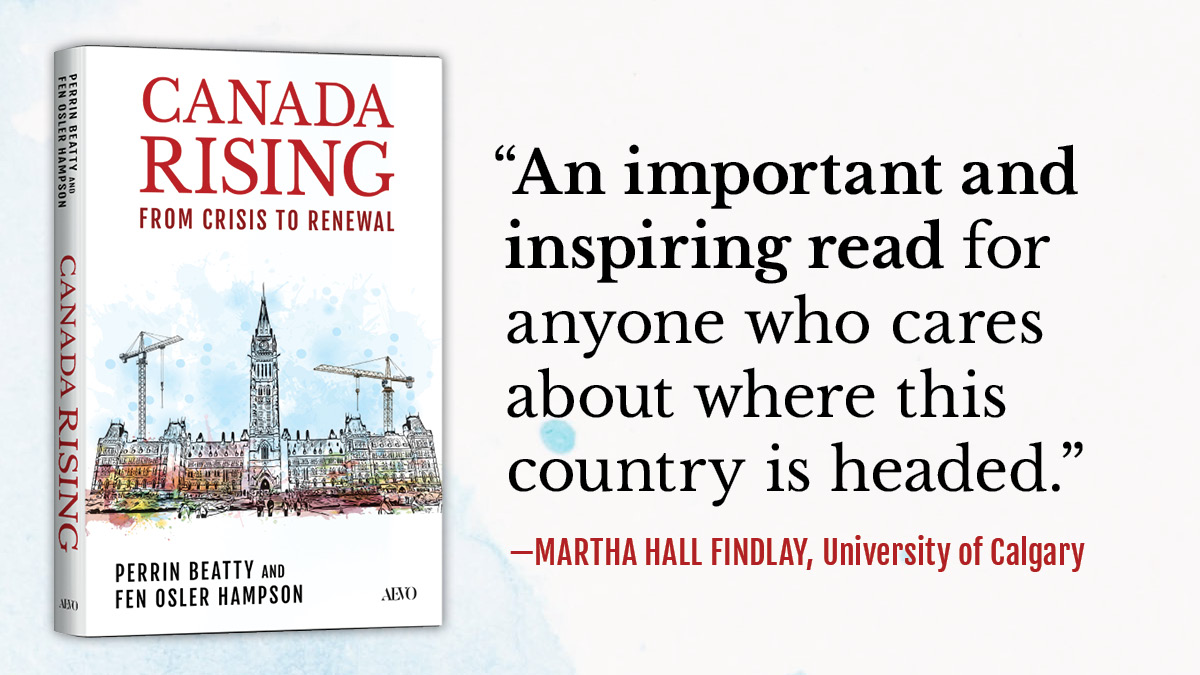
Canada Rising explores how dismantling internal #trade barriers could unlock Canada's economic potential.
Order your copy: https://t.co/4ZHCl2rNc7
@PerrinBeatty@munkschool
Today is the launch of Canada Rising. The book addresses the critical questions Canadians urgently need to address. How we respond will determine whether Canada will continue to slide or if we will seize the opportunity to become stronger, more prosperous and more sovereign.
Canada stands at a crossroads. As trade tensions rise and the global order shifts, can Canada continue to rely on the US for prosperity and security?
In Canada Rising, @PerrinBeatty & Fen Osler Hampson chart a path from crisis to renewal: https://t.co/4ZHCl2rNc7
#CDNPoli
In Canada Rising, @PerrinBeatty & Fen Osler Hampson explore how Canada’s most serious problems have gone unaddressed for years, and Donald Trump’s recent threats have made them impossible to ignore.
Discover a path forward: https://t.co/4ZHCl2rNc7
@CAGlobalAffairs#CanadaUS
“Nostalgia is not a strategy.” @PerrinBeatty & Fen Osler Hampson agree with PM Carney’s diagnosis that the world is "in the midst of a rupture, not a transition."
In Canada Rising, they set out what #Canada must do next: https://t.co/4ZHCl2rNc7
@CdnChamberofCom@Carleton_U
The U.S. helped Canada build an aluminum-production juggernaut during WWII. In Trump’s trade war, those smelters are the enemy—and American businesses are paying a price. https://t.co/OYDkCiZulH
"Nixon was a pussycat compared to Trump. Canada secured the removal of Nixon’s surcharge on Canadian goods within months. Not so with Trump, who is causing much greater — and more permanent — damage. Unlike the Third Option of yesteryear, which was largely stillborn, the evolving partnership with Europe has genuine substance."
~ Many thanks to @policy_mag Contributing Writers @PerrinBeatty & Fen Hampson for the perfect piece to launch Canada-EU week ahead of the Montreal summit.
“Sixty-seven percent of Michigan voters oppose the tariffs on Canadian goods, according to a New York Times/Siena poll taken in September.”
https://t.co/zUIiVEmvLe
A sincere thanks to everyone who has reached out following the loss of our beloved Patrick. Julia, Nabiha and I greatly appreciate your thoughtfulness at this sad time. https://t.co/qwhBeMThHf
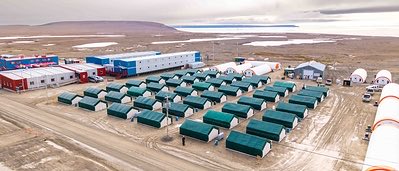
Kudos to ATCO Frontec, which converted a remote site in Resolute Bay, Nunavut, into a fully operational temporary base capable of supporting 350 Canadian Armed Forces personnel during the ongoing Operation NANOOK-NUNAKPUT - in just three weeks. Masters in remote logistics.
https://t.co/3bVdUX6BWa
More than 40 countries - Canada and its allies - have sanctions against Belarus for supporting war criminal Putin’s invasion of Ukraine.
Buying blood potash from Belarus is supporting Russian aggression.
It’s wrong and it doesn’t make sense.
All of that potash has to be shipped first through Russia, then across the ocean, then across the US to mid-western farmers.
Does anyone believe Belarusian blood potash shipped through Russia is going to be more affordable, more sustainable or more ethical than potash shipped from Saskatchewan - right here in North America?
1) Saskatchewan has the world’s largest potash deposits, producing twice as much potash as Belarus. 85% of US potash imports come from Saskatchewan, efficiently and reliably shipped by rail.
2) Belarus is a brutal dictatorship and puppet state for Vladimir Putin under international (including American) sanctions for gross human rights abuses.
3) Belarusian potash production has been fully contracted to Asian buyers (eg China and India) since the imposition of western sanctions. Belarusian dictator Lukashenko has already said "Even if we wanted to supply somewhere else, Western markets, we just don't have those volumes, everything has been contracted."
4) The US Government does not buy potash. US fertilizer companies and ag producers do. Those private sector buyers have consistently demonstrated their preference for Canadian potash.
5) President Trump tariffed Canadian potash early in 2025, then backed off days later following loud protests from American ag producers and their Congressional representatives.
Mark Carney: "We are not fair-weather allies. We do not pursue zero-sum deals. Our commitment to the rule of law and our unyielding defence of human dignity, individual freedom, and democracy share the same deep roots, the same unwavering dedication."
Donald Trump’s threats if Canada & the EU work more closely validate Canada’s decision to walk away from the talks. They also raise doubts about the value of the EU’s “deal” with the US. Trump has no right to dictate our relationships with third countries. https://t.co/jr5ZJaYjmS
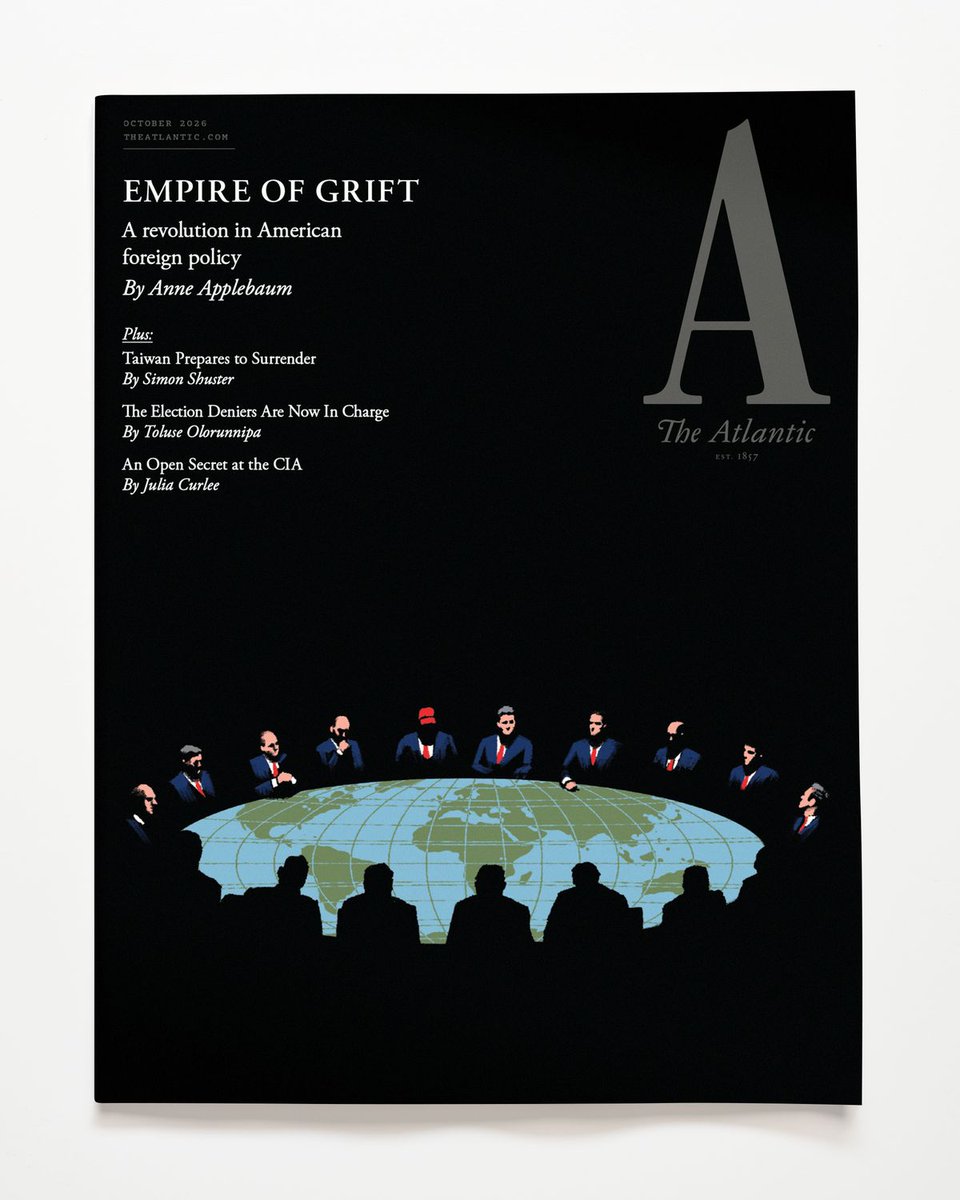
Online grifters, private companies, and far-right ideologues have transformed traditional American diplomacy, @anneapplebaum writes. She explores how they’re wielding their newfound power: https://t.co/oSVSfTGuHu