@MicieliA_MD Last Friday I had the same case and turned out to be a distal M1 occlusion. But I agree that thalamic strokes sometimes present with aphasia.
Predictors and Outcomes of Hematoma Expansion and Neurological Decline in Intracerebral Hemorrhage: A Multisite Mobile Stroke Unit Study | Stroke: Vascular and Interventional Neurology https://t.co/SEdkAelZeC
Safety and Efficacy of Intravenous Thrombolysis by Infarct Type in Patients with No Visible Occlusion: A Secondary Analysis of the AcT Trial | Journal of the American Heart Association https://t.co/NdzyX4nkzm
1/
Anemia happens frequently in our aSAH patients.
Those patients are at risk for delayed cerebral ischemia and other neurologic insults
It would seem having adequate oxygen to the brain tissue would be a good thing to prevent such injury.
But is it?
A #tweetorial on SAHARA
@ShadiYaghi2 No thrombolysis given the non disabling symptoms. I would do EVT for the M2 clot as most likely that originated from the stenotic carotid. I would start DAPT with Brilinta+aspirin and schedule for angioplasty and stenting. @MichaelSaggio
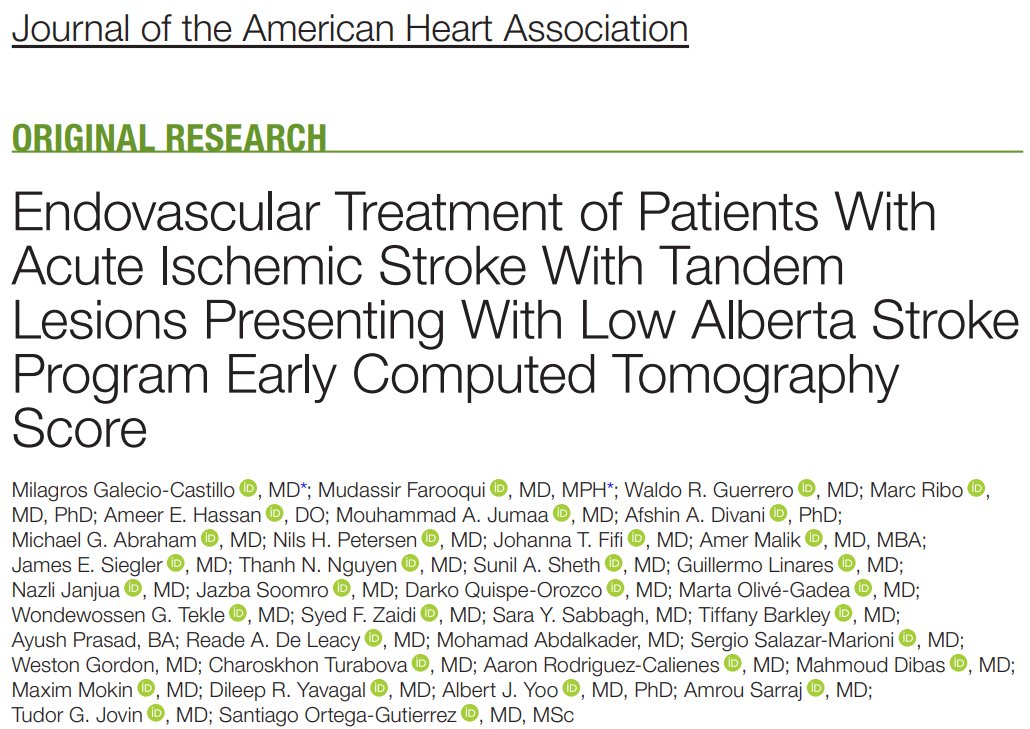
New insights on stroke care:"Thrombectomy in patients with acute ischemic stroke, tandem lesions, and low ASPECTS (2-5)"
Surprisingly, 30% achieved functional independence at 90 days 🧠
#Stroke#Thrombectomy
A 🧵by @LeonardoCruz_C 1/5
https://t.co/EGMvXtZghN