What Temperature Kills Bed Bugs? Why Heaters Are Set to 135°F #BedBugs #... https://t.co/3Yvv1BWaNz via @YouTube. Bed bugs and eggs die at 122°F. Heaters are set to 135°F to make up for what walls and furniture soak up. Here's how it works 👇 https://t.co/AxpdlILgcx
A good bed bug inspection guide starts at the bed, but don't skip baseboards & outlet covers. Bed bugs use them to move between rooms. https://t.co/QhXLPcO0f0 #BedBugs#PestControl#HotelIndustry
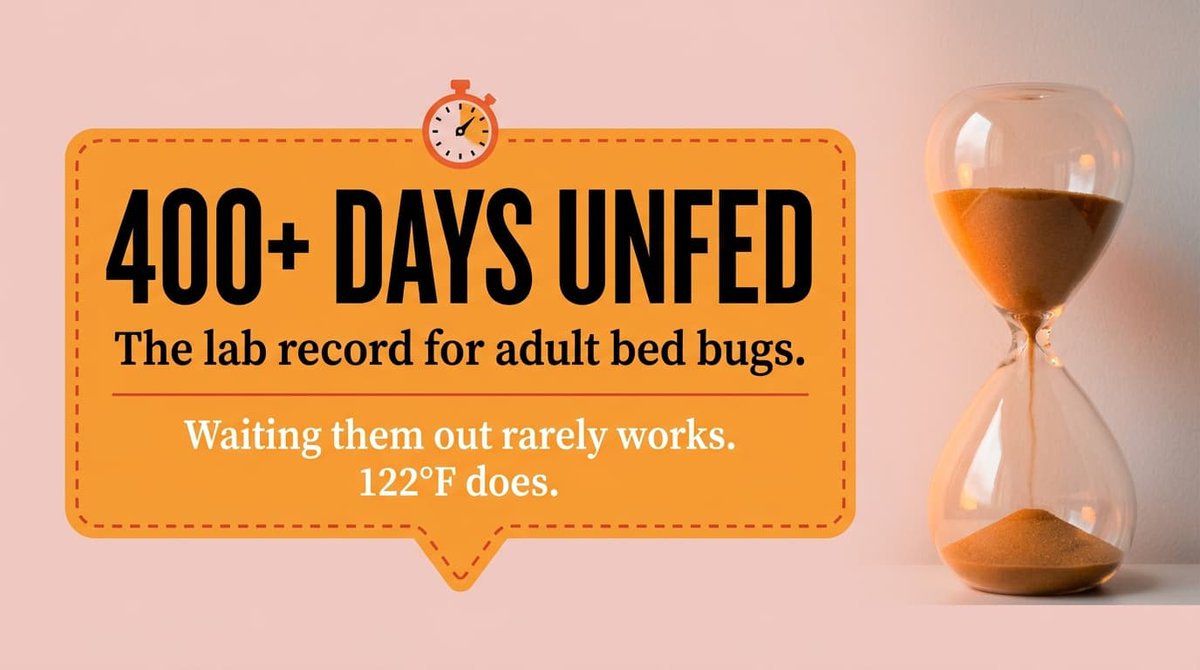
How long can bed bugs live without food? 2–6 months at room temp, up to a year in a cool room. A 30-day vacancy won't starve them out. Heat will: https://t.co/FPgIDHfEJr #BedBugs#PestControl#HeatTreatment
Does Bed Bug Fumigation Work? Why Heat at 135°F Beats Emptying the Building https://t.co/cSEqTgZtrS via @YouTube See where to get a PestPro Thermal bed bug heater: call (970) 443-8119 or visit https://t.co/AxpdlIKImZ. #BedBugs#HeatTreatment#PropertyManagement
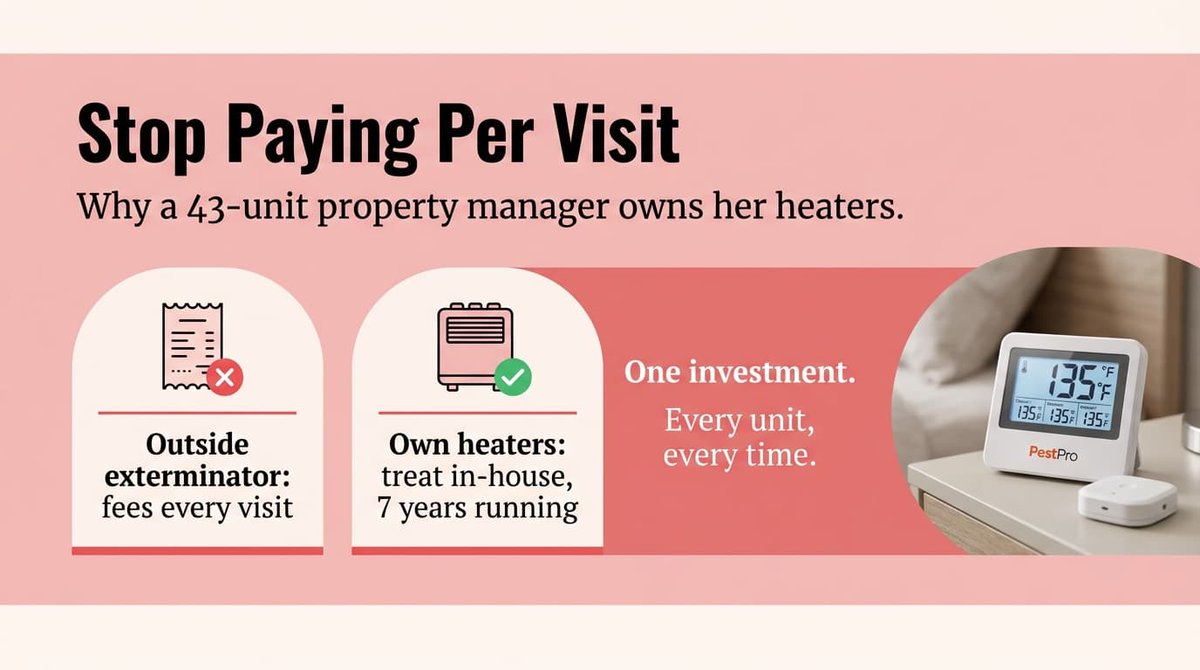
Third-party exterminators charge significant fees per treatment, and it seems never to completely eliminate the problem. A property manager with 43 units on why she has owned PestPro heaters for 7 years: https://t.co/vKHJXMPsHC
What attracts bed bugs? Not dirt. CO2 is the strongest cue, detectable from several feet away, plus body heat and skin chemistry. Clean hotels get them too. https://t.co/CT9PyjAMlV #BedBugs#PestControl#BedBugMyths
What temperature kills bed bugs? 122°F is the threshold. Pro heat treatment runs 135°F, held across the whole room, for a complete kill. A 1,500W space heater rarely gets there. https://t.co/tKKYPbsxDc #BedBugs#HeatTreatment#PestControl
Cold weather doesn't kill bed bugs. They survive near 32°F and go months without feeding. Only heat holding 135°F throughout a space works. Weather impact on bed bugs is real, but it's not an exit strategy: https://t.co/v4yCsY0Qz3 #BedBugs#PestControl#HeatTreatment
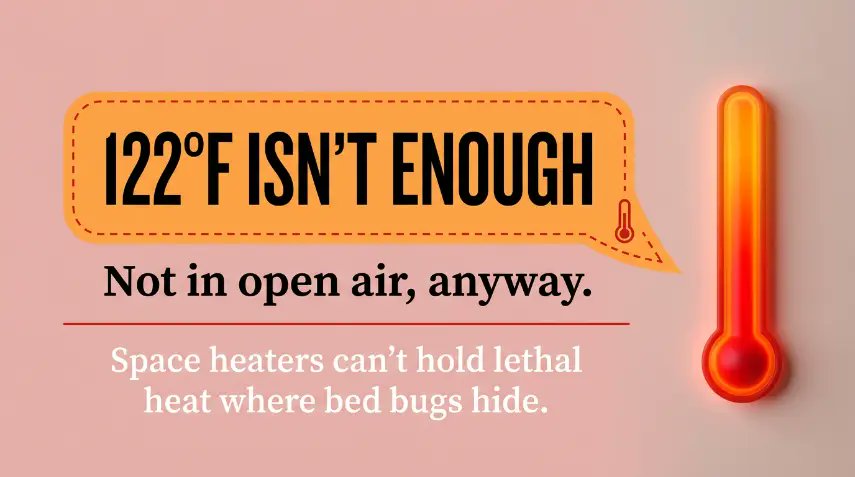
Space heaters rarely kill bed bugs. They die at 122°F, but killing them inside mattress seams & wall cavities takes ~135°F held for hours. Most space heaters can't do that. Here's what actually works: https://t.co/jpmJHfeunb #BedBugs#HeatTreatment#PestControl
The same case extends one deck down to marine vessels — tankers, FPSOs — where the Maritime Labour Convention requires "clean and habitable" crew accommodation. A bed bug issue from a rotating crew's gear is a compliance issue, not just a comfort one.
https://t.co/7Utcap3r14
That's why whole-room electric heat treatment fits better than the alternatives: no chemicals in a shared-air environment, uses power infrastructure that's already there, and it's already running on Gulf of Mexico platforms today — including BP's Thunder Horse and Mad Dog
Confined quarters. Shared HVAC. Remote locations where a same-day fix isn't an option. Zero tolerance for downtime.
Whatever solution gets used has to work in a single visit — no multi-visit chemical protocol, no re-entry interval.
Bed bugs travel one way — riding in fabric. A duffel bag stowed in a crew quarters locker for two weeks between rotations is all it takes.
They can survive up to a year without feeding. No food source needed — just a dark seam to wait in.
Bi-weekly crew rotations are one of the most efficient systems in industrial work.
They're also, unintentionally, one of the most efficient bed bug delivery systems in existence
https://t.co/77Wh4UXiYI
A single female bed bug can lay hundreds of eggs before you spot the first sign of infestation. Know the 5 clues before it spreads: https://t.co/2Ir20aqQ7E #BedBugs#PestControl
Bi-weekly crew rotations make offshore platforms one of the most efficient rotation systems in industrial work — and, unintentionally, one of the most efficient bed bug delivery systems too.
https://t.co/7Utcap3r14