I am excited to share my lab's latest work online today @MolecularCell where we investigate the relationship between condensate formation and transcriptional activity of the cell-type specific coactivator MYOCD. https://t.co/Yo9zKHbGxg
Thank Dr. Pommier for a great talk. We are having two rising stars this week! Tune in to hear their story about LINE elements and RNA-telomere in STEM Cells! sign up at https://t.co/XaGM9LsycS
Excited to share that our map of the genetic interaction network of the DNA Damage Response is out in @NatureBiotech! Led by Sam Hayward, @vaitsiankova and @tlmdz_.
https://t.co/hIV5BLcJuQ
Looking for a tenure-track position? The Department of Cell Biology is hiring! Submit your application by today!
See link below for more information:
https://t.co/eMb5mWgT4d
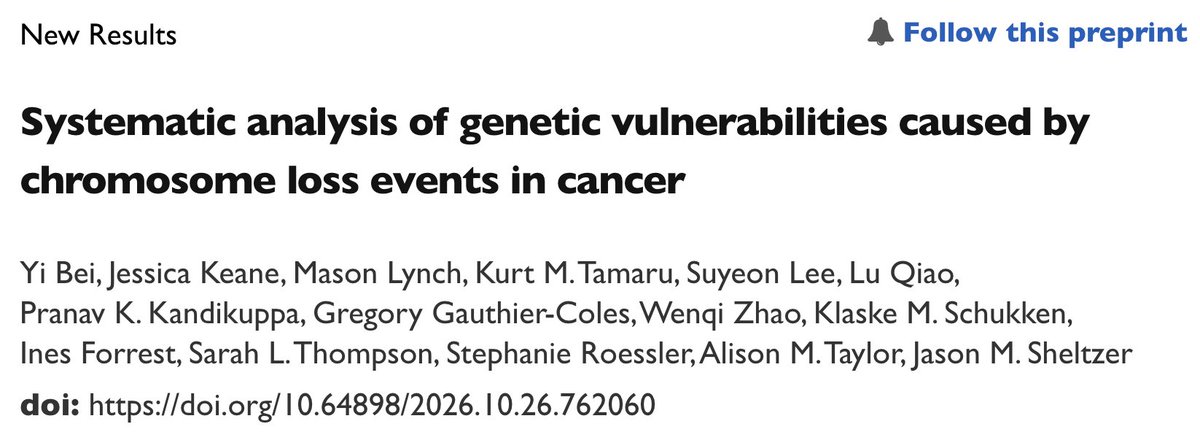
I’m thrilled to share our new preprint, in which we describe what I think may be the best way to selectively target aneuploid cancers while sparing normal euploid tissue.
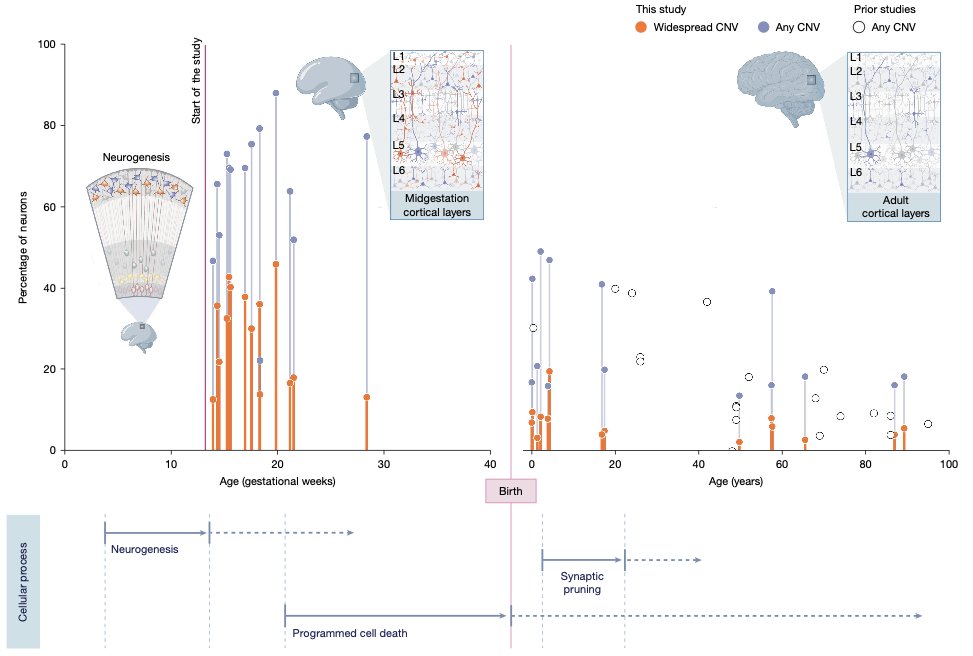
1/8 Abnormal neurons in the developing brain: ~26% of human fetal cortical neurons carry widespread, multi-chromosome CNVs. Most of these genomically aberrant neurons are eliminated right around birth, not gradually over a lifetime. 🧵https://t.co/SQAhAaxzvs @Nature
Excited to share that our latest work on post-mitotic DNA synthesis (post-MiDAS) at repetitive and difficult-to-replicate DNA sequences such as telomeres and centromeres has been published: https://t.co/QmjWa09NN8.
Fantastic time at the 2026 CRI Retreat! A day and a half packed with amazing science, inspiring talks, and plenty of opportunities to connect and recharge with our CRI community. Relentless discovery!
How does the mitotic spindle adapt to genomes that differ in size by more than 10,000-fold? Our new paper in @NatureCellBio reveals a simple scaling law and the physics behind it: chromosome crowding! 🧵
https://t.co/DsGvz8ulME
Happy to share our latest preprint on how the human DNA damage response drives nuclear metamorphosis (nucleomorphosis) and its role in DNA repair via a molecular code distributed on cytoskeletal and membrane-related elements.
https://t.co/Qayge9BdTP
When cells in different phases fuse, nuclei play a mitotic tug-of-war
Olga Afonso, Daniel Feliciano and Jennifer Lippincott-Schwartz investigate the fate of syncytia containing nuclei at different cell cycle stages.
Highlight: https://t.co/SKpcuboIKI
Our recent paper on CCAN organization was just out in @ScienceAdvances. We combined MD simulation with expansion microscopy to observe an interesting structure in the kinetochore. Congrats, @yj_sakai, Mariko, and @yasuhhirano17 !! Please check it out.
https://t.co/zZF4FNHJ1z
The Department of Biological Chemistry at UCI is seeking a tenure-track Assistant Professor!
This is a broad search across biomedical sciences, including genome stability. Join a dynamic department with great faculty benefits and year-round sunshine!
https://t.co/xLAkV0NxOA
Out today in @JCellBiol Work from the Mogessie, @FachinettiLab & @DrSteffi labs reveals how CENP-A/B/C cooperate to maintain kinetochore function in oocytes and how declining centromere strength predisposes aging eggs to aneuploidy. @pewhealth@HFSP
https://t.co/Q2hYFCL9i1
We are looking to hire post-doctoral fellows to work on somatic mosaicism, regeneration, and cancer development, please reach out to me if you are interested! @CRI_UTSW
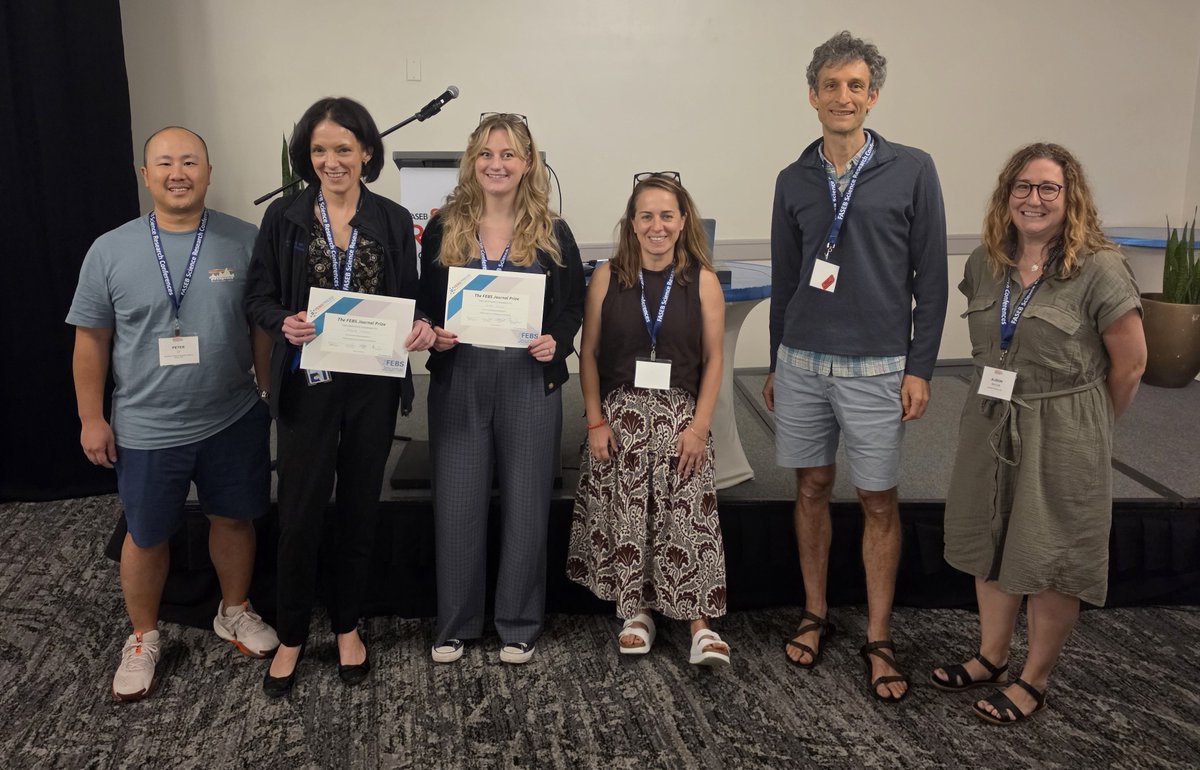
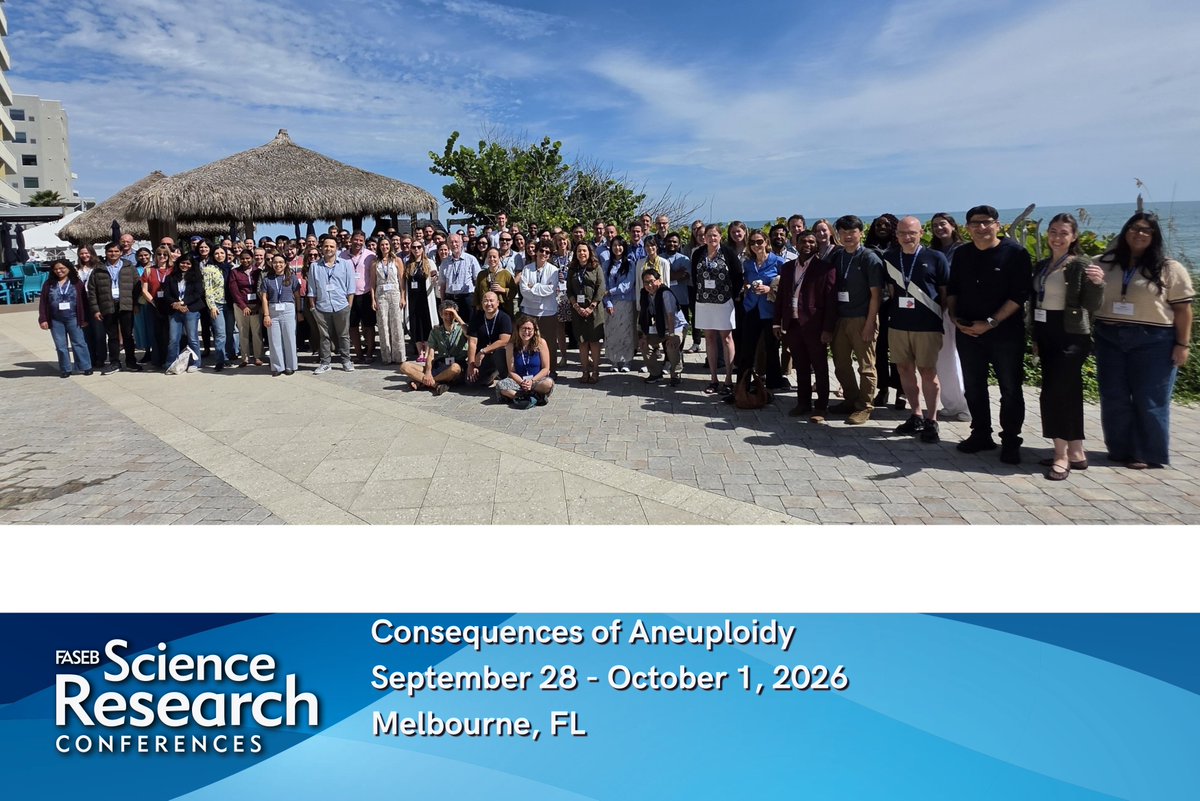
That’s a wrap for FASEB Aneuploidy 2026! Thanks to all the attendees for making it a special meeting. The science was so out-of-this-world that NASA even launched a spaceship for us. 🚀
See you again in 2029! #ANESRC