I accidentally broke my brain reading about Nobel Prize winners last month.
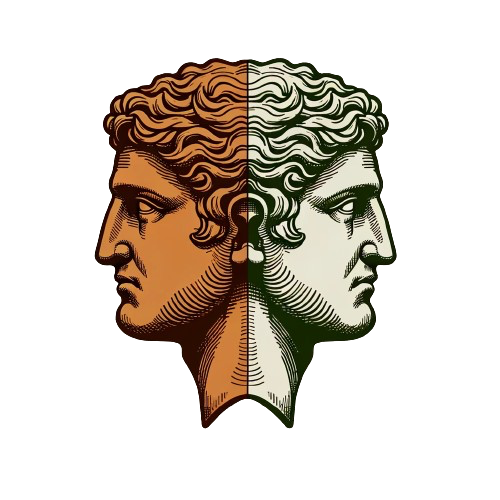
There's this thing called "Janusian thinking."
It's exactly why some people's minds work like magic while the rest of us think in straight lines. Named after Janus, the Roman god with two faces pointing opposite directions.
The psychologist who discovered it, Albert Rothenberg, was trying to figure out what made breakthrough thinkers different. He interviewed dozens of Nobel laureates, major artists, revolutionary scientists. What he found sounds impossible.
These people can hold two different ideas in their mind at the same time. They can explore both without switching back and forth or forcing a quick comparison. They can consider “yes” and “no” to the same question simultaneously and stay clear-headed.
Einstein too talked about this when he described his relativity breakthrough. He was imagining riding alongside a beam of light while also standing perfectly still. Both perspectives at once. Mozart said he could hear an entire symphony "all at once," every note, every contradiction, every resolution happening in a single moment of awareness.
Your average person's mind works like a courtroom. Evidence comes in, you weigh it, you reach a verdict. Case closed. But Janusian minds work more like... I don't know, like a quantum computer that can process multiple realities simultaneously until something new emerges from the overlap.
I've started noticing it in conversations. When someone can genuinely see both sides of something without needing to pick one, it drives people nuts. They want you to land somewhere definite. The ability to live in that tension space reads as wishy-washy or indecisive.
Most creative advice tells you to "think outside the box."
But Janusian thinking is weirder than that.
It's being inside and outside the box at the same time. It's thinking the box exists and doesn't exist simultaneously.
Which explains why truly creative people seem slightly unhinged. They think they're choosing between realities. But, they're inhabiting multiple realities at once, mining the contradictions for insights the rest of us never see.
Sadly, most of us have trained ourselves out of this ability. We've learned that holding contradictions feels unstable, so we rush toward resolution. We've been taught that changing your mind means you were wrong before, so we defend positions instead of exploring them.
But the people changing the world have kept that childlike ability to hold impossible thoughts without needing them to make sense immediately.
We just need to live in the questions everyone else is too scared to ask.
When Leonard Nimoy and @WilliamShatner got together without a script, they were hilarious!
This was a promo piece for Star Trek 4 that hasn't been seen since it was made in 1986, completely unavailable on video.
Fauci sabotaged ivermectin and hydroxychloroquine so the COVID vaccine could get approved. This alone could have saved millions of lives—People would not have taken the vaccine.
He demonized it so that pharmacists would not fill doctor's prescriptions.
It must now be seen as the greatest blunder in human history. And it was all done on purpose. No public relations campaign can change that.
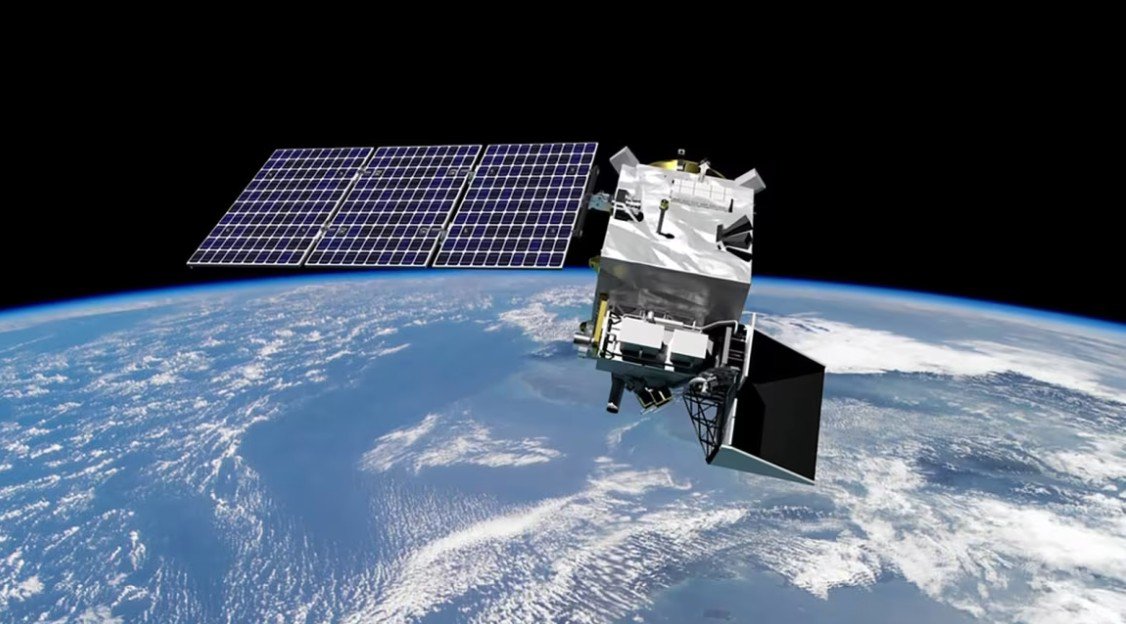
Yes, the world is still a bit warmer. CO₂ is still a bit higher. But NASA satellites have revealed the recent rise in carbon dioxide has sparked the greatest expansion of green leaf area 'in recorded history'.
The entire human story has been about our dogged survival in a harsh, dangerous world, thanks mainly to sheer luck. Our species is thriving in today's warmer Holocene interglacial cycle, which has lasted 11,700 years. This covers the entire rise of all human civilisation, every single empire, every invention and everything that makes us modern, from razor blades to spaceships.
The observable data throughout geological history suggests that today's cooler temperatures lie mostly within natural variability. The natural world invented the miracles of multicellular life and DNA on its own. It doesn't need human intervention. The Earth will run its course despite our interference.
However, many are unaware that we still are living in the Late Cenozoic Ice Age, beginning 33.9 million years ago when permanent ice sheets formed on Antarctica. Ice ages may be rare, but we are in one, whether we like it or not. Earth has seen just five major ice ages in its long history - the Huronian, Cryogenian, Andean-Saharan, Karoo, and today's Late Cenozoic Ice Age.
Today's global average temperature is estimated at 15°C, but this is not hot in geological terms. Our modern era sits deep within a major cold trough. It is up to 10 degrees cooler than the long-term average range of 18–26°C.
It was the Industrial Revolution though, that kicked off the modern world, beginning around 1750. And the discovery of coal, oil and gas created the most successful period in human history. We have medical miracles and the astonishing technology to prove it.
CO₂ levels over 250 years from 290 ppm to 426 ppm have created a massive spreading green canopy. Agriculture has exploded beyond anything ever seen before. It has not caused a global disaster.
And Net Zero, by the way, has never been fully explained - other than swapping promissory notes at annual summits worth trillions of dollars. There is every likelihood it will not change a thing. It's nothing more than a throw of the dice. Yet the error strewn 'transition' to wind-solar is expected to cost $275 trillion - equal to 2.5 times global GDP.
This could have built up to 27,500 nuclear power stations worldwide, ending any doubts about pure energy.
Global temperatures have risen by around 1.4°C since the Industrial Revolution 250 years ago. This came after the end of the 500-year Little Ice Age in Europe, the coldest spell in 10,000 years. Cold usually brings famine, misery and an early death.
Until the past few decades, most people only learned about CO₂ in biology classes at school. It is where we discovered this trace gas is the building block of complex life, the engine of photosynthesis and the oxygen we breathe.
The CO₂ miracle isn't taking a bank holiday.
John Cleese — the Man with Common Sense Among the Madness.
He has been saying the same thing for fifty years: that the emperor has no clothes.
Life of Brian is the most conservative film the left ever celebrated – and the most honest film about the left ever made. They loved it for the wrong reasons and have been trying to cancel it ever since, for the right ones.
1. The film is not about Jesus. It is about the crowd – the human need for a messiah, the willingness to follow anyone who seems to have the answers, the transformation of an ordinary man into a symbol by people who need a symbol more than they need a man. Brian doesn’t claim to be the Messiah. He denies it, repeatedly, with increasing desperation. The crowd hears confirmation in every denial. This is not a theological point. It is a political one – about every revolutionary movement, every ideological project that has ever needed a face to follow more than an argument to evaluate.
2. "You’re all individuals!" Brian shouts at the crowd. "Yes, we’re all individuals!" they respond, in perfect unison. One voice at the back: "I’m not." The most precise image of progressive conformity ever produced. The anti-herd herd. The counterculture that became a culture. Still running, unchanged, in every progressive coalition that has tried to agree on anything since.
3. The People’s Front of Judea is the left eating itself – the meeting instead of the action, the motion instead of the movement, the ideological purity that makes the slightly differently named rival organization the real enemy. Not the Romans. The other liberation front. "Splitters." Fifty years later, every progressive coalition still runs this scene at least once per election cycle.
4. "What have the Romans ever done for us?" – Bastiat made funny. The revolutionary who cannot acknowledge that the system he opposes also produced everything he values. The aqueduct. The roads. The sanitation. The wine. "All right, but apart from that…” Every anti-capitalist who types his manifesto on an iPhone is running this scene without knowing it.
5. “He’s not the Messiah – he’s a very naughty boy." Brian’s mother, against ten thousand people who need to believe. No ideology, no illusions, no patience for any of it. She is the only person in the film operating at full resolution – seeing what is actually there rather than what the crowd needs to see. Common sense as the last form of radicalism.
6. Then there is the scene. Stan announces he wants to be a woman and have babies. Cleese responds: “What’s the point of fighting for his right to have babies when he can’t have babies?” The room falls silent. The most precise philosophical question about gender ideology ever asked – forty years before gender ideology existed as a political movement. Not cruel. Not dismissive. Just the question the ideology cannot answer – because the ideology’s central problem has always been its struggle with reality. Cleese noticed it, named it, waited for the silence. They cancelled him forty years later for doing the same thing in real life. He noticed that too.
7. Cleese is the most conservative comedian the left ever claimed. He has been saying the same thing for fifty years – with the calm of a man who finds the outrage neither surprising nor particularly interesting. Empirical, rational, anti-performative, genuinely funny precisely because he refuses to manage reality. Always Look on the Bright Side of Life – men being crucified, choosing to whistle. Marcus Aurelius with a ukulele. The one position that survives contact with reality: you are here, the situation is what it is, and the response is yours to choose. The man with common sense among the madness. Still standing. Still asking the question. Still waiting for an answer that isn’t coming.
Earth is still bound to the Late Cenozoic Ice Age, and our planet's average global temperature still hovers around a very livable 15°C.
This is far below the world's long-term planetary average of 18°C to 24°C - seen throughout most of Earth's biological history. It makes the idea of a global warming crisis seem out of sync with reality.
Despite four decades of continuous climate alarmism, roughly 10% of the Earth's total land area remains permanently capped by glacial ice, which covers 15 million square kilometers (5.8 million square miles).
That is nearly a third of its extent during the peak of the Last Glacial Maximum (26,000 to 19,000 years ago), when continental ice sheets reached their historical zenith.
The Antarctic ice sheet remains the largest and thickest body of ice on the planet, extending up to 4.8 kilometers (about 3 miles) deep. It holds roughly 90% of global ice volume and accounts for 85% of total glacial land cover. Spanning 14 million square kilometers (5.4 million square miles), Antarctica alone makes up 8.3% of Earth's total land surface.
A basic geographical reality is often forgotten: land comprises a mere 28% of the planet's surface. All human cities, towns, and infrastructure combined occupy just 1% to 3% of that land (while deserts take up 33% and forests 31%).
We live on an ocean world, and waters cover 72% of the globe to an average depth of 2.3 miles.
Crucially, the oceans hold 86% of the global carbon reservoir and absorb over 90% of retained thermal energy. By contrast, the atmosphere holds a fraction of a percent of each. The oceans—not human industrial activity—serve as the true long-term regulatory engine for atmospheric carbon dioxide and global climate stability.
The current Quaternary Glaciation is part of an ice age cycle that began 34 million years ago with the thermal isolation and glaciation of Antarctica, later intensified by the closure of the Isthmus of Panama and orbital variations (Milankovitch cycles).
Carbon dioxide was not the driver of these immense shifts.
All of human civilisation, agriculture and technological progress has unfolded within a brief, warm respite: the Holocene interglacial period, which began just 11,700 years ago.
Yet for 40 years, the narrative has been dominated by a campaign driven by an unaccountable bureaucratic authority—the United Nations—pushing an agenda of global control.
The promised catastrophe of runaway, unprecedented warming never arrived.
One of the harshest reviews yet of Christopher Nolan’s The Odyssey has come from the Greek newspaper Ethnos, where columnist Nikos Tzianidis delivers a scathing critique of the director’s adaptation of Homer’s epic.
Published under the headline “Three Hours of Yawning and a Trojan Horse Against Our Aesthetics – Homer? Absent!”, the article argues that despite its massive production, stunning visuals, and cutting-edge filmmaking techniques, the movie fails to capture the true essence of Homer’s timeless work.
According to Tzianidis, the film’s pacing is slow and exhausting, describing the nearly three-hour experience as “three hours of yawning.” He argues that Nolan kept little more than the title of The Odyssey, abandoning the spirit, themes, and philosophical depth that have made the ancient Greek epic one of the foundations of Western literature.
The review is particularly critical of the film’s artistic direction, calling it a “Trojan Horse against our aesthetics.” In the columnist’s view, the adaptation replaces Homer’s cultural identity and values with a modern cinematic vision that feels detached from its source material. He even concludes that “Homer is absent,” suggesting that the legendary poet’s voice has been lost beneath spectacle and reinterpretation.
The Ethnos review adds to the growing debate surrounding Nolan’s adaptation. While many international critics have praised the film’s ambition and technical achievements, others believe its creative liberties stray too far from the original epic, fueling an ongoing discussion over how faithfully one of humanity’s greatest literary works should be adapted for modern audiences.
#archaeohistories
Dear Christopher Nolan,
My name is Herod Priovolos and I want to tell you what #TheOdyssey truly means to me and to generations of Greeks who grew up with Homer’s story.
Homer did not sing of Odysseus simply to entertain us with ships, storms, gods and monsters. He told the story because he understood what war, time, distance and loss can do to the human soul.
Odysseus leaves Ithaca as a king, a husband and a father. He returns twenty years later alone, exhausted and disguised as a beggar, carrying the memory of every companion who never made it home.
The monsters are not merely creatures created for spectacle.
The Cyclops is power without justice. The Sirens are the beautiful voices that tempt a person to abandon their purpose. Circe represents the danger of losing our humanity. Calypso offers Odysseus immortality, but even eternal life becomes a prison when the price is forgetting his wife, his son, his homeland and his own identity.
And Ithaca is not merely an island.
Ithaca is the place that remembers you when the world no longer recognizes your face. It is the home that remains alive inside you after everything else has been taken away. It is Penelope growing older while she waits. It is Telemachus becoming a man without his father. It is Argos surviving long enough to recognize his master one final time.
Odysseus is not great simply because he defeats monsters. He is great because he is proud, frightened, wounded, clever, imperfect and deeply human. He loses his companions, his youth, his name and twenty years of his life, yet he refuses to forget who he is.
When he finally returns, Penelope does not recognize him through strength, glory or appearance. She tests him. Odysseus proves his identity by remembering the bed they built together around the roots of a living olive tree.
That is the heart of The Odyssey.
Not the battles. Not the ships. Not the monsters.
Two people standing before each other after twenty years, asking whether love, memory and identity can survive everything time has done to them.
That is why this poem has survived for almost 3,000 years. Every human being is trying to return to something: a home, a person, a lost part of themselves, or the life they had before the world changed them.
So use Homer’s seas, gods, heroes and monsters. But please understand what you are touching.
The Odyssey was never truly about how far a man could travel.
It was about how much the world could take from him before he stopped being himself, and whether, after losing almost everything, he could still find his way home.
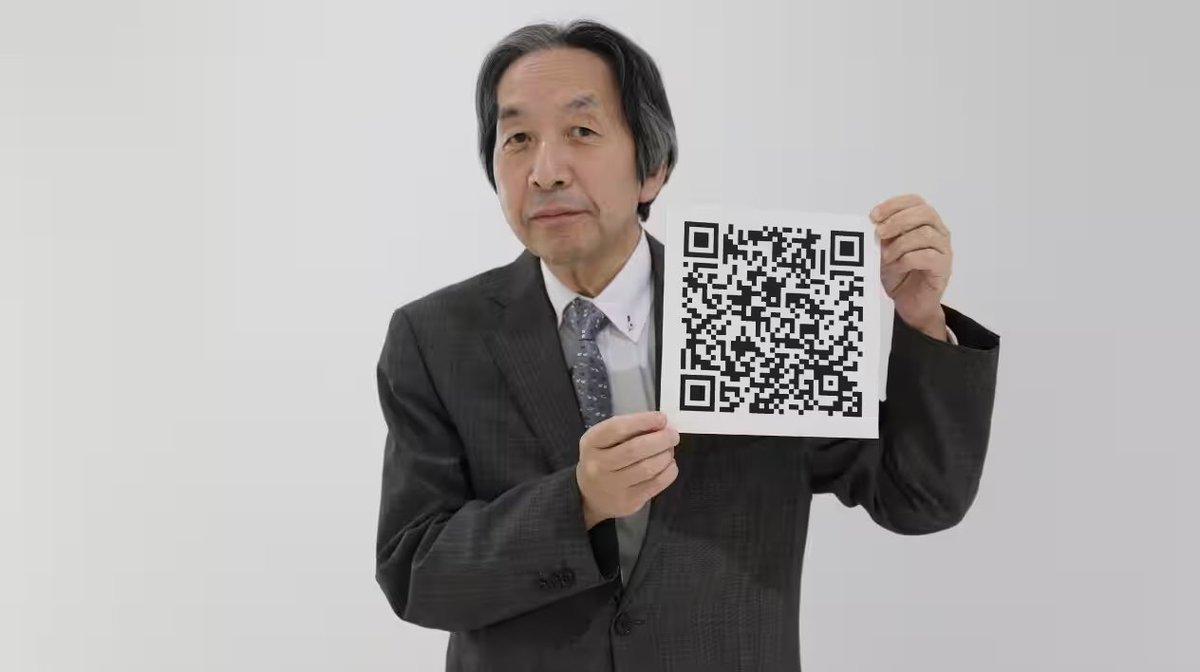
A Japanese engineer invented the QR code for one job, tracking car parts on a Toyota line, then his company chose to give the patent away for free, which is the only reason it ended up on every restaurant table on Earth.
His name is Masahiro Hara. The company was Denso Wave, a parts supplier owned by Toyota.
In 1992 the problem landed on his desk, and it was not glamorous. Workers on the factory floor were drowning.
Every car part had a barcode, but a barcode can only hold about twenty characters, so to track one component they had to stick five or ten barcodes on it.
A worker would stand there scanning a single part ten times in a row. Some of them were scanning close to a thousand barcodes a day. The job had stopped being about building cars and turned into pointing a scanner at stickers all day long.
And there was a second problem nobody upstairs cared about. This was a factory. Oil got on everything. A smudge of grease across a barcode and the whole thing became unreadable, and the line stopped.
Hara was asked to make the scanner faster. He looked at it for a while and realized the scanner was not the problem. The barcode itself was the ceiling. A line of black bars can only hold information going one direction, left to right.
He decided to build something that held information in two directions, up and down as well as across, so it could store hundreds of times more in the same little square.
Then came the part that sounds made up but is not.
Hara played Go on his lunch breaks, the old board game with black and white stones sitting on a grid. He was staring at the board one day and it clicked.
The grid of black and white stones was already a way to store information in two directions. That was the shape of his code.
But building the code was the easy half. The hard problem was speed, because the whole point was to be fast, and a scanner wastes most of its time just trying to figure out where the code is and which way it is turned.
The fix came to him on a train. He was looking out the window at buildings, and one building stood out from all the others because of its shape against the sky. That was the idea.
He put three little square targets in three corners of the code. The moment a scanner sees those three squares, it knows instantly where the code is and how it is rotated, even upside down, even at an angle.
Now here is the detail that shows how far he was willing to go. Those three corner squares only work if nothing else on the page looks like them.
If a magazine ad or a cardboard box happened to have the same black and white pattern nearby, the scanner would get confused and grab the wrong thing.
So Hara and his tiny two-person team went and surveyed printed material. Magazines. Flyers. Cardboard boxes. Piles of it, for days, reducing every picture down to its ratio of black to white area, hunting for the one ratio that almost never shows up in print anywhere. They found it. One to one to three to one to one.
That exact rhythm of black and white is baked into every corner square of every QR code on Earth, and it is there because it is the pattern the printed world almost never produces by accident.
Then he solved the oil.
He built the code so it carries a backup of its own information, spread mathematically across the whole square. You can tear off, smudge, or scratch out up to thirty percent of a QR code and it still scans perfectly, because the code rebuilds the missing piece from the copy it kept of itself.
A worker could get grease on a third of the label and the line would keep moving. This is the same math that lets a scratched CD still play and lets a spacecraft send data back across the solar system without asking to repeat itself.
He finished in 1994. He named it Quick Response, after what it does for the person using it, not after what it is.
And then Denso made the decision that actually mattered.
They held the patent. They could have charged a fee on every single scan, and given how many billions happen now, that would have made someone unimaginably rich.
Instead they announced they would not enforce their rights to collect royalties, and they published the specification openly so anyone could use it. Hara later said it was not even a big argument inside the company.
That one choice is the whole story. A code that costs nothing to use is a code everyone builds on. Airlines put it on tickets. Phone makers built readers into cameras.
Then a pandemic hit and the world needed a way to hand someone information without touching anything, and the free little square that a Toyota engineer built for greasy factory workers was suddenly on every menu, every payment, every door.
Hara still works there. He has said, more than once, that he never imagined it would spread this far, and that the part he is proudest of is that it got used to keep people safe.
The man built it to survive oil on a factory floor. It ended up surviving everything else too.
You have scanned his work a hundred times this year. Now you know whose it was.
In 1705, an Irish woman named Margorie McCat was believed to have died from a fever and was buried quickly to prevent the spread of illness.
She was laid to rest wearing a valuable ring that her husband John, a doctor, could not remove because her finger was badly swollen, making her grave an appealing target for body snatchers. Later that same evening, before the grave had fully settled, grave robbers began digging and, unable to remove the ring, decided to cut off her finger.
When blood was drawn, Margorie suddenly awoke from a coma, sat up, and screamed. What happened to the grave robbers is unclear, with one version claiming they fled and never returned to their trade.
Margorie managed to climb out of the grave and walk home, where John heard a knock and remarked that if his wife were still alive, he would swear it was her. When he opened the door and saw Margorie standing there in burial clothes, bleeding, but alive, he collapsed from shock and passed away suddenly. He was later buried in the grave meant for her.
Margorie eventually remarried, had several children, and when she truly passed away years later, she was buried at Shankill Cemetery in Lurgan, Ireland, where her gravestone reads, "Lived Once Buried Twice".
Stories like Margorie’s are often cited to explain why families once tied a string to the finger of the deceased, leading to a bell placed above the grave. If the person revived and moved, the bell could be rung, giving rise to the phrase "saved by the bell". This fear also explains the presence of graveyard watchers, who walked the rows listening for any signs of movement, and the custom of waiting 3 days before burial. That waiting period became known as a wake, allowing family and friends to watch over the body to be certain the person was truly gone.
#archaeohistories
Most people look at an opal and see a pretty stone. What they're actually looking at is a frozen accident of time so improbable it borders on impossible.
Five million years for one centimeter. Read that again slowly. The opal sitting in a ring on someone's finger represents a span of geological patience that predates the entire human species. Modern humans have existed for roughly 300,000 years. The little gem catching light on a jeweler's velvet cushion has been quietly assembling itself for sixteen times longer than we've walked upright.
To understand why opals are so strange, you have to understand what they are at the molecular level, because they break a fundamental rule of what we call a "gemstone."
Diamonds, rubies, emeralds, sapphires. Every classic gem you can name is a crystal. Its atoms lock into a rigid, repeating lattice, the same geometric pattern extending in every direction. That ordered structure is exactly what gives crystals their hardness, their cleavage planes, their fire.
Opal refuses all of that. It has no crystal lattice. It's classified as a mineraloid, an amorphous solid, the same structural category as glass. At the microscopic level it's built from countless tiny spheres of silica, each one impossibly small, stacked together like cosmic billiard balls. And the magic, the entire reason opal does the thing it does, comes from how perfectly those spheres arrange themselves.
When the silica spheres are uniform in size and pack into an orderly three dimensional grid, light entering the stone gets diffracted. The gaps between the spheres act like a natural grating, splitting white light into its component colors and bouncing them back at the eye. The size of the spheres determines which colors appear. Smaller spheres throw blues and violets. Larger ones release the rare reds and oranges that make certain opals worth more than diamonds by weight.
This means the color in an opal is not pigment. There is no red dye, no green mineral, no blue compound. The stone is essentially colorless silica and water. Every flash of fire you see is pure structure, pure geometry, light itself being sorted by architecture too small to see. You are watching physics, not chemistry. The opal is a lens disguised as a jewel.
Now layer the water back into the picture.
That 6 to 10% water content is doing something almost no other gemstone does. It means opal is partly liquid history. The water trapped inside is ancient groundwater, sealed in during formation millions of years ago, fluid that touched a prehistoric world. And because that water is structurally part of the stone, opals can literally die. Take an opal from a humid environment to an extremely dry one and the water can escape over time. The stone crazes, cracks into a web of fractures, and the play of color fades forever. A diamond is functionally immortal. An opal can dehydrate and pass away like something that was once alive.
There is a poetry buried in the formation process that most people never consider. Opals form when silica rich water seeps into cracks, voids, and cavities in rock, then slowly evaporates and deposits its silica load, layer by microscopic layer, over those incomprehensible timescales. Which means an opal is a fossil of empty space. It's the cast of an absence, water patiently filling a wound in the earth and turning the scar into the most colorful substance the planet produces.
Some of the most spectacular opals on Earth take this even further. In parts of Australia, opal has replaced the bones of dinosaurs and the shells of ancient sea creatures, molecule by molecule, preserving the exact shape of a creature dead for a hundred million years but rendering it in rainbow fire. There exist opalized seashells, opalized teeth, opalized pinecones. Death and deep time and light, fused into a single object you could hold in your palm.
When you grasp all of this, the casual phrase "it's just a gemstone" collapses entirely. Each opal is a five million year exposure of liquid that touched a vanished world, an amorphous structure that bends light through pure architecture, a partially living thing that can crack and die if you treat it carelessly, and sometimes a tombstone for an animal that breathed before the first primate existed.
We mine these from the ground, polish them, and sell them in shops next to mass produced trinkets, rarely pausing to register that we're trading in compressed eternity.
The planet spent five million years per centimeter making something beautiful with no audience in mind.
We just got lucky enough to dig it up and notice.
The most expensive biohacking equipment in the world cannot replicate what happens when your skin touches wet grass for half an hour.
Your body is an electrical system running inside a pair of rubber-soled shoes on synthetic flooring inside a building wrapped in electromagnetic interference, and nobody told you the circuit has been broken for decades.
Every cell in your body maintains an electrical charge.
Your heart beats because of electrical impulses. Your nervous system fires through voltage-gated ion channels. Your immune cells use something called an "oxidative burst" — a deliberate release of free radicals — to destroy pathogens. Free radicals are molecules missing an electron, which makes them unstable, reactive, and chemically aggressive.
That aggression is useful when aimed at bacteria. It becomes a wrecking ball when those free radicals start attacking your own healthy tissue.
That's chronic inflammation. The number one driver behind heart disease, autoimmune conditions, chronic pain, neurodegeneration, and metabolic dysfunction. And the mechanism behind it is, at its root, electrical.
Free radicals carry a positive charge because they're missing electrons. The way your body neutralizes them is by supplying free electrons to complete their molecular structure and make them stable again. Antioxidants do this. Vitamin C does this. But there's a source of free electrons so massive and so constantly available that we literally stand on top of it every day and ignore it completely.
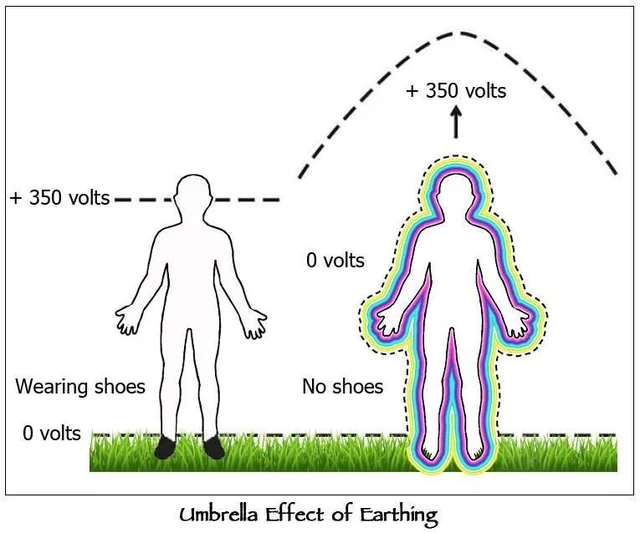
The surface of the Earth maintains a virtually limitless reservoir of free electrons, generated by thousands of lightning strikes happening globally every minute, solar radiation interacting with the ionosphere, and geochemical processes in the crust. The ground beneath your feet is a dense, negatively charged electrical field. When your bare skin contacts that surface, electron transfer occurs instantly. Your body equalizes with the Earth's charge the same way a grounding wire equalizes the charge in an electrical circuit.
This was the default state of every human body for the entire history of the species. We walked barefoot. We slept on the ground. We were in continuous electrical contact with the planet's surface, and our immune systems evolved inside that contact. The inflammatory response evolved with a built-in off-switch: the constant supply of electrons from the ground neutralizing excess free radicals after an immune response completed its job.
Then we invented rubber-soled shoes. Synthetic flooring. Elevated beds with insulated frames. We wrapped ourselves in materials that sever the electrical connection between the human body and the Earth's surface, and we did it so gradually that nobody thought to measure what we lost.
Clint Ober thought to measure it.
A retired cable television executive who understood grounding from an engineering perspective — every cable system needs a proper ground connection or the signal degrades — he looked at humans walking around in insulated shoes and asked the question nobody in medicine was asking: what happens to a biological electrical system when you cut its ground?
The research that followed is difficult to dismiss.
Thermographic imaging studies showed that grounding the body for 30 minutes produced measurable reductions in inflammation visible on thermal cameras. Blood viscosity studies — measuring how thick and clotted your blood is, a major cardiovascular risk marker — showed that earthing significantly reduced red blood cell aggregation, meaning your blood literally flows better when you're electrically connected to the ground. Cortisol studies showed that grounding during sleep normalized the cortisol curve, the 24-hour stress hormone rhythm that governs immune function, sleep quality, and metabolic regulation.
The cortisol finding alone should have made front-page news. Disrupted cortisol rhythm is connected to nearly every chronic disease pattern in modern medicine. Flattened cortisol curves show up in burnout, depression, chronic fatigue, fibromyalgia, and insulin resistance. And a simple electrical connection to the Earth's surface helped restore the natural rhythm without any pharmaceutical intervention.
What makes this hard for mainstream medicine to accept has nothing to do with the evidence. The problem is the mechanism is too simple. Modern medicine is built on molecular interventions — drugs that block specific receptors, supplements that target specific pathways, surgeries that remove specific tissues. The idea that standing barefoot on grass for 40 minutes could reduce systemic inflammation through basic electron transfer feels like it belongs in a wellness blog, not a research journal.
But electrons don't care about medical hierarchies. Charge transfer is physics. It happens whether a journal validates it or not.
The deeper layer most people miss: the modern environment didn't just disconnect us from the Earth's electrons. It added a constant positive charge. Wi-Fi routers, cell phones, power lines, synthetic clothing generating static, LED lighting, laptop chargers — we live submerged in electromagnetic fields that continuously induce voltage on the body. Without a ground connection, that voltage accumulates. You are, in a very literal electrical sense, carrying a charge your body was never designed to hold.
Earthing doesn't just "add electrons." It discharges the accumulated voltage from modern electromagnetic exposure. You're not adding something exotic to your biology. You're draining something that was never supposed to be there.
Thirty minutes. Bare feet. Grass, soil, sand, concrete — any conductive natural surface. The electron transfer begins within seconds. Measurable changes in blood chemistry appear within minutes.
The most advanced anti-inflammatory technology on Earth has been underneath your feet this entire time. It costs nothing, requires no prescription, and works through the same physics that keeps every electrical system on the planet from frying itself.
We just forgot to plug ourselves in.
I'm a cardiologist. Something just happened today that I genuinely did not see coming — and it could change the future of preventive medicine more than anything I've written about on this platform.
Midjourney — the AI company that became famous for generating images from text prompts — just announced a medical hardware division and unveiled a working prototype of a full-body scanner unlike anything that's ever existed.
It's called the Midjourney Scanner. And it works like this.
You step into a shallow pool of water. You stand on a platform that slowly descends — about two inches per second — through a ring containing roughly half a million tiny ultrasonic transducers, each the size of a grain of sand. Every one of them acts as both a speaker and a microphone, sending ultrasonic waves through your body from every angle and recording what comes back.
60 seconds later, you step out. The scan is done.
No radiation. No magnets. No claustrophobia. No IV contrast. Just sound, water, and an almost incomprehensible amount of computing power — roughly 2 petaflops processing 17 gigabytes per second of raw acoustic data — reconstructing a 3D map of your entire internal anatomy down to half a millimeter resolution.
Organs. Tissues. Blood vessels. Bones. Muscle. Fat distribution. All segmented by AI in real time.
As a cardiologist who has spent months writing about how the standard screening playbook misses the majority of future heart attacks — this is the technology I've been waiting for without knowing it existed.
Here's why this matters for the future of your heart.
Right now, getting a detailed look inside your cardiovascular system requires either a CT scan (radiation), an MRI (magnets, claustrophobia, 45-60 minutes, $1,000+), or a coronary CT angiogram (radiation, IV contrast, limited availability). These are powerful tools. I order them regularly and they save lives.
But they're reactive. You get them when something is already suspected. They're expensive. They're uncomfortable. And for most people, they happen once — maybe twice — in a lifetime.
Imagine instead: a 60-second scan with no radiation that you could repeat monthly or quarterly. Tracking cardiac structure over time. Watching body composition shift. Detecting changes in organ size, fluid distribution, or vascular architecture before symptoms ever develop. Building a longitudinal dataset of YOUR body that AI can analyze for patterns no single snapshot would reveal.
That's what Midjourney is building toward.
The company plans 50,000 scanners worldwide over six years, with capacity for a billion scans per month. The first location — the "Midjourney Spa" in San Francisco — opens at the end of 2027 with 10 scanners alongside saunas, cold plunges, and a gym. The scan costs a few dollars. The experience is designed to feel like wellness, not medicine.
The technology is built on Butterfly Network's ultrasound-on-chip platform — 40 modules per scanner — combined with Midjourney's own AI segmentation and reconstruction stack. David Holz, the founder, claims the system aims for image quality comparable to MRI in many aspects but at nearly 100x the speed with zero radiation.
Now the caveats — because I'm a physician and the caveats matter enormously.
This is a Gen 1 prototype. About a dozen people have been scanned so far. Current scan time is actually closer to 20 minutes, not 60 seconds — the system is bottlenecked by bandwidth and reconstruction algorithms. The 60-second target is aspirational for future hardware generations.
It is not FDA-cleared for diagnostic use. Midjourney is starting with body composition maps — a category below diagnostic imaging in the regulatory hierarchy. The path from "beautiful 3D body scans" to "clinically validated diagnostic tool that your cardiologist can act on" runs through years of clinical trials, comparative studies against MRI and CT gold standards, and FDA review.
No independent clinical validation has been published. The imaging claims come from Midjourney's own demonstrations. Comparative data against established modalities does not yet exist.
And the privacy implications of full-body internal scans at planetary scale — a billion scans per month — is a conversation that hasn't even started yet.
So I want to be precise. This is not ready for clinical medicine today. It may not be ready for years. Many ambitious medical hardware projects have failed in the gap between prototype and product.
But.
The fact that a working prototype exists — producing real segmented 3D anatomy from sound waves and compute alone — means the physics works. The engineering works. The question is no longer "is this possible" but "how fast can it be validated and scaled."
And if it is validated — if the resolution holds up against MRI, if the AI segmentation proves reliable, if the regulatory path clears — then what we're looking at is the most significant new imaging modality in 50 years.
For my entire career, preventive cardiology has been limited by the fact that seeing inside the body is expensive, slow, uncomfortable, and infrequent. We catch disease late because we image rarely. We image rarely because imaging is hard.
A 60-second, no-radiation, spa-based full-body scan that costs a few dollars would demolish every one of those barriers.
I've written about AI detecting inflamed arteries. About gene editing curing cholesterol. About GLP-1 drugs rewriting metabolic medicine. About cellular reprogramming reversing aging.
This is the missing piece: the ability to see inside every human body, routinely, safely, and affordably — so all of those interventions can be deployed before the disease arrives instead of after.
The company that taught AI to generate images from imagination just built a machine that generates images from the human body.
The future of medicine showed up today from the last place anyone expected.
How does concrete cure underwater, and how did the ancient Romans use this technique to construct harbors?
Modern concrete crumbles in decades when exposed to seawater. Yet, Roman harbors built 2,000 years ago actually get stronger the longer they sit underwater.
To understand why, we first have to realize that concrete doesn't harden by "drying out" in the air. Instead, it cures through a chemical reaction known as hydration. When cement is mixed with water, the two ingredients react to form microscopic crystals of calcium silicate hydrate. These crystals grow and interlock, binding sand and gravel into a solid mass. Because this process actively consumes water, concrete can cure perfectly well underwater, provided the cement is not washed away by currents before the chemical bonds have time to form.
The ancient Romans intuitively understood this chemistry and leveraged it to engineer some of the most resilient marine infrastructure the world has ever seen. Their massive harbors, breakwaters, and piers remain intact today, long outlasting our modern equivalents.
Their secret lay in a unique recipe based on volcanic ash. Roman builders sourced a specific type of ash from the Bay of Naples, known as pozzolana. To build harbor foundations, builders would construct massive wooden caissons—watertight retaining structures—and sink them into the sea. Into these forms, they packed a mixture of quicklime, pozzolana, and chunks of volcanic rock (tuff).
When seawater flooded into the mixture, it triggered a spectacular chemical event. The water reacted with the quicklime and volcanic ash in a highly exothermic pozzolanic reaction. The intense heat and alkaline environment caused the volcanic glass in the ash to dissolve. In its place, rare minerals like tobermorite and phillipsite began to crystallize.
This is where Roman marine concrete diverges from modern Portland cement. Modern concrete often deteriorates when exposed to seawater because saltwater corrodes the steel reinforcements hidden inside. Roman concrete lacked steel rebar. Instead, the continuous percolation of seawater through the concrete actively fortified the material over the centuries. The seawater continually reacted with the volcanic ash, growing new interlocking crystals that filled micro-cracks before they could spread.
By embracing the marine environment rather than fighting it, Roman architects turned the ocean into a vital ingredient. The seawater fundamentally altered the molecular structure of their concrete, transforming it from a simple building material into an artificial rock capable of withstanding millennia of crashing waves.
#archaeohistories
THE BODY MANUAL NOBODY HANDED YOU:
1. Can't fall asleep ⟶ Blink rapidly for 60 seconds. Eyes tire, brain follows.
2. Back pain from sitting ⟶ Squeeze your glutes for 30 seconds. Spine realigns itself.
3. Eyes tired from screens ⟶ Look 20 feet away for 20 seconds. Tension releases immediately.
4. Hands shaking from anxiety ⟶ Press your fingertips together hard. Nervous system calms down.
5. Headache behind your eyes ⟶ Press your tongue to the roof of your mouth. Jaw releases, pain fades.
6. Feeling nauseous ⟶ Press firmly on the inside of your wrist. Nausea signal to the brain cuts off.
7. Hiccups won't stop ⟶ Hold breath, swallow twice, exhale slowly. Diaphragm resets.
8. Mind goes blank mid-sentence ⟶ Look up and to the left. Memory retrieval speeds up instantly.
9. Ears ringing after loud noise ⟶ Cup your palms over your ears, tap the back of your skull. Ringing fades in seconds.
10. Jaw clenching from stress ⟶ Tongue flat to the roof of your mouth. Jaw cannot stay tight.
11. Lightheaded standing up ⟶ Clench your thighs before you rise. Blood pressure holds before it drops.
12. Can't stop coughing ⟶ Press your thumb on your wrist pulse point. Cough reflex weakens fast.
13. Knees aching after sitting ⟶ Walk backwards for 30 seconds. Knee compression releases in reverse.
14. Eyes twitching ⟶ Press gently on the closed eyelid for 10 seconds. Almost always stress or magnesium deficiency.
15. Waking up at 3am every night ⟶ Your liver is overloaded. Cut sugar, alcohol, late meals. It's not insomnia. It's your body asking for help.
THIS WILL SAVE YOUR LIFE ONE DAY:
1) Sudden panic attack → Touch something cold (water, phone, metal). Your brain switches from fear to safety mode.
2) Heart beating too fast → Cough 2–3 times forcefully. It resets your heart rhythm.
3) Can’t breathe properly → Put your hands on top of your head. Your lungs open up instantly.
4) Feeling dizzy → Focus on one spot and tense your legs. Blood rushes back to your brain.
5) Stuffy nose → Hold your breath and nod your head up & down slowly. Open blocked airways.
6) Sudden anxiety → Splash water on your face – it activates the calm reflex.
7) Can’t sleep → Exhale longer than you inhale (4–7 breathing). Your brain goes into sleep mode.
A 32-year-old junior doctor in Australia walked into his hospital laboratory on a Tuesday morning in July 1984, picked up a small glass beaker containing one billion live bacteria suspended in beef broth, and drank it. He had told no one in advance. He had not asked his wife. He had not asked his ethics committee. He had not asked his hospital. He had a theory that the entire global medical establishment had been treating millions of patients incorrectly for almost a century, and he had run out of other ways to prove he was right.
Three days later his mother told him his breath smelled like a corpse. Five days later he started vomiting at six in the morning. Ten days later he was endoscoped and found to have severe inflammation across the entire lining of his stomach.
He had given himself the disease he was trying to cure, in order to prove that the cure was a single course of antibiotics.
It took the medical establishment another twenty-one years to admit he was right.
His name is Barry Marshall. He won the Nobel Prize for Medicine in 2005.
I read his actual 1985 paper last night and could not stop thinking about it.
The textbook story of medicine treats stomach ulcers as a story that has always been understood. You have an ulcer, you take a course of antibiotics, you are cured. That story is true. It is also missing the part where, until almost the end of the twentieth century, this disease was considered chronic, incurable, and almost entirely caused by stress, spicy food, and personality flaws. Hundreds of millions of patients suffered with ulcers for years and decades. Tens of thousands died from complications. The entire global pharmaceutical industry built a multi-billion-dollar business selling acid-suppressing drugs that managed the symptoms while never touching the cause.
The cause was a bacterium. The cure was cheap. And one man drank the bacteria himself to prove it.
Here is the story almost nobody tells you.
In 1979, a quiet pathologist named J. Robin Warren was working at the Royal Perth Hospital in Western Australia. He was looking at biopsy slides under a microscope when he noticed something that should not have been there. Spiral-shaped bacteria, alive and active, sitting on the lining of a human stomach.
The medical world at the time was unanimous on this point. Nothing lives in the stomach. The stomach is filled with hydrochloric acid strong enough to dissolve metal. Bacteria could not survive in that environment. Every textbook said so. Every professor said so. Every pathologist who had ever looked at a stomach slide and seen something strange had assumed it was contamination.
Warren kept looking. He kept seeing it. He started photographing it. He began to suspect that what he was looking at was not contamination at all. It was a living organism that had figured out how to survive somewhere life was not supposed to exist.
For three years he could find almost no one in the hospital who would listen to him.
In 1981, a 30-year-old internal medicine trainee named Barry Marshall rotated through Warren's department. He was assigned the routine task of helping investigate twenty difficult gastrointestinal cases. Warren showed him the bacteria. Marshall, unlike everyone else in the department, did not dismiss it. He found it interesting. The two of them began a collaboration that would consume the next four years of their lives.
They biopsied one hundred patients. They cultured the tissue. Every patient with a duodenal ulcer had the bacteria. Every single one.
Marshall was 32 years old when he stood up at the 1983 Royal Australian College of Physicians meeting in Perth and presented the findings. He proposed that the spiral bacteria, now provisionally classified as Campylobacter pyloridis and later renamed Helicobacter pylori, were the actual cause of most peptic ulcers. The disease the medical world had been treating as a stress disorder for decades was an infection. It could be cured with two weeks of antibiotics.
The room laughed at him.
The senior gastroenterologists who had built their careers on the stress theory of ulcers were not interested in being told they had been wrong for thirty years. The pharmaceutical industry had just rolled out a new generation of acid-suppressing drugs called H2 blockers, beginning with Tagamet, which was on its way to becoming the best-selling drug in the world. The combined revenue of acid-suppressant drugs would peak at roughly 6 billion US dollars per year. Telling that industry their products treated the symptoms of an infection that could be cured with thirty dollars of antibiotics was not a popular position.
Marshall spent the next year trying to prove the theory with an animal model. He could not get the bacteria to infect rats. He could not get them to infect pigs. The bacteria was so well adapted to the human stomach that it apparently refused to live anywhere else. Without an animal model, the medical establishment had a perfect reason to keep dismissing him. He had no way to prove cause and effect.
In July 1984, he made a decision he later described in his Nobel lecture in language so understated it almost vanished off the page.
He decided to use himself.
The detail that should disturb every reader is what he did before he drank the bacteria.
He had himself endoscoped first. A camera went down his throat and into his stomach. The biopsy confirmed his stomach was healthy. No bacteria. No inflammation. No ulcers. He was a perfectly normal stomach in a perfectly normal 32-year-old body.
He pretreated with a single 600 milligram dose of cimetidine. This was an acid-suppressing drug intended to give the bacteria a fighting chance against his stomach's natural defenses. He did not want the experiment to fail because his acid killed the bug before it could colonize.
He took a culture from a patient with chronic dyspepsia. The patient's bacteria had been confirmed sensitive to standard antibiotics, so Marshall would be able to cure himself afterward if needed. He mixed the bacteria into about half a cup of warm beef broth. The concentration was roughly one billion live organisms per dose.
On Tuesday morning, July 12, 1984, at 10 AM, in the hospital laboratory at Fremantle Hospital in Western Australia, he drank it.
He told nobody.
He went home that evening and ate dinner with his wife and four young children. He did not tell his wife either.
For three days nothing happened. Then on the fourth day, he started to feel bloated. His appetite collapsed. He noticed that food felt strange in his stomach. His mother visited and recoiled. She told him his breath was so bad it smelled like something had died inside him. He brushed his teeth. The smell did not go away.
On day five he started vomiting. Clear watery liquid, every morning, around six AM, with no acid in it at all. The acid was missing because his stomach acid production had collapsed. The bacteria had colonized so successfully that they had shut down the very acid environment they had supposedly been incapable of surviving in.
He went back to the endoscopy lab on day ten and had another camera sent down his throat.
The footage was unmistakable. His stomach lining was inflamed across its entire surface. The biopsies showed Helicobacter pylori everywhere. Severe active gastritis. The exact pattern he had seen in hundreds of patient samples over the previous three years.
He had given himself, in ten days, the early stage of the disease the entire medical establishment had been telling him for years could not possibly be caused by a bacterium.
He still did not tell his wife.
She found out when he came home and told her over dinner. According to multiple later interviews, her response was something close to "you idiot." She made him take antibiotics immediately.
The paper appeared in the Medical Journal of Australia in 1985. It was three short paragraphs. It is now one of the most cited articles in the journal's history. It described, in dry clinical prose, a single subject who had ingested a known bacterial culture and developed the predicted clinical syndrome within the predicted timeline. The case study was one person. There was no control group. The methodology was strictly speaking against every modern principle of clinical research. The data was undeniable.
The medical world remained skeptical for another decade.
The most uncomfortable line in the entire historical record is what happened during those ten years. Senior gastroenterologists publicly mocked Marshall at conferences. He was passed over for academic positions. His career stalled. Patients across the world continued to be told their ulcers were caused by stress, spicy food, or character flaws. They continued to be prescribed acid-suppressing drugs for indefinite periods. Many of them progressed from ulcers to stomach cancer because no one was treating the underlying infection.
H. pylori is now understood to be one of the most common bacterial infections in human history. It currently colonizes roughly half of the entire global population. In countries with weaker sanitation it colonizes well over 80 percent. It is the leading cause of stomach cancer in the world, which is itself the fifth most common cancer in humans. Every case of stomach cancer that has occurred in the twenty years between Marshall's discovery and the medical establishment's acceptance of it could potentially have been prevented by a two-week course of antibiotics that already existed.
The estimate of how many lives have been saved since the treatment finally became standard is in the hundreds of millions.
By the late 1990s, large clinical trials in the United States, Europe, and Asia had replicated his findings beyond any reasonable dispute. The National Institutes of Health convened a consensus panel in 1994 and officially endorsed H. pylori as the cause of most peptic ulcers. Treatment guidelines began to change. By the early 2000s, eradication therapy with antibiotics had become the global standard of care.
On October 3, 2005, the Nobel Assembly at the Karolinska Institute in Stockholm announced that the Nobel Prize in Physiology or Medicine had been awarded jointly to J. Robin Warren and Barry Marshall.
Marshall was 54 years old. Twenty-one years had passed since the morning he drank the bacteria.
In his Nobel lecture he showed a slide that has since become famous in medical history circles. It was a comic he had drawn of himself standing in the laboratory holding the beaker, with his colleague Neil Noakes saying "Dr. Marshall you're crazy."
He included it because by the time he won the Nobel Prize, he had been called crazy professionally for so long that he had decided to make peace with it.
The most uncomfortable line in the entire historical record is the one Marshall himself has repeated in interviews many times since.
He said the medical establishment did not reject his theory because the evidence was weak. They rejected it because accepting it required admitting that they had been treating a generation of patients incorrectly, and that an entire pharmaceutical industry had been profiting from the management of a curable infection. The financial and reputational cost of being wrong was high enough that they preferred to assume the data was somehow wrong instead.
The Semmelweis reflex applies to the highest levels of modern medicine in exactly the same way it applied to nineteenth-century obstetrics.
Walk into any gastroenterology clinic today. Ask the doctors what causes most peptic ulcers.
All of them will say H. pylori.
Then ask them who proved it.
A surprising number will say his name.
Some of them will tell you the story. The 32-year-old junior doctor in Australia who could not get a senior committee to take him seriously. The Tuesday morning in July 1984. The beaker of beef broth in his hand. The mother who recoiled at his breath. The wife who called him an idiot. The decade of ridicule. The Nobel Prize.
The detail almost nobody hears in those retellings is the part of the story that should be carved into every medical school wall.
Marshall has been asked many times whether he was scared the morning he drank the bacteria. He has always said the same thing. He was not scared of dying. He was scared of being right. He knew, walking into the lab that Tuesday morning, that if his theory was correct, then the medical establishment had spent the previous half century misdiagnosing one of the most common diseases on earth. The implication was so embarrassing that the easier outcome, professionally, was for his experiment to fail.
He was hoping it would fail.
He thought he might survive being wrong.
He was not sure how the world would survive him being right.
He was 32 years old, with a wife and four children at home. He drank a billion bacteria anyway.
The thing he proved is now in every textbook.
The medicine he made obsolete is still on every pharmacy shelf, sold mostly to people who do not need it.
The infection he identified is still inside roughly half the human beings alive.
Most of them have never been tested.
Walk into the kitchen tomorrow morning. Make yourself a cup of coffee. Notice the shelf above your sink. Notice the bottle of antacids your parents kept on it. Notice that nobody ever told them that the symptom they were medicating was almost certainly an infection, and that the infection had a treatment that took two weeks and was almost always permanent.
He drank the bacteria so they would not have to.
Most of them never thanked him.
Most of them still do not know his name.