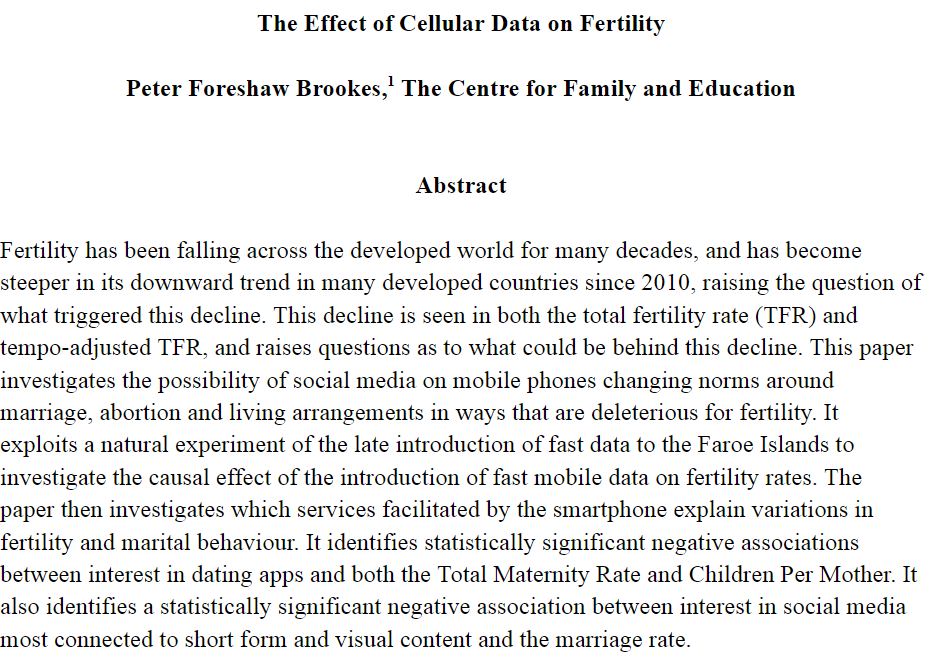
Two working papers in the past month ascribed fertility decline to the smartphone, but they couldn't tell us which aspect of smartphones do it. In this paper, I find that interest in mobile dating apps, unlike social media, leads to an immediate fall in fertility outcomes.
TL;DR: Let your teenager get a little reckless tomorrow night--bottle rockets, blown curfew, minor chaos. Kids who never take risks don't magically learn to handle real ones at 18. @CarterSkeel's takeaway: we need more of this, not less.
Literally all three of these are wrong.
Building hasn’t taken off in the UK because the British right has not embraced investment.
That’s it. American YIMBYism kinda works because those YIMBYs are often left, they have pro-investment allies on the right.
I wrote for @FamStudies on American Pie, young adult risk aversion, and reclaiming the promise and character of America for the next 250 years...
Link below!
Each additional sibling you grow up with is associated with a slightly lower risk of your own eventual divorce.
The proposed mechanism is that siblings are practice for spouses.
You get good at negotiating, sharing, losing, and repairing relationships with people you can't leave.
"Front porches foster a sense of belonging, connection, communication, and responsibility toward the broader community." ~ John Cuddeback @FamStudies https://t.co/tgBoIvUjNV
This overstates the impact on women- within 10yrs, there was no significant effect on the proportion of women who divorced. So a more accurate picture is:
-Winning money strengthens men's marriages
-Winning money has no effect on women's marriages, except timing of dissolution
Men who win the lottery become more likely to marry and less likely to divorce.
Women who win become more likely to divorce, in the years right after the win.
Random money strengthens men's marriages and dissolves women's.
It's one of the only ways to do a randomized study on income, and it still shows an effect.
“There is still a lingering assumption particularly in the professional class that [you shouldn’t] have too many kids if you want to be responsible,” he says.
“People haven’t updated their software about the ideas around overpopulation. It’s very clearly not the case. There’s no chance of us spiralling out of control — the new challenge is how do we deal with population decline in the long term.”
-- @theandrewglover against anti-natalism
https://t.co/xtlmkyTfXD
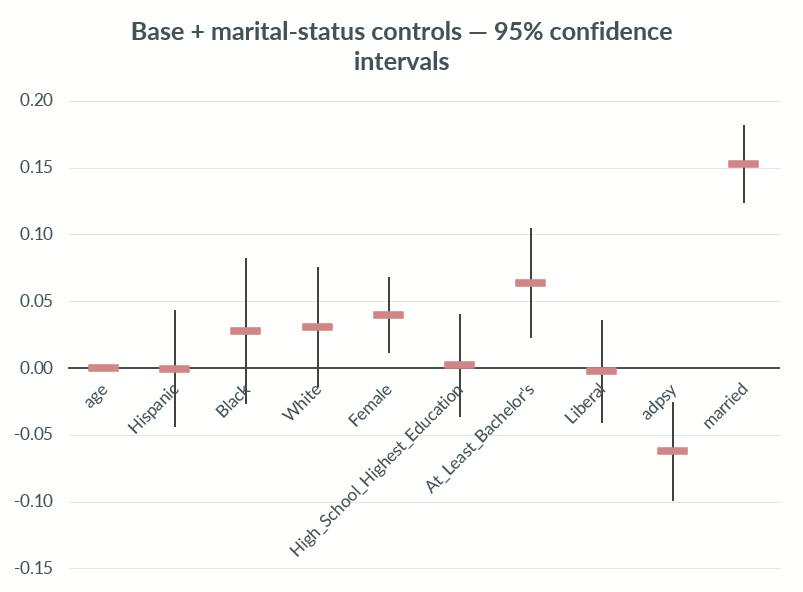
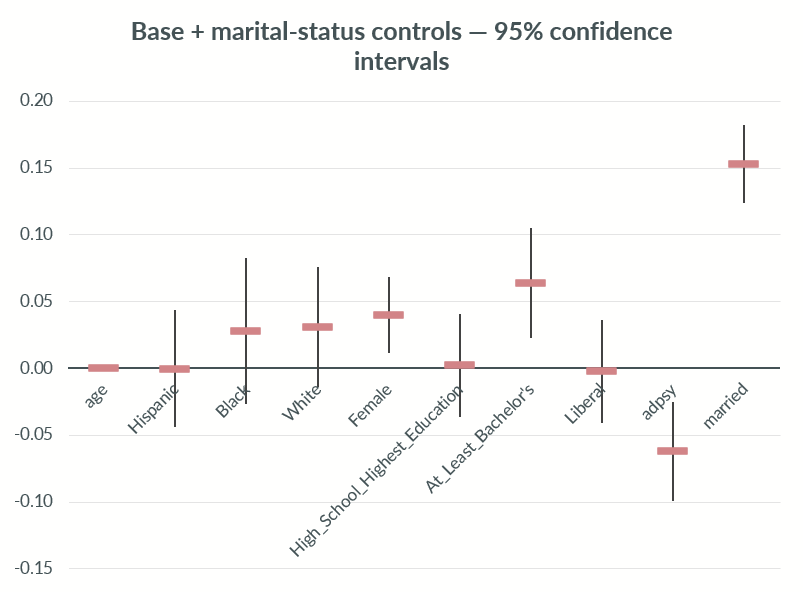
@RichardHanania says liberal-happiness gap is accounted for by mental health culture. My analysis of GSS data suggests it's actually a marriage/singlehood happiness gap.🧵
But controls for marriage make the liberal happiness association near-zero. The liberal happiness gap is borne of the fact that liberals are young people yet to create intimate human connection and responsibility—yet to get married and have children
Teaser: the introduction of the contraceptive pill preceded a rise in the terms 'romantic relationship' and the German similar term 'Liebesbeziehung'. Did the contraceptive pill invent the modern 'romantic relationship'?