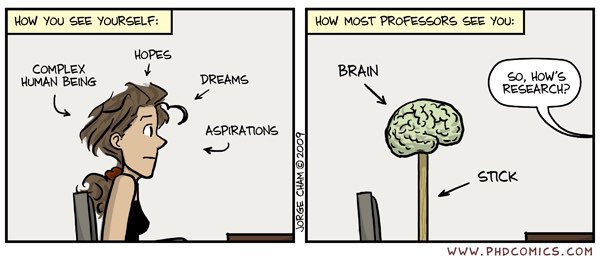
Professors should not serve as punchbags for the university admins.
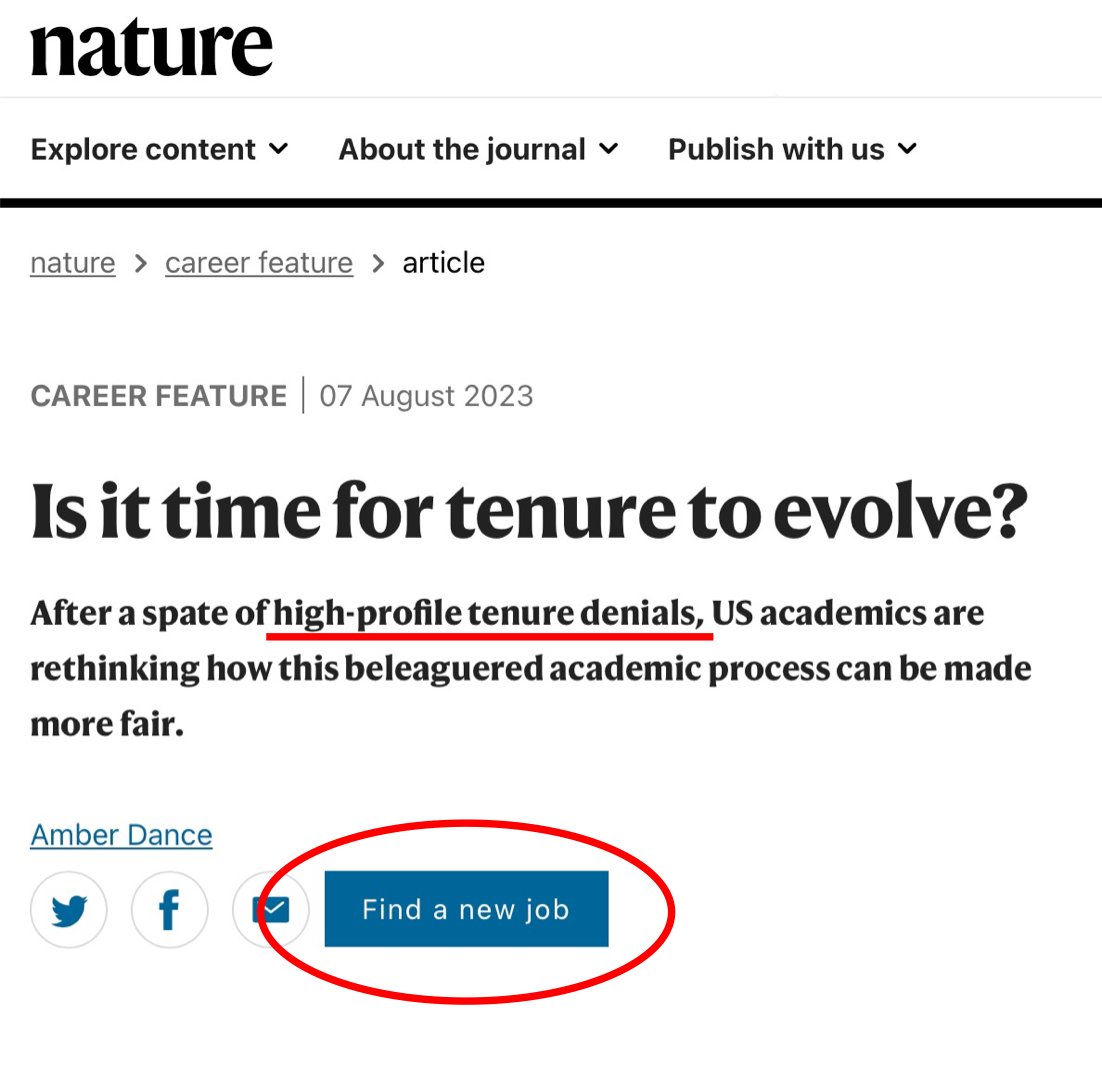
A story from this article:
- Tolu Odumosu submitted for tenure after 5 years at the University of Virginia (Charlottesville). His application was highly supported by the department, but the school rejected it.
Why? Because “he hadn’t published any single-author books” (the requirement he never heard of)
▫️
Tenure requirements are becoming more life-draining than before.
The main purposes behind tenure requirements are:
- Universities want faculty members to secure funding, which generates overheads. But funding is hard to get! So, your profile MUST stand out.
- Departments compete for ranking. They don’t want a faculty who is not great.
▫️
As a result:
- Fewer people want to pursue a tenure-track academic career these days.
- Young faculties experience enormous stress under tenure pressure. This hits their personal life really hard.
- Students suffer from overwork and lack of mentoring because (in particular) their advisors are under pressure themselves. I do not defend such faculties, but this seems to be a big contributing factor.
- Risky #research is postponed “until after tenure” (and often never pursued), resulting in fewer discoveries.
▫️
My personal opinion:
1. Yes, tenure by itself can give you freedom. However, I don’t see many associate professors suddenly leaving their comfort zone and going into risky research after getting tenured. This prompts the question - what does this freedom pertain to? (a provocative thought)
2. Tenure track is often turned into a rat race. This makes everyone miserable. Students, postdocs, faculties. The requirements MUST be lessened. It’s basically exploitation.
Personally, I am not on a tenure track. And I don’t care if I am given tenure or not.
▫️
With this in mind, let me recite another story form this article:
Columbia University had been trying to GIVE tenure to David Helfand for nearly FOUR decades. Each time, the astronomer said “no thanks”.
Why? “Tenure does more to suppress academic freedom of those who don’t have it”. - he said.
(He was on five-year contracts. However, in July 2022, the provost refused to give him a new contract, so he got de facto tenure.)
▫️
The point is:
❗Departments should lessen TT requirements. Excessive competition, ranking and quantities is not why we go into science. We're not here to do business.
❗Tenure has been essential to academia. But fierce competition is not.
#AcademicTwitter #AcademicChatter
DO interview your potential advisor if you apply for a PhD or postdoc.
This can save you years of pain, lost dreams and wasted time.
❗ Most students are focused on receiving the offer. But this is the biggest mistake one can make when looking for a position.
▫️
NOT every lab is friendly and has a good mentor in charge. In fact, most professors don’t know how to mentor (as mentorship is not prioritized in academia).
AFTER you get an offer, you can avoid possible problems during your PhD/postdoc through this:
1️⃣ Interview your advisor about the approaches and opinion on:
1. Research advising (how your advisor understands it and how it’s done in the group).
2. Mentoring and personal development during PhD/postdoc.
3. Collaboration - how they do it and what role students/postdocs play in it.
4. Development of your independence and confidence in research.
5. Your participation in conferences and workshops (how often and which types of conferences).
6. How they prepare research publications – authorship, quality, time per manuscript, contributions, etc.
.
2️⃣ Make sure you can talk to the current students one on one (online or in person):
1. Ask about the group culture and support from the advisor
2. Hear their opinion on publication practices and conferences
Ultimately, don’t leave until you understand how you can fit in this group.
.
3️⃣ Talk to alumni (at least 3-4 people):
1. Check out the advisor’s website and find a list of alumni.
2. Google the names of those who went into academia and industry (to hear both sides).
3. Reach out via email or LinkedIn, explain your intentions and politely ask for a quick call.
.
🔴 Why is it important?
Because your advisor is the ONE who can shape your professional skills, motivation and perception of science.
Because the right mentor FORGES your critical thinking and vision.
And a careful search of such an advisor is the starting point.
#AcademicTwitter #AcademicChatter #phdvoice
A simple note-taking technique that helped me:
• Finish my dissertation in 12 months
• Publish four single-authored journal articles during my PhD
I call it "Right for Writing, Left for Thinking."
Here's how it works:
The University of Oxford has held its position as the leading academic institution in the UK for generating spinout companies, according to a new report by Beauhurst.
More info ⬇️
https://t.co/J5mL78NYA0
New Policy Enables Expatriate PhD to Get a green Cards IMMEDIATELY!
Got a PhD? Move to Shanghai and immediately qualify for a Chinese green card!
#China#Immigrants
China's education system has driven the economic miracle.
In 1986, the Chinese government passed a compulsory education law, making nine years of education mandatory for all Chinese children. Today, the Ministry of Education estimates that above 99 percent of the school-age children have received universal nine-year basic education.
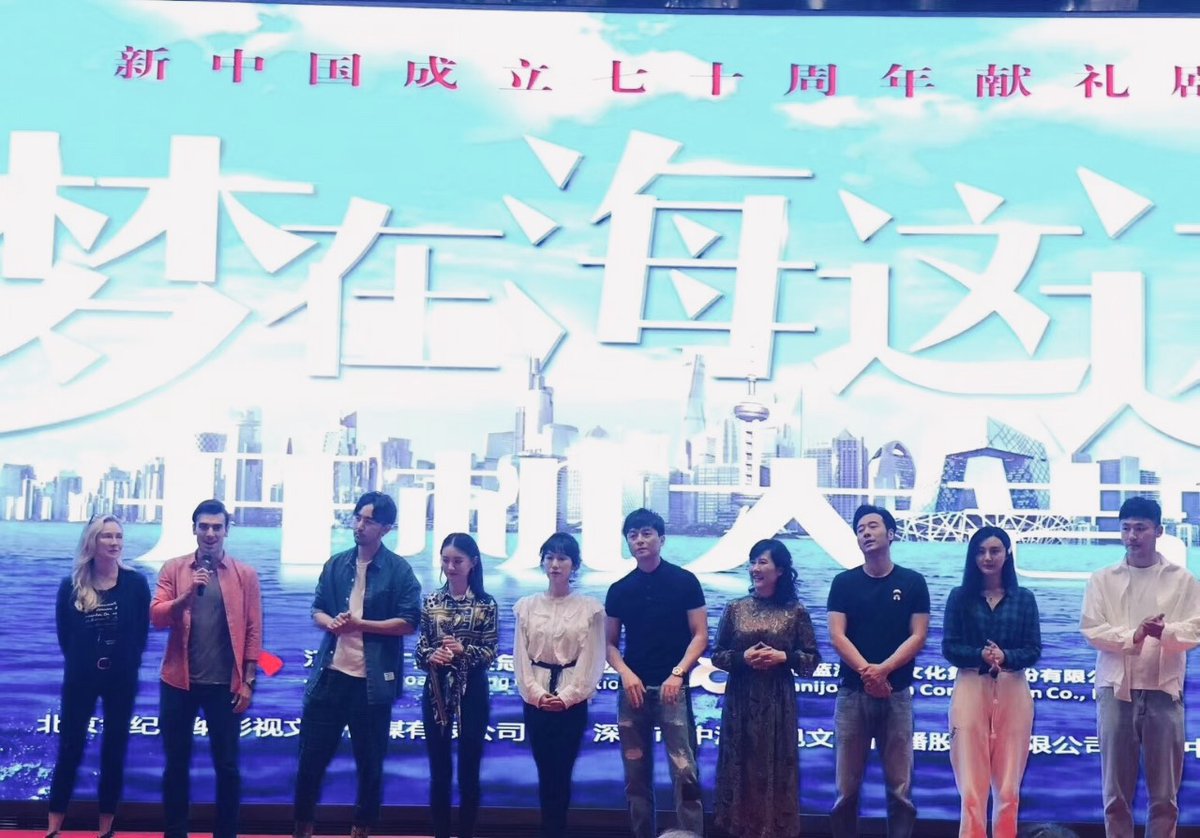
In 2019 I spent months filming a TV drama series called ‘The Chinese Dream’ 梦在海这边. We filmed in Nanjing and Suzhou at various university campuses.
The story line had to do with a group of Chinese studying overseas in the 1980s. My role was to play a top-level professor at at top university in the US who was very demanding and wanted the best for her students.
In 1978, Deng Xiaoping made a strategic decision to send 3,000 students and scholars from China overseas each year to further their educations. These 3000 students were the best and the brightest and it was very competitive to get a spot to go overseas.
The TV drama revolved around these earliest students in the US, their trails and tribulations, their grit and determination to succeed, and their success in securing degrees. These students were haigui 海归 and returned to China to set up successful companies in their chosen fields.
The literal translation of the title 梦在海这边 means ‘dream of this side of the sea’.
玉不琢,不成器 (Yù bù zhuó, bù chéng qì) – One cannot become useful without being educated.
Literally, this old saying means “If a jade is not cut and polished, it can’t be made into anything.” So, training and discipline in education are necessary for proper bringing up children.
According to the World Bank, the literacy rate in China increased from 65.5 percent in 1982 to 96.8 percent in 2018, with the global average rate being 86.3 percent. This is another extraordinary achievement. In 2019, China spent 5.01 trillion yuan education, which is 8.74 percent higher than the year before.
China now has over 2,900 universities and colleges. It has also become popular for international students, with over 500,000 international students studying in the country. These international students are attracted to China's education system because of its high academic standards, world-class facilities, and affordable tuition fees.
I know this to be true. The universities that I have visited are modern and have amazing facilities. And it’s not just the universities, primary and secondary schools all across China are modern with large sports fields with energetic and active students. My own kids went to some of these schools.
Even back in 1986 when travelling in China, I met many overseas students mostly from African countries, all fluent in Mandarin.
I’ve heard that China also offers opportunities for post-graduation work and immigration for international students, making it an attractive option for those seeking to launch their careers in the country.
Something to ponder, on which side of the sea will dreams become reality.