A Stanford neuroscientist said something on his podcast that most adults do not want to hear.
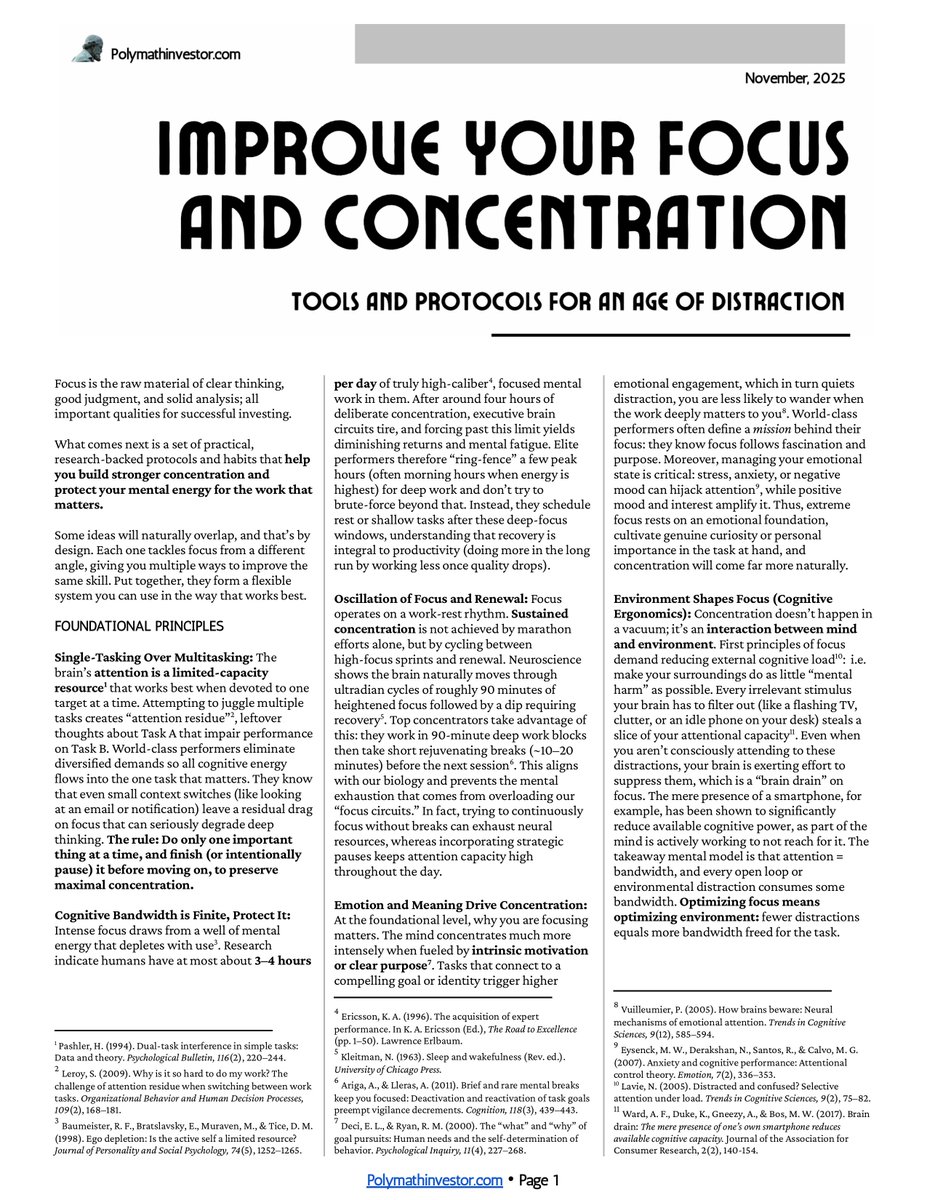
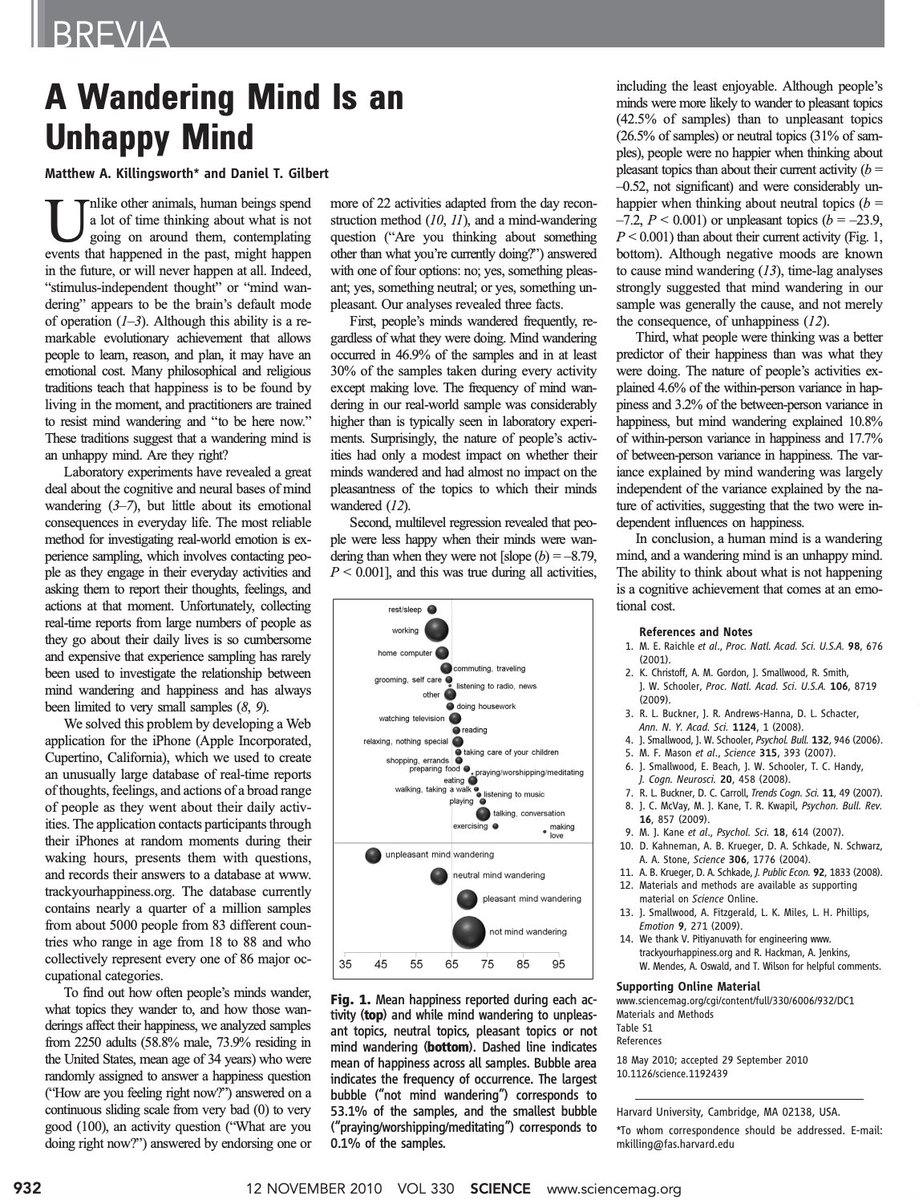
Heavy phone use can cause adult ADHD in people who never had it.
The fix takes 30 days. It costs nothing. Almost no one will try it.
1/ The dopamine reset most adults need.
Spend around 10–30 minutes a day visualizing a version of yourself that you are deliberately trying to build. Do it when your mind is already calm, especially in the evening or just before sleep, because the mind accepts imagery more easily when it is not being pulled in different directions.
The basic idea is simple. The brain treats repeated internal experience as something important. When a certain kind of situation is lived again and again in imagination, with enough detail and emotional weight, it starts to lose its “imagined” quality and becomes something your mind recognizes as familiar territory.
And what becomes familiar stops feeling impossible.
Old patterns weaken in this process not because you fight them directly, but because you stop feeding them the same mental rehearsal. At the same time, new patterns begin to stabilize because they are being repeatedly experienced internally before they ever exist externally.
Start by settling your body. Slow breathing. Less tension in the face, shoulders, stomach. You are not trying to force anything, you are just lowering internal noise.
Then choose one specific scene. Not an abstract goal. A moment. Something you can step into mentally.
If it is health, do not think “I want to be healthy,” instead see yourself moving through a normal day with physical ease, walking without effort, breathing clearly, feeling your body light and responsive.
If it is confidence or success, see yourself in a real situation where you would normally hesitate, but now you speak without that hesitation, you are steady, direct, and things unfold without internal resistance.
If it is discipline, see yourself already inside the routine, doing the work without negotiation, as if it is simply what you do.
Always stay in first person. Through your own eyes.
What is directly in front of you. What is under your feet. The texture of the environment. The light in the space. The small details your attention would normally skip.
Then sound. The way voices actually enter the space. The rhythm of your breathing. Any background noise that belongs to that environment.
Then physical sensation. The weight of your body. Temperature on the skin. The sense of movement. The way you occupy space when you are not resisting yourself.
Emotionally, you are not trying to force excitement. You are allowing a quieter set of states to appear. Relief that things are simple. A sense of “this is already how I operate.” A quiet internal stability that does not need justification.
You are not building a fantasy. You are rehearsing familiarity.
At the end, stop adding detail and just remain in the general felt sense of it for a short moment, as if your mind has already accepted it as normal.
Let that feeling continue lightly as you move into the rest of your day.
Repeat it often enough that the scene stops feeling like something you are trying to reach, and starts feeling like something your mind already knows how to do.
Naval and Andrew Huberman changed my life.
I watched hundreds of their videos in the last years.
Here are the 20 best lessons I learned that will change your life:
There's a gap between who you are and who you know you could be.
Every morning they wake up optimistic.
The right things are effortless. They respect themselves deeply, and that respect makes them immune to bad habits.
There's a deep self-trust that knows that whatever happens, they'll figure it out. This belief eliminates fake pressure.
Before challenges, their mind naturally replays memories of past success.
Proof that you already know how to do this.
Life becomes an unfolding. Anything could happen anytime.
They walk through their days in a constant state of appreciating the magic of being here.
Who they are, what they believe, it sits at the centre of their chest. Certain in themselves.
You hear it in the firmness of their tone.
Just a deep comfort that you are in an experience and allowed to live it.
Their certainty in who they are submits the uncertainty of life.
Can you remember what that feels like?
Moments where everything clicked.
Where you surprised yourself.
Where you thought why can't I be like this all the time?
You can.
You don't have to pretend. Or perform. Or become someone you're not.
This person is you.
And perhaps you're beginning to remember the times you've already been them.
This is what I teach you to rebuild
Steven Adams sharing the technique he uses for helping with self-doubt…
“I write down how I feel… the raw emotions. I stop, re-read it and respond in a different colour. The one with the raw emotion I imagine as a 10 year-old Steven. My response is an adult Steven… it’s like I’m giving advice to a younger Steven”
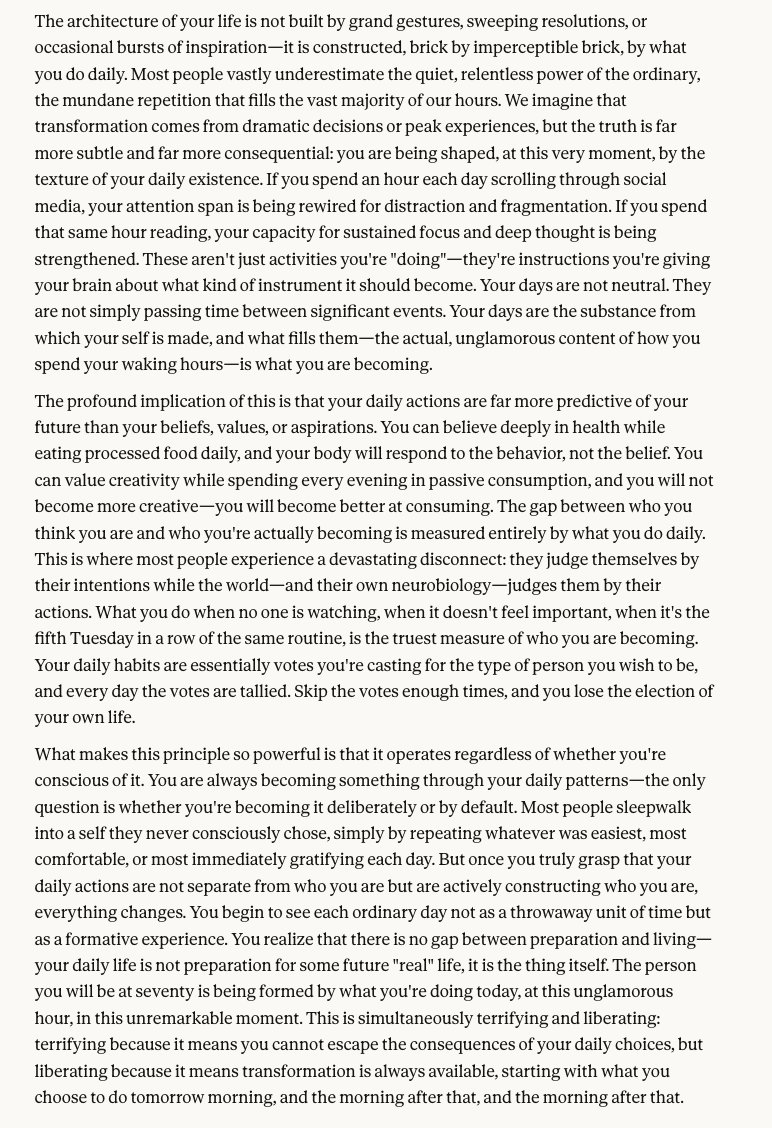
Repetition rewires your brain.
Repetition rewires your brain.
Repetition rewires your brain.
Repetition rewires your brain.
Repetition rewires your brain.
So choose carefully what you repeat.
A man spends 50 years teaching at MIT.
He knows his time is running out.
So he records one last lecture — everything he knows, distilled into a single hour.
He died 5 months later.
This is that lecture.
The most important hour you'll watch this week. 👇
Bookmark it for later
EVERY TIME YOU ACCEPTED A SALARY OR WALKED INTO A NEGOTIATION THE OTHER PERSON WAS RUNNING GAME THEORY IN THEIR HEAD.
You were guessing.
Game Theory is the mathematical science of strategic decision-making.
Every salary negotiation. Every pricing conversation. Every partnership deal. Every time two people want different things and have to reach an outcome.
The person who understands Game Theory sees the entire structure of the situation.
The person who does not is just hoping.
Yale Professor Ben Polak taught this subject for decades.
MBAs pay $150,000 to sit in rooms where this material is taught.
Yale posted his full lecture series for free.
Here is what understanding Game Theory actually changes:
You stop reacting and start anticipating.
You understand why the first offer in any negotiation anchors everything that follows.
You know when to cooperate and when to defect.
You see dominant strategies before the other person plays them.
You understand why rational people make decisions that look irrational from the outside.
You stop being surprised by outcomes you could have predicted.
The people running companies, managing funds, and closing the biggest deals in the world are not smarter than you.
They just learned a framework for strategic thinking that most people never encounter outside of a $150,000 degree.
One hour.
Free.
From Yale.
Bookmark this before you walk into your next negotiation.
Follow @cyrilXBT for more resources that build real world leverage.
This is the frequency of https://t.co/BazwUY2KVd calms your mind and blocks negative https://t.co/wksbWomyrC this video so you can listen to it when you need it.
Andrew Huberman says your brain has an insatiable appetite for short-form video.
It will consume it endlessly without ever feeling full.
That's because short-form video triggers the same dopamine loop that makes gambling addictive—onstant novelty, constant reward, no natural stopping point.
It literally hijacks your brain system.
His advice:
"The moment you forget time and it's sucking you in — it needs to go back in the box."
— Andrew Huberman on TBPN (@tbpn)
Alia Crum is a Stanford psychologist who proved stress isn't killing you — your beliefs about it are.
On Huberman Lab, she revealed 7 "normal" habits that wreck your sleep, mood, and nervous system:
1) Trying to "manage" your stress.