Multipotentialite ya Mo(ba)dimo:👨🏽💻Techno| 📚Scholar| 🚀Changemaker. 🌍WEF Global Shaper: @GShapers_JHB. 👨🏽🎓MA’19 (Cum laude), MBA’22, currently PhD’ing
Steve Biko was 30 years old when he died. Frantz Fanon was 36 at his death. At 30, Biko had already comprehensively developed the entire ideational structure/paradigm that underpins Black Consciousness Philosophy, as we know it today. At 36 Fanon had authored several books and essays, two of which are seminal texts in decolonial theory/literature, as we know it today. Jabulani Nobleman Nxumalo was 35 when he died in 1991, and was only 32 years old when his iconic book was published: "Gatsha Buthelezi - Chief with a Double Agenda" (the scathing critique of the IFP and its leadership). Nxumalo's polemical essays, although largely uncited, shaped much of the SACP's early thinking on racial capitalism, Black Marxism, and their theories as regards the relationship between capitalism and colonial disturbance. Books and writing aside, Kaizer Motaung was only 26 years old when he established Kaizer Chiefs Football Club in 1970 - it has grown to become the biggest brand in South Africa, and is one of the very few successful institutions that were established and owned 100% by Black people. Now back to books and writing; Toni Morrison lived longer, she was 88 when she died in 2019. But, she was 39 when she submitted the manuscript of her first novel to be published; she was considered a late bloomer, even though she was still in her 30s. Bessie Head was 48 years old when she died, but was only 31 years old when her now world-acclaimed novel was published: "When Rain Clouds Gather". What about Nadine Gordimer? Almost like Morrison, she also lived a long life; she was 90 when she died in 2014. She was only 35 when her iconic novel, "A World of Strangers" was published in 1958. She continued writing politically subversive books, such that in 1976 the white racist government banned her book: "The Late Bourgeois World", which was published in 1966.
What are 30+ year olds thinking/reading/writing in 2026? What are we doing ngempela? 🤔 I wonder! (I'm not excluding myself here. At all)
***Happy Youth Month to all the young people of South Africa! 🙃
Michelle Obama just delivered one of the best speeches I’ve ever heard. She upheld her husband’s legacy, defended the dignity of all people, appealed to our better angels, & reminded us of the America that we could be.
What a contrast to the depravity occupying the White House.
Maria Popova is famous for her personal blog, The Marginalian, where she's published more than six million words.
All the nights I've spent reading her writing were like an entry point into intellectual curiosity. She's introduced me to more writers and ideas than just about anybody, and this conversation is about how she does it.
Timestamps:
00:00 Introduction
00:37 Why writers should visit archives
04:39 Lessons from reading diaries
09:41 Letters vs diaries
11:35 Presence over productivity
18:30 How language shapes thought
19:48 Why Maria started reading poetry
36:46 Why college failed her
39:58 Reading to survive
41:41 Why epiphanies don’t stick
43:57 Thoughts on famous quotes
47:32 Why AI can never make art
53:10 Stop calling it content
I've shared the full interview with Maria Popova below. If you'd rather watch it on YouTube, or listen on Apple / Spotify, check out the reply tweets.
Because just like Silicon Valley, our story is not only about code and apps. It is about identity, resilience, and the shaping of an ecosystem that could stand as one of the most important on the continent and in the world.
If we don’t tell these stories, they risk being erased or only half-told. And history shows us that silence leaves space for others to narrate on our behalf often missing the depth, the context, and the texture of the journey. South Africa’s tech story deserves its chroniclers..
.next time you buy groceries on the Checkers 60x60 app, remember that the tech infrastructure was built by @donnyvaloyi and team at @Zulzi_SA. Earlier versions of Zulzi started at Wits selling used books. One of them most gifted Black tech founders in SA. 👏🏾💪🏿👌🏻
Voices who will ensure that when future generations look back, they will not only see the giants who built but also understand the conditions, the ingenuity, and the spirit of a people who dared to innovate...
@tshidi_lee you were EXCELLENT here! Really sizzling. Not just your arguments, but your delivery and demeanour. You read the room and outplayed the anchor on his home-ground. Well done.
I think overall, the RSA delegation did well. There was NEVER not going to be theatrics. Trump side changed schedule, ambush was set but overall, it was OK. PS... You lose Trump when you say, "We need your help." SA delegates must emphasise economic benefits of investing in partnerships.
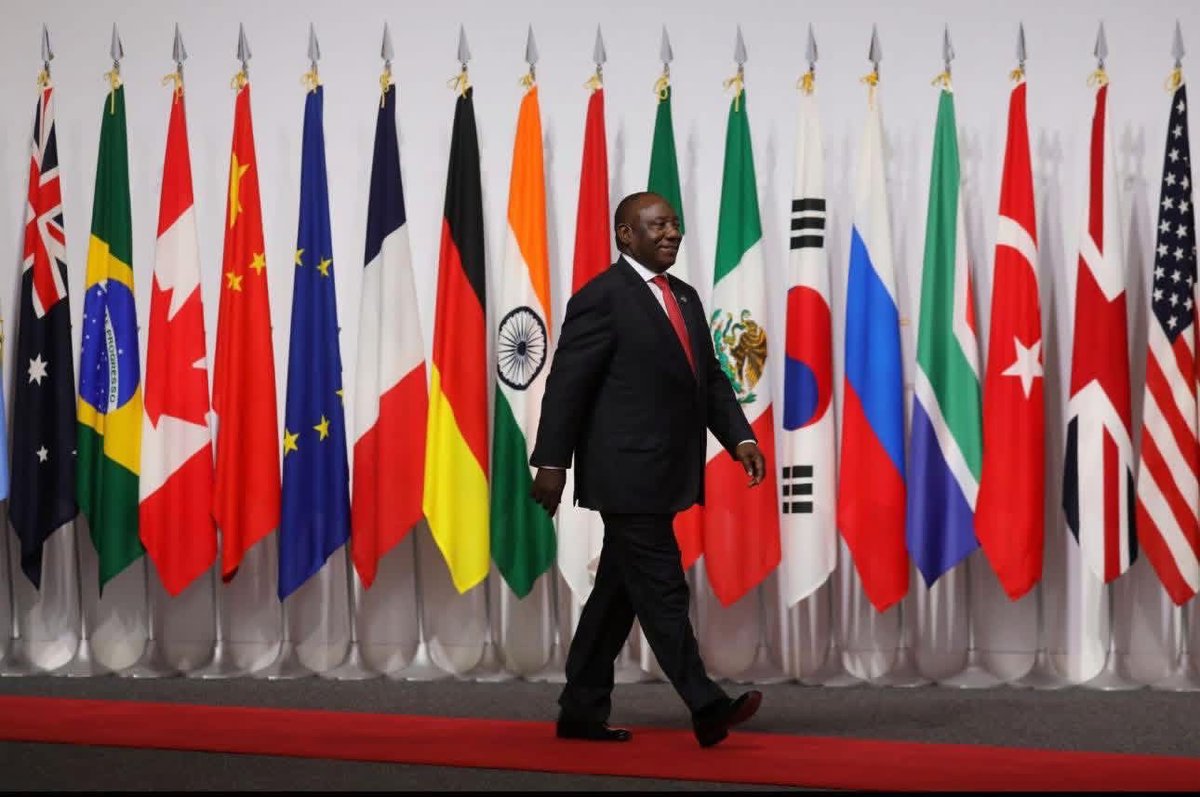
We must town down the pageantry. Don’t centre “access.” Centre the work. Show a confident, self-assured president engaged on behalf of a capable, strategic nation. Because that’s the only way to change narrative.
I fully agree with @RediTlhabi Political imagery isn’t just aesthetic it’s strategic. In Washington, optics are narrative.
This isn’t about dulling pride it’s about projecting purpose. What you post frames the posture of a nation. Less “tourist awe,” more “statesman at work.”
Dear @GovernmentZA communications teams accompanying @CyrilRamaphosa and ministers. Please study the images posted by Carney, Macron and Steimer teams. They depict seriousness & purpose, not pageantry & elaborate displays. Not "look at me at the WH" but "a day at work."
Our counterparts abroad understand this: seriousness in tone, composition, and symbolism. A social media protocol shouldn’t be optional in this era of screenshot diplomacy. Every frame is a message.