Protocol mechanics: Custody guarantees
Graduation liquidity is locked forever. The custody contract holds no primitive capable of transferring a token or a position, no withdrawal, no rescue, no admin path, for anyone including PHERA. Anyone may permissionlessly compound the locked positions' earned fees back into the same positions, growing the locked floor over time.
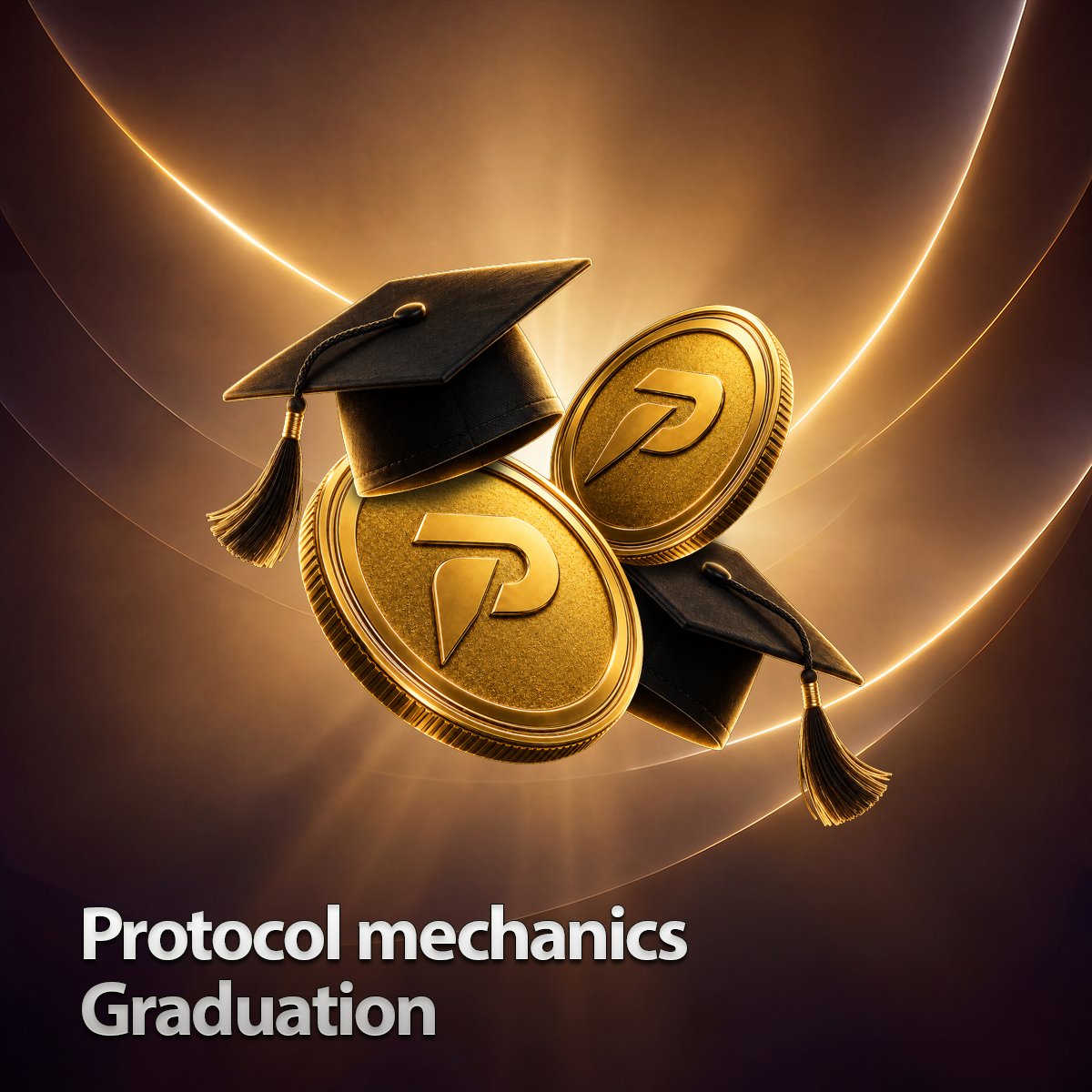
Protocol mechanics: Graduation
The buy that crosses the target triggers graduation inside the same transaction: curve trading closes, the pool is created and initialized at the curve's final price, and the seed positions are minted directly into permanent custody. There is no migration window, no manual step, and no state in which the market exists on neither venue. If any part fails, the entire transaction reverts and the curve keeps trading.
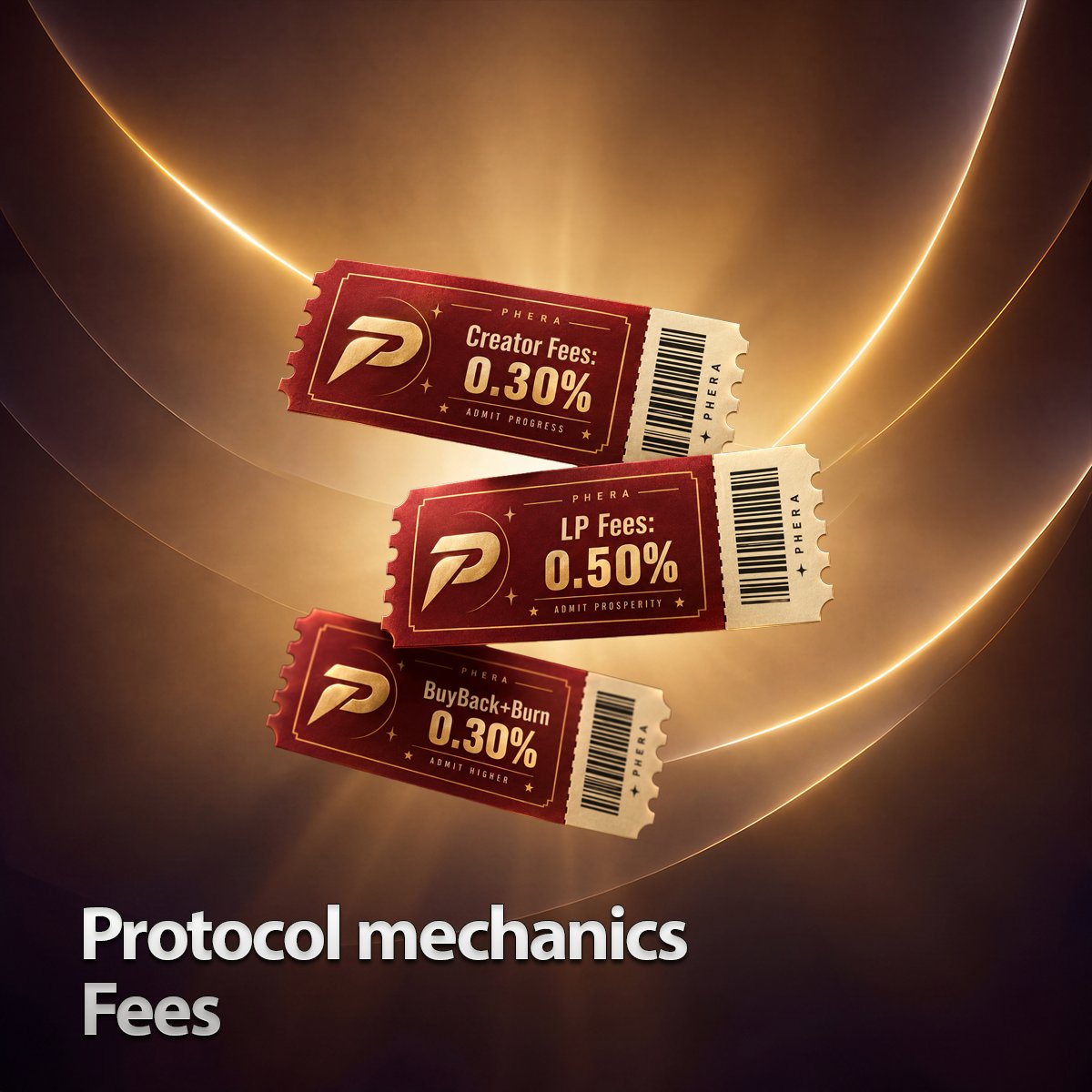
Protocol mechanics: Fees
The creator fixes the total fee and the creator/LP split at launch; nothing about a launch's economics can change afterwards. A creator may irreversibly redirect their entire fee share to an automated BuyBack + Burn, once chosen, the creator can never claim those fees; they only ever buy and burn the token.
An optional anti-sniper shield (chosen at launch, immutable) applies a surcharge to public buys in the opening seconds, decaying from 40% to the base fee within 6 seconds. The surcharge never accrues to the creator or the treasury, it funds the launch's own locked liquidity and the protocol's insurance reserve.
Protocol mechanics: The curve
Fees don't count toward graduation. Only real money from net buys does. You can trade a token in circles all day and it won't get one step closer to the pool.
75% of the supply sells on the curve. The other 25% seeds the pool it graduates into, the same value on every pair, 2 ETH-equivalent in whatever you paired against.
Protocol mechanics: Lifecycle
Every launch mints a fixed supply of 10,000 tokens (18 decimals, minted once, plain ERC-20, no taxes, no hooks, no rebasing) and funds its bonding curve with the entire supply in the same transaction.
The creator may include a first purchase in that transaction, capped at 5% of supply; because creation and purchase are atomic, no other transaction can execute between them.
V2 is on the way.
Buys and sells. Not just buys.
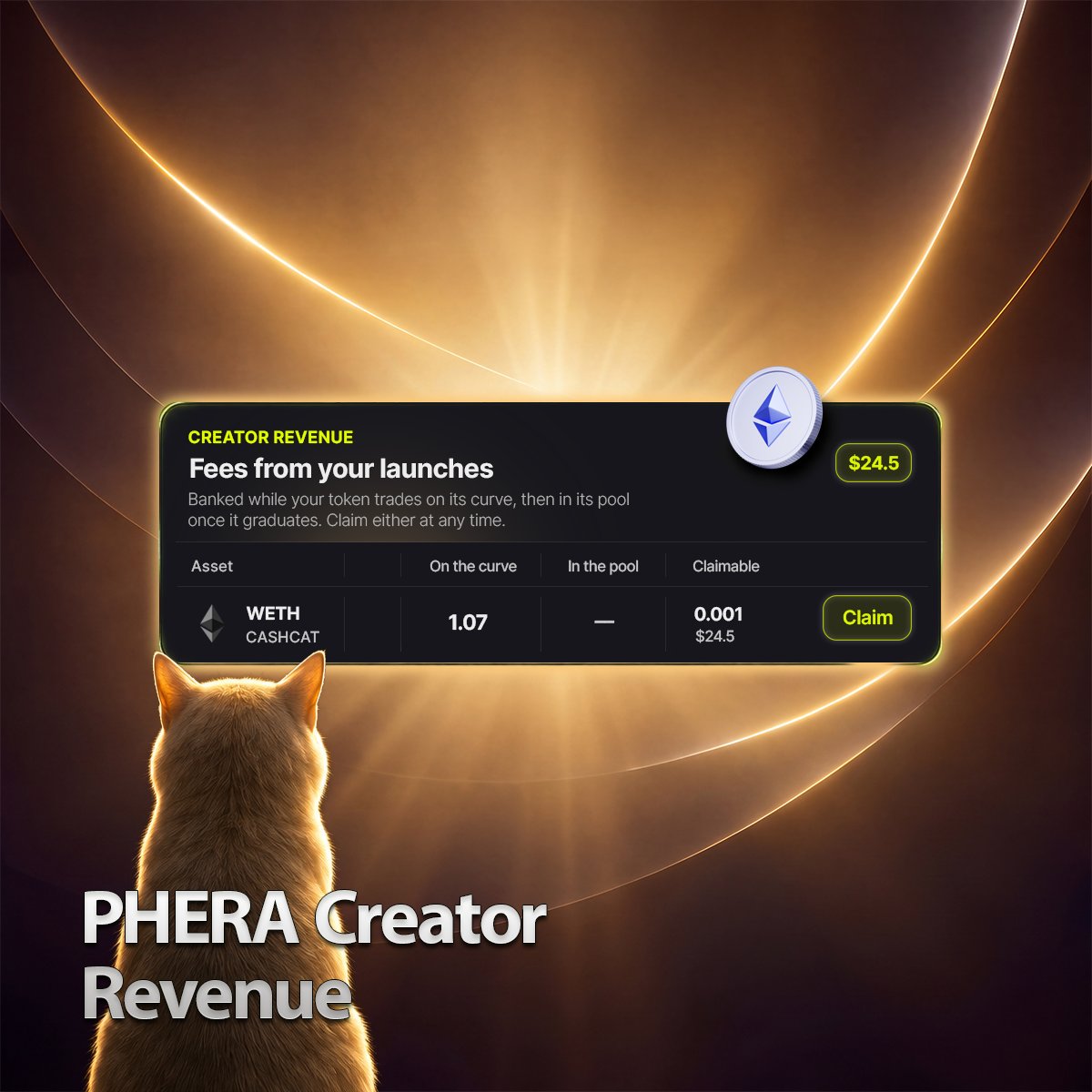
Your creator fee banks in whatever asset your token trades against, while it's on the curve, and in its pool after it graduates. Claim either at any time; nothing expires.
PHERA Limit Orders.
A limit order on PHERA isn't a row on someone's server. It's a position on the chain.
Nobody has to honour it and nobody but you can cancel it. It fills when the price passes through your range and the fill is what pays.
Building an LP position on PHERA
Pick a range. Your liquidity earns fees while the price is inside it, and nothing while it isn't.
That's the entire trade-off. Tighter range, more fees per dollar and a shorter walk before you stop earning. Better to know it going in than to find out.
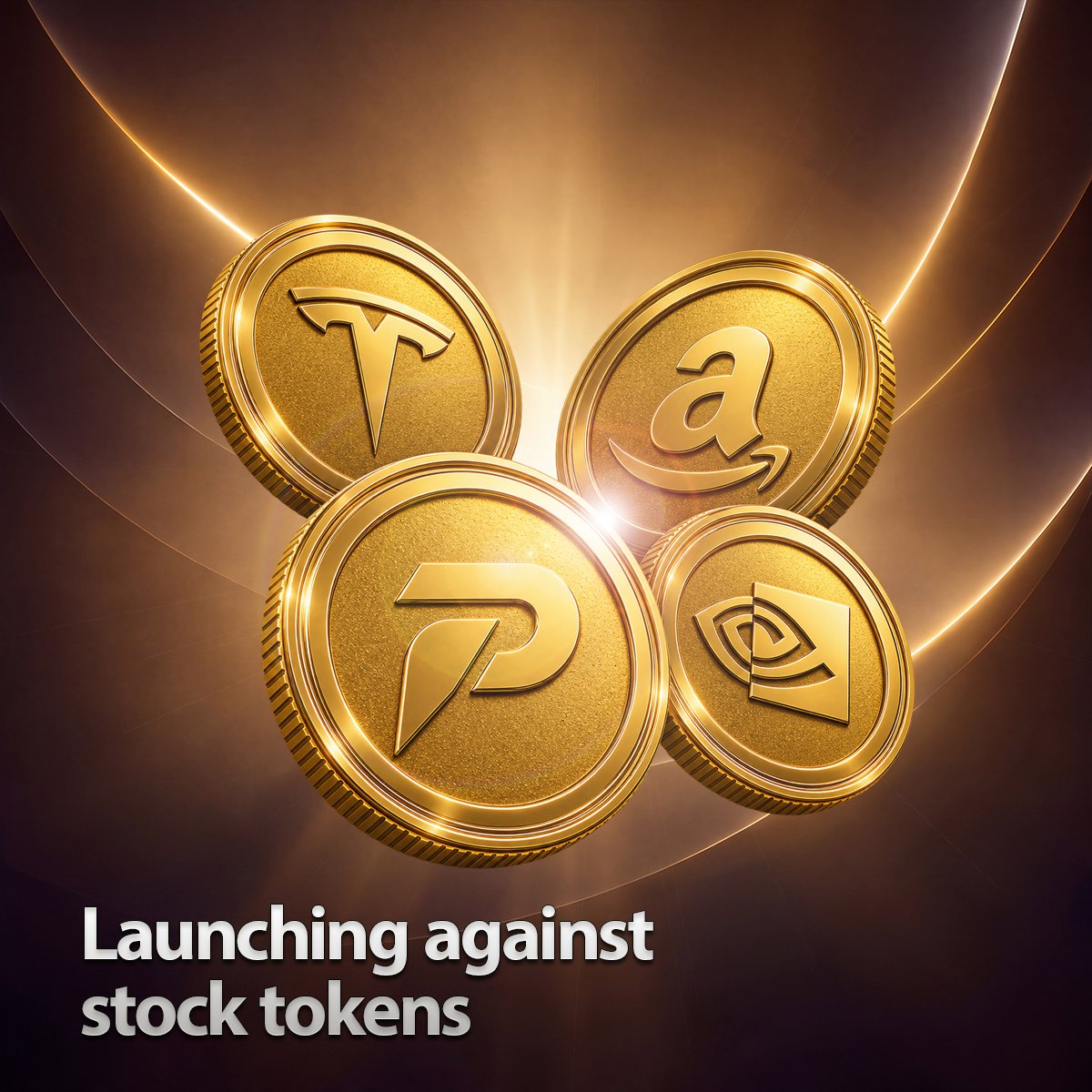
Launch a token that trades against Tesla instead of ETH.
Sixteen quote assets on PHERA, eleven of them stock tokens. You pick one when you create the token, and the price lives in whatever you chose.
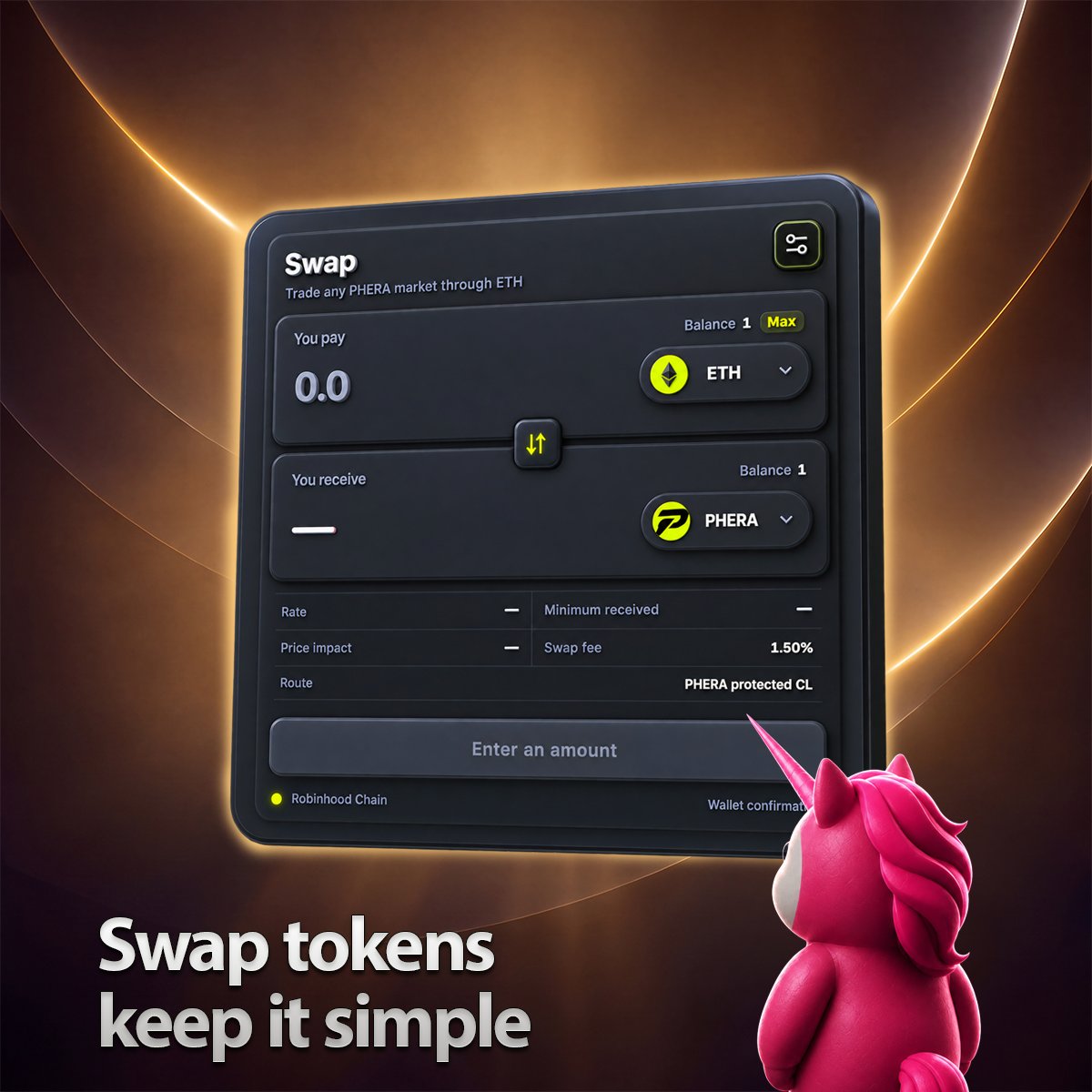
Swap tokens. Keep it simple.
Curve or pool, it's the same two fields. You don't need to know which phase a token is in to trade it, and you can pay with plain ETH either way.
Scarcity is the new meta.
10,000 total supply.
2 ETH graduation.
Native DEX.
Full LP management.
Creator incentives.
Scarcity from block one.
No billions of tokens. No recycled launchpad formula.
V2 is coming...
Most launchpads on Robinhood Chain graduate their tokens into someone else's DEX.
We built our own. Launch a token, trade it, earn LP fees - one protocol, native to this chain, fees locked in the contract from day one.
This is PHERA.