If you want peace, you must have the capacity for war. And show it. Let everybody know it. Use a scapegoat if necessary. You have to understand human nature. People, by nature, will attack anyone who projects weakness and fear those who project overwhelming strength. What you want is to avoid both extremes. You don't want to be too nice and be disrespected and attacked or too vicious as to be feared.
Strike a balance. Project just enough warmth to be loved and enough strength to be respected. And treat people individually. If you notice a little disrespect from someone, it means you have been too warm with them. Withdraw. If you see fear in them, then you have been too hard. Soften. Wealth, power, and fulfilment are attracted to those who know how to balance in the middle of the spectrum.
#RenosNuggets
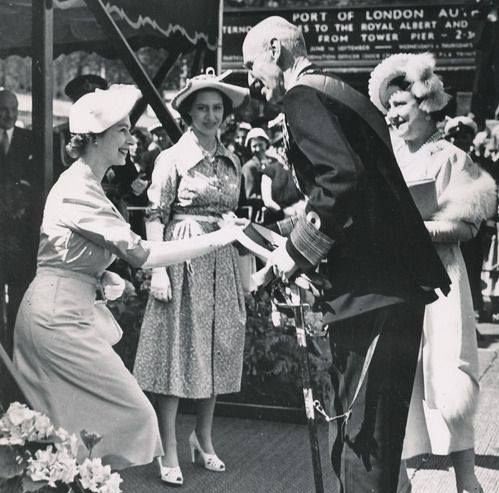
For those who say kneeling and bowing is uncivilised, and that they cannot bow or kneel before any man, please fact-check me: Before she became Queen Elizabeth II, Princess Elizabeth ALWAYS bowed and knelt to her father, the King, and her mother, the Queen Consort, and her grandmother, the Mother of the King. And when God made her Queen, all those she bowed to began bowing to her.
Before you can command, you must learn to obey!
We cannot see God. But we can see the powers that be bestowed on men, and when we respect authority, we are not respecting men. We respect God. And this is based on the fact that nobody can have authority over us, good or bad, unless God has permitted it. Even if we think we are more intelligent or wealthier than them. And when you fail to respect your parents, it is almost certain that God will not give you impactful authority that will last. By impactful, I mean the authority that money cannot buy.
You think money is the ultimate and places you above others? Are you wealthier than King Solomon was? Look at how Solomon treated his parents:
"When Bathsheba went to King Solomon to speak to him for Adonijah, the king stood up to meet her, bowed down to her and sat down on his throne. He had a throne brought for the king’s mother, and she sat down at his right hand."-1 Kings 2:19.
#RenosNuggets
Yoruba: Olorun Is Not God, and Esu is Not Satan
Before colonialism, you were either Oyo, Egba, Ondo, Awori, Owu, Ekiti, Ijebu and so on.
It was the British, who, in search of an ethnic identity for the Omo Oduduwa, took the derogatory Fufulde word for the Olukumi and mispronounced it as Yoruba with the help of Ajayi Crowther. That word was what his Fulani captors called him after raiding him from Osogun.
The Fulanis themselves may have learnt that word from the Malians, who used it earlier. Even the word Hausa is actually a Songhai word meaning Southerner.
The actual word for God in the Edekiri Olukumi language (the real name of what is wrongly called the Yoruba language) is not Olorun, as widely believed.
The word for the Omnipotent God is Oritse. Oritse is a word that shows you how spiritually developed the Omoluabi are (the actual name of the Yoruba people-the language is Edekiri, the people are Olukumi or Lukumi, and when you fulfil the ethos of the race, you become an Omoluabi or Omo-ti-Olu-Iwa-bi). Not all Olukumi will be Omoluabi.
Ori means head. For example, you can say ge ori mi, or g’ori mi, which means shave my head. That is where the name of the palace slave, gorimapa (Ge ori mo apa) in the now rested Village Headmaster TV series came from.
Tse means to create or to do. For instance, tse b’ayi meaning do it like this or create it like this. We Itsekiri use tse, but the Olukumi closer to Lagos and Oyo use șe or she.
The word Oritse is a compound word comprising of Ori-meaning Head, and Tse, meaning Create. Thus, Oritse means Head Creator.
His children are referred to as Orisa or Orisha.
So, in pure Edekiri language, there is only One Oritse and many Orisas.
The word Olorun comes from the older Edekiri word Olofin-Orun. It means Lord of the heavens. It is actually a title for Oritse. In modern Yoruba, Olofin-Orun is shortened to Olorun.
One thing I learnt in Cuba is that Èṣù, or Echú as they pronounce it, is actually not satan. Cuban and Brazilian Lukumi people (the word is pronounced Lukumi in Cuba and Brazil, with the o silent) left Nigeria before Ajayi Crowther corrupted that word. They were not affected by the corruption. Èṣù is actually an Òrìṣà (a god or deity). But he is not satan himself.
Interestingly, the Lukumi language is taught in schools in Cuba, and Ifa worship (known there as Santeria, although there are other things included, not just Ifa) is very widespread and done openly. In Florida, Oyibo (White European) babalawo exists. If you search for me on YouTube, you will see a video I did where I went to the Ojubo of an Oyinbo Babalawo in Daytona, Florida. Èṣù is one of the Òrìṣà of Santería.
When Ajayi Crowther was translating the Bible, he could not find a suitable word for satan, and he took one of the deities in Ifa worship, Èṣù, and turned him into satan.
While it is hard to translate satan into Yoruba, because there is no such concept, the nearest being to satan is not Èṣù. Even the word Èṣù is not complete. In Cuba, the full name is Èṣù-Ẹlẹ́gbára, sometimes shortened to Ẹlẹ́gbá, or Echú Eleguá, as the Cubans call it. In Brazil, the deity is sometimes known as Exu. It was in Cuba that I was educated about the fact that the place in Lagos called Ojuelegba, is actually Ojubo Ẹlẹ́gbá, meaning altar, or shrine of Ẹlẹ́gbá, or more accurately, a portal from which the deity enters and exits the spiritual realm to enter the physical realm. And we in Nigeria are blissfully unaware of this!
And the thing is that the word Èṣù refers to (and I know I will annoy a lot of Christians with this truth) more or less a messenger of God (Oritse Olódùmarè or Elódùmarè in the Yoruba pantheon of gods, as opposed to Olorun, which as I said earlier is rather a vague honorific).
There are more than one Èṣù. Each Èṣù is a messenger of Olódùmarè for a specific purpose.
For example, you have Èṣù Odara, which some say is a different messenger from Èṣù-Ẹlẹ́gbára.
Reno Omokri
Don’t let anyone deceive you that the sole cause of the current hardship is linked directly to government policy and as such mass instability and other woes should be justified and expected. This is an uneducated conclusion and baseless in all ramifications.
There are perennial issues since 2015 (if not earlier) that were never prioritized and heavy subsidies were paid to shield the public from the impact. The new administration chose to adopt holistic reforms (beginning with the economy) to stem the tides which inadvertently will make the populace feel the impact of our economic reality albeit with some cushioning on the side of the Government.
This, however, will not go well with most people who largely believe the Government is responsible for their happiness and all hell must break loose if they find themselves depressed for any reason.
The news flash here is that the role of genuine leadership at the Presidential level is NOT a popularity contest. Executive decisions will have to be made regardless of whose Ox is gored in the interest of the republic.
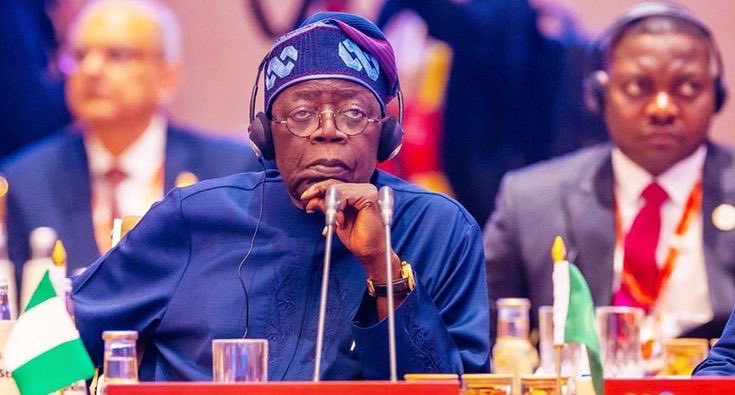
President @officialABAT is not transfixed or impaled under the worry about his reputation or political survival. This is not about him but about us as a people. He is a leader in a democracy which is why his words and approaches have been in the interests of the collective and not identity politics of difference.
The expectation that economic reforms will be reversed entirely because of the agitation of a few is neither here nor there. It is expected that we will (as a nation) face difficulties which can be ameliorated but our economy will eventually respond to treatment and the temporary inconveniences will abate in due course.
Admittedly there have been some reversals on certain policies contrary to market-oriented economic plans as an intervention for the masses' sake but this is not an indictment on some of the policies but a result of the compassionate and empathetic stance of the administration in consideration of Chapter 2 of the 1999 Constitution as amended (Fundamental Objectives and directive Principles of State Policy).
What is perceived as caving into popular demand may not be due to the dearth of alternatives but a demonstration of the fact that Governance is incomplete without the contribution of the people and as such an ear must be out to feel the pulse on the streets. There are changes we may not be prepared for that can be implemented in phases instead of abruptly. We all desire change but nobody wants to change or make sacrifice for it.
Inflation is a tough battle for any administration especially in a complex clime like ours. Communication must be prioritized with transparency and accountability and the Government must play the lead role in making tough sacrifices against politicized actions that can be interpreted as insensitivity to the plight of the people.
There is no room to accommodate poor performance, endemic corruption, needless anti-establishment-inspired chaos, widespread insecurity, inter-agency rivalry, and economic decline. Meaning cabinet reshuffle is a no-brainer. The buck will always stop on the table of Mr President.
The world is waiting for us. 🇳🇬
Food
Rent
Drink
Transport
Clothes
Shoes
School fees
If any of the above are still pending, don’t buy
iPhone
Wristwatch
Perfume
Send babe money
Go clubbing
Lend money
Life is easy if you put your needs before your wants and hard if you put wants before needs
#RenosNuggets
How Ooni Ogunwusi’s Companies Executed the Biggest Fraud in Nigeria’s Real Estate History — and Got Away With it
By @Adeolabuzz
https://t.co/6wCWD7H4lu