Hi @neiltyson, my 7 year old has fallen in love with astronomy and just discovered black holes. He is curious what would happen if two black holes collided, but his science teacher parents don’t have a good answer on this one.
Any insights or resources you can suggest?
ICYMI: Exploring science teachers' efforts to frame phenomena in the community
Community-oriented framing is a pedagogical approach for organizing science instruction around local issues and helping students understand science as relevant to their community and themselves
New article: Exploring science teachers' efforts to frame phenomena in the community
Community-oriented framing is a pedagogical approach for organizing science instruction around local issues and helping students understand science as relevant to their community and themselves.
What are actions a principal can take to support their school's progress toward three-dimensional standards like the NGSS?
See this brief resource to read more about the critical role principals play: https://t.co/LdoU33nMcC
Academic peer pressure arises early: Children as young as 7 years old “begin to connect asking for help w/ looking incompetent in front of others,” researchers concluded in a 2021 study.
But fear of looking dumb is often just half of a reticent student’s calculation.
🧵1/8
“Many science classes rely on cookie-cutter science labs and rote memorization... but there’s a growing demand for science curricula to help students apply science in novel ways to solve challenging problems like pandemics or climate change.”
See more: https://t.co/nPVI7UrWq7
Researchers and educators from the @NSF-funded Investigations Project are exploring the role of uncertainty in motivating science investigation and learning.
Check out this framework describing types of uncertainty in science practice: https://t.co/NDGuC7HVfv
The Science Task Prescreen and Screener build off the criteria in Category III of the EQuIP Rubric for Science to more clearly specify features for assessment tasks designed for three-dimensional standards.
See them here: https://t.co/YzbZkf3Bar
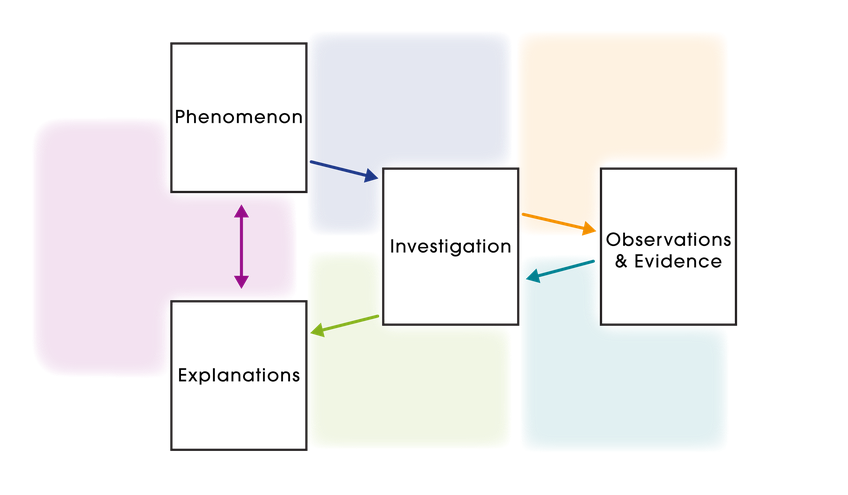
A key shift in learning designed for today’s science standards is supporting students to explain phenomena and to design solutions to problems.
See examples and guidance on driving instruction with engineering design problems here: https://t.co/oUZaKoxIQD
Data is critical to improvement but without a meaningful context it's difficult to use data to promote change. When we explain data with a compelling story that links to people's values and a sense of shared purpose, then things start to move..
Check out (for free!) this panel of the amazing authors from my Equity and Justice in Education book series, hosted by Routledge! And right now all the books in the series are 20% off!
MHS is the recipient of the BCME (Best Communities for Music Education) Award. The program recognizes & celebrates schools & districts for their support & commitment to music education & efforts to assure access to music for ALL students as part of a well-rounded education.
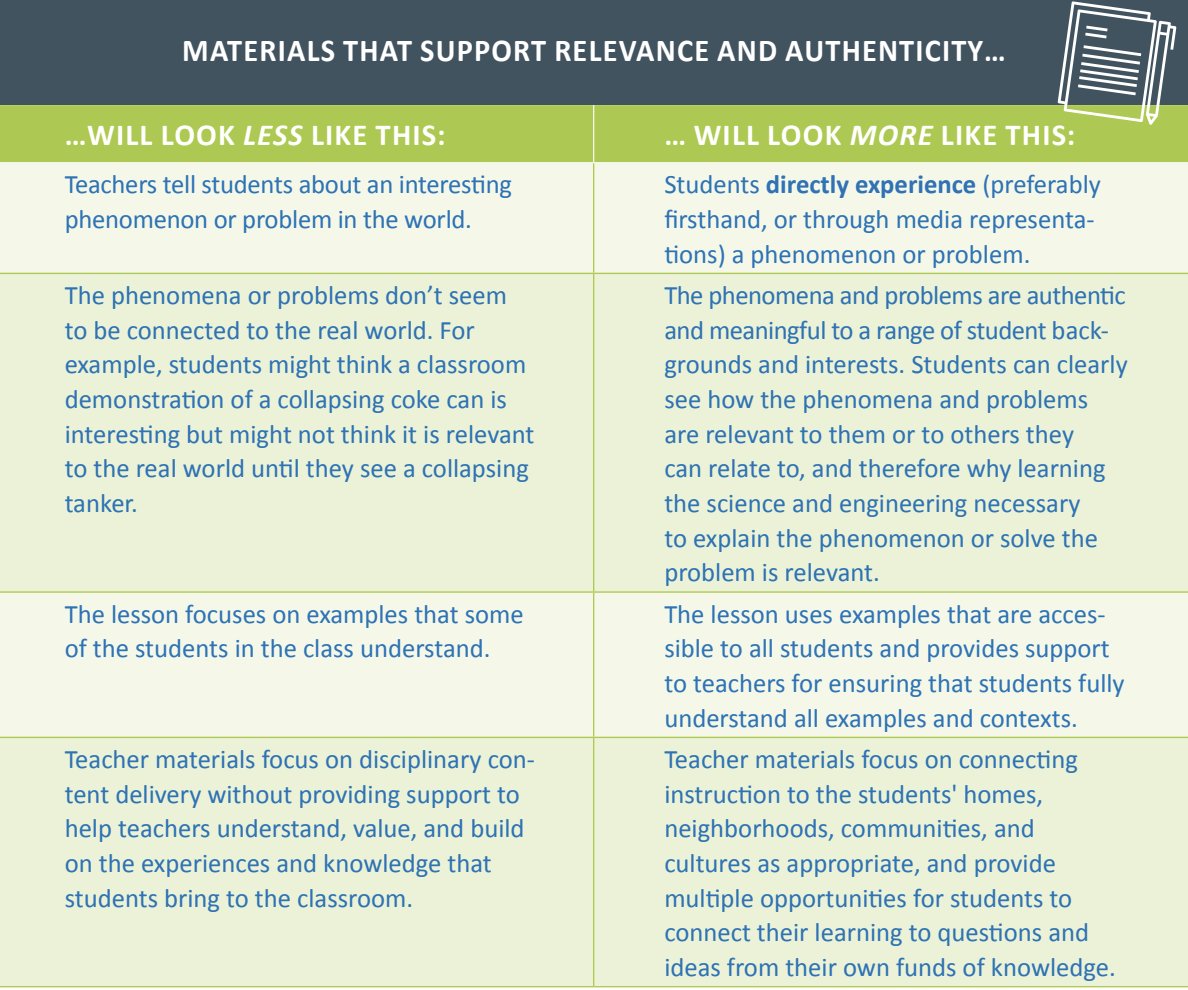
Phenomena, problems, and classroom activities can be presented in many ways to authentically connect with students' lives.
These are some of the criteria to consider when evaluating materials for relevant and authentic science teaching and learning:
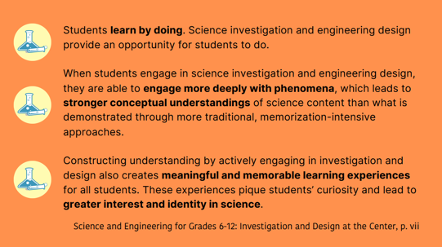
When students are making sense of phenomena or designing solutions to problems, students actually learn better!
It leads to stronger conceptual understandings of science content than what is demonstrated through more traditional, memorization-intensive approaches.
#NGSS