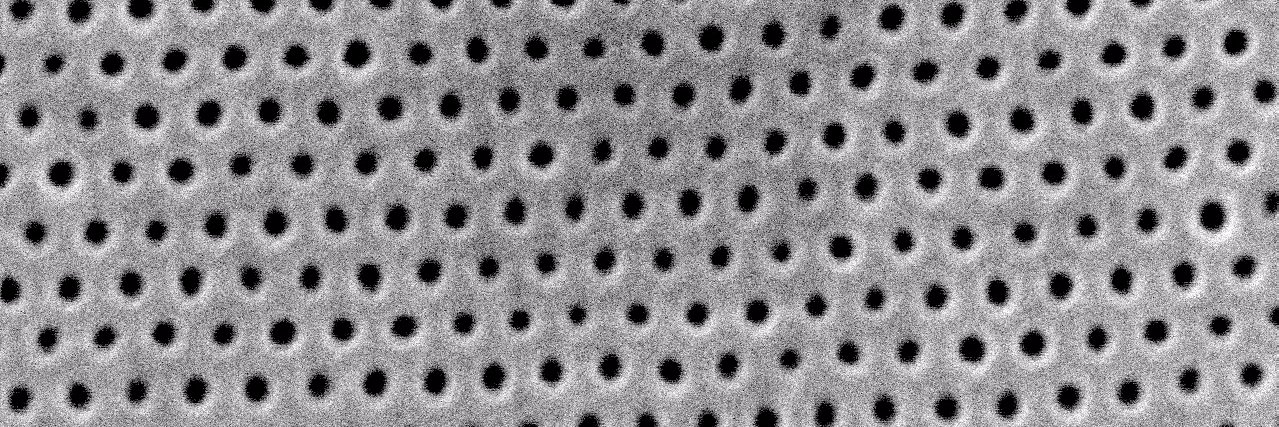
NAMS celebrates International Membrane Day – April 14. From the pioneers who took the first steps on membrane formation, to the innovators who created robust membrane separation technologies for industrial breakthrough applications, efficient energy, clean water, safe food, and better health, to the new generation of membrane dreamers who will push the frontiers of the membrane world in this still young, but soon to become a mature XXI century, and beyond.
To mark this day, NAMS highlights key membrane separation applications and their societal impact—while leaving space to ask an important question: what comes next?
💬 We invite the community to join the conversation, share their perspectives, spark valuable discussion, and inspire future innovations:
• Which membrane separation has had the greatest impact so far?
· What stands out as truly game-changing, and why?
· What new separations or applications will be unlocked in the next 10 years?
Let’s celebrate past achievements and shape the future of membrane science together.
#InternationalMembraneDay #NAMS #MembraneScience #SeparationTechnology
SMASH Engineering REU (Soft Materials for Applications in Sustainability and Healthcare Engineering Research Experience for Undergraduates) site program is accepting applications for summer 2025! Please share this opportunity!!
https://t.co/kwOJfDCmjY
#Macromolecules and #ACSMacroLetters have the latest research on the Polymer Physics of Separation Membranes!
Check out the collection here ➡ https://t.co/bDaCfFxnGM
Summer at @NDnano offers mentored research experiences for students, who are paired with faculty at the University of Notre Dame.➡️Read the 2024 project summaries, where students recap their research experience: https://t.co/6JGpJEAND3. 🗓️Plan now: 2025 application opens in Dec!
“Refrigeration might not be the first thing that comes to mind as we think about protecting the environment, but it is a critical energy sustainability challenge."
Notre Dame is part of a new @NSF-funded Engineering Research Center developing next-generation refrigerant technology: https://t.co/8ULrM6YcvQ
Cosmetics. Fast-food wrappers. Period products. Dental floss. Eye drops. Firefighter turnout gear.
These are just a few of the items in which we've found PFAS.
See how Notre Dame is developing new ways to measure and manage these forever chemicals: https://t.co/Wjy8V5rWKT
Excited to share some of our work, led by our student Dinis Abranches on: Stochastic machine learning via sigma profiles to build a digital chemical space | PNAS https://t.co/skY8DvdslQ
@ejmaginn@NDCBE
A research team led by @kdoudrick assessed the mass transfer performance of a porous polyamide adsorptive membrane for removing #PFAS from #drinkingwater under varying conditions.
Learn more from ACS ES&T Engineering: https://t.co/98tHobFyVR
What is a "forever chemical?"
"They are incredibly resilient and don’t break down naturally, so they are hard to destroy," said @NDEngineering professor Kyle Doudrick.
He shares ways to filter out some PFAS chemicals at home with @ConversationUS: https://t.co/PsssW2jfLt
The NSF REU Soft Materials for Applications in Sustainability and Healthcare Engineering (SMASH Engineering) site is now accepting applications!
Website: https://t.co/kwOJfDCmjY
FAQs: https://t.co/GarYcgbrDf
Application link: https://t.co/Z79SYMxn7u
@Phillip_Lab@NDCBE@NDnano
Curious what is like to be a female academic interested in translation? We’ll share experiences and lessons learned from multiple perspectives. Please join us!
@NortheasternCOS@NU_Chemistry
Welcome! Sima Asadi, new faculty @NDCBE@NotreDame. She is an expert in infectious disease transmission, pursuing understanding of airborne pathogen transport to develop medical technologies and mitigate spread of disease. 🥳 Read ➡️https://t.co/A0oqrzrPHI