Thai people don’t wear black to a wedding. In worst case wearing black to a wedding is tantamount to cursing, so I guess Khun is being considerate here.
พี่ฟ้า บุญฑิกา ศิษย์เก่าป.โทการแปลรุ่น 22 คนเก่ง จะพาเราไปรู้จักหลักสูตรใหม่เอี่ยมจากศูนย์การแปลและการล่าม จุฬา "Double Degree Programme: MA in Applied Translation and MA in Translation" เรียนแค่สองปีได้สองปริญญาด้านการแปลจากจุฬาฯ และ U of Leeds UK https://t.co/BpBA9RA3ij
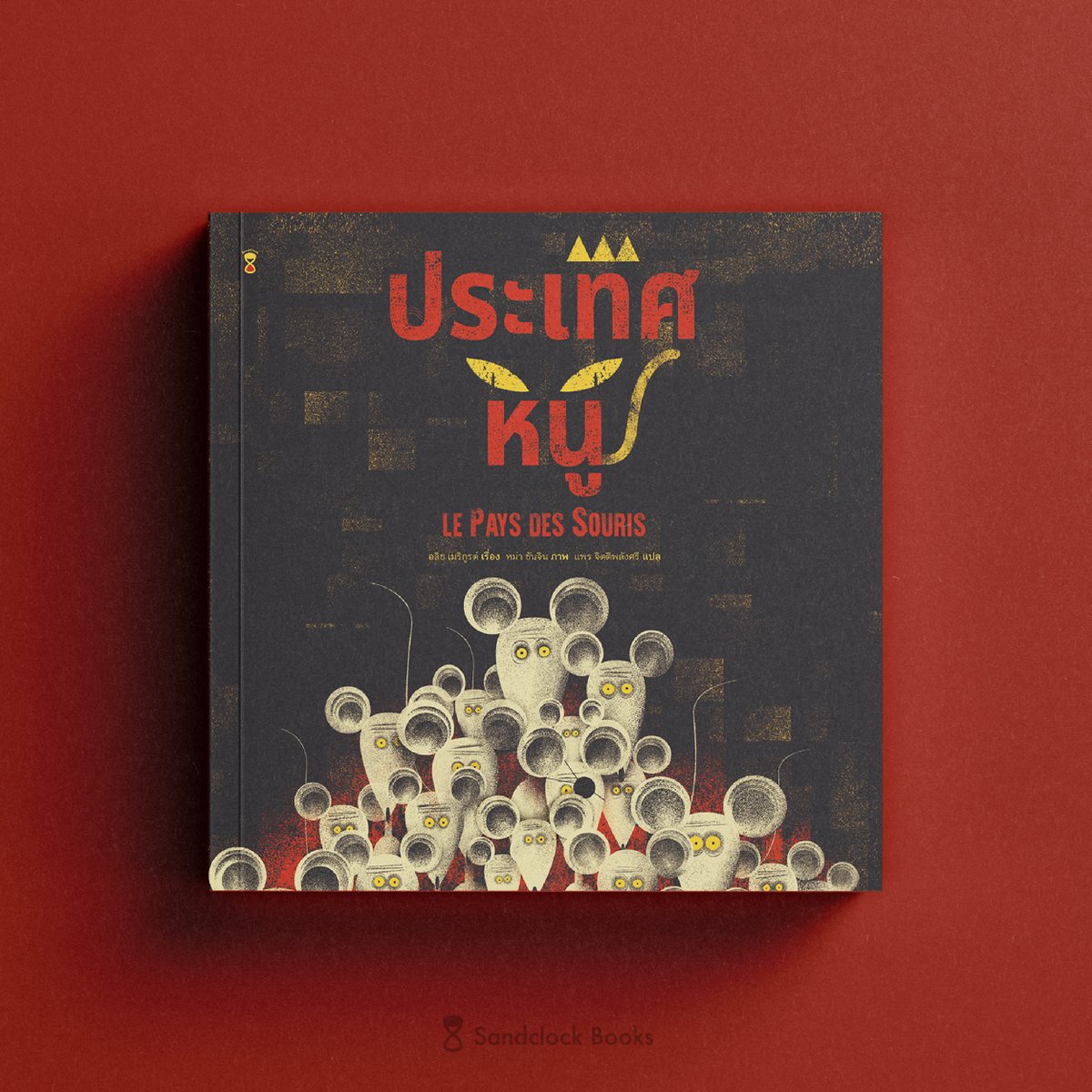
ฝากผลงานแปลเล่มล่าสุดจากภาษาฝรั่งเศส #ประเทศหนู เปิดตัวในงานมหกรรมหนังสือแห่งชาติปีนี้ เด็กอ่านได้ ผู้ใหญ่อ่านดี เข้ากับสถานการณ์บ้านเมืองเฉย ที่บูธสนพ. SandClock ค่ะ
Mon dernier travail de traduction du français vers le thaï est maintenant en vente à la Fête nationale du livre.
« Le pays des souris » est un titre déroutant pour un livre illustré, car le surnom de notre Premier ministre actuel est « Noo », ce qui signifie « souris » en thaï.
C’est une histoire sur un pays où les souris élisent toujours des chats comme dirigeants, à leur propre perte.
@pouriturenoble Thank you! I finally got back to reading books I like after two months of staying up to 4-5 am to get subtitles done, so this is just pure bliss after long chaos.
I've reflected a lot on Trin's behavior in the last episode of Shine, and I'd like to gather here some thoughts I've already shared in comments over the past few days, but which I feel the need to collect in a single, coherent text. These are, of course, personal reflections.
Trin's decision to leave Tanwa in the finale, despite the deep emotional and spiritual connection they have built over the course of the story, is a highly significant element of the narrative. Trin doesn't have the conceptual tools or the vocabulary to recognize what's happening to Tanwa as true depression; he can only sense that "𝑠𝑜𝑚𝑒𝑡ℎ𝑖𝑛𝑔 𝑖𝑠 𝑤𝑟𝑜𝑛𝑔." He is faced with a pain he doesn't fully understand and doesn't know how to deal with. He feels powerless, perhaps even frustrated by the fact that love and closeness aren't enough to "𝑠𝑎𝑣𝑒" Tanwa. Without the means to name or grasp that suffering, he interprets it as distance, rejection, or Tanwa's inability to "𝑐ℎ𝑜𝑜𝑠𝑒 𝑙𝑖𝑓𝑒."
Leaving Tanwa isn't (only) an act of selfishness, but rather a gesture of self-preservation: Trin senses that staying by Tanwa's side, so lost and closed off in his own pain, risks pulling him under as well. In a certain sense, it's a way to survive. Trin's choice is human and imperfect: there's no heroism in his leaving, but neither is there complete indifference. It's the action of someone who, even while wanting to love, comes up against their own limits. In an era when mental health was rarely spoken of, Trin's reaction is realistic and achingly human.
In this way, the story avoids the trap of "𝑙𝑜𝑣𝑒 𝑠𝑎𝑣𝑒𝑠 𝑎𝑙𝑙": Trin's love, however genuine, doesn't heal Tanwa's traumas. The ending becomes a reflection on the need to face one's own inner demons with tools that go beyond just a romantic relationship. It's an imperfect and human gesture, credible within its historical context, that speaks to how, in the past, psychological fragility was often avoided, ignored, or misunderstood.
I believe all this offers an interesting lens through which to read and interpret both Trin and Tanwa as characters.
Tanwa shows his wounds and vulnerabilities: his pain, his insecurity, his inability to commit are always visible, almost "𝑠ℎ𝑜𝑢𝑡𝑒𝑑 𝑜𝑢𝑡" to the audience. This creates instant empathy: we have direct access to his suffering, and we can justify his "𝑝𝑟𝑜𝑏𝑙𝑒𝑚𝑎𝑡𝑖𝑐" behaviors as consequences of trauma or a difficult past.
Trin, on the other hand, is often restrained, reflective, and appears more "𝑎𝑑𝑢𝑙𝑡" and self-controlled. When he makes mistakes, it seems to come from a place of greater awareness or autonomy. This leads us to judge him more harshly: we always expect coherence and maturity from the "𝑟𝑎𝑡𝑖𝑜𝑛𝑎𝑙" ones, and their mistakes seem less excused by emotion. Tanwa embodies the archetype of the "𝑎𝑑𝑜𝑟𝑎𝑏𝑙𝑦 𝑡𝑜𝑟𝑡𝑢𝑟𝑒𝑑" (the "𝑝𝑢𝑝𝑝𝑦 𝑤𝑖𝑡ℎ 𝑠𝑎𝑑 𝑒𝑦𝑒𝑠"): those who suffer are often seen as more worthy of affection, protection, and forgiveness. Trin, meanwhile, is closer to the grey moralist, never fully one thing or another, and this makes him less reassuring.
Many people find it easier to identify with those who display emotional fragility than with those who have doubts, pull back, or seem "𝑢𝑛𝑎𝑏𝑙𝑒 𝑡𝑜 𝑐ℎ𝑜𝑜𝑠𝑒." Trin's indecision makes us uncomfortable because it reminds us of our own hesitations and ambivalences; it's easier to empathize with someone who suffers than with someone paralyzed by uncertainty.
Often, even unconsciously, we expect the "𝑏𝑟𝑎𝑖𝑛𝑠" of the couple, or the one who appears more rational, to also be the "𝑠𝑎𝑣𝑖𝑜𝑟" or the anchor. When instead that person shows their own weaknesses, we experience it as a disappointment relative to our narrative expectations.
Tanwa's mistakes are perceived as "𝑝𝑎𝑠𝑠𝑖𝑣𝑒" (he doesn’t commit, runs away, self-destructs), while Trin's are more "𝑎𝑐𝑡𝑖𝑣𝑒" (he hurts, withdraws, sometimes manipulates). As a culture, we tend to forgive those who "suffer" more easily than those who "𝑎𝑐𝑡."
The moral of the story, from my point of view, is that we more easily forgive Tanwa because we see him as a "𝑣𝑖𝑐𝑡𝑖𝑚 𝑜𝑓 ℎ𝑖𝑠 𝑜𝑤𝑛 𝑝𝑎𝑖𝑛," while Trin is perceived as "𝑡ℎ𝑒 𝑜𝑛𝑒 𝑤ℎ𝑜 𝑠ℎ𝑜𝑢𝑙𝑑 𝑘𝑛𝑜𝑤 𝑤ℎ𝑎𝑡 𝑡𝑜 𝑑𝑜, 𝑏𝑢𝑡 𝑑𝑜𝑒𝑠𝑛'𝑡." But it's precisely this asymmetry that makes their relationship so realistic, and the characters so human and profound.
My heartfelt compliments to @milephakphum and @Nnattawin1 for your extraordinary performances as Trin and Tanwa. You gave these complex characters a soul, and I'm deeply grateful for your artistry 🥹🫶❤️
#ShineTheSeries #BeOnCloud