If pooling is just too hard for a even a luminary such as @GregSankey to fathom, and since he apparently thinks that the rest of the sports and commercial world is too ignorant and stupid to find a solution, there is nothing in the Cantwell/Cruz bill that forces him (or anybody else) to participate in the conversation. Page 93, Line 1 of the Bill is titled “OPTIONAL PARTICIPATION”. Read it.
The huddle isn't a meeting. It's a situational awareness system. Most multi-site healthcare platforms have converted theirs into something that broadcasts to the floor instead of listening to it. Part II of the new series in The Operator:
The Huddle Isn’t a Meeting. It’s a Situational Awareness System, by @PhysicalTherapy https://t.co/Yz2H9D1AUt
Since 2020: - Meeting load tripled (Microsoft) - Remote workers attend 50% more meetings - Executives at 19+ hrs/week in meetings - Workers interrupted every 2 minutes - "Infinite workday" is now the norm
New Series: "Too Many Meetings that Mostly Suck" Most Platforms Don’t Have a Meeting Problem. They Have a Meeting Stack Problem, by @PhysicalTherapy https://t.co/i4zpizCW7k
.@uofl was well represented at the Knight Commission Meeting
AD @joshheird, President Gerry Bradley & Board of Trustees Chairman Larry Benz were in Washington, DC to discuss proposed solutions for college athletics.
📸 Knight Commission/Lisa Helfert
#GoCards
University of Louisville leaders told a national commission that college athletics is facing a financial crisis — and that Congress may need to step in. Stephen P. Schmidt has the story. https://t.co/3rsXqEpcbU
Ten years ago, I published Grit. In those pages, I wrote down everything I’d discovered about world-class achievers and how passion and perseverance set them apart.
Since then I’ve been studying the situations that make world-class achievement possible.
My research shows that the situation shapes you—but you have the power to shape it first. How?
1. Set up your personal space.
2. Pick your peers.
3. Attract mentors.
4. Choose your culture.
Getting situated means finding the people and places that bring out your best.
Grit is great, but to realize your potential, you also need to get situated.
Pre-order Situated. Out September 1st.
https://t.co/8zIG684hvY
Healthcare platforms keep misidentifying their leadership problem as a talent shortage.
The talent is there.
The problem is what they're selecting for — and what they're promoting out of the clinic.
New post on The Operator. Healthcare Concepts We Keep Getting Expensively Wrong, by @PhysicalTherapy https://t.co/hhEkghPuWg
"Efficiency" is the most virtuous-sounding word in healthcare operations.
Nobody argues against it. Nobody asks what it means.
That combination — universal approval, zero definition — is exactly how a concept becomes dangerous.
New post on The Operator. 🧵Healthcare Concepts We Keep Getting Expensively Wrong, by @PhysicalTherapy https://t.co/95G2D5lxgB
Louisville has emerged as a dark horse luxury market, where $1 million homes are selling quickly. “It’s a lot less constrained than living in Chicago or New York, or even L.A.” https://t.co/LSYBqJWqyV via @WSJ
Register for May 13 public sessions, including discussion with University of Louisville campus leaders Gerry Bradley, Larry Benz, & @joshheird, on proposed solutions for #collegesports.
In-person & virtual attendance options: https://t.co/T7cUkjy3cY
#collegesports
Louisville is spending aggressively, and building the infrastructure to back it up.
The Cardinals just pulled off one of the fastest transfer portal blitzes in college basketball, landing tier 1 talents in a matter of days. The basketball payroll could push toward $20 million and Jeff Brohm just locked in an eight-year, $64.8 million extension through 2033. Louisville is going all-in on both revenue sports at the same time.
But what makes Louisville's approach stand out is that they aren't just spending, they're rethinking the entire model.
Last week the board of trustees approved Cardinal Ventures, a new nonprofit built to function as an in-house commercial engine for the athletic brand. Sponsorships, marketing, NIL agreements, branding deals that were previously outsourced or underleveraged would now run through a dedicated entity designed to move fast and keep more value inside the institution.
It starts with no staff, no budget, and no assets. AD Josh Heird called the approval "mile one of a marathon."
They also approved a second, dormant entity that creates a legal framework to receive private capital, equity investment, or bond financing tied to athletics if the right deal materializes. Nothing happens with it unless the trustees vote separately to activate it, but the structure is in place.
"The one thing I would tell you is that we are looking at every option under the sun," Heird says. "We'll entertain any conversation as long as it makes an inkling of sense, because expenses aren't getting reduced anytime soon. But on the flip side, [investors] aren't going to be willing to have these conversations relative to debt, equity, whatever it may be, providing capital, if they don't think there's opportunity there."
That's the key insight Louisville's leadership seems to understand clearly: you have to prove the brand has value before anyone will invest in it. The spending and the structural work feed each other.
Board chair Larry Benz framed the broader challenge directly: instead of finding new ways to slice the existing pie, you try to create a bigger pie.
Louisville is one of the few programs tackling both sides of this equation simultaneously, competing at the highest level today while building new financial tools for tomorrow. For a city where Cardinal athletics drives the culture, the ambition matches the stakes.
As Pat Kelsey put it: "When we win, the sun is out. When we lose, it's gloomy and people yell at their dog and the pizza doesn't taste as good. It freakin' matters."
Louisville is betting on itself and they're building the infrastructure to make that bet pay off.
@mcuban And most are also vertically integrated providers disadvantaging providers they contract with. They are also repricers and utilization reviewers motivated to make providers miserable and to increase their cost thru endless hoops and ladders
Louisville just published a white paper titled "College Athletics Is Running Out of Time."
They weren't being dramatic.
Their athletic department ran a $12.5 million deficit last year. A reserve fund that once sat at $34 million is down to $3.4 million.
They're borrowing money from local banks to stay competitive.
Don't be misunderstood. This is happening all across the country.
Louisville is just the one willing to say it out loud.
The costs of competing at the Power Four level have never been higher, and the old playbook of going back to donors isn't keeping up.
Louisville's board chair put it plainly: "We're doing the same thing everyone else is doing. We're borrowing money."
This is a college athletics problem holistically.
The schools that get ahead of this aren't going to do it by finding more donors or taking on more debt.
They're going to do it by building revenue streams that don't depend on either.
That's what we do at NOCAP Sports.
We connect athletic departments with their alumni business communities, creating sustainable, recurring revenue through real business partnerships.
No extra asks or borrowed money. Just a smarter model built for where this industry is actually heading.
For the communities ready to build something more sustainable for their school, learn more at the link below.
you are learning quite a bit but one glaring example of inefficiency in pricing is known as "provider based reimbursement"-was orignially a technique for hospitals getting higher reimbursement for medicare but that has been largely eliminated-now the hospitals get much higher fees from payors for radiology, labs, and physical therapy than those same payors reimburse independent providers. Independent providers in physical therapy for example can't see United and some others because they reimburse below cost-so the hospitals end up seeing these same patients at higher cost to employers and employees-same with medicare advantage. There is no incentive for the self insured TPA insurance company to fix this.
Hospitals punish physician providers by not allowing them privileges in their hospitals if they compete in any way with them-insurance companies kick us off panels if we compete-what's worse is that insurance co's have created regulations that keep them in the middle-makes direct to employer contracting very difficult-the TPA core functions: repricing, provider panel formation/contracting, claims adjucation create obstacles for direct to employer-part of stopping them is deregulation and technology/platforms that will disintermediate the core functions of a TPA-everyone would win except hospitals and insurance co's
There are other things about the health care system that are even worse, but this is spot on and a good start. One side note: guess what one of the biggest hindrances for groups of providers or individual providers going direct to employers are? the regulations and the local hospitals that stop them. @mcuban
The greatest problem in healthcare ? Hospitals, even market dominant hospitals, won’t walk away from the big ins companies that underpay, late pay, clawback, deny claims, waste their time in denial appeals, and require them to pay up to 8 pct of revenue to RCM consultants so they think they are getting what they are owed.
Here is the crazy part. The ins companies ARE NOT THE ONES ACTUALLY PAYING THEM on commercial plans. Employers are.
60 pct of employees get their insurance from their self insured employers. The ins carrier is just a middleman that pretends to add value.
All the clinical “value” they add, the hospital could do better, for both medical and pharmacy.
Most hospitals have no idea whether they make or lose money with their big ins contracts. They are just afraid to lose patient flow.
But. They actually know which companies their patients are coming from. They actually know or can find out, how much more the employers are paying the ins company, than what the ins company pays them (the spread, just like in pharmacy )
And to make it worse, those ins companies negotiate their rates as a discount from the “charge master “, which is like WAC in pharmacy. Just a made up list price.
Because the hospitals are afraid or too uninformed to walk away from these deals, the hospitals use the inflated charge master prices as the basis to charge uninsured , or out of network , or insured but not covered for their care, at charge master rates. Which of course the patients can’t afford. And it crushes their finances or they go without care
I’ll summarize. Employers , and their members , are paying far more than they should to companies they don’t like working with , that effectively rip off both the employer and hospital , and they could eliminate the middlemen if they went directly to to the employer.
It’s so simple. Sell your services to the employers that use your services at a price that is less than what nine companies charge for your services and you will make MORE money and employers will save a ton
And if they did this, they could dump the chargemaster and reduce the price they bill patients when they are at their most vulnerable
But they don’t want to change. And don’t get me started on how much hospitals over pay for drugs and devices because of the GPO deals they do. It’s just stupid.
Which in turn leads to the hospital being a bad actor with 340b , facilities fees and afraid of their doctors who demand they pay more for things like glue and implants so they can get vacations.
If you are a politician and reading this. Now you know why this is so fucked up and it’s not about capping rates. The insurance companies are smarter than you. They will just move the money to other places. It’s not about giving money to patients. You can’t shop for care from hospitals that are too gutless to walk away from the ins companies that distort all of healthcare economics
Go to your local hospitals , particularly those at risk of closing and ask for their profitability by carrier. Fully burdened. Ask how much they spend on RCM and consultants. In many cases they could survive if they ran like a real business and hired execs that could do the work rather than just manage consultants. They could work out contracts in their communities rather than with ins companies and benefit everyone.
The middlemen are not needed. Get rid of them
Points of clarification on the 09/19 Friday Night @TexasTechFB and @UHCougarFB game:
1. I will re-iterate that Friday nights are sacred in Texas, and high school football is an integral part of our proud culture. It’s different here than it is in other states.
2. Texas Tech’s alumni base is largely centered in the DFW area, which is 300+ miles from Lubbock. A Friday game puts enormous strain on their ability to attend the game.
3. Tech plays a late road game in Corvallis, Oregon prior Saturday -will arrive back in Lubbock at about 4am on Sunday. While we are technically inside the “window” that allows this game to be played, it’s only by a few hours, and will put significant strain on our team, staff - even the equipment managers.
4. @brettyormark and I are friends and have a good relationship. We work well together on many fronts, and Texas Tech is very committed to the Big 12. Brett and I have had our disagreements, but I like the guy and respect his hustle.
However, I do stand by a quote I made: the Commissioners work for the Presidents, and the Presidents work for the Boards. The commissioners have not been vested in unilateral authority to do whatever they want. This is an issue throughout college athletics.
This peptide protocol is about to demolish the $85B physical therapy industry overnight.
✓ Complete cartilage regeneration without surgery
✓ Gut barrier restoration in 4-6 weeks
✓ Zero NSAIDs or prolonged recovery time
Makes physical therapy and cortisone injections look prehistoric.
Full recovery in 6-12 weeks.
A deep dive into the healing stack: 🧵
You can just check your LDL-C, if it's over 60mg/dL, you are building plaque. You can get it under 60 pretty easily and never worry about plaque. You don't need to wait until you have calcium in your arteries. Calcium is a late stage finding. Would you tell a smoker to keep smoking until a CT scan shows lung cancer? That's decades too late. You tell them to stop immediately. We can now prevent heart disease. We don't need to wait until it's irreversible! 💪🏻🫀🩺


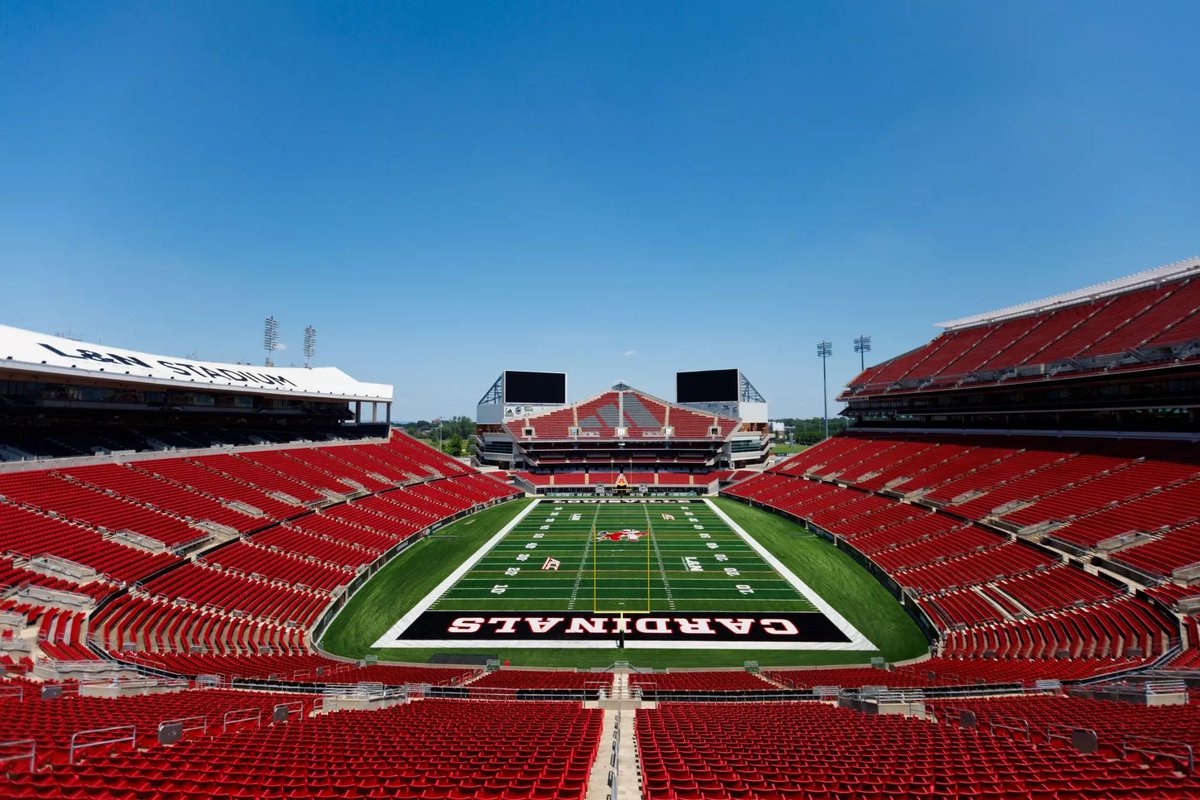








![nickatnocap's tweet photo. Louisville is spending aggressively, and building the infrastructure to back it up.
The Cardinals just pulled off one of the fastest transfer portal blitzes in college basketball, landing tier 1 talents in a matter of days. The basketball payroll could push toward $20 million and Jeff Brohm just locked in an eight-year, $64.8 million extension through 2033. Louisville is going all-in on both revenue sports at the same time.
But what makes Louisville's approach stand out is that they aren't just spending, they're rethinking the entire model.
Last week the board of trustees approved Cardinal Ventures, a new nonprofit built to function as an in-house commercial engine for the athletic brand. Sponsorships, marketing, NIL agreements, branding deals that were previously outsourced or underleveraged would now run through a dedicated entity designed to move fast and keep more value inside the institution.
It starts with no staff, no budget, and no assets. AD Josh Heird called the approval "mile one of a marathon."
They also approved a second, dormant entity that creates a legal framework to receive private capital, equity investment, or bond financing tied to athletics if the right deal materializes. Nothing happens with it unless the trustees vote separately to activate it, but the structure is in place.
"The one thing I would tell you is that we are looking at every option under the sun," Heird says. "We'll entertain any conversation as long as it makes an inkling of sense, because expenses aren't getting reduced anytime soon. But on the flip side, [investors] aren't going to be willing to have these conversations relative to debt, equity, whatever it may be, providing capital, if they don't think there's opportunity there."
That's the key insight Louisville's leadership seems to understand clearly: you have to prove the brand has value before anyone will invest in it. The spending and the structural work feed each other.
Board chair Larry Benz framed the broader challenge directly: instead of finding new ways to slice the existing pie, you try to create a bigger pie.
Louisville is one of the few programs tackling both sides of this equation simultaneously, competing at the highest level today while building new financial tools for tomorrow. For a city where Cardinal athletics drives the culture, the ambition matches the stakes.
As Pat Kelsey put it: "When we win, the sun is out. When we lose, it's gloomy and people yell at their dog and the pizza doesn't taste as good. It freakin' matters."
Louisville is betting on itself and they're building the infrastructure to make that bet pay off.](https://pbs.twimg.com/media/HG2j0OybsAAtgyg.jpg)


