Physical AI has a data problem, and it isn't the one people are pricing.
Tiger Research put robotics on its 2026 crypto list, Fine.
But look at what most of the market is actually trading:
tokens, demos, humanoid clips.
Very little of it touches the question every robot has to answer on day one:
what does this specific room look like right now?
That's the gap @vangrid_io is built for.
The problem:
A robot can have great hardware and a great model and still fail at the door of a building it has never seen.
Interiors are messy and they change constantly:
furniture moves, shelving gets rearranged, a loading bay is blocked, a stairwell is under repair. Mapping vans don't go inside on request, and old scans go stale.
How Vangrid works:
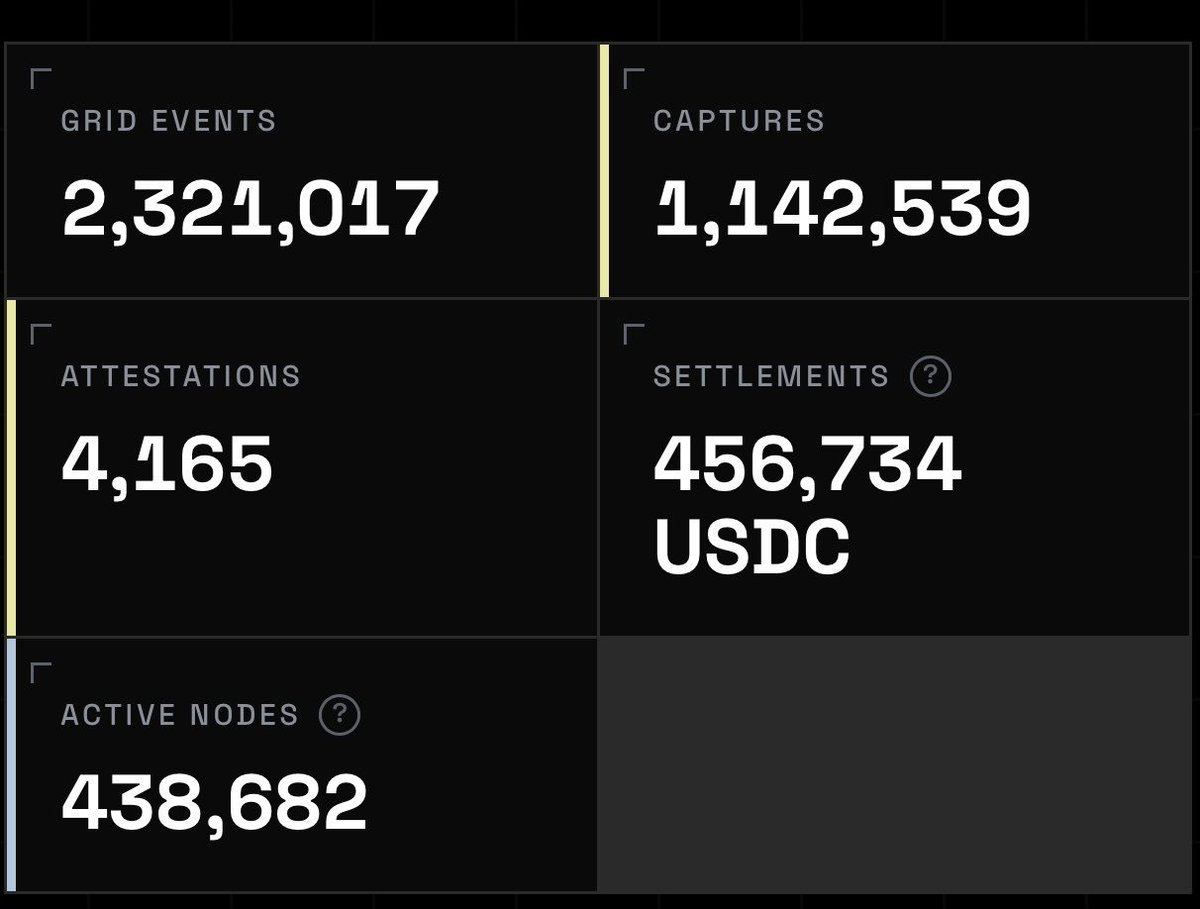
Phones are the nodes. No custom hardware, no supply chain to bootstrap. The capture network is already in people's pockets.
Bounties point people at named places. Instead of hoping a scrape happens to cover a site, a buyer posts a job for one exact location and someone goes there.
USDC settles the work. The contributor gets paid for a specific, completed capture.
Every capture is fingerprinted and anchored on Base. That's what makes a stranger's footage usable in a serious workflow: there's a record of what was captured and when, and it can be checked.
The explorer is the audit layer. A buyer doesn't have to trust a claim. They can verify it.
Why this matters for the 2026 thesis?
If Physical AI is real, the scarce asset isn't another humanoid trailer. It's current, dated, verifiable views of live sites, the kind of data that can sit in a procurement file and survive scrutiny.
Crypto can trade this theme all year and still just be pricing narratives.
Vangrid is doing the unglamorous part underneath:
collecting ground level data, paying for it, and leaving a trail.
Hardware still needs interiors. Models still need fresh geometry. Someone has to supply the rooms.
That's the rail Vangrid is laying.