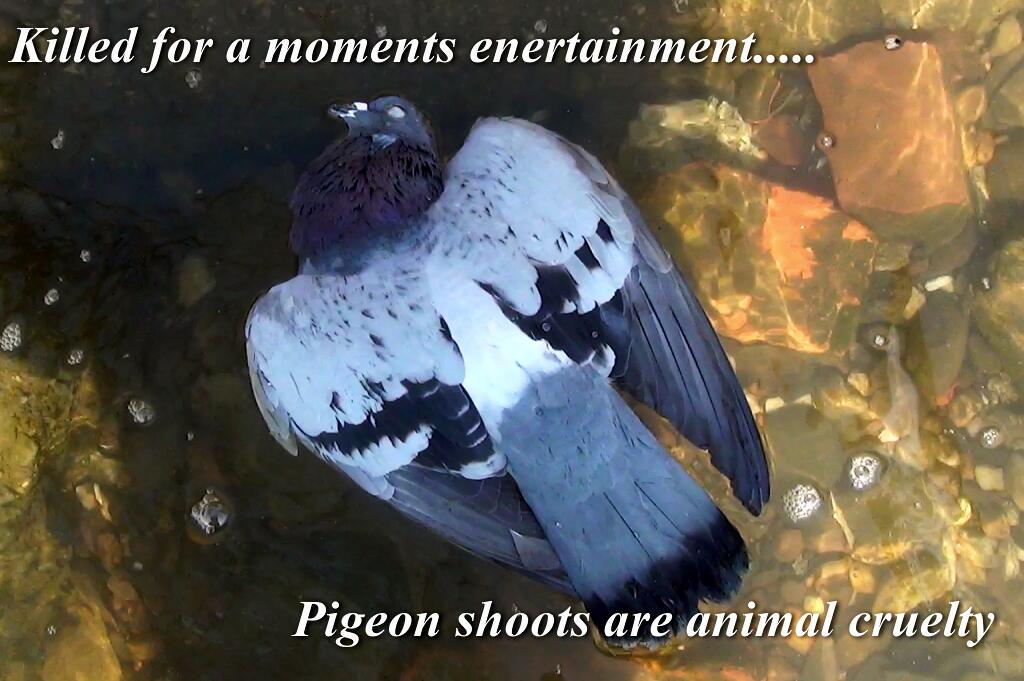
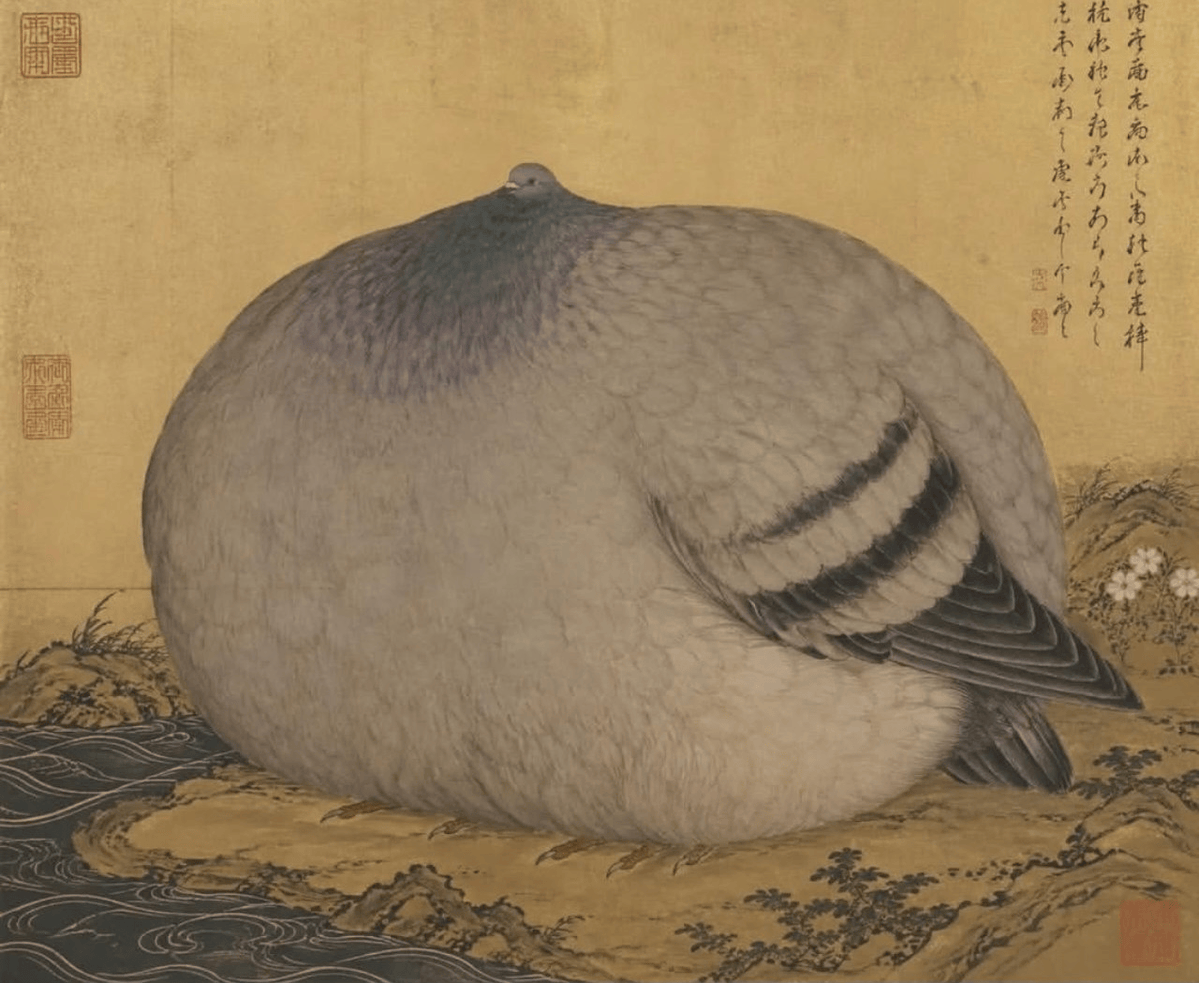
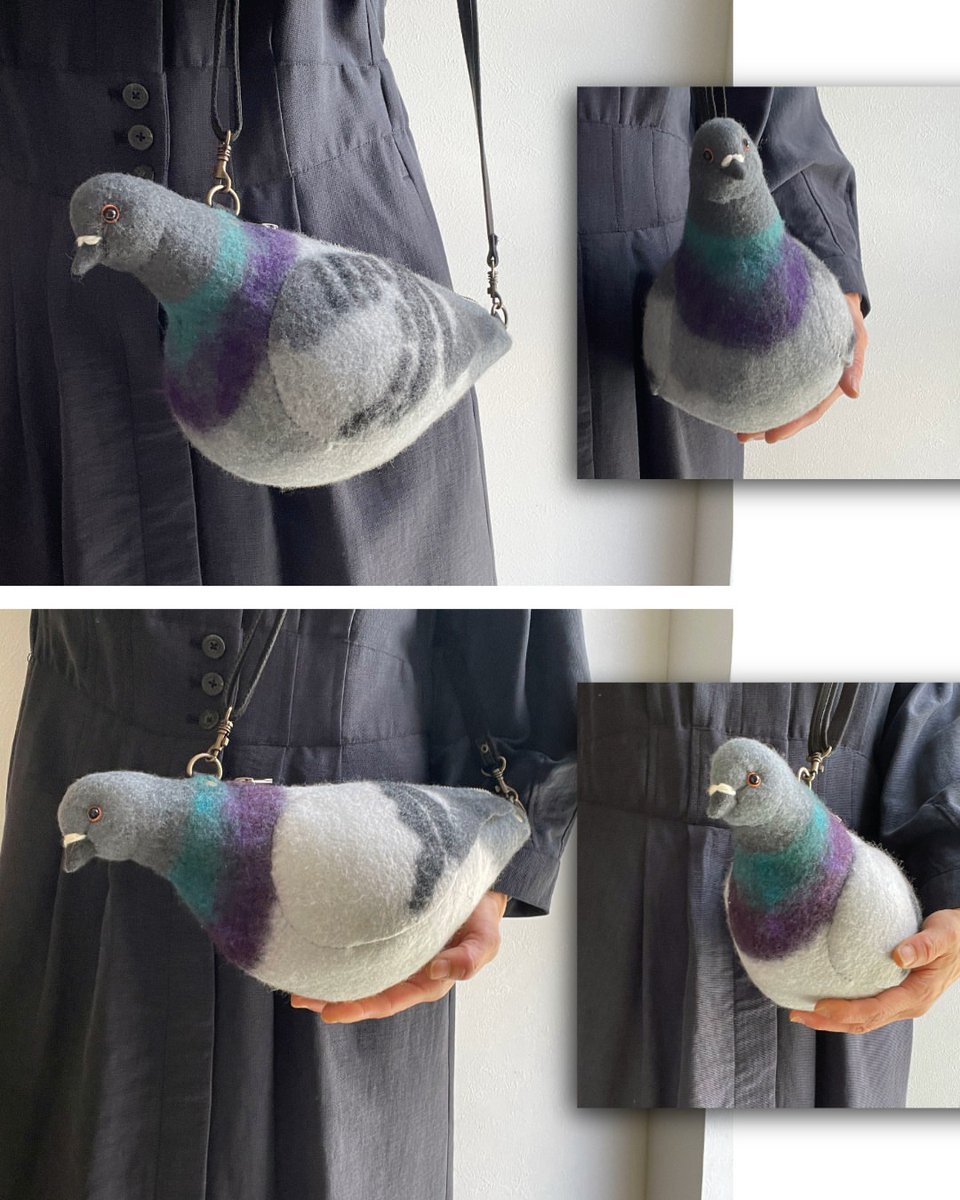
Pigeon rescuer and advocate. Pigeons are not dirty and diseased. That's humans. Never believe everything you read on the internet. Pigeons taught me that.
There are cat therapy centers in Japan.
If you're tired of life, things aren't going well for you, and it feels like life is coming down on top of you, you can visit these centers.
Here, cats spend time with you, helping to reduce your stress, lift your mood, and restore your energy.
Honestly, it wouldn't be a bad thing if these therapy centers spread all around the world 🐱❤️😹
The shape of your pollinator garden matters more than its size.
Most native bees have small foraging ranges. Peer-reviewed research on solitary bees found female flight distances of just 73 to 121 meters from the nest. A small bee born in your neighbor's yard might not reliably reach a flower patch in the middle of your yard if there's a length of mowed grass between them.
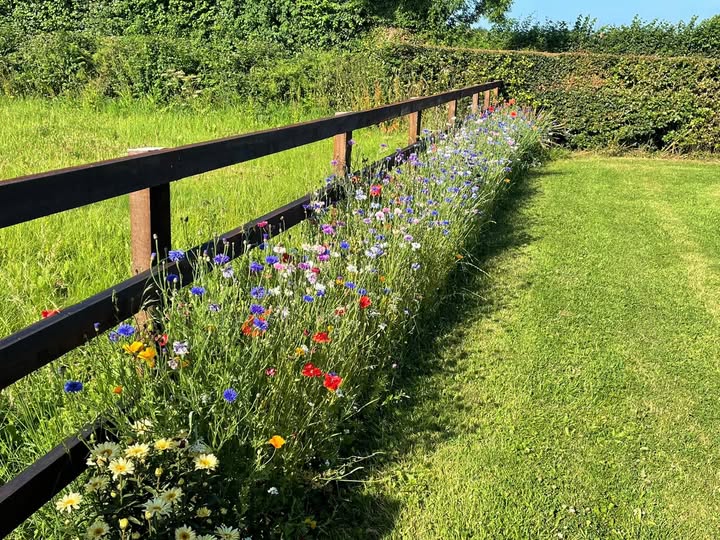
What works is linear pollinator habitat. A strip along a fence line, a corridor along the driveway, or a narrow band of natives running the full length of the property is best.
A 2018 study in the journal Ecography found that the length of linear semi-natural habitat was the single strongest predictor of wild bee species richness and connectivity in agricultural landscapes. Bees track edges.
A 2-foot-wide strip running 50 feet does more ecological work than a 10x10 island in the middle of the lawn. The strip gives pollinators a route to follow, something that guides their movement across the landscape.
The effect multiplies when your neighbors do the same. A strip along your fence meets a strip along theirs, and so on.
She adjusts. She tucks. She covers every one of them.
No one taught her this.
In the egg industry, she never meets her chicks. Her eggs go to a hatchery. She never feels them underneath her.
This hen does.
One man in California has spent 57 years recording the sounds of natural places. Much of what he's recorded no longer exists.
His name is Bernie Krause. He started as a folk musician and an early pioneer of the Moog synthesizer. In 1968, he began carrying recording equipment into rainforests, deserts, coral reefs, African savannas, and research sites associated with scientists like Jane Goodall and Dian Fossey.
The Wild Sanctuary archive now contains more than 5,000 hours of recordings and over 15,000 identified species. Krause coined the term "biophony" to describe the collective sound of living organisms in a habitat and helped establish the field of soundscape ecology.
Through thousands of recordings, he observed that healthy ecosystems often partition acoustic space, with different species occupying different frequencies and times of day. On a spectrogram, an intact habitat can resemble a densely layered musical score.
When Krause revisited many of the places he had recorded decades earlier, he found that over half had become silent, severely degraded, or so altered by human activity that their original biophonies could no longer be heard. His archive preserves sounds from ecosystems that have been transformed or lost.
Bye bye Boadie!
Our banded herring gull returned to the wild yesterday after two weeks in care. We think he suffered a collision, based on bruising on his keel, and then was down a while, not eating, while recovering. All our tests (x-rays, lead) came up clean, and he quickly regained his strength in care and was able to pass his flight test.
Based on the info from his band, Boadie just celebrated his 15th birthday. We hope he’ll enjoy 15 more healthy years out on the waters of NYC.
Happy #FreebirdFriday!
🎥: Terra Tirapelli
I'm fuming to read this! 🤬
Year in and year out this kind of crap happens in the summer, when most birds are already breeding, not just with Swifts, but with all birds! 😒
Birds and their nests are protected by law, but the law is clearly inadequate and is riddled with loopholes that councils, builders, farmers... anyone really, can exploit. 😡
Yet still some wonder why the UK is the most nature depleted place on earth...
https://t.co/q2grIPa3g5
Smells a dead mouse from a mile away. Eats anthrax for breakfast. Prevents epidemics just by existing.
The turkey vulture — the most important bird nobody respects.
THE NOSE:
→ Best sense of smell of any bird on Earth
→ Can detect ethyl mercaptan (decomposition gas) from 1+ mile
→ Gas companies add the same chemical to natural gas lines
→ Turkey vultures have circled gas leaks — engineers follow them
THE STOMACH:
→ Stomach acid: pH ~1 (nearly pure hydrochloric acid)
→ Destroys anthrax, botulism, cholera, hog cholera
→ Eats diseased carcasses that would otherwise spread epidemics
→ Essentially a flying biohazard disposal unit
THE BALD HEAD:
→ No feathers = bacteria can't get trapped when eating carrion
→ UV sunlight sterilizes the bare skin
→ Same reason vultures sunbathe with wings spread (UV sterilization)
THE FLIGHT:
→ Soars for hours without flapping (uses thermals)
→ Distinctive "wobbly" flight with wings in shallow V
→ Can cover 200 miles per day searching for carrion
WITHOUT VULTURES:
→ In India, vulture populations crashed 99% due to a cattle drug
→ Result: rotting carcasses, feral dog explosion, rabies epidemic
→ Tens of thousands of human deaths attributed to vulture decline
Respect the cleanup crew.
You need them more than they need you.
One of the most heroic things I've seen recently is one little town in northern Michigan that kept a bird from going extinct.
The town is Mio, population of about 1800. The bird is the Kirtland's warbler, a small gray-and-yellow songbird that breeds in exactly one kind of habitat, mostly in a single corner of Michigan.
In 1974, the entire global population dropped to 167 singing males. The bird was one of the first species listed under the original 1966 Endangered Species Preservation Act, and it looked like the species was going to be extinct within a generation.
The problem was the habitat. Kirtland's warblers need fire-disturbed jack pine. Their entire breeding range is one specific successional stage of a fire-adapted forest. Decades of fire suppression had let the jack pine grow up past the age the birds could use. The birds had nowhere left to nest.
Mio became the staging point for the recovery. They built a forest management program: clear-cut, replant, burn, repeat. About 76,000 hectares are now managed on roughly six-year rotations to keep a continuous supply of young pine in the bird's preferred age range.
The work has paid off with the total population estimated at over 4,500 birds. The Kirtland's warbler was removed from the endangered species list in 2019, a rare full delisting.
The bird still requires active management. If the work stopped, the jack pine would age out within 20 years and the species would collapse again.
Is there anything more <checks notes> *beautiful* than a fledgling red-winged blackbird?🥺
OK, so they’re a little late in getting feathers on their faces. It’s a blackbird thing! Common grackle fledglings are also known for their unabashed baldness in the facial region. We don’t know why. But these birds leave the nest normally while still looking a little scruffy. They can fly a bit at this age but are still dependent on their parents for food.
This fledgling, named Viola, was found in the water in Prospect Park and needed a little extra help. Normally, however, you can let a fledgling like this be.
📷: Rachel Frank