GLP-1-like drugs have become one of the biggest stories in modern medicine, especially for treating obesity and other metabolic diseases. At the same time, there is an ongoing debate around their affordability, accessibility, long-term use, and whether these treatments can become sustainable solutions for everyone.
One thing is clear: countries like India urgently need innovative and scalable approaches to tackle lifestyle-associated diseases such as obesity, diabetes and metabolic dysfunction, which are affecting an increasingly large population.
Supported by BFI-BIOME, Dr. Bhabatosh Das and Dr. Dinesh Mahajan at THSTI are engineering a beneficial gut bacterium, E. coli Nissle 1917, to produce and release GLP-1-like peptides directly inside the gut.
Think of it as turning bacteria into living drug factories.
Instead of repeatedly delivering drugs from outside the body, these engineered bacteria could potentially produce therapeutic molecules where they are needed, helping regulate appetite, improve metabolism and address obesity and fatty liver disease.
The team is now testing their safety, stability and effectiveness in animal models.
@THSTIFaridabad
Building a growing network of medical institutions across India
Through the BFI-BIOME Medical INI Program, BFI-BIOME SAMARTH Program, and Medical College Incubation Centers, we are building a growing network of leading medical institutions across India.
These partnerships support translational research and clinical innovation addressing critical healthcare challenges across infectious diseases, non-communicable diseases, cancer, rare diseases, antimicrobial resistance, genomics and proteomics, diagnostics, and novel medical technologies.
BFI is creating pathways for promising research and clinical insights to move towards practical healthcare solutions and patient impact.
योगी जी आपकी हाईटेक पुलिस को ये क्या हुआ..किसकी नजर लग गई अब तो र'क्षक ही भ'क्षक की भूमिका में आ गए -
यूपी पुलिस का वर्दी की आड़ में लूट का कारनामा सुनकर दंग रह जाएंगे आप ?
जौनपुर जिले में खुद को क्राइम ब्रांच से जुड़ा बताकर पुलिस की गैंग ने जौनपुर और बनारस से दो अलग-अलग कारोबारियों को उठाया गया ।
दोनों व्यापारियो�� को टार्चर किया गया।उनके साथ मारपीट की गई, और धमकाकर लगभग ₹1.65 लाख यूपीआई (UPI) के जरिए ट्रांसफर कराए गए ।
शिकायत के बाद हे मामला खुला है -
जिसके बाद 2 सिपाही सत्येंद्र कुमार गौर और विष्णु सिंह सहित तीन लोगों को गिरफ्तार कर लिया है।
वहीं थानाध्यक्ष दिव्य प्रकाश सिंह फरार है,पुलिस ने SHO पर 25000 का इनाम घोषित किया है।
इस घटना में SHO के दो सगे भाई विकास सिंह और संकीत सिंह भी शामिल थे..दोनों ने कोर्ट के सामने सरेंडर कर दिया है।
फरार चल रहा इनामिया थानाध्यक्ष अब व्हाट्सएप पर धमकी भरे स्टेटस लगा रहा है -
जिसमें लिखा है -
"सभी की पोल खुलेगी, जल्द वापसी करूंगा"
1/2
India had an estimated 115.1 million people living with chronic kidney disease in 2017, highlighting the urgent need for accessible and timely kidney function testing.
Source: Global Burden of Disease Study, published in PubMed Central
https://t.co/v7BKo6SRai
Early detection can help prevent or slow further kidney damage, yet conventional creatinine testing depends on pathology labs, creating delays and limiting screening, especially in underserved areas.
Supported by BFI-BIOME, Utopic Tech is changing that with Creasens, a portable point-of-care device designed to bring kidney-function assessment closer to the patient.
Creasens need just 10 µL of blood from a finger prick to measure creatinine, a key marker used to assess kidney function. The device then uses the creatinine result, along with age and gender, to calculate eGFR (estimated glomerular filtration rate), a measure of how effectively the kidneys are filtering waste from the blood. Results are generated in just 3 minutes.
At its core, Creasens uses a biosensing-based measurement system to detect creatinine in the blood and convert that biological signal into a quantitative result. Its compact, portable design means testing can move beyond centralized laboratories to clinics, hospitals, screening camps and rural healthcare settings. Utopic Tech’s validation study reports 97% overall diagnostic accuracy compared with a central laboratory reference method.
The potential impact is significant: less waiting, fewer barriers to testing and more opportunities to identify kidney problems earlier, particularly in communities where access to laboratory diagnostics is limited.
Introducing the First Cohort under the Product Promotion Program - BFI Innovation Full Stack
8 startups. 8 healthcare innovations. One shared mission: market adoption.
These ventures have moved beyond validation and into the Product Promotion Program, where a dedicated team of market experts, working across major cities nationwide, will help take proven healthcare innovations to doctors, hospitals, distributors, and government procurement channels.
Meet the cohort:
• Cre-AID Labs: MITHRIL Splints®️, custom orthopaedic splints & orthoses
• MedevPlus: IXanner®️ 7VN, the world's first portable handheld OCT
• Inochi Care: InoHeal™️ Pro, multi-therapeutic wound healing device
• CareMother by Doto Health: Maternal & fetal monitoring solutions
• SmartQR Technologies: AI-enabled Mini DNA Lab
• Serigen Mediproducts (Official account): Seriderm, silk-protein wound dressing
• SparshMind Innovations Pvt. Ltd.: VR-based neuro rehabilitation solution
• Cureous Labs: Eturnal Series, India's first intelligent automatic patient repositioning solution
Learn more: https://t.co/7dmB7RN5CD
Calling all innovators to address the gap in HIE care.
The first 6 hours after birth can make a critical difference for a newborn with Hypoxic Ischaemic Encephalopathy (HIE).
Clinicians, MedTech innovators, engineers, and implementation partners are invited to contribute solutions for:
• Safe, controlled therapeutic hypothermia
• Continuous monitoring of temperature, vitals and brain activity
• Maintaining HIE care during referral and transport
If you have relevant expertise or a solution that can help close this gap, Connect with the team on Interconnect.
Read the full problem statement: https://t.co/k4o8psDakQ
More than 15.4 million people worldwide were living with spinal cord injury (SCI) in 2021. For many, SCI can mean losing the ability to walk, move their hands, or perform everyday activities independently. Globally, the condition accounted for more than 4.5 million years lived with disability in 2021.
Source: https://t.co/85NIEbRG6K
Yet the biggest challenge goes beyond the initial injury. When the spinal cord is damaged, nerve cells have very limited ability to regenerate. At the same time, inflammation and scar tissue create an environment that makes it difficult for new nerve fibres to grow across the injured region.
Despite advances in surgery, rehabilitation and experimental therapies, there is still no approved treatment that can reliably restore damaged neural circuitry and lost neurological function.
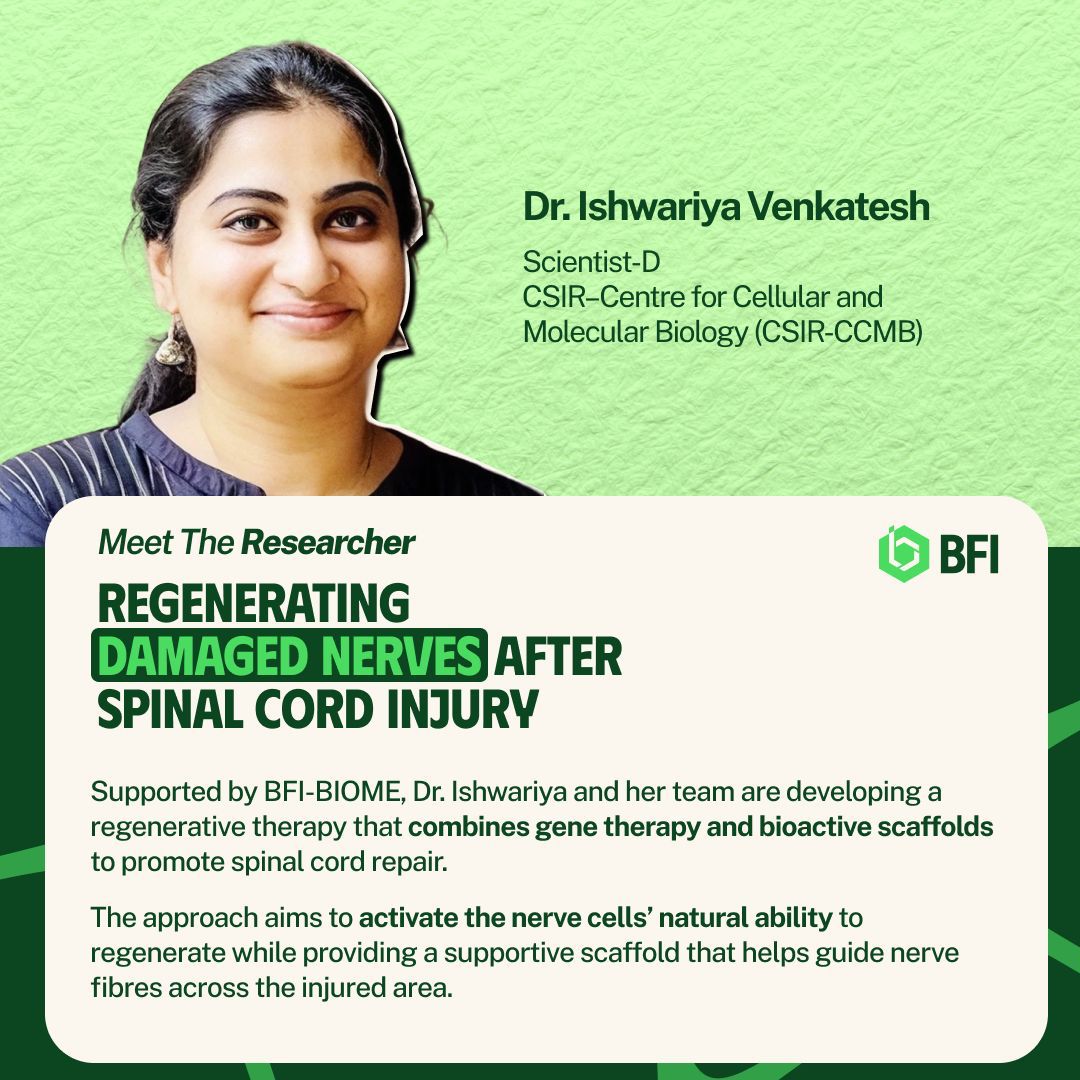
This is the challenge Dr. Ishwariya Venkatesh and her team at CSIR–CCMB are working to address, with support from BFI-BIOME.
Their approach combines gene therapy with bioactive scaffolds, two strategies designed to tackle both sides of the problem.
Gene therapy aims to enhance the natural regenerative ability of damaged nerve cells.
Bioactive scaffolds aim to create a supportive bridge at the injury site, providing structure and biological signals that can help regenerating nerve fibres grow across the damaged area.
The team will evaluate this combined approach in preclinical models of both recent and long-term spinal cord injury, studying nerve regeneration, neural connections and movement to determine whether the approach can translate regeneration into meaningful functional recovery.
Millions of people who are blind or have severe visual impairment navigate a world they cannot see. What if technology could help them hear and understand it?
NeuroDrishti is working to make everyday life more accessible for people with visual impairment by using AI, cameras, sensors, and audio to help them better understand, navigate, and interact with the world around them.
At its core, NeuroDrishti works through three simple steps: See → Understand → Speak.
The camera captures the environment, AI interprets it, and audio communicates relevant information to the wearer.
NeuroDrishti, founded by Ashwani Yadav, was supported through the BFI-BIOME Fellowship, which backed the development of this innovative assistive technology in India.
If successfully developed and scaled, NeuroDrishti could become an everyday assistive companion, helping visually impaired people navigate the world with greater independence, confidence, and safety.
Gastric cancer is a major global health challenge responsible for nearly one million new cases and over 660,000 deaths annually.
Despite advances in cancer therapy, existing treatments such as surgery, chemotherapy, and radiation often cause significant side effects in patients due to poor targeting of cancer cells.
To address this, Prof. Swati Biswas and her team from BITS Pilani, Hyderabad Campus, are developing a novel oral drug delivery platform based on self-propelled Janus nanomotors for the treatment of gastric cancer.
Janus nanomotors are tiny engineered particles with two distinct functional sides. One side helps propel the particle, while the other carries the anticancer drug. Unlike conventional drug delivery systems, the unique design of nanomotors enables them to actively navigate
the harsh acidic environment of the stomach, and transport anticancer drugs directly to tumor sites.
This targeted approach aims to improve treatment precision and reduce harm to healthy tissues.
Funding support from BFI-BIOME is enabling the complete development pathway of this Technology, from fabrication and therapeutic design of the Janus nanomotors to validation of their safety and efficacy in preclinical models.
This research has the potential to establish a new generation of targeted, minimally invasive therapies for gastric cancer.
Building the Future of Healthcare Innovation
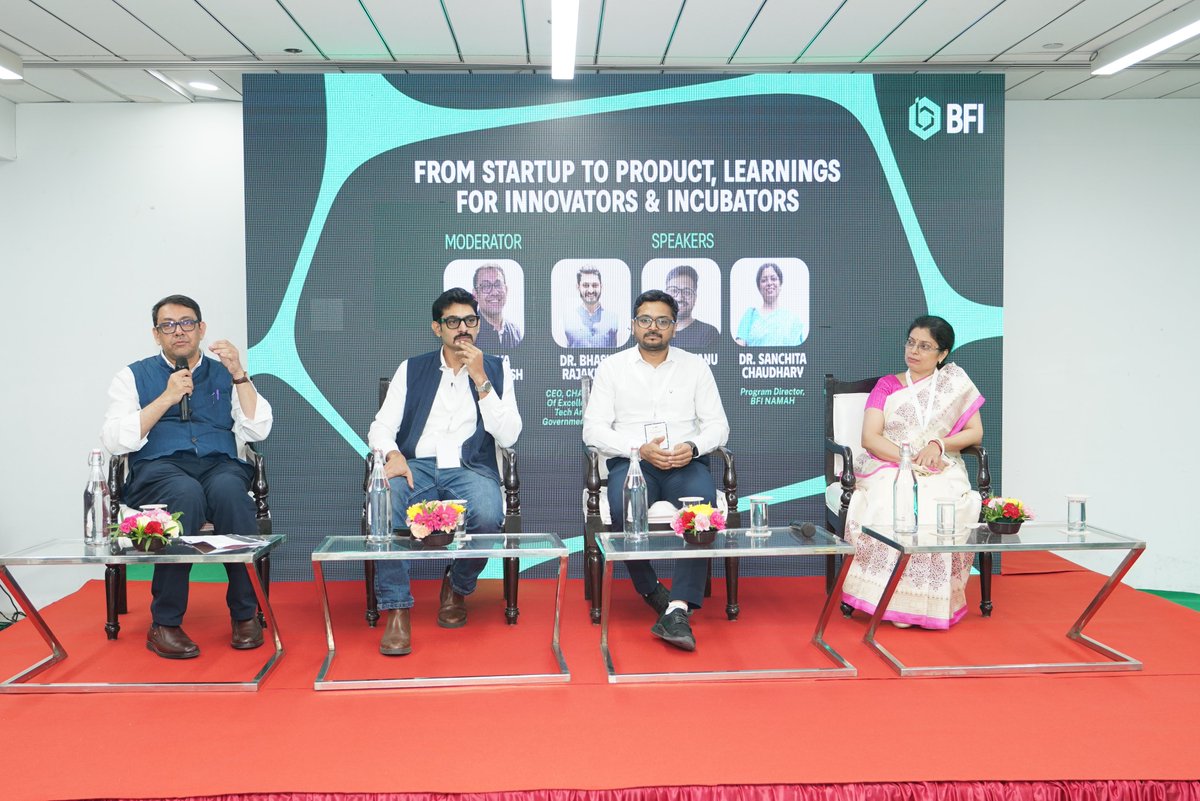
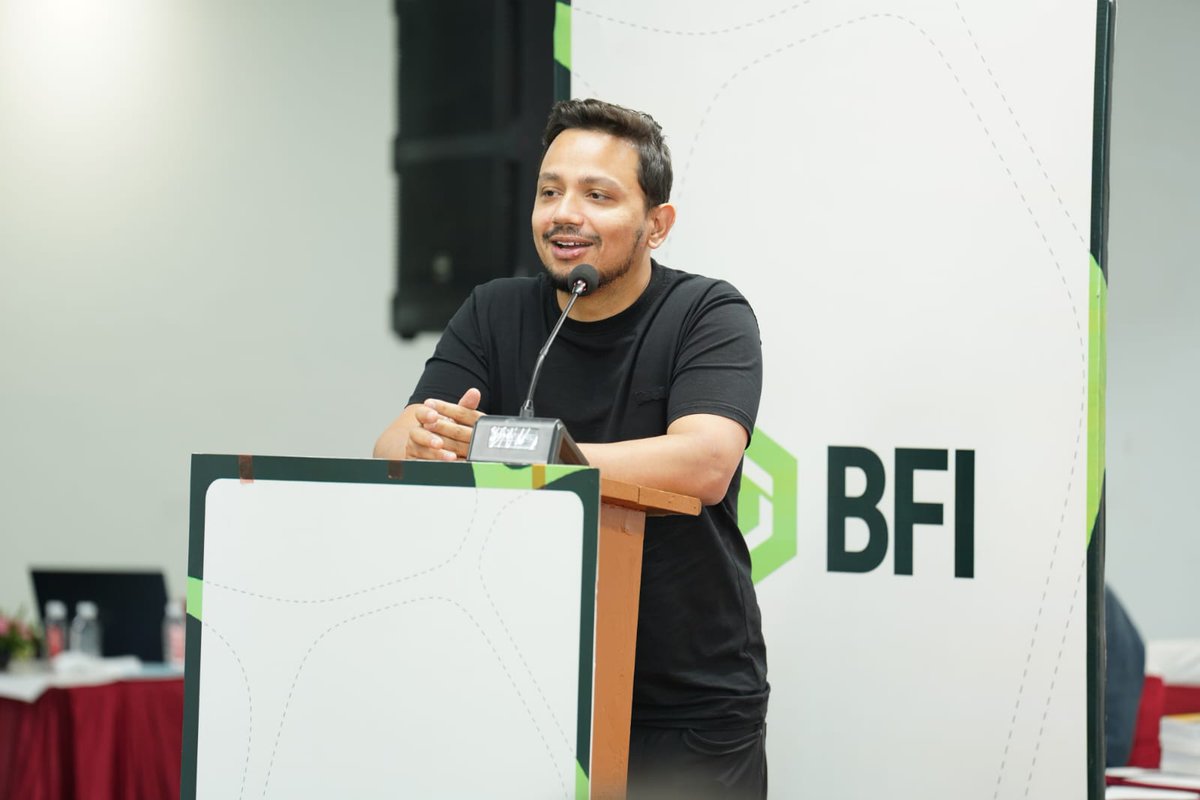
BFI organised a Two Day Orientation Program for the Medical College Incubation Centres within the Innovation Full Stack program on 13th -14th August 2026 at R&I Park, IIT Delhi, with an objective to align different incubation facilities across the BFI Innovation Full Stack programs, orient them to the process of incubation in medical institutions, and create portals for networking and dialogue between all BFI partner institutions.
The interactive workshop brought together representatives from the medical college incubation centres including centre managers, faculty, and guest speakers from the research and innovation ecosystem for knowledge sharing, peer learning, interactive discussions, networking and exposure to established incubation and prototyping facilities.
While Day 1 explored the journey of building and strengthening incubation ecosystems, covering clinician-led innovation, preclinical and clinical incubation, mentorship, regulatory pathways, commercialisation and industry engagement, Day 2 brought these conversations to life through the Innovator’s Roundtable, a facilitated discussion focused on peer learning, identifying institutional challenges and developing contextualised implementation roadmaps. The exposure visit to MPragati, IIT Delhi further complemented these learnings with practical insights into prototyping, testing, manufacturing and innovation support facilities.
From strengthening incubation capacity to fostering collaboration across institutions, the two days laid the foundation for a stronger and more collaborative medical innovation ecosystem.
Our heartfelt gratitude to all the speakers, participants, partners and teams who made this program a success!
This marks the beginning of converting brilliant ideas to sustained action through a collaboration of innovators, clinicians and researchers across disciplines.
Whether it’s cancer, tuberculosis, or neurological disorders, early diagnosis can significantly improve treatment outcomes. Yet, many diseases continue to be detected only after symptoms appear or significant damage has already occurred. One of the biggest reasons is that disease biomarkers exist in the blood at extremely low concentrations during the early stages, making them difficult to detect with conventional diagnostic methods.
This is the challenge that ANLISA Biotech is working to solve.
Founded by Dr. Balendu Avvaru, ANLISA is developing an ultrasensitive molecular detection platform capable of detecting biomarkers at attomolar concentrations, up to 1000× greater sensitivity than conventional ELISA, using a simple blood sample. By identifying biomarkers that conventional methods may miss, the platform aims to enable earlier diagnosis while remaining compatible with standard laboratory equipment, making advanced diagnostics more accessible and scalable.
ANLISA’s current focus is on neurological diseases, where the platform is designed to detect biomarkers such as NFL, tau, GFAP, and α-synuclein without the need for invasive CSF collection. The company is also building ultrasensitive immunoassays for oncological and infectious diseases, opening the possibility of applying the same detection approach across multiple disease areas in the future.
As healthcare shifts towards prevention and early intervention, technologies that can detect disease at the molecular level have the potential to transform healthcare by allowing disease to be identified and addressed before it progresses, potentially reducing the need for intensive treatment.
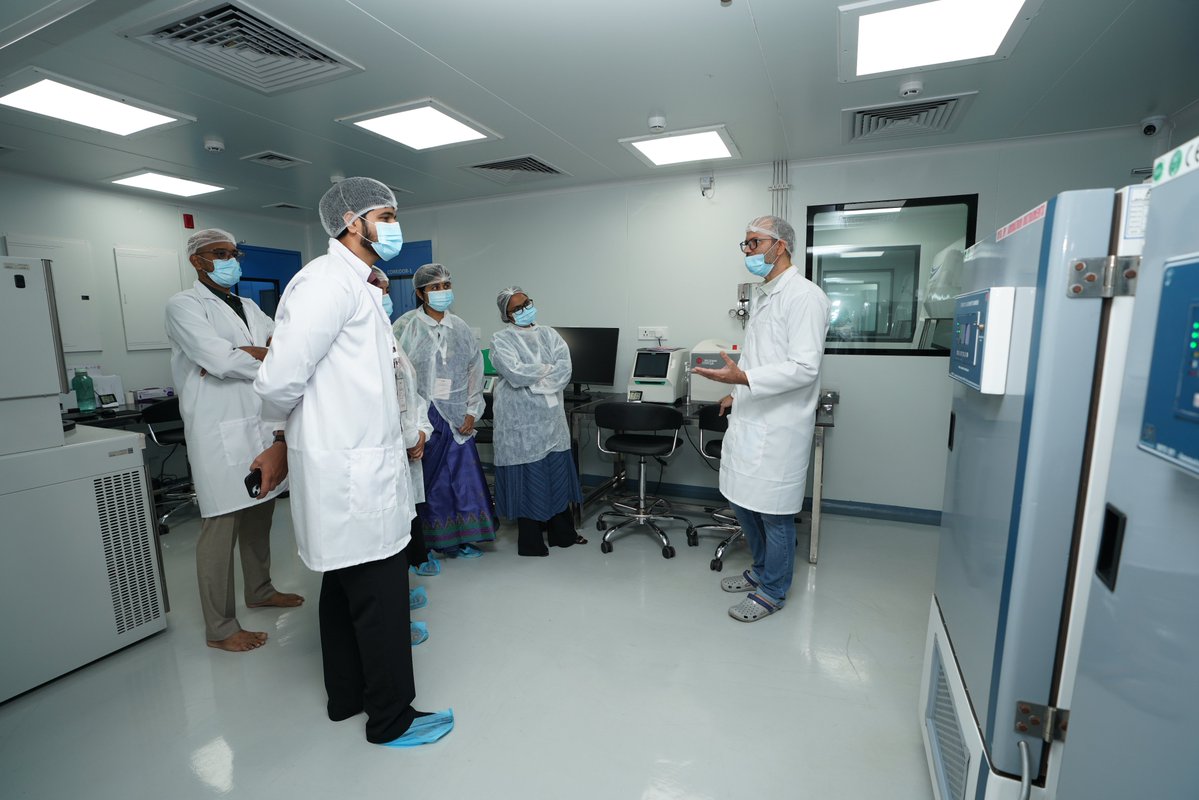
Introducing the team of innovation enablers of the BFI NAMAH Program at mPragati, IIT Delhi, with multidisciplinary expertise in CNC machining, advanced manufacturing, AI, embedded systems, product engineering, regulatory affairs, and MedTech innovation.
When the innovators arrive, they'll find more than infrastructure. They'll be supported by the expertise, mentorship, and hands on guidance needed to turn ideas into impactful MedTech solutions.
For any query please reach out to [email protected]
Every cell in our body carries genes that carefully regulate its growth and trigger cell death when something goes wrong. These built-in safeguards prevent damaged or abnormal cells from multiplying uncontrollably. However, cancer cells find ways to bypass these natural defenses.
One of the mechanisms they use involves proteins called Histone Deacetylases (HDACs), which can switch off genes responsible for controlling cell growth and initiating cancer cell death. Among them, HDAC3 plays a critical role in helping cancer cells survive, proliferate, and even resist existing therapies. While several HDAC inhibitor drugs are already available, most target multiple HDAC proteins simultaneously, often causing unwanted side effects by affecting healthy cells.
Supported by BFI-BIOME, Prof. Balaram Ghosh and his team at BITS Pilani Hyderabad Campus are developing AH22, a novel and highly selective HDAC3 inhibitor designed to precisely reactivate the body’s natural cancer-suppressing genes. By selectively blocking HDAC3, AH22 aims to restore the cell’s ability to eliminate cancer cells while minimizing damage to healthy tissues.
The team is now advancing AH22 through preclinical translation, generating the critical safety and efficacy data needed before it can enter human clinical trials. If successful, this targeted therapy could pave the way for safer, more effective cancer treatments that overcome drug resistance and improve outcomes for patients.
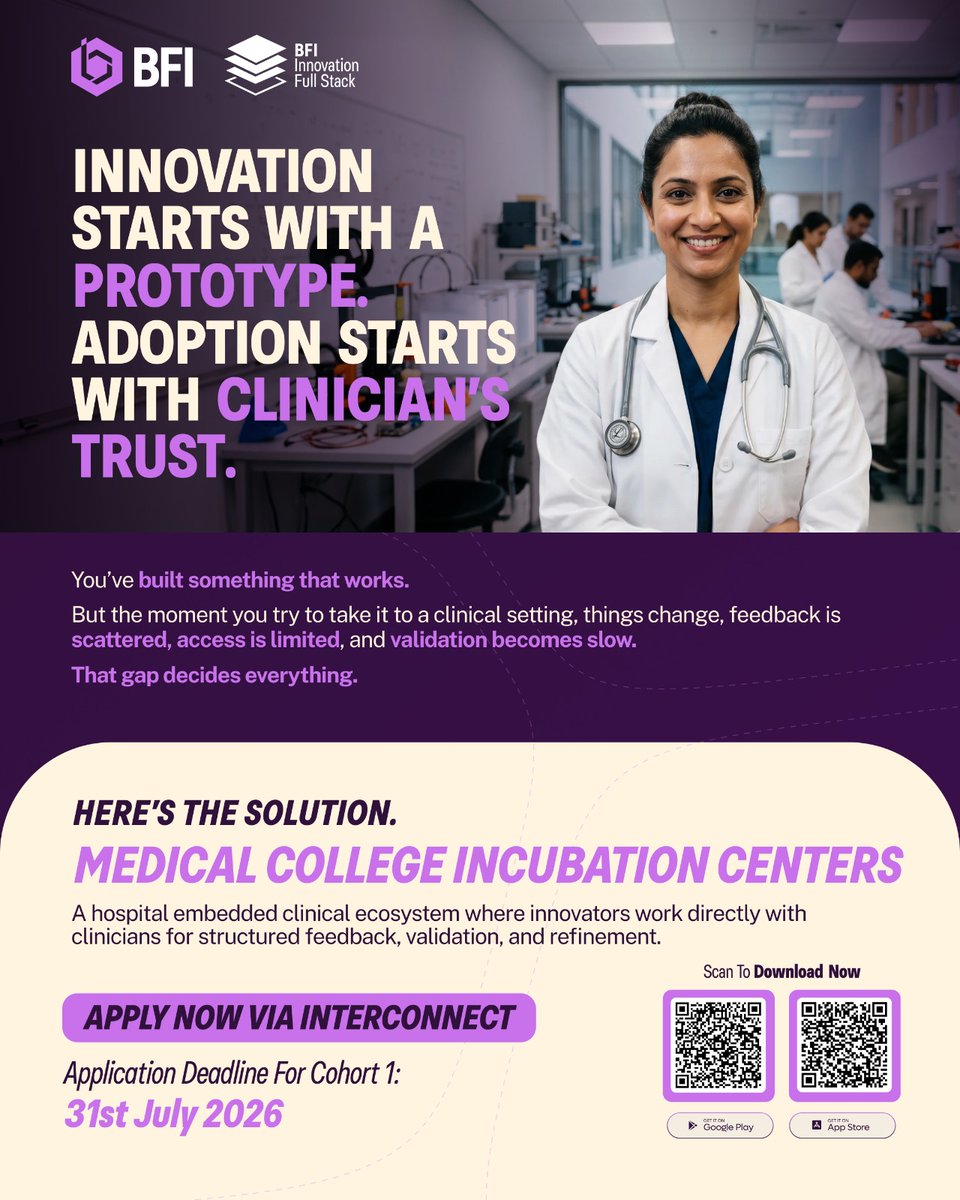
BFI Innovation Full Stack brings prototyping, clinical validation, large scale field studies, and market access onto one platform, with structured support at every stage, and room for innovators to join at any point in their journey, from prototyping to near market readiness.
Deadline's approaching, don't wait to apply.
Application deadline for Cohort 1: 31 July 2026
Apply now via Interconnect: https://t.co/XTLtMPGtLM
Learn more: https://t.co/FoKKWoLcnE
@GITAMUniversity@NimsUniversity@iiscbangalore@bitspilaniindia@IGIBSocial@AIC_CCMB@iitbombay@aiims_newdelhi@AshokaUniv@THSTIFaridabad
Imagine a patient waiting for a life saving medicine, unaware that the medicine may have already lost its effectiveness before it reaches the hospital or clinic.
For temperature sensitive therapies, even a few minutes at the wrong temperature can compromise its effectiveness. The result? Millions of dollars’ worth of medicines are wasted every year, treatments are delayed, and patients may not receive the care they need. In fact, an estimated 25% of biologics are discarded due to temperature excursions during storage and transportation.
That’s where Phloton comes in.
Phloton is an active cooling solution that continuously maintains the required 2–8°C temperature range during transport. Unlike conventional cold boxes that rely on ice packs and passive cooling, Phloton actively regulates temperature to help ensure temperature-sensitive healthcare products reach their destination safely and remain effective.
As biologics and other advanced therapies become more common, innovations like Phloton are helping make healthcare delivery more reliable, efficient, and accessible.
If you want to connect with innovators like Prerit Mittal, Suraj J R, and hundreds of others tackling some of healthcare’s most pressing challenges, join Interconnect, a platform where biomedical researchers, clinicians, founders, investors, and industry experts connect, collaborate, and build the future of healthcare together.
Download Interconnect today.
Google Play: https://t.co/zAUUvNFiu6
App Store: https://t.co/yCmmyuFMiQ
@prerit_mittal@sandeepnailwal
Applications for BFI Innovation Full Stack are open until 31st July.
Applying is simple:
• Download the Interconnect app from the Google Play Store or Apple App Store.
• Register yourself or your organization.
• Publish your project on Interconnect (this is a mandatory step before applying).
• Start your application, choose the BFI Innovation Full Stack program that best fits your needs, complete the required details, and submit.
Learn more: https://t.co/2vbNYjgp27
Download Interconnect: https://t.co/D2SRCxtxBF…
Read more
@sandeepnailwal
Over 1.5 million people are diagnosed with cancer in India every year, and a significant proportion of them require chemotherapy as part of their treatment.
While chemotherapy remains one of the most effective cancer treatments, it is not selective, it attacks rapidly dividing healthy cells along with cancer cells.
As a result, patients often experience debilitating side effects such as fatigue, nausea, hair loss, immune suppression, and organ toxicity. These side effects can reduce quality of life, limit the dose of chemotherapy that patients can tolerate, and sometimes even interrupt treatment.
Exsure is working to address this challenge through an exosome-based targeted drug delivery platform. Exosomes are tiny, naturally occurring vesicles released by cells that act as biological messengers. Exsure engineers these exosomes to carry anti-cancer drugs directly to tumors, allowing medicines to be delivered more precisely to cancer cells while minimizing exposure to healthy tissues. The platform is also being designed to target cancer stem cells, which are believed to contribute to tumor recurrence and treatment resistance.
By making chemotherapy more targeted, Exsure aims to improve treatment effectiveness while reducing its harmful side effects. If successful, this approach could enable safer cancer therapies, improve patients’ quality of life during treatment, and reduce the likelihood of cancer relapse, ultimately benefiting a large number of cancer patients who depend on chemotherapy each year.