The YOM network runs on a simple loop.
More gamers using platform → more compute consumed → more network activity → more $YOM settlement on-chain → more operators joining to serve demand.
Token utility grows when the network grows.
That's the design.
Every year the checklist gets longer: better GPU, more storage, faster internet, a newer console.
And every year the actual game stays exactly the same size it always was.
Publishers integrating YOM can bypass the traditional app-store funnel.
No downloads.
No store install friction.
No 30% platform fee on streamed access.
A player clicks a link. The game streams instantly from the nearest available node.
In the Martians vs Roughnecks case study, replacing a multi-GB download with instant play drove a +1,316% DAU increase.
That is what removing the barrier does.
https://t.co/AlRT6r6mwt
A gamer in Lagos, Nigeria. 🇳🇬
A gamer in Berlin, Germany. 🇩🇪
Same game. Same Steam purchase.
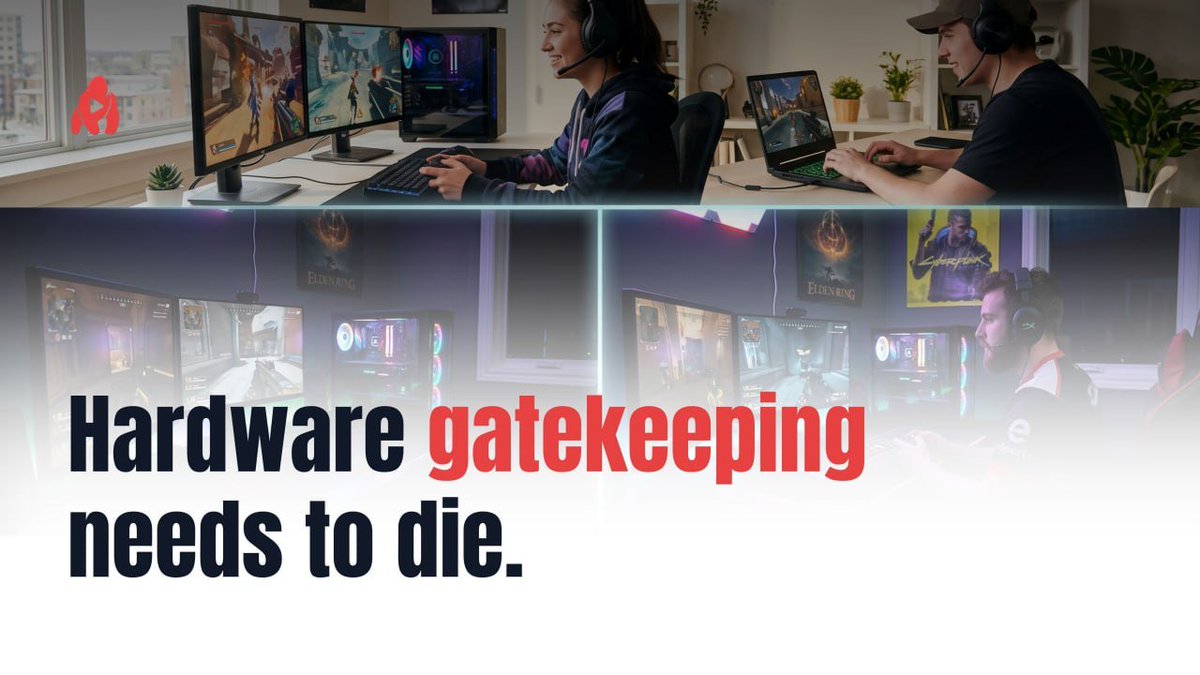
Why should one need a $3,000 PC for max settings while the other doesn't?
Gaming should be for everyone.
Hardware gatekeeping has to go.
Thousands of gaming PCs. Already built. Already in homes. Already online.
No data center needed. Just a network to connect them.
That's DePIN. Distributed hardware doing real work.
YOM is applying it to cloud gaming nodes close to players, not on the other side of the world.
Learn how it works.
https://t.co/EvAydwgc0G
Somewhere, an RTX 4080 has been sitting idle for 21 hours today.
It's powerful enough to render AAA titles in real time.
It's doing nothing.
YOM is building the network that puts that hardware to work streaming games to players nearby.
Node rewards vary based on utilization, uptime, and demand.
https://t.co/jm6J9jlKZ8