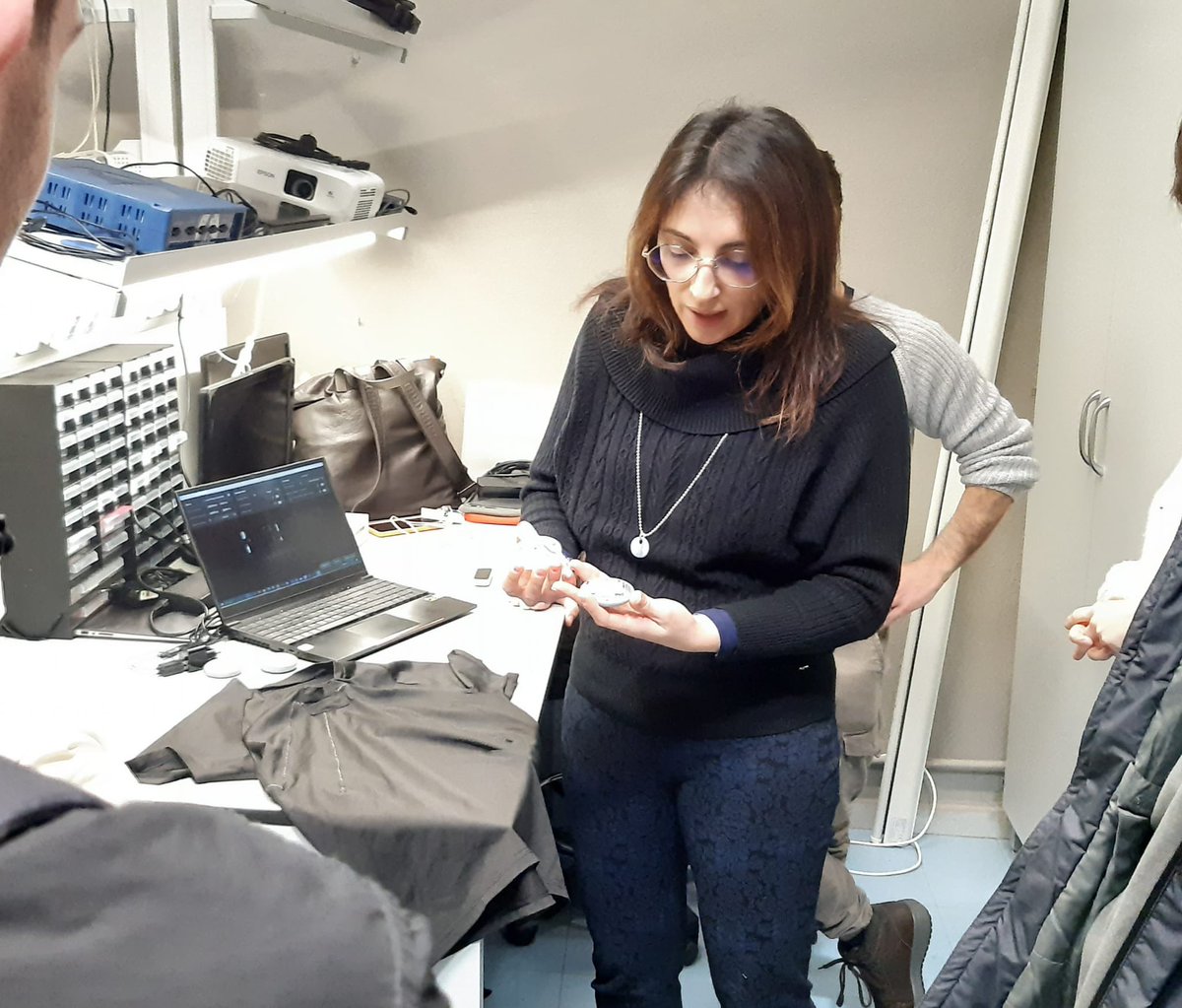
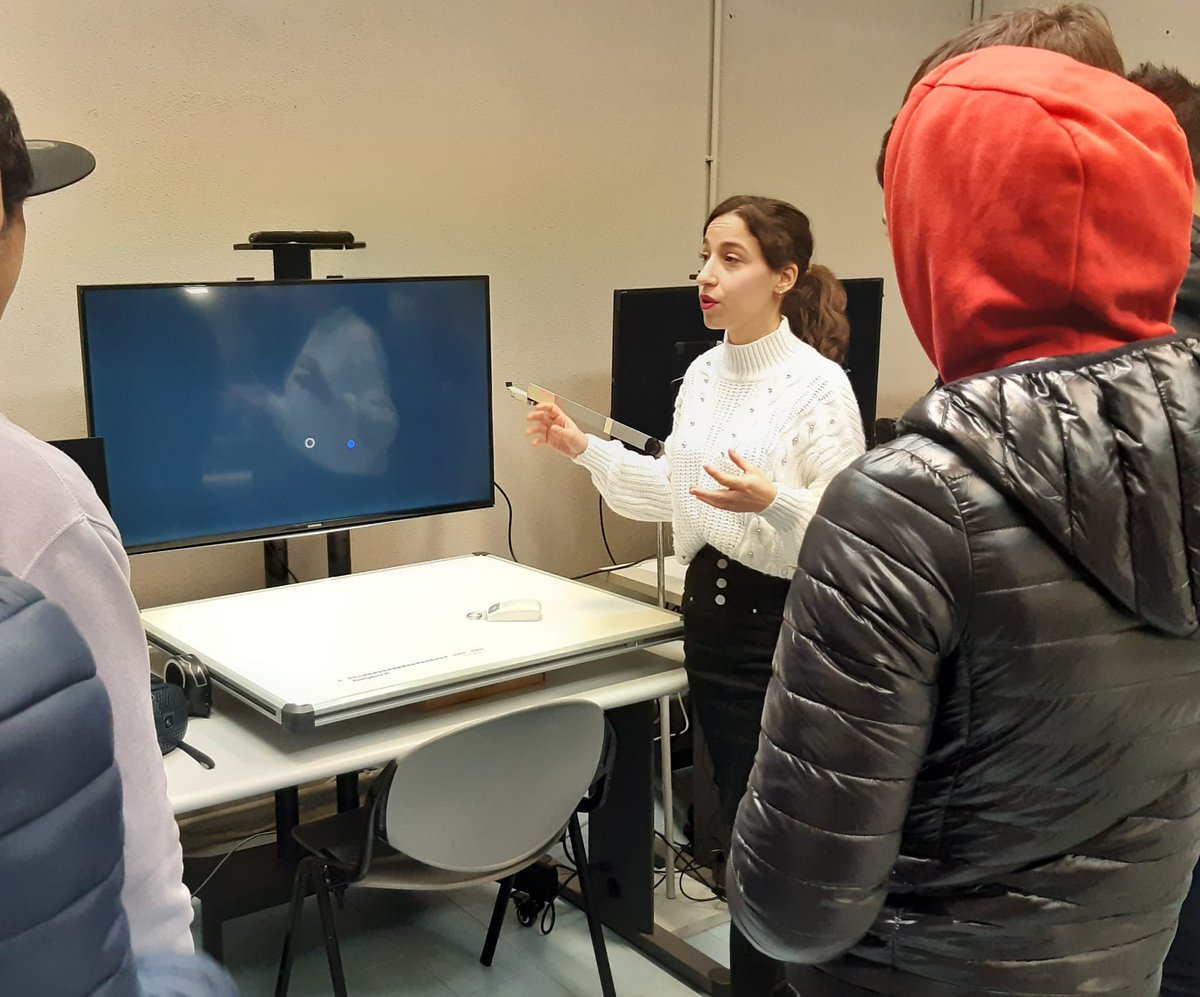
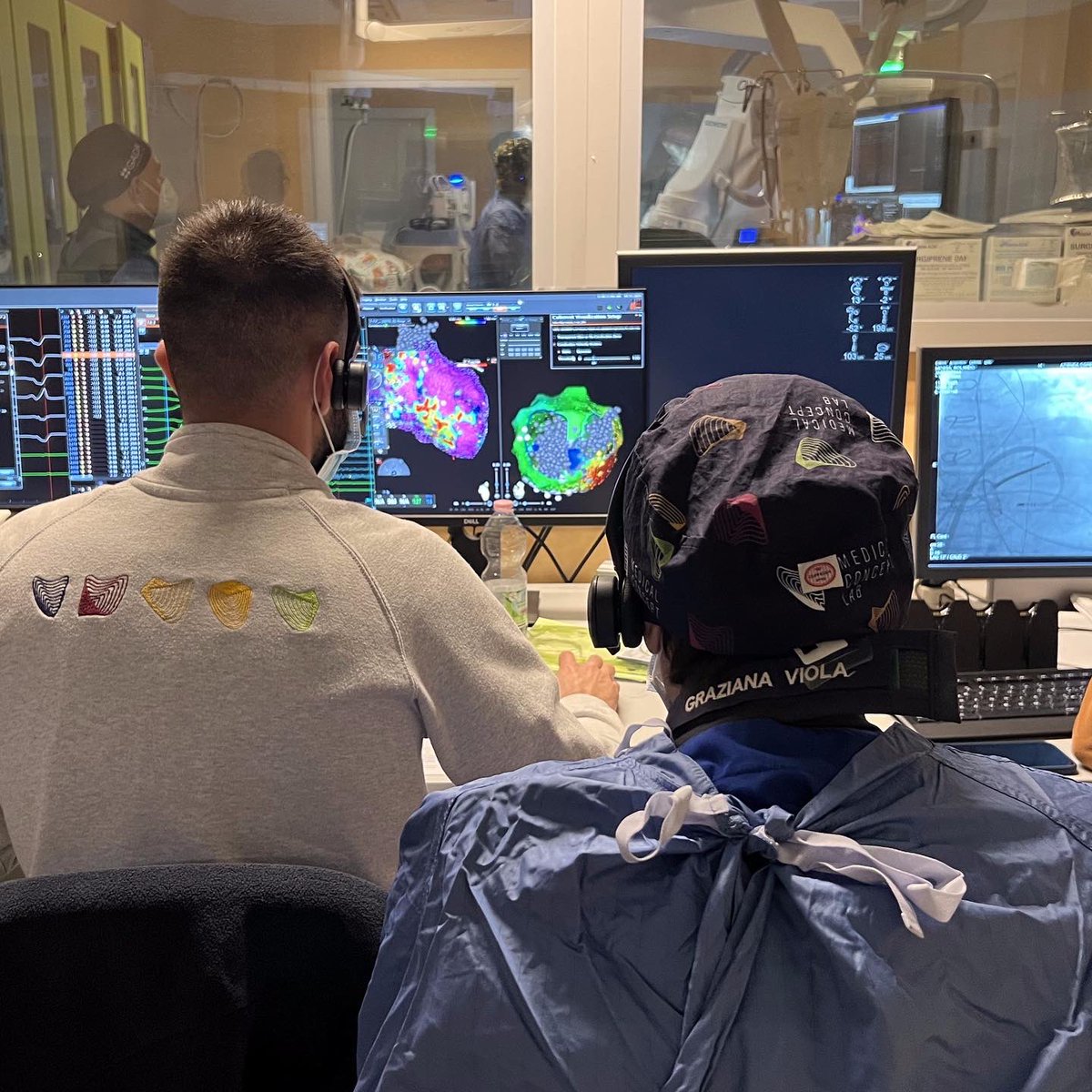
Recently, the MeDSP members @giulia_baldazzi, Andrea Pitzus, Marco Orru and Nicla Mandas went to the Santissima Annunziata Hospital, in Sassari, to discuss about new ideas and tools for post-ischemic ventricular tachycardia (VT) patients with Dr. @grazianaviola and her team.
Finally, thank you to the editorial team of @Patterns_CP, who were always available and responsive, and to the reviewers, whose comments allowed us to propose a much improved version of our work! 7/7
I would like to thank @PitzusAndrea, who did all the coding heavy-lifting for this project during his master thesis; Fabio Vallone, who supervised Andrea with me; and @_smicera for his constant mentorship and for allowing us to do science in a fantastic environment. 6/7
We show in silico that using modelling and (simulated) spontaneous recorded activity we can localize the fibers whose activity relates to different bodily functions for different electrode arrangements and with different degrees of knowledge of nerve anatomical details. 4/7
The lead field matrix of the volume conduction problem contains the "fields of view" of the electrodes implanted in the nerve, which are then weighted using the correlation between the recorded ENG signals and function-related physiological signals like blood pressure. 3/7
Our method (tested in silico) paves the way for reconstructing the functional organization of nerves using the spontaneous activity that can be recorded through the stimulation electrodes. Such information would then allow optimizing spatially-selective stimulation protocols! 2/7
@SimoneRomeni@_smicera It was an exciting experience for me! Thank you so much Simone for your huge work on this article and your constant support, I would also like to thank Fabio very much for his great contribution!
Finally, many thanks to @_smicera for the amazing mentorship and vision!
Great work!
Check out our new article https://t.co/Hxuro31rhX on @Patterns_CP! We describe a method to perform the localization of clusters of fibers mediating for different function in the vagus nerve using electroneurography (ENG) and hybrid (FEM-NEURON) modelling.🧵1/7
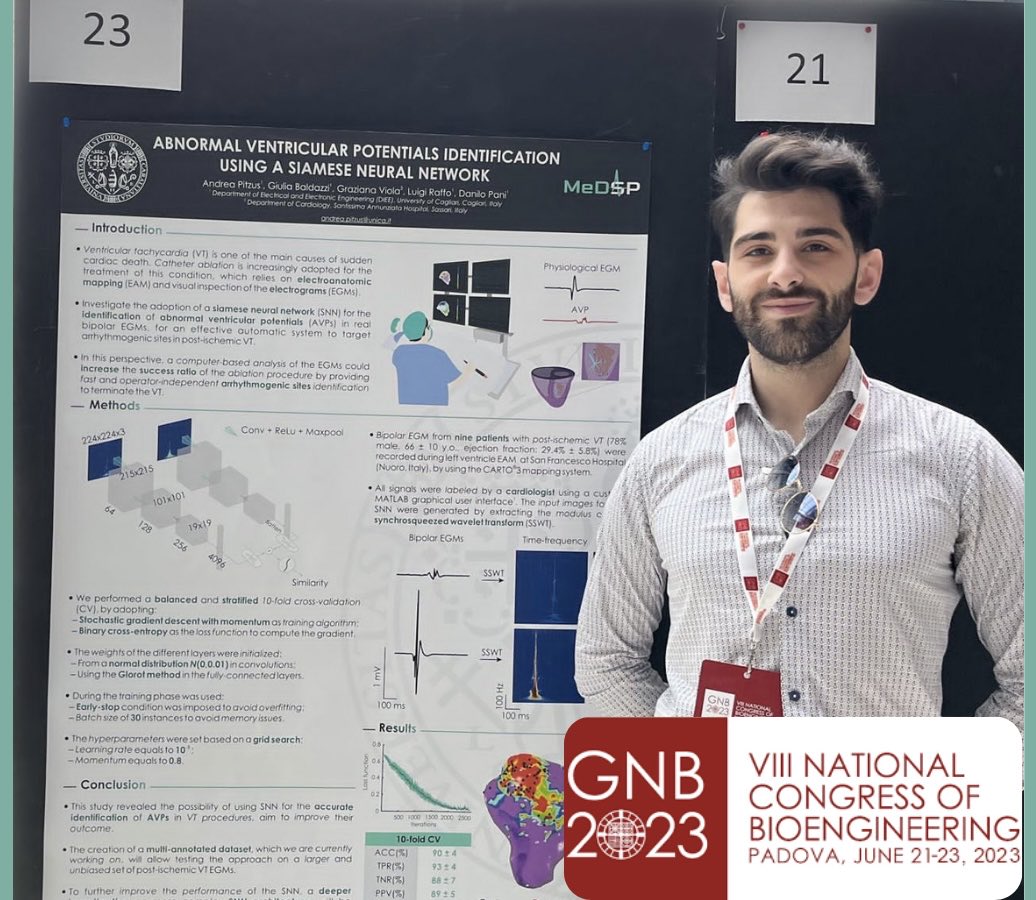
Now at Computing in Cardiology 2022, Tampere, Finland. Our PhD student Andrea Pitzus presenting his work on deep learning for electrophysiology procedures to treat post-ischemic ventricular tachycardia, in the Session SB1 - Ventricular Arrhythmias!
Now at Computing in Cardiology 2022, Tampere, Finland. Our postdoc researcher Giulia Baldazzi presenting her work during the first exciting poster session of the conference. Great work!
Heading to Tampere for Computing in Cardiology 2022! A delegation of three MeDSP members (@DaniloPani, Giulia Baldazzi, @PitzusAndrea) is getting there, where four papers from the group have been accepted. A pleasure and a honor to join this exciting event in person again!
@SimoneRomeni@_smicera@Patterns_CP Thank you very much to all of you @SimoneRomeni, Fabio and @_smicera for the constant support during the work and for supervised me in a masterly way!
Being able to carry out my thesis at the #TNE lab has been a dream that came true.
Check out our new preprint at https://t.co/wx55b2nW3E! We show in silico that it is possible to localize different concurrently active organ-related clusters of activation in a nerve section using finite element modelling and signal processing.