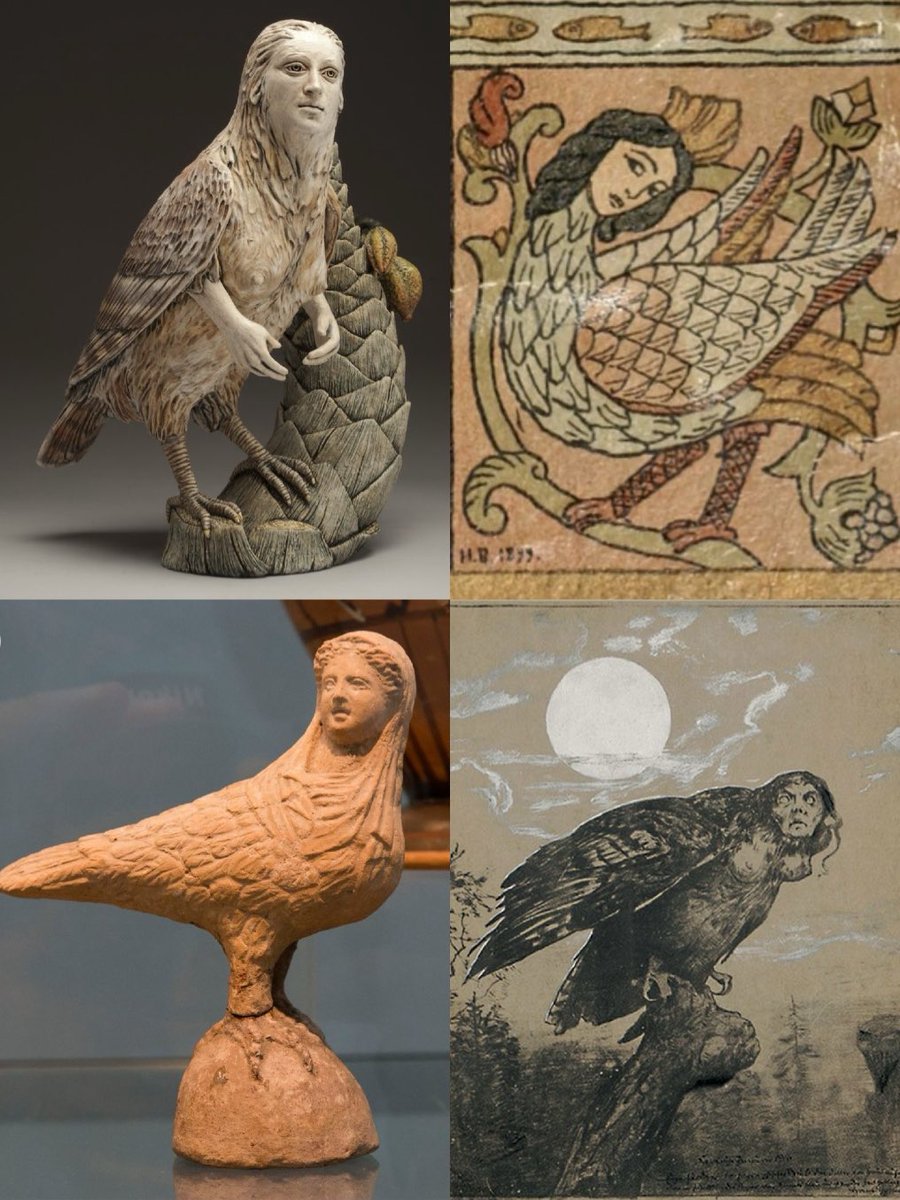
Sirens originated from Egyptian and Middle Eastern "soul-bird" concepts. The Ba-bird (a bird with a human head) represented a person's soul or a winged ghost leaving the body after death, associated strictly with funerary mourning.
In classical Greek mythology, sirens were exclusively half-woman, half-bird hybrids. Famously appearing in Homer's Odyssey, they had no physical description in the text, but pottery depicted them with human heads and avian bodies. They did not tempt sailors sexually; they lured them to their deaths by promising omniscience and forbidden knowledge.
Between the 7th and 12th centuries CE, early Christian texts like the Liber Monstrorum conflated bird-sirens with aquatic creatures like Tritons or Nereids. The Church altered their anatomy into fish-tailed mermaids to serve as moral allegories warning against vanity, lust, and worldly temptations, establishing the modern pop-culture mermaid archetype.