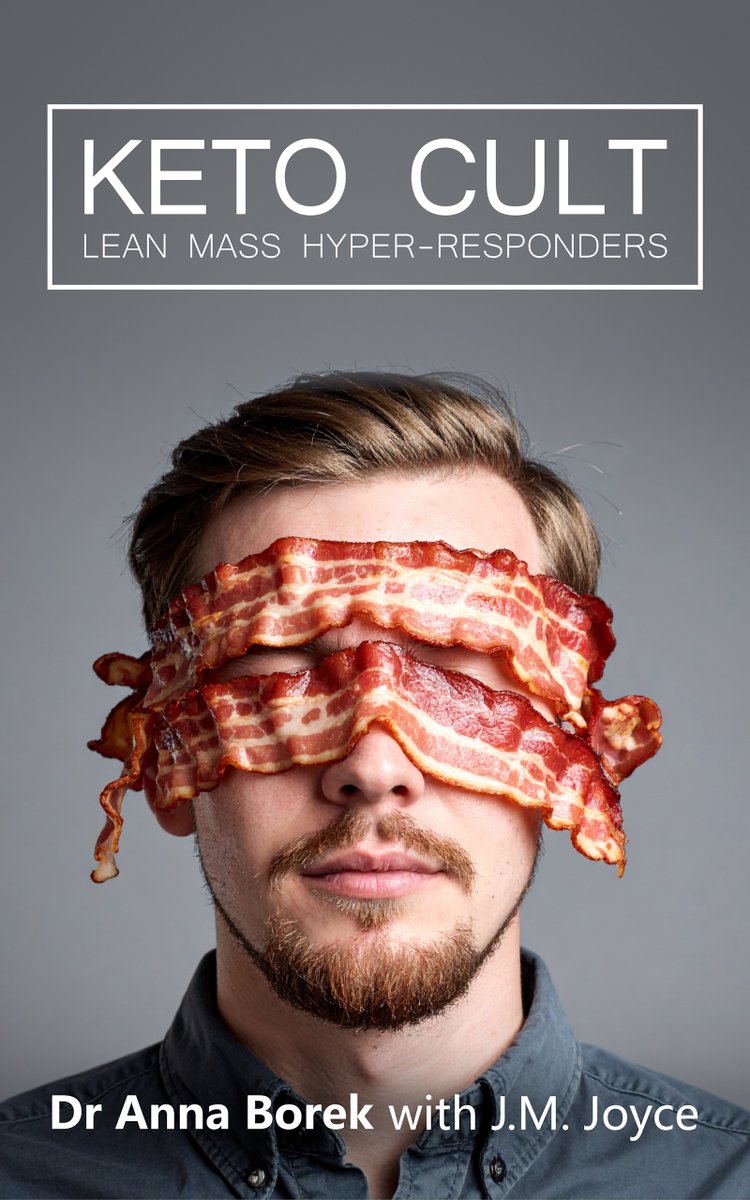
🚨If you're interested in the KETO-CTA study, you may also be interested in this short book 📖.
It offers:
1⃣ a sustained critique of the fringe hypothesis that LDL-C lacks clinical relevance in a subset of ketogenic dieters;
2⃣a thorough analysis of the KETO-CTA study, and; 3⃣an exposé of the scientific malpractice committed by its authors.
💬I'm certain this is not the end of the story & I will update this book periodically with new chapters as the evidence evolves and the narrative unfolds.
RFK Jr. describing guidelines as putting "Fruit Loops at the top of the food pyramid." 🤦
* The food pyramid was scrapped in 2005.
* Guidelines have never said to prioritise cereals high in added sugar.
* Foods at the top of the pyramid were to be limited, not favoured.
(cont.)
The "ultra-processed food" mania has now reached the point where we celebrate spoilage.
Presumably those people don't really care about food waste, because they can afford it. And there is still brioche for all the others ...
The problem with this book is: it contains dangerous nonsense that puts women at risk because the author lacks scientific understanding.
Just claiming to be a feminist does not make up for not understanding physiology, biochemistry and food science.
@ApoDudz Can't be bothered to reply to all this. But I would say that all results should be considered hypothesis generating.. regardless if pre-specofied: because it is a small, unrandomised pilot study with numerous limitations.
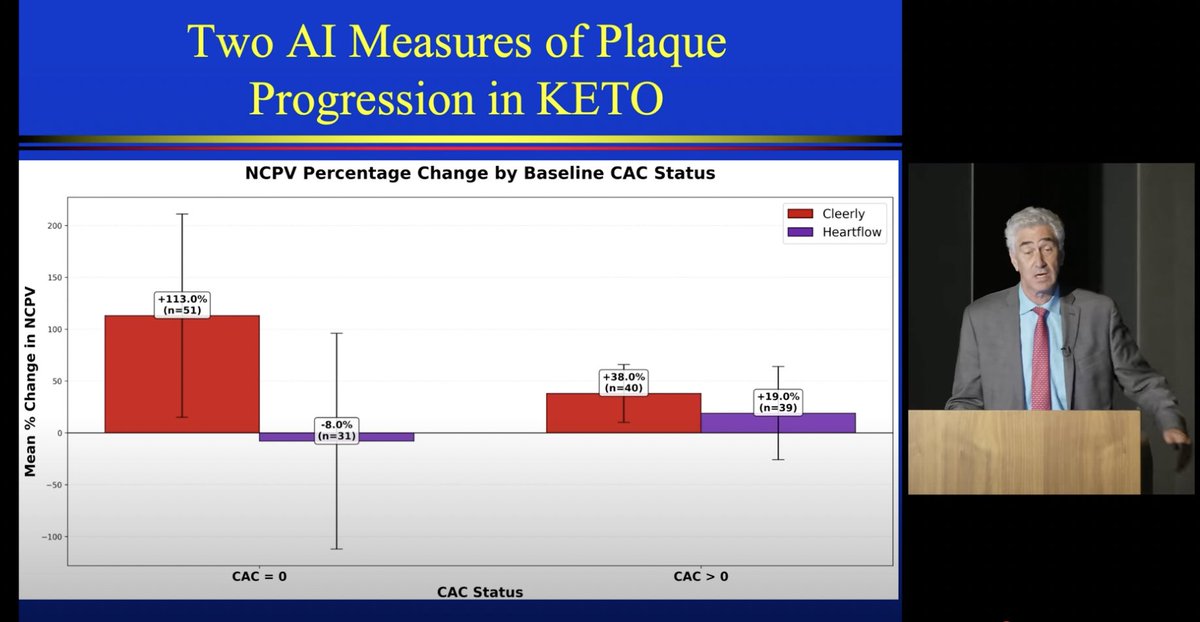
Finally got around to watching the update on the KETO-CTA cohort. Not much to say for now – I’ll take a closer look once their paper is published.
Thoughts:
1⃣ Why are they focusing on relative measures, especially when several of the authors have agreed that this is misleading?
2⃣ From what I tell, the absolute change that picked up by Cleerly in those with a CAC score of 0 = minimal. So the reported >100% relative change feels quite misleading in that context.
3⃣ I tend to think Cleerly may be a more sensitive software package – that it picks up small absolute changes, which, of course, tend to translate into large relative changes.
4⃣ I'm not sure it makes sense to compare one AI tool to another – without an internal control, the best we can do, I imagine, is compare Cleerly data to other cohorts that also used Cleerly. Likewise, the same should be done for the HeartFlow and QAngio analyses.
5⃣ Would any of these re-analyses be happening if the Cleerly results had aligned with the ideological bias of the authors – and the study's funders? I don’t think it’s overly cynical to suspect not.
Nice new paper from the Malmo Diet and Cancer Study finds higher intake of fiber and fruits and vegetables is associated with roughly half the risk of rheumatoid arthritis, while higher intake of red and processed meat is associated with a near doubling in risk.
There are certainly limitations in the data linking saturated fat to cardiovascular disease but here's the rub - it's the nutrition rec with the most consistent data (pretty much every line of evidence supports replacing satfat with mixed unsaturated fat sources). If you amplify the limitations in this data to the point you think a rec can't be made,then you can't recommend really any other diet-chronic disease advice while being intellectually honest and rigorous
Or you can run for 30 mins to burn 400 calories and...
1) Have more space for nutrient-rich foods
2) Not have to cut calories super low to lose weight
3) Be fit, have more stamina, and better health
A good diet & exercise > one or the other.
There are two UPFs most people agree are bad for health: soft drinks and processed meat.
Isn't it funny that one of the crusaders against UPF thinks processed meat is still fine (but sliced bread is dangerous)?
The history of bread is a great example why the UPF discussion is silly: originally, sourdough, hand kneading and whole meal flour were used.
When did bread become UPF - with the use of isolated yeast? With white flour?
The introduction of machines? The Z-blade?
Where do we draw the line?
Starbucks - a purveyor of largely sugar-sweetened and creamy coffee beverages, baked goods, and sodium/refined grain-loaded sandwiches - has 'very clean foods' per the HHS secretary and he's asking him to get rid of canola oil..
History will look back on the misspent MAHA energy to impact chronic disease and see it as little more than industry friendly marketing with a dash of chemophobia
@followthemotive@dietiti3n True.. but even if they accept that CICO explains the favoruable changes in bodyweight... it is very common for zealots think that everyone will be able to hit their ideal weight by eating ad lib... which is highly dubious imo.
@ScottAppliedSci@maxlugavere@Cleerlyhealth I don't imagine that fake praise is valuable tbh. I agree that it's important to understand your interlocutor's point of view and to steel man it before commenting. But a token compliment.. well, it's not for me anyhow.