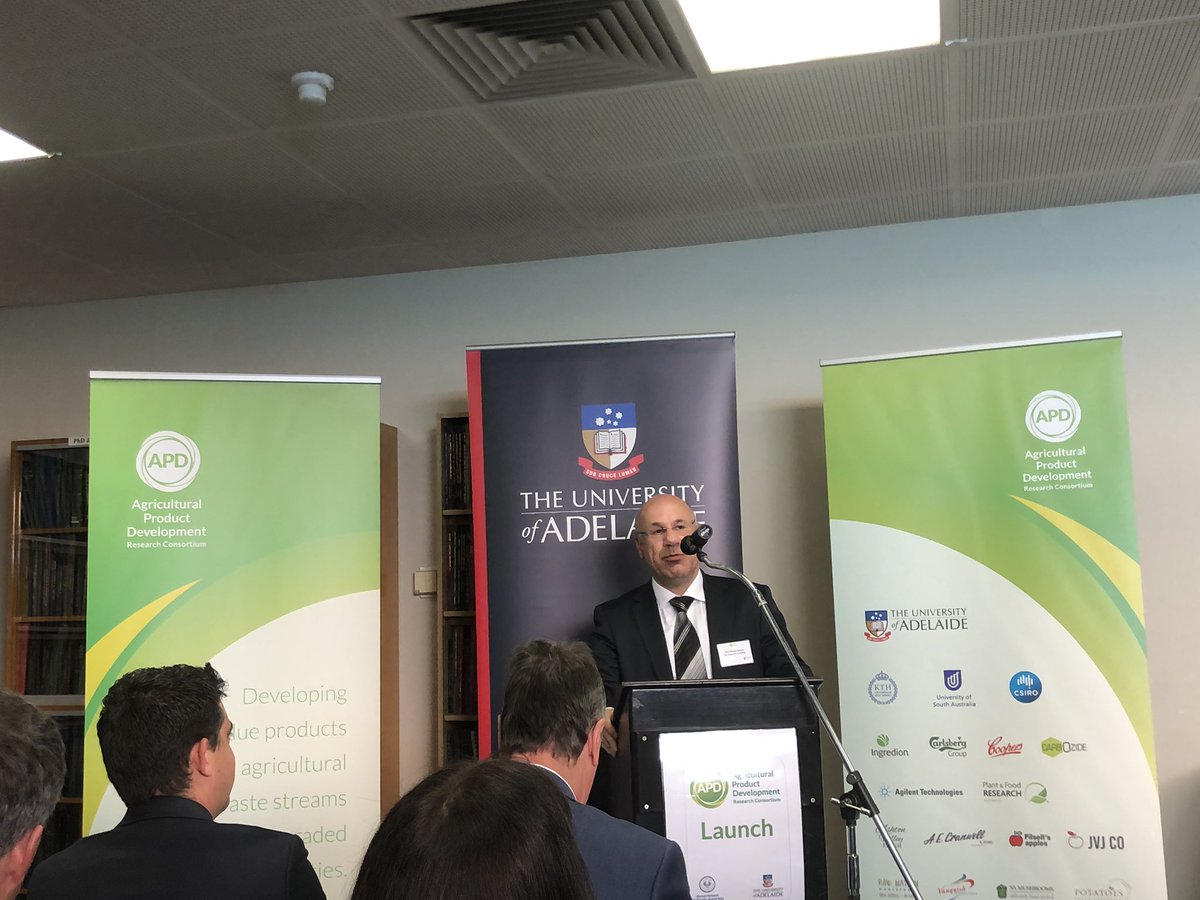
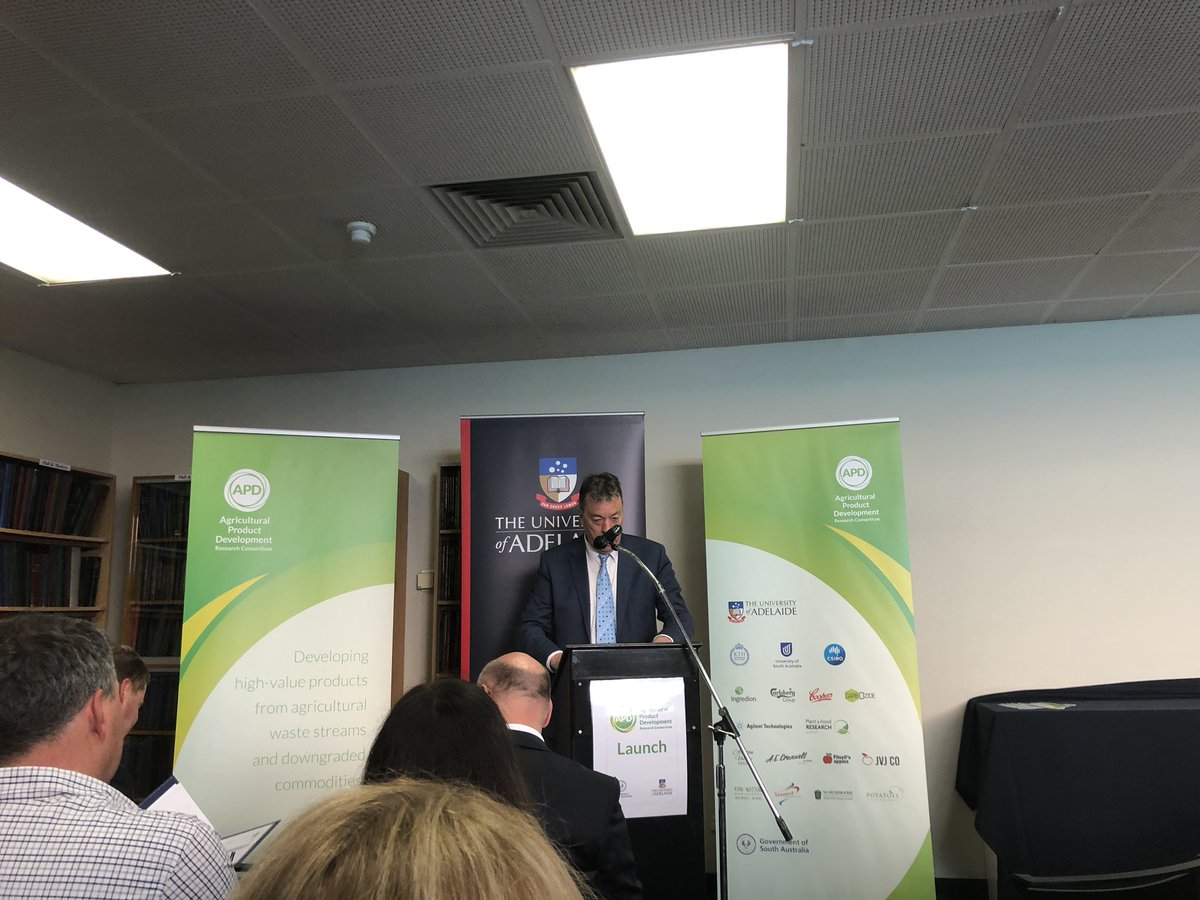
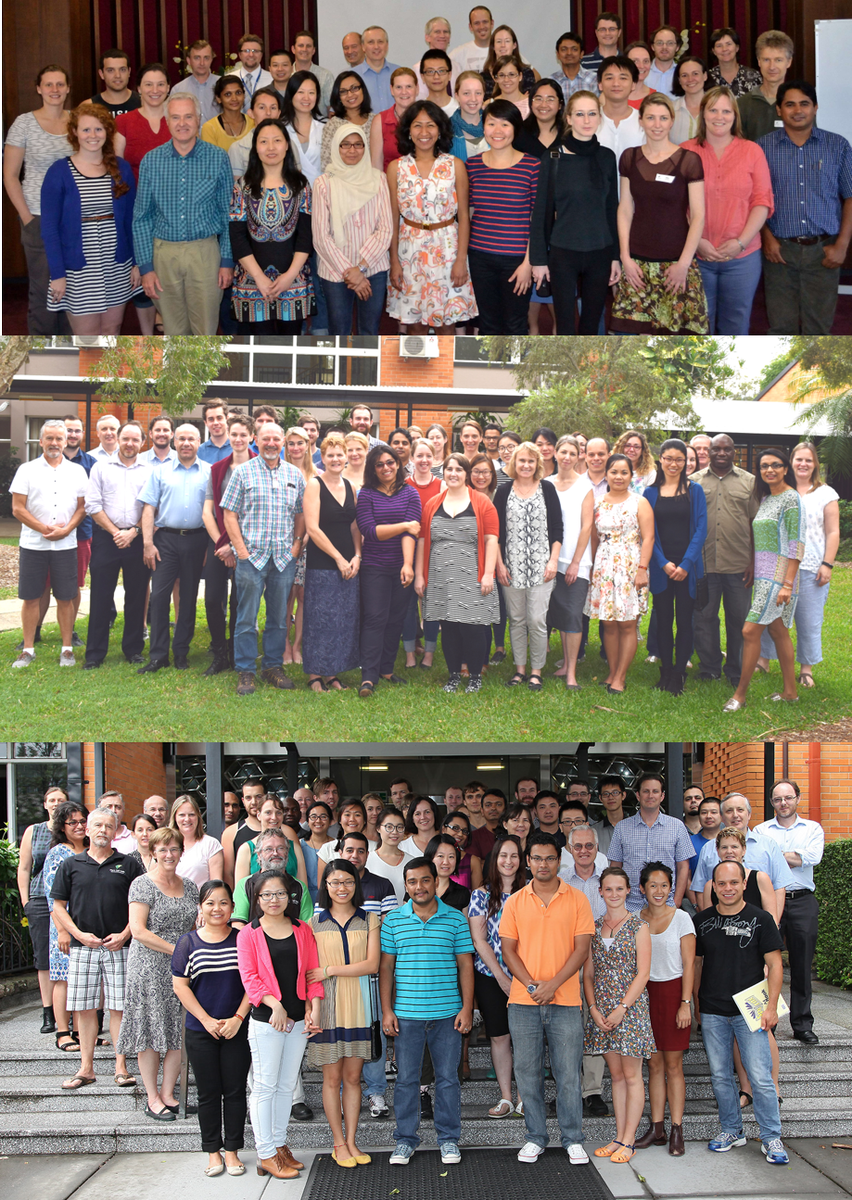
Excellent to see the official launch of the University of Adelaide hosted Research Consortium Program for Agricultural Product Development (RCP-APD). @UniofAdelaide @FoodUniAdelaide @waiteresearch
Wonderful moment yesterday with Minister Pisoni
@DavidPisoniMP for the launch of our Research Consortium for Agricultural Product Development. Thank you Minister for the great discussion and your interest in Adelaide Glycomics @Adel_Glycomics
Terrific to launch the Agricultural Product Development Consortium today which brings together 18 participants including universities and industries to tackle the problem of agricultural waste through the commercialisation of value-added products. @UniAdelSciences @UniversitySA
The anonymous "tweeter" behind @PlantCellWalls is moving on after a great 7+ years at the CoE (& nearly 17 years at @waiteresearch). Please keep engaging with & sharing our Research Showcase and if you have any questions, pls contact the researchers directly #PCW2018
We'd love to know what you think about sharing some of our research on Twitter and if doing presentations in this format are something researchers should do in the future? #PCW2018
Thank you to all who attended our #PCW2018 Research Showcase and engaged in our Twitter presentation. If you have any questions, please ask them here and we'll get our researchers to respond ASAP.
62 And thus our #PCW2018 Research Showcase Concludes. I’d like to thank all our staff, students, visitors and collaborators of which there were many! Many thanks to @arc_gov_au for the funding and support over the 7 years. (Vincent Bulone)
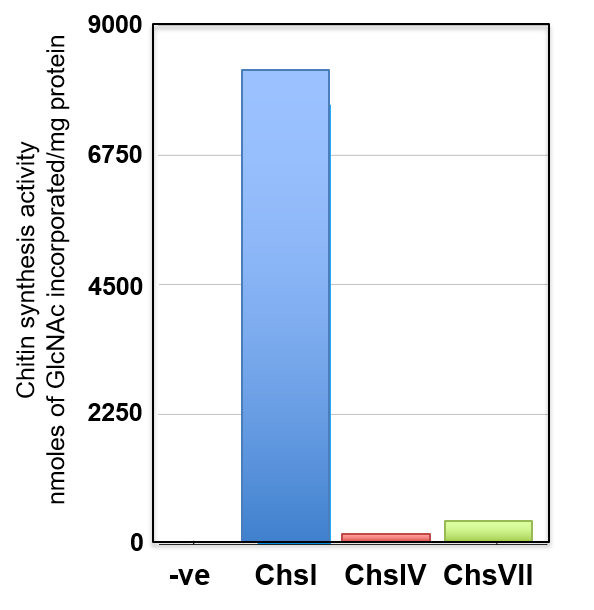
61 #PCW2018 Cloning and protein expression in yeast systems allows in vitro activity assays to be established for future screens of chemical libraries for novel inhibitors of fungal cell wall synthesis (Alan Little)
60 #PCW2018 Correlating cell wall changes during fungal development with expression of cell wall synthesis genes allows identification of targets for disease control (Alan Little)
59 #PCW2018 Fungal cell walls have several key polysaccharides that are not found in plants &/or animals & thus are the Achilles’ heel for fungus. We delivered a detailed cell wall composition & an annotation of the cell wall synthases for key barley pathogens (Alan Little)
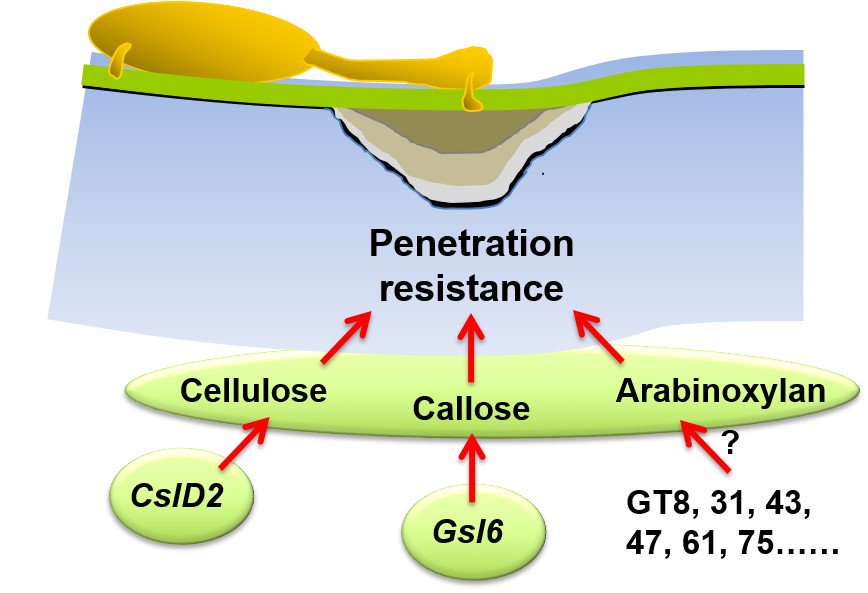
58 #PCW2018 Key genes that make callose, cellulose & AX were identified in barley papillae & may be new targets for crops with greater disease resistance. These genes were modified & the resultant change in papillae contents led to a change in fungal penetration success (AL)
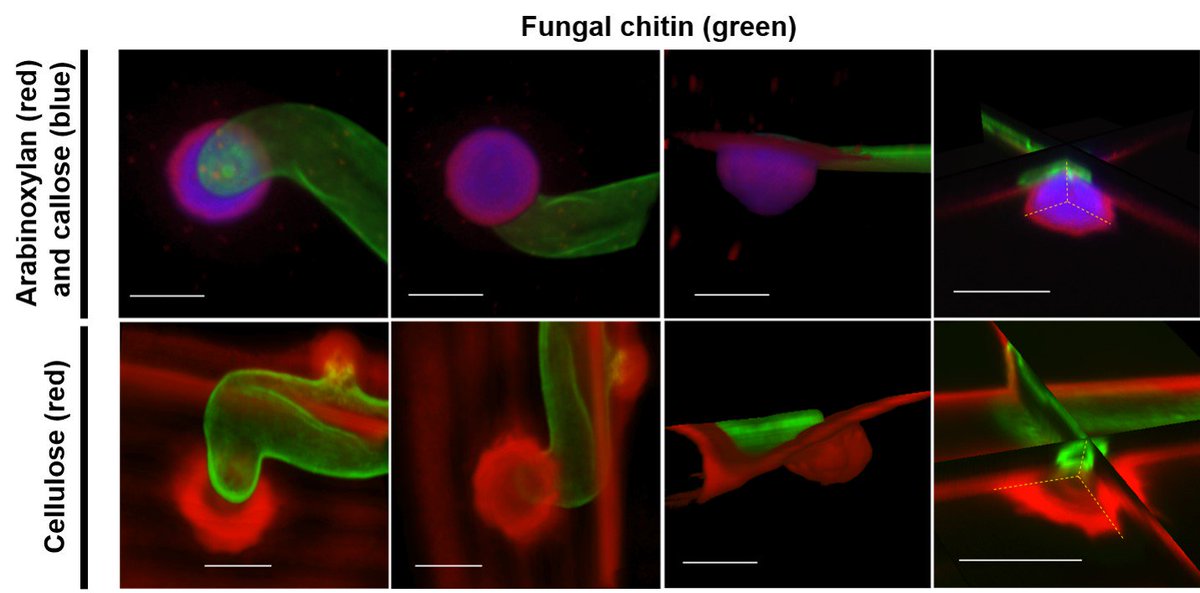
57 #PCW2018 Here we show the fungus (green) being blocked by the papilla formation. Top row - inner core of papilla with AX (red) and callose (blue), Bottom row – outer layer of papilla with cellulose (red) (Alan Little)
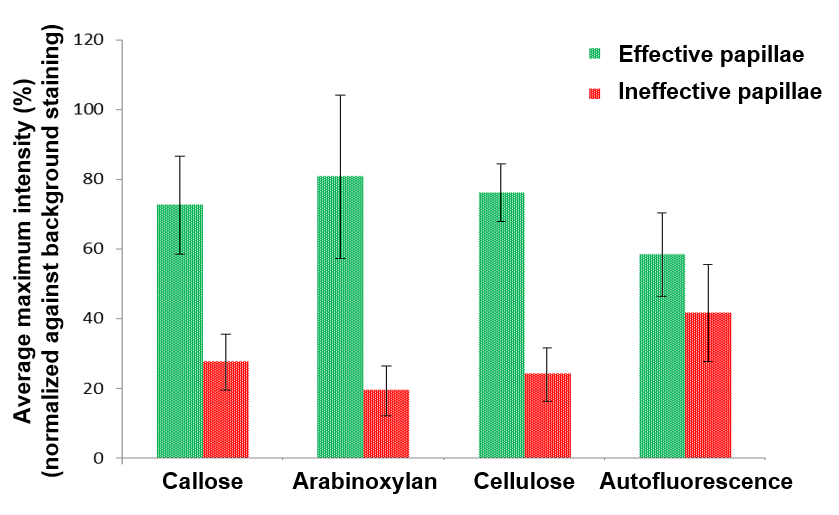
56 #PCW2018 We described the first detailed composition of the carbohydrate content of the barley papillae & their association with penetration resistance. Papillae successful in stopping fungal penetration contain higher concentrations of cellulose, arabinoxylan & callose (AL)
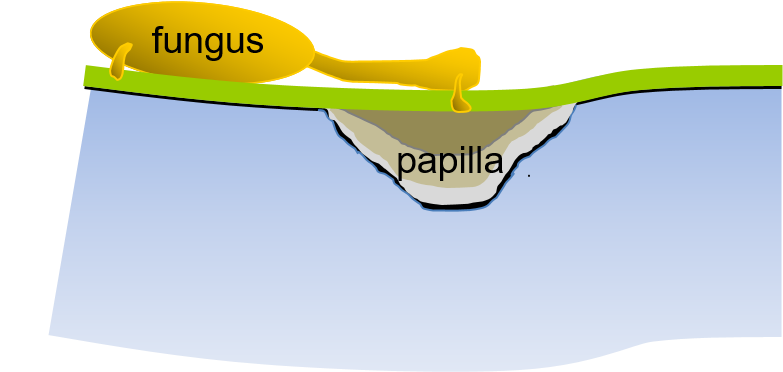
55 #PCW2018 Plants attempt to block fungal penetration by building a plug of cell wall material called a papilla. Research until now has led to the dogma that callose is the main polysaccharide component (Alan Little)
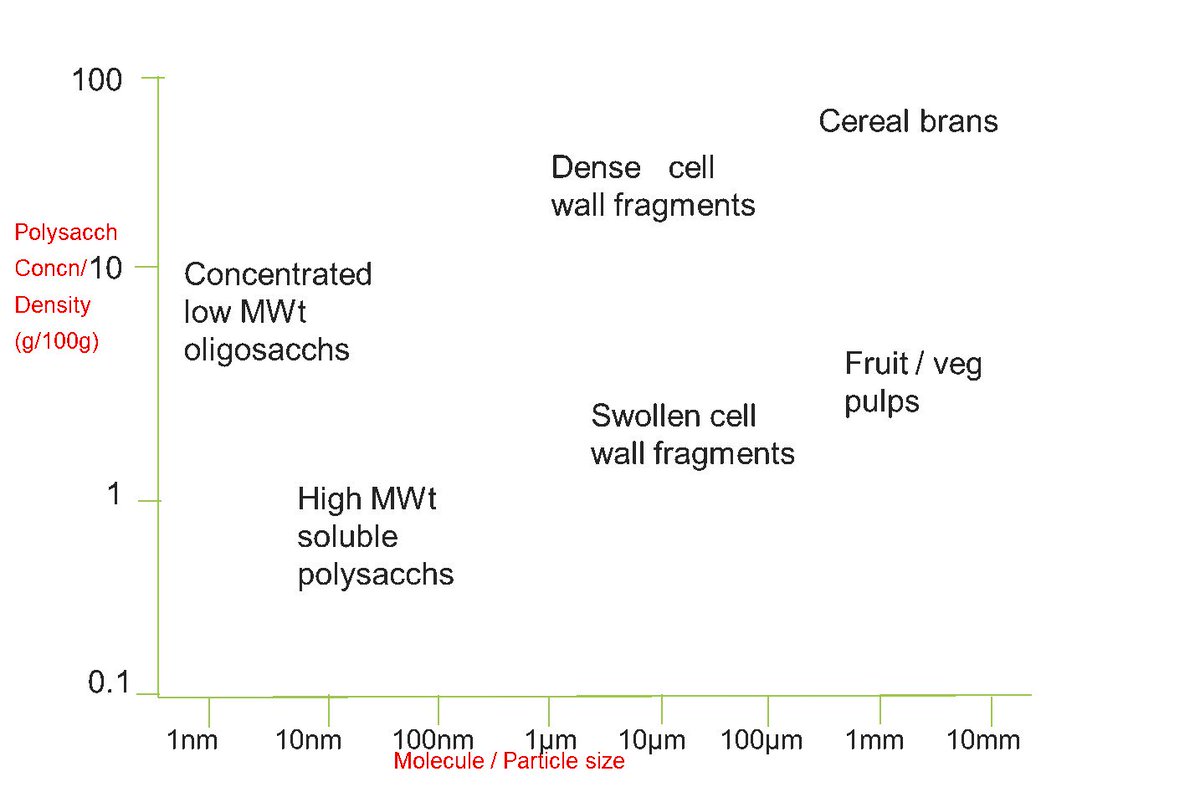
53 #PCW2018 The traditional classification of dietary fibre into soluble and insoluble is recognised as being too simplistic. We propose a new classification based on the size and local molecular density of fibre components (Mike Gidley)
52 #PCW2018 In general the multiple binding, transport and structuring effects of plant cell wall fibres influence all aspects of the physiology, biochemistry and microbiology of digestion (Mike Gidley