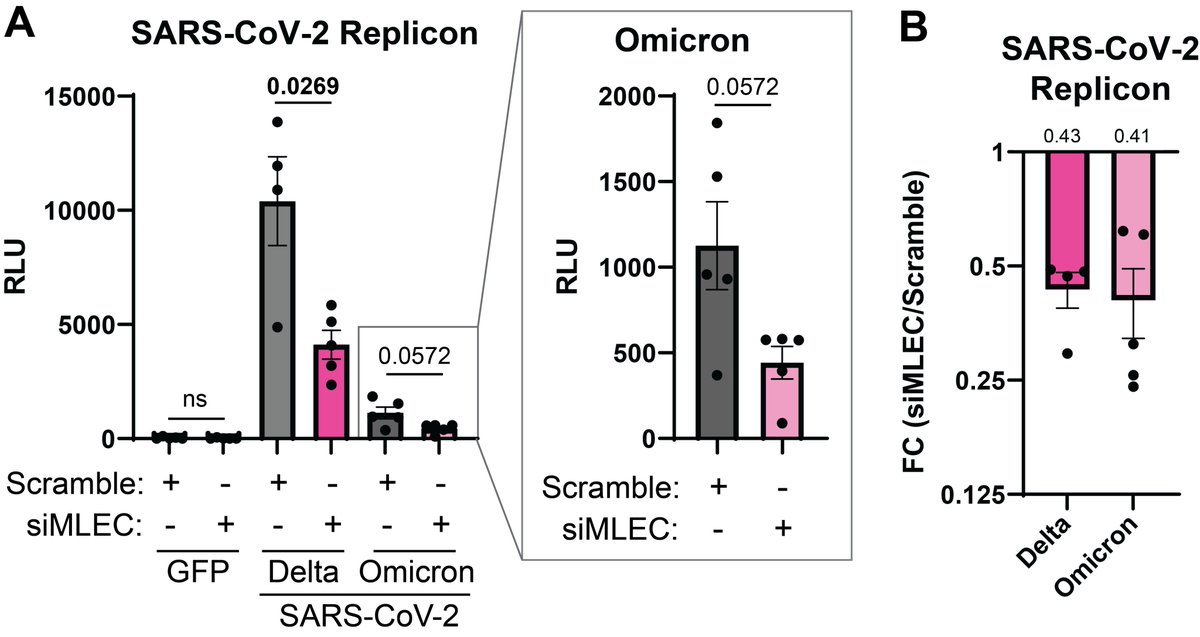
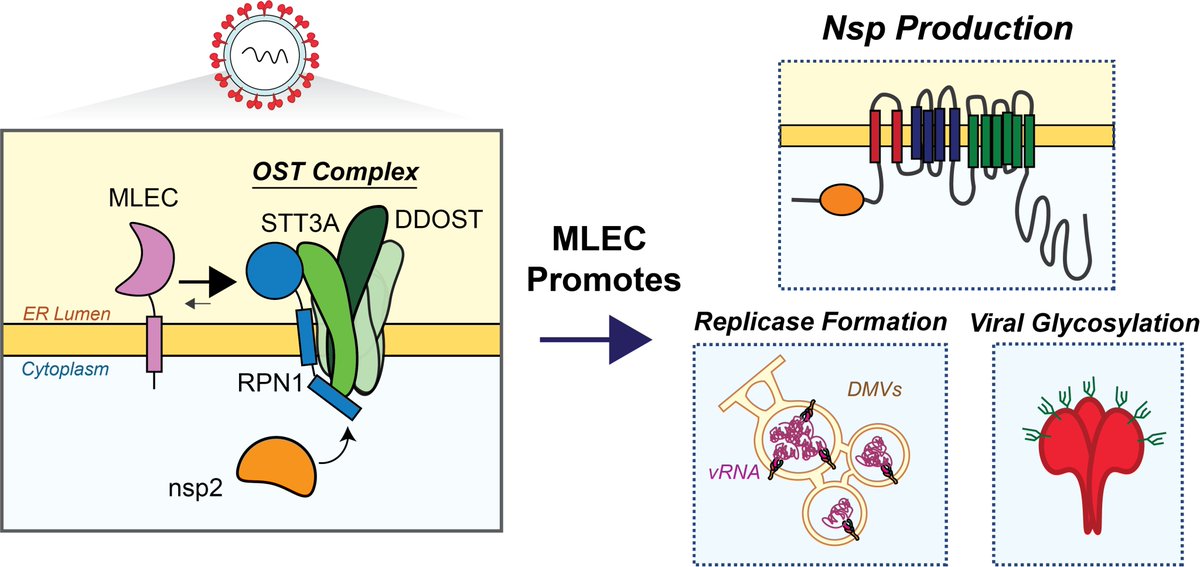
Excited to share a preprint from @J_P_Davies PhD work! We find that CoVs, like SARS-CoV-2, use malectin (part of cells’ glycoprotein production assembly line) to make viral proteins and replicate. Malectin may be a prime pan-CoV antiviral target! 🧵(1/7)
https://t.co/9ACQptuEG7
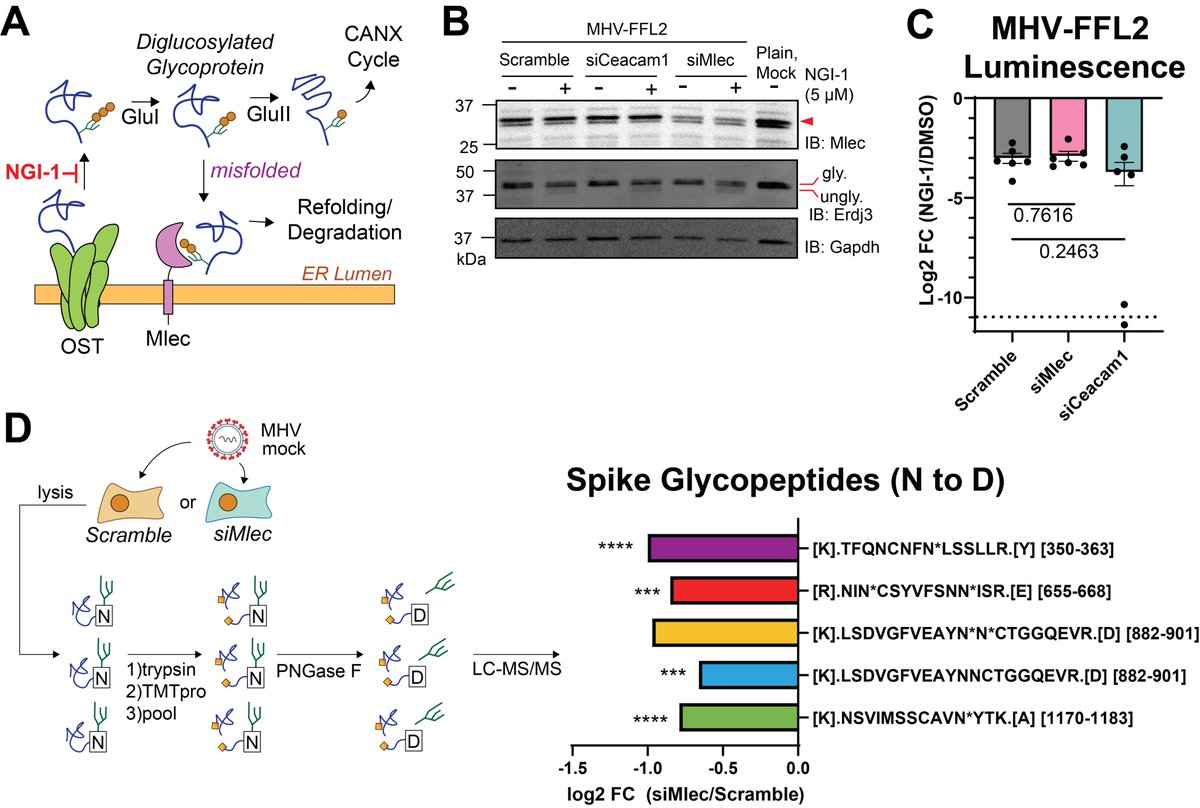
MLEC surveys our glycoproteins during production, checking for errors and capturing duds before they are sent out. Is this function of MLEC important for CoV replication? Yes! (6/7)
Congratulations to @EliFritzMcD (of the @MeilerLab & @Plate_Lab) on winning the 2024 Karpay Award in Structural Biology! Eli presents "CFTR Folding – Started from the Translocon Now We Here" on Tuesday, January 23, 2024, for the MBTP/CSB Seminar Series.
https://t.co/aDomHUIu2R
Good morning Phoenix. Looking forward to attending #NACFC2023. If you’re around, come to the lunch roundtable on Proteomic-driven Advances in Studies of CF (RT29) where we’ll discuss the latest mass spec research on CF. @CF_Foundation
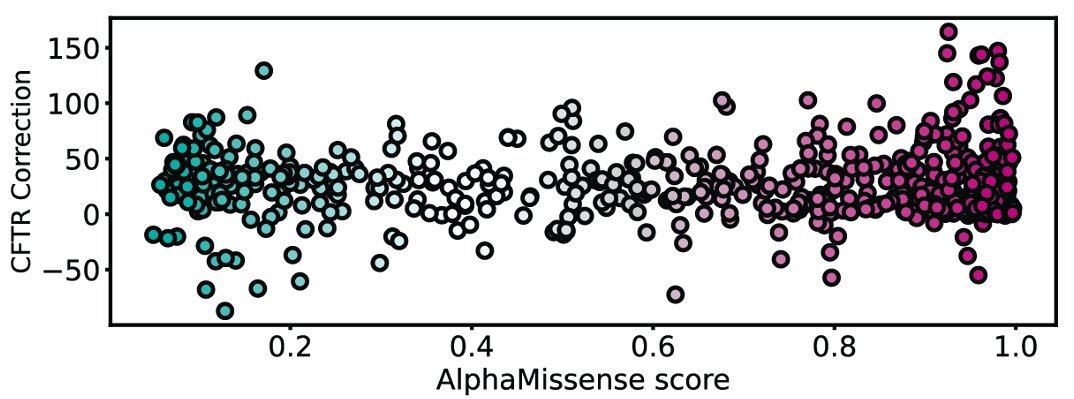
In sum, AM predicts CF accurately w/ a high false positive rate.
AM correlated modestly w/ clinical outcomes, but well w/ CFTR function. It cannot distinguish pathophysiology.
AM may prove useful for identifying CF causing variants in carriers, but caution must be taken.
(7/7)
Can #AlphaMissense identify Cystic Fibrosis causing variants?
We benchmarked AM pathogenicity predictions on CF clinical outcomes from the https://t.co/4fZNVkSitn database and CFTR in vitro data. @EliFritzMcD@MeilerLab
Here's what we found: 🧵(1/7)
https://t.co/3ld1FnfXsz
Finally, we were curious if AM could predict CFTR theratype - how CFTR variants respond to drug.
This feat is technically outside AM's intended design, but is important in the CF field.
We concluded, AM cannot predict CFTR theratype. (6/7)
@J_P_Davies from our lab is forging new research collaborations at @IINPeru in Lima! Thanks to @vuglobalhealth and @VI4Research for spearheading this new program!
We concluded translational dynamics modulate the co-translational folding of P67L sufficiently to sensitive it to VX-445. Personalized medicine will need to account for system level changes beyond single point mutations in targets.