Modeling serious tech with LEGO®️ : #Blockchain. Understand and demonstrate key processes, roles, concepts, from #Bitcoin onwards 😊 more active on @lauremerlin
@CameliaCams@lauremerlin Merci Camélia 🎁🥰 en effet, j'ai d'immenses progrès à faire côté communication, marketing et tutti quanti! 🚀🎀 Mille merci à tous ceux qui parlent de moi, m'invitent à leurs événements, proposent mes formations aux entreprises et me posent plein de questions pertinentes 😅 💝
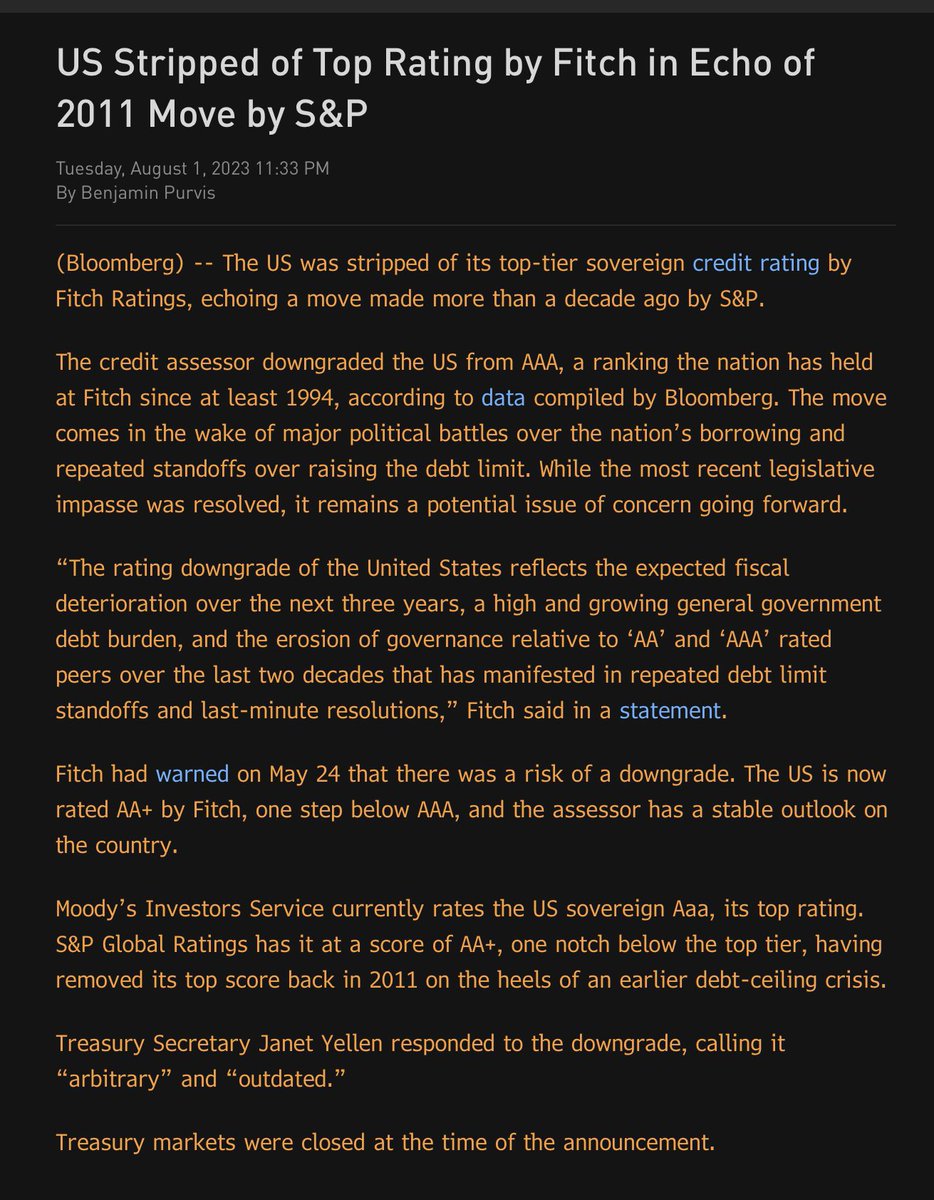
Some think technological acceleration will bail out the current order. We’ll grow our way out! Or so the logic goes.
But did streaming bail out Blockbuster? Did smartphones save Nokia? And did the Industrial Revolution maintain the monarchy?
Acceleration causes disruption.
Dalio on why this bigger than people think.
"It's not [just] a banking issue. It is a global issue...all sorts of entities, pension funds, insurance companies, all around the world...there was a lot of buying of these government bonds. Which have gone down in value..."
Transcript below.
QUESTION
My question for you today is the following.
As you know, the US national debt is currently at an estimated $31 trillion, making up about 125% of the US GDP. In the meantime, over the past few years, the Federal Reserve has telegraphed, that they intend to monetize the debt by printing trillions of dollars, even as they insist that they're fighting inflation.
Already, other major economies in the world such as China, Saudi Arabia, and Brazil, are moving away from the dollar in anticipation of this. My question is, are we likely to face a time in the future, when the US dollar is no longer the global reserve currency? How is Berkshire prepared for this possibility?
And what can we do as American citizens to attempt to shelter ourselves from what's beginning to look like the beginnings of dedollarization?
BUFFETT’S ANSWER
Well, I should ask you to come up here and answer some questions!
It's very interesting. I mean, we are the reserve currency, I see no option for any other currency to be the reserve currency. And I think that nobody understands the situation better than Jay Powell. But he's not in control of fiscal policy. And every now and then he drops a few hints.
And there was no question, when the pandemic broke out, I mean, it was a semi war-like situation, but nobody knows how far you can go with the paper currency before it gets out of control. If and particularly if you're the reserve, world's reserve currency, nobody knows the answer to that.
And you don't want to try and pick out the point that does become a problem, because then it's all over. And I think we should be very careful.
I mean, you know, we all learned Keynesianism. And we applied it in WW2 to the advantage of the country and, and we did everything we could to prevent inflation during the war. And then war ended in August of 45. And I think in January 46, and I'm not giving you exact figures at all now, but in January 46, I think the rate of inflation was at something like 1% or thereabouts. And by the end of the year, I think it was like 15%.
And again, I'm doing this from long memories, but it's easy for America to do a lot.
But if we do too much, it's very hard to see how you recover once you let the genie out of the bottle and people lose faith in the currency.
And they behave in an entirely different manner than they do when they feel when they put some money in the bank or have a pension plan or whatever it may be, that they're gonna get to have something with roughly equal purchasing power and it just changes the economy and all kinds of things can happen then and I can predict them and nobody else can predict them but I do know they aren't good.
And we will see. And I do this — as you know I I voted for both parties — and it's
it's not limited to politicians of either party or anything of the sort.
…there's nothing wrong with the fact that you that you can't master everything, we can’t all be Isaac Newton, but you can't go around pretending you do or making decisions on it — and we are not as well off in relationship to curbing inflation expectations which become self fulfilling.
And we are not as well off as we were earlier. And Berkshire is better prepared than most investments for that kind of a period.
But I said this in the annual report, but we aren't perfectly prepared because as an adult, there's no way to perfectly prepare you don't know what course of action will occur and it’s a very political decision now — it's a tribal decision to some degree — and you will hope for leadership that actually will do something, that recognizes the problem.
And America is an incredible society. Rich, we got everything going for us. But that doesn't mean we can just print money indefinitely as debt, and it'll be interesting to see how it turns out.
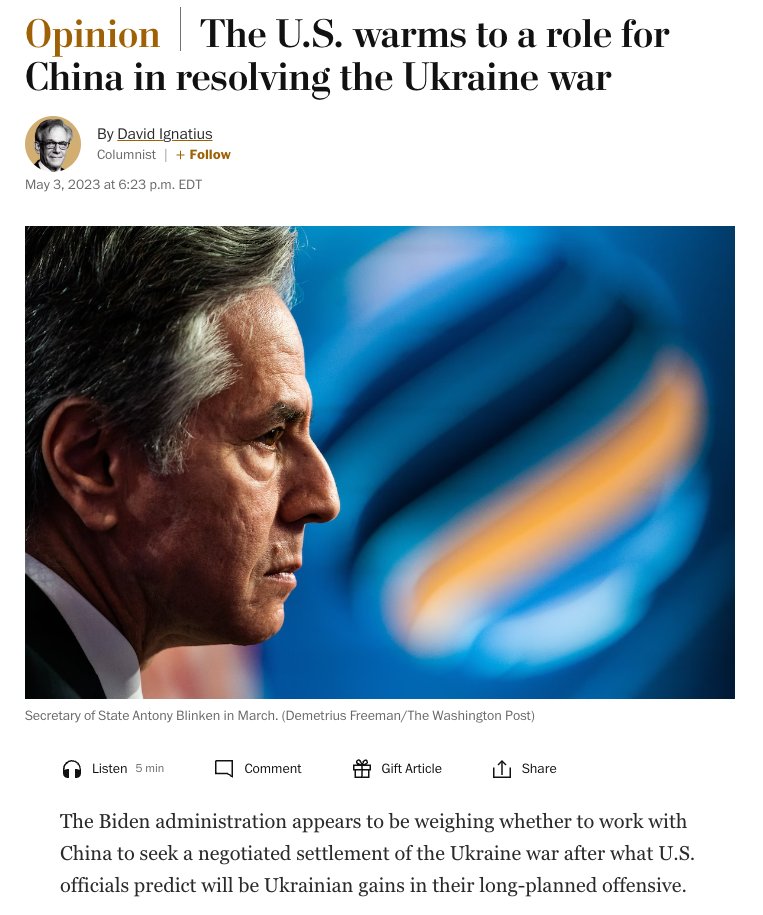
It's now officially a multipolar world.
Why?
Blinken's new statement alone is a massive shift.
They acknowledge they have to work with China.
That the two superpowers must negotiate.
That's more similar to 1945-1991 than 1991-2021.
So, whatever you may think of this development...
The unipolar moment is over.
The #1 can no longer unilaterally impose terms.
https://t.co/efY9vd4j7y
Tant qu'il y aura des formations cryptos bidons qui promettent de "transformer 249€ en 90.000€" et des start-up bidons comme CryptoGPT qui lèvent 10 millions $, ce secteur n’avancera pas. Ou alors que très très très lentement, et c'est vraiment dommage.
The crypto-art enters the institutions: should we be happy about it?
Join us tomorrow for the Factory Circles to discuss this topic!
Register here 👉 https://t.co/rcyAsQu5HE
🔴 Vague de perquisitions en France chez @SocieteGenerale, @BNPParibas, @natixis et @HSBC pour des affaires de fraude fiscale
Près de 200 enquêteurs mobilisés depuis ce matin
On parle d'une fraude de 3 à 4 milliards d'euros/an 🤯
https://t.co/7zSazHDZWL
"History...tells us investors tend to flock into dollar-denominated assets during times of stress"
No, take a longer historical lens.
People exit devaluing currencies.
That's the key difference vs 2008.
USD is no longer too big to fail.
Hope what comes next is BTC, and not RMB.
WHY 2023 IS NOT 2008
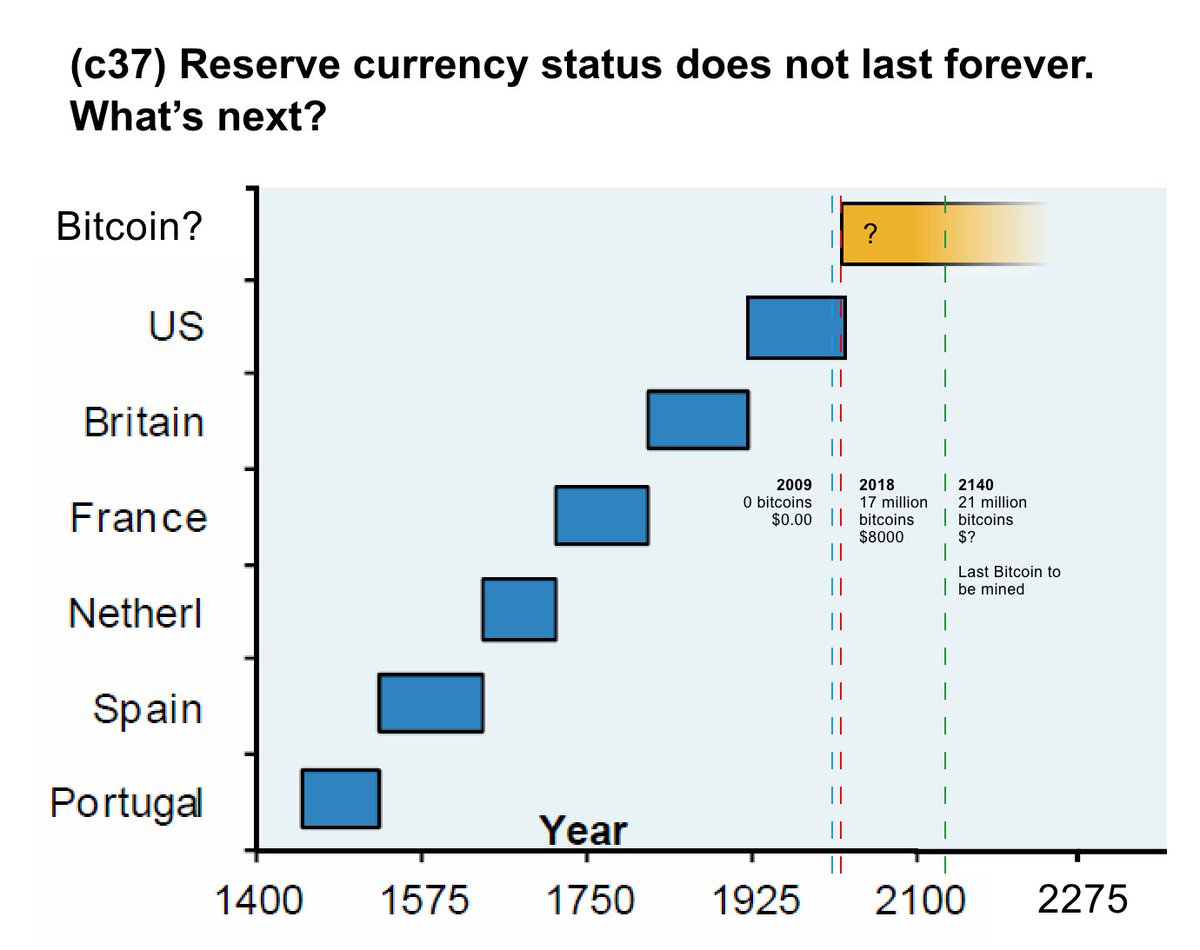
Dalio has a different definition of historical reserve currencies. He says it's the US dollar, then before that the British pound, then before that the Dutch guilder.
But the point remains that reserve currency status doesn't last forever. Go and watch Dalio's video from last year. He said it with cartoons. Now you need to substitute real events. Because the Fed is now in the process of printing the money to monetize the unpayable debts. This is the digital dollar devaluation.
In short, the old playbook won't work anymore because it's not 2008. Many differences:
1) You can't print your way out of this crisis, though they are trying to do so. Inflation is already extremely high and there are two at-scale alternatives: RMB and BTC.
2) In 2023, banks are now going bust at the consumer level (in the form of bank runs and mass withdrawals), not the enterprise level as they were in 2008 (where it was just paper markdowns between men in skyscrapers).
3) The world has changed over the last 15 years. By default, the alternative to a devalued USD is RMB. China is building a currency union with Russia, Iran, Saudi, and others, where the digital yuan is the medium of exchange. These countries have hard goods, natural resources, and oil. The currency is backed by something real. That's extremely concerning because the digital yuan is a surveillance engine.
4) While RMB is a land power, BTC is a cloud power. That's the other major development over the last 15 years: the rise of technology and crypto. 400M+ people worldwide hold cryptocurrency. Everyone has a mobile phone where they can send wires with one tap. $500B has moved out of community banks in the last few weeks. News of the banking crisis breaks and spreads on social media, not in mainstream outlets.
So to summarize the differences from 2008:
1) they're out of room to print
2) this is a consumer crisis, not an "enterprise" crisis
3) the geopolitical situation is totally different, especially RMB
4) the digital situation is also totally different, especially BTC
In short, this crisis may not go down like 2008 did.
Not everyone is going to double down on short-term Treasuries and big banks as their "flight to quality" given that long-term Treasury markdowns caused this crisis and big banks (like Credit Suisse and Deutsche Bank) are melting down chaotically. Are you so sure short-term Treasuries are safe from devaluation risk (via inflation) if long-term Treasuries were just devalued in a different way by the Fed (via hiking rates dramatically after saying they wouldn't)?
The next bad thing doesn't look quite like the last. If these *are* the last days of USD as global reserve currency, we should hope the successor is something free (BTC) rather than something completely controlled (RMB).
https://t.co/TTKi5GO5or