Here are those lessons, and some ideas about the future of agentic development, that I think are genuinely new.
https://t.co/raIFKn662R
The future of AI agents is bright, and we are already cooking. Stay tuned.
After three years of building, we are sunsetting Playbooks AI (https://t.co/Z5FcZueAjX), the open-source semantic programming system for AI agents that I started in mid-2022.
The lessons we learned along the way - about agent control flow, composability, and what "programming" even means in the age of LLMs - shaped my thinking in ways that keep paying forward.
20 GitHub ⭐s milestone. Help me get to 100! AI agent framework unlike any other - https://t.co/4PXOeIVgOx.
Now with automatic artifact management for building deep research agents - https://t.co/RwRHf40p5N.
@PlaybooksAI
In the video, I build 3 agents - Seller, Buyer and Boss.
Seller agent:
- Negotiates with a Buyer agent
- Reports to a Boss agent
- Makes autonomous decisions
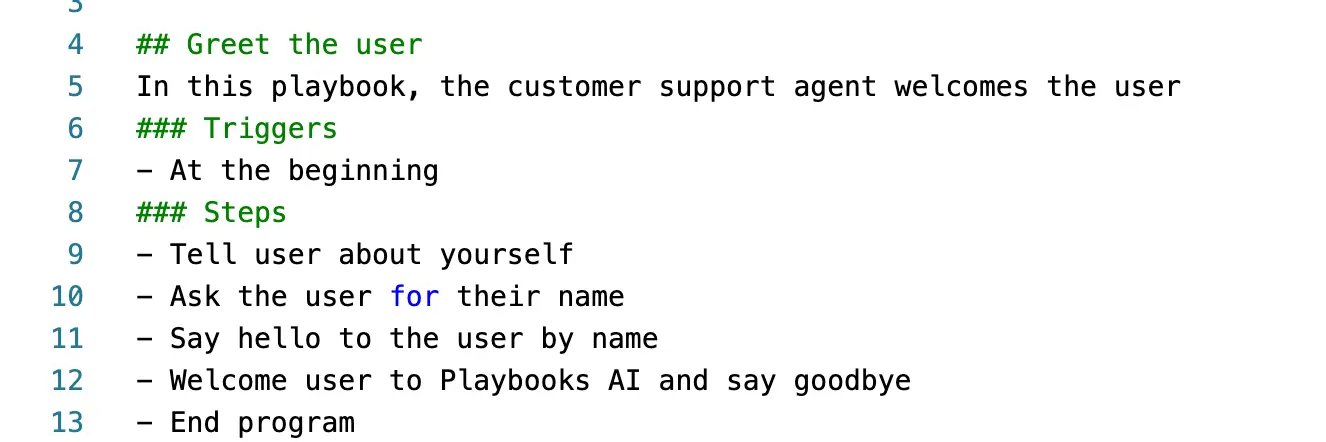
The entire program? Fits in a single screen and reads like English.
📽️ 10-min how to video: https://t.co/ODEUrR9c3e
What is the best way to teach @cursor_ai how to work with a new computer language so that auto complete works, cursor plan and agent modes follow coding best practices?
The new language is @PlaybooksAI. I can point cursor to the docs but wondering if there is a deeper integration possible.
Try Playbooks ▶️📚: https://t.co/1qYteypAI1
🚀Let's build something amazing together.
Any questions or comments or want to connect? Drop a comment below.
▶️📚 Introducing Playbooks AI: The world's first Software 3.0 stack for building AI agents, automations and applications.
Watch the 3-minute intro ↓ https://t.co/HwX1RjrFm6
For the engineers wondering about the stack:
⚙️ Playbooks compiles markdown-formatted .pb files → Playbooks Assembly Language (.pbasm) → executed by the Playbooks Runtime on LLMs.
Think: high-level language → assembly → CPU execution.
But the CPU is an LLM.




![PlaybooksAI's tweet photo. [Friday humor] World Domination with Playbooks (Because Why Not?)
https://t.co/U4xCHbJhD2 https://t.co/1uO99aT5Qm](https://pbs.twimg.com/media/G3eOLxiXkAAHYU5.jpg)