A pre-save at midnight is not a campaign. It is five quiet mistakes stacked on top of each other.
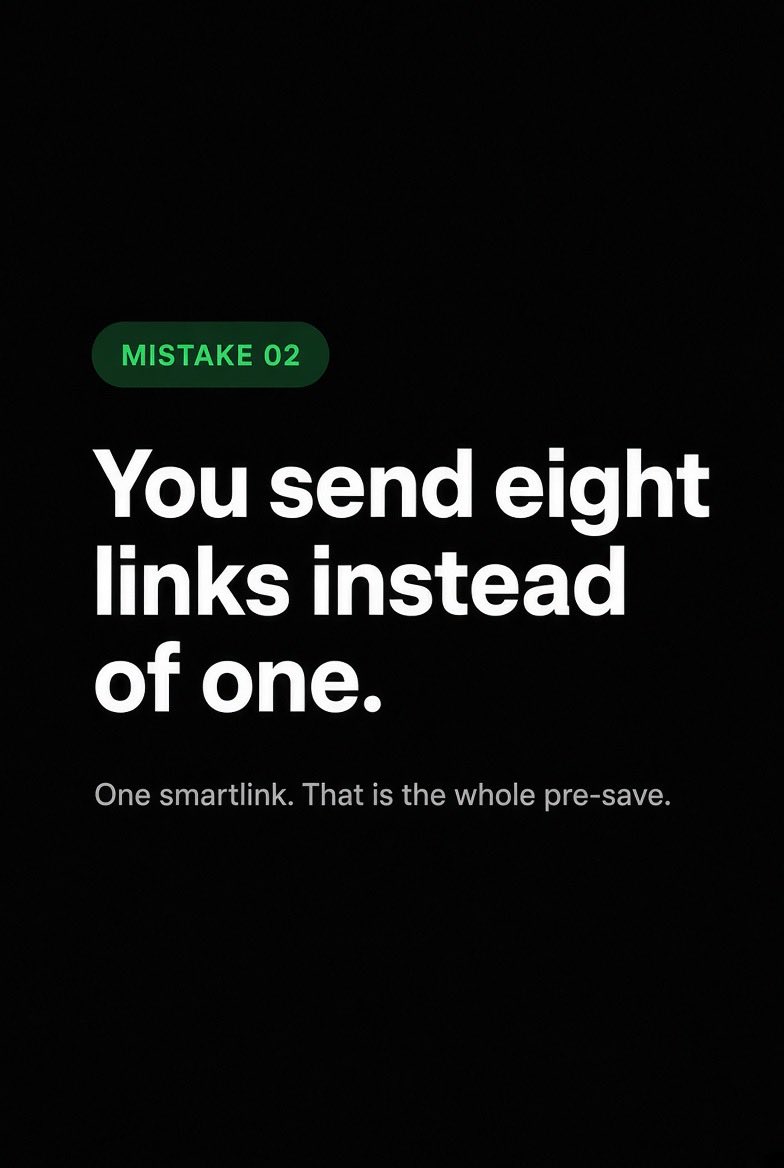
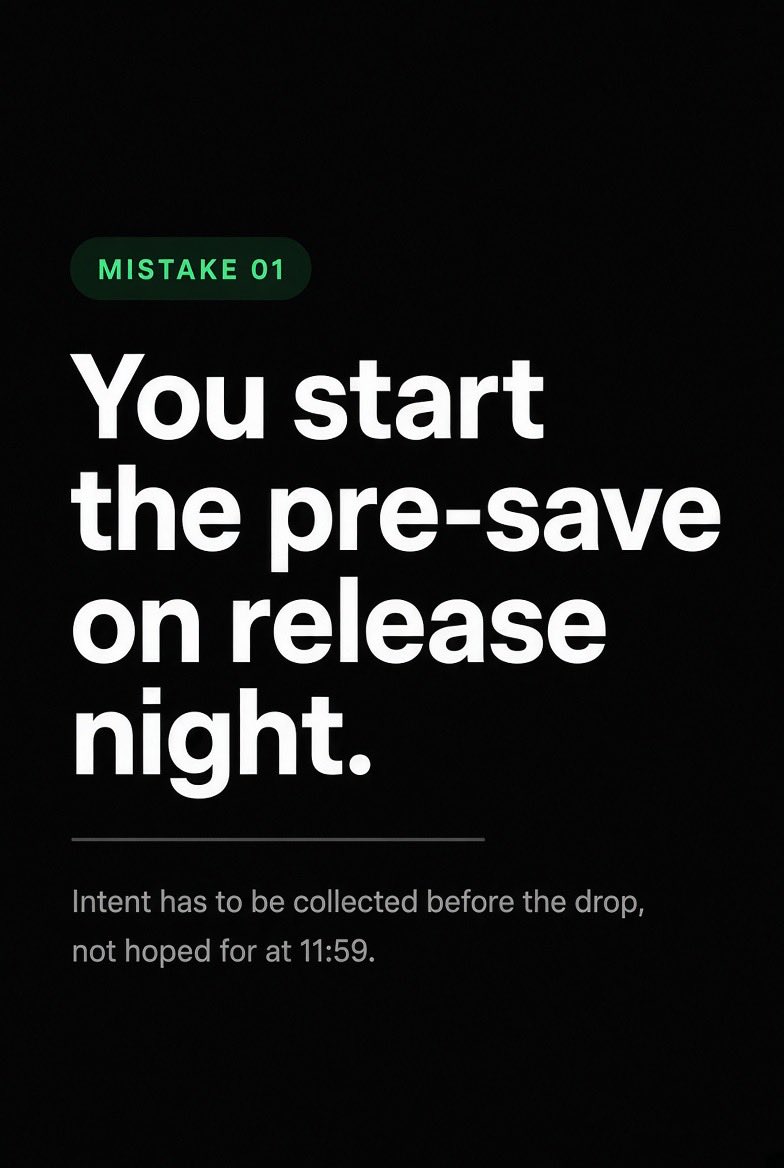
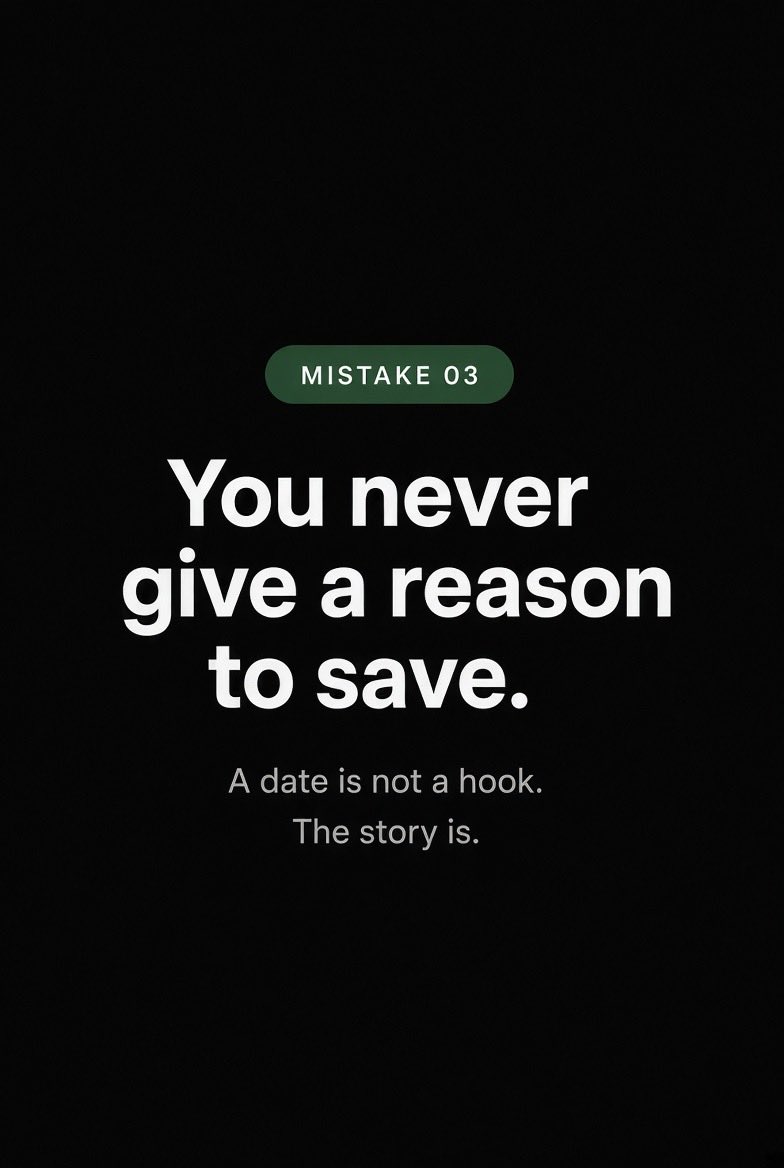
Start early, use one smartlink, give a real reason to save, and run a countdown of story, hook clips, and emails.
When the track goes live, take that same link into PlaylistFeed and pitch verified playlist curators whose lists already match the genre and mood.
#PreSave #MusicMarketing #IndependentArtist #PlaylistPitching #PlaylistFeed #NewMusic #ArtistDevelopment #SpotifyArtists
Playlist pitching is a fit game, not a volume game: only send to lists where the last 10 to 15 tracks could sit next to your song.
Keep the pitch to 4–6 lines—what it is, why it fits that playlist, one link—and send it before release day.
Build that curator list once in PlaylistFeed, pitch verified playlists by genre and mood, and reuse it so every release does not start from zero.
#PlaylistPitching #SpotifyPlaylists #IndependentArtist #MusicMarketing #PlaylistFeed #NewMusic #ArtistDevelopment
Pitch fewer playlists. Pitch better ones.
If the last 15 tracks could sit next to your song, it is a fit. If they could not, skip the follower count.
Find those verified playlist curators by genre and mood on PlaylistFeed, send a short pitch with one link, and stop spraying lists that were never going to add you.
#PlaylistPitching #SpotifyPlaylists #IndependentArtist #MusicMarketing #PlaylistFeed #NewMusic
Most artists pitch too many playlists.
That is why they hear nothing back.
Playlist pitching is not a numbers game. It is a fit game.
Find the right playlists before you write a single email.
Start with the song, not the follower count.
Write this down first: genre mood energy tempo vocal style time-of-day feel 2 or 3 honest comparison artists
If you cannot describe the song in one line, you cannot target it.
Then look for playlists that already live in that world.
Search by genre plus mood. “dark r&b night drive” “melodic drill” “dream pop study” “indie folk morning”
Open the last 15 tracks. If 10 of them could sit next to your song, it is a fit. If your track would jolt the listener out of the mix, skip it.
Ignore vanity.
A 4,000-follower playlist that adds music every week beats a 200,000-follower list that has been frozen since 2022.
Check the signals that matter: recent last-updated date real cover art and a clear concept artists you recognize in the same lane saves and follows that look human a curator who is actually reachable
Save the good ones in a simple list. Playlist name. Link. Curator. Why it fits. Date pitched. Reply.
That list becomes an asset. A scattered Notes app does not.
Write the pitch after the targeting.
4 to 6 lines. Song title. Mood. Why it fits that playlist. One link. Thank you.
No novel. No “this will blow up your playlist.” No 8 streaming links.
Pitch early. Independent playlist curators need time to listen. Release-day panic pitches get skipped.
The official Spotify editorial pitch still goes through Spotify for Artists. Independent curator pitching needs a cleaner map than random search and guesswork.
PlaylistFeed is built for that map. Browse verified playlist curators by genre and mood, pitch the lists that actually fit, and keep every submission in one place so the next release starts with a list, not a scramble.
Right playlist first.
Then the pitch is easy.
#PlaylistPitching #SpotifyPlaylists #MusicMarketing #IndependentArtist #FindPlaylists #PlaylistCurators #PlaylistFeed #SpotifyForArtists #NewMusic #ArtistDevelopment #MusicSEO
Most artists drop a song.
Then they start the campaign.
That is why release week feels empty.
Treat the date like a launch. Use a 4-week music release timeline.
Week 4. Build the base.
Finish metadata and cover art. Update Spotify for Artists. Refresh photos, bio, and Canvas. Make the EPK, one-sheet, and one smartlink. Start the pre-save.
If the song is not in the stores yet, you are already late.
Week 3. Start outreach.
Pitch blogs that actually cover your sound. Find playlists that match the genre, mood, and energy. Write short personalized pitches. Collect emails. Shoot content now so release week is not a panic.
Week 2. Warm the room.
Tell the story behind the song. Post a hook, a lyric, and one behind-the-scenes clip. Every post needs a next step: pre-save or follow. Send one follow-up. Not five. Check credits, links, and the release-day post stack.
Week 1. Launch with a path.
Do not just “post the link everywhere.”
Profile live. Smartlink in bio. Email the list. Short clip. Visualizer or music video. One ask: save the track.
Then keep pitching independent playlist curators with the live link.
After release week, read the data.
Open Spotify for Artists. See what converted: playlists, cities, sources, saves. Repeat what worked. Drop what only got empty views.
Editorial pitching lives in Spotify for Artists. Independent playlist pitching needs a real curator list.
PlaylistFeed is how you keep that list useful. Find verified playlist curators who fit the song, send a short pitch, and stop rebuilding outreach from scratch every Friday.
A release date is a line on the calendar.
A timeline is how the song gets heard.
#MusicReleaseTimeline #MusicMarketing #IndependentArtist #ReleaseWeek #PreSave #SpotifyForArtists #PlaylistPitching #PlaylistFeed #NewMusic #ArtistDevelopment
A music release timeline is the difference between a drop and a launch.
Most independent artists finish the song, upload it, and start promoting on release day. That is why the first week feels quiet. The listeners were never prepared.
Use a 4-week music release timeline.
Week 4: lock the foundation. Finish metadata, cover art, and the Spotify for Artists pitch. Update the artist profile, bio, photos, and Canvas. Build the EPK, one-sheet, and one smartlink. Start the pre-save page. If the stores do not have the track yet, you are already late.
Week 3: start targeted outreach. Send music blog pitches and premiere offers. Find playlists that match the song’s genre, mood, and energy. Write short personalized playlist pitches. Collect emails. Film the first batch of content so release week is not a panic.
Week 2: warm the audience. Post the story behind the song. Share a hook clip, lyric line, and studio or BTS still. Point every post to the pre-save or smartlink. Follow up once with blogs and curators who have not replied. Confirm assets, credits, and the release-day post stack.
Week 1: launch with a path. Release day is not “post the link everywhere.” It is a sequence: profile live smartlink in bio email to your list short-form clip full music video or visualizer one clear ask: save the track Then pitch remaining independent playlist curators with the live link.
After release week, do not disappear. Read Spotify for Artists. See which playlists, cities, and sources converted. Double down on the content and curator lane that worked. Cut what got views and no saves.
The official Spotify editorial pitch belongs in Spotify for Artists. Independent playlist pitching belongs in a targeted list.
PlaylistFeed is how that second list stays usable. Find verified playlist curators whose audiences fit the record, send the pitch from the same timeline, and keep music marketing from turning into a scramble every Friday.
A release date is a calendar line. A release timeline is the system that gives the song a chance to get heard.
#MusicReleaseTimeline #MusicMarketing #IndependentArtist #ReleaseWeek #PreSave #SpotifyForArtists #PlaylistPitching #PlaylistFeed #NewMusic #ArtistDevelopment #MusicSEO
Spotify for Artists is the control room for your catalog.
It is not a growth hack. It is where you see how people find the music, then decide what to do next.
Use it for four jobs.
One: keep the profile current. Artist name, photos, bio, Canvas, Artist Pick, social links, tour dates, merch. When a new listener taps through, this is the page that tells them whether to follow.
Two: read the audience, not just the vanity total. Listeners vs streams. Where fans are. What they already know in your catalog. How they arrived: your profile, algorithmic playlists, editorial, listener playlists, search, external links. Those sources tell you what to repeat.
Three: pitch and package each release. Spotify for Artists is where you submit upcoming music for official playlist consideration, set release info, and make sure metadata, genre, mood, and the pitch story are clean before the song goes live. A late, vague pitch is how records miss the window.
Four: turn stats into a plan. If search is converting, tighten titles and profile keywords. If algorithmic playlists are carrying you, feed them more consistent releases. If listener playlists are showing up, that is your cue to pitch curators whose lists already match the song.
That last part is where most artists stall. Spotify for Artists shows you the playlist picture. It does not build your independent curator list for you.
After the official pitch is in, use PlaylistFeed to find verified playlist curators by genre and mood, send a short targeted pitch, and track that outreach next to what Spotify for Artists is already reporting.
Read the dashboard. Then put the song in front of people who actually program that sound.
#SpotifyForArtists #SpotifyArtists #MusicMarketing #IndependentArtist #PlaylistPitching #SpotifyPlaylists #PlaylistFeed #ArtistDevelopment #NewMusic #MusicSEO
Music video marketing only works when people can find the video, watch it, and then hear the song again.
Most artists upload a music video, post the link once, and call it promotion. That is not music video SEO. That is a quiet premiere.
Optimize the video like a search page.
Put the main keyword in the title. Artist name + song title + “official music video.” If it is a lyric video or live session, say that in the title.
Write a real description. First line: song title, artist name, and a smartlink. Then 2 short sentences on the concept, genre, and mood. Add timestamps, credits, and the same keywords fans actually search: official music video, lyric video, live performance, indie [genre] artist.
Use tags that match intent. Song title. Artist name. Genre. “official music video.” Similar artists only if the comparison is honest.
Package more than one cut. Full official music video. 15-second hook for Reels, Shorts, and TikTok. Lyric clip. Behind-the-scenes post. Every clip should point back to the full video and the streaming smartlink.
Build watch time on purpose. End screens to the next video. Pinned comment with the save link. A simple series so viewers have a next click: video, session, breakdown, next single.
Publish on a schedule, not a spike. Premiere date. Hook clips before and after. One recut a week later. Search and the algorithm both reward staying power.
Measure the right things. Saves. Follows. Click-through to streaming. Comments asking for the next release. Views without a next step do not build a career.
Then connect the video to playlists. A music video gets the first watch. A playlist add gets the repeat stream.
After the official music video is live, pitch the same track to curators whose playlists already match the genre, mood, and energy.
PlaylistFeed helps you find those verified playlist curators, send a short targeted pitch, and keep music video promotion and playlist pitching inside one release plan.
Rank the video. Then give the song a place to keep playing.
#MusicVideoMarketing #MusicVideoSEO #OfficialMusicVideo #IndependentArtist #MusicMarketing #YouTubeSEO #PlaylistPitching #PlaylistFeed #NewMusic #ArtistDevelopment
Music PR is not “getting mentioned.”
It is giving the right rooms a reason to care before the song disappears into the feed.
The strategies that actually work are simple.
Start with a story, not a resume. Editors and curators need a hook they can use: the era, the collaboration, the city, the concept, the tension in the lyric. If you cannot say it in one sentence, the campaign is still mush.
Build the kit first. Updated profiles. One smartlink. Short bio. Strong photo. That pack is the PR. Without it, every email is extra work for the other person.
Pick lanes, not “the internet.” Blogs that already cover your sound. Playlists that already live in that mood. Local radio. College desks. Genre newsletters. Playlist curators. A few targeted creators. Ten honest targets beat two hundred random ones.
Time the ask. Premiere and playlist pitches need a window. A campaign that starts on release day is a eulogy for the single.
Lead every message with the music. Then the fit. Then one clear ask. Coverage, premiere, interview, add. One ask.
Stack owned channels under the press. Email list. Behind-the-scenes content. A reason to save the track. PR can open the door. Your own audience is what keeps people in the room.
Track everything. Who you pitched. What you asked. What landed. What got silence. The second release gets easier because the first one left a map.
Do not confuse spend with strategy. A publicist is useful when you already have a story, assets, and a lane. Paying someone to spray a mediocre pitch just gets you ignored faster.
Run press and playlists as one campaign, not two hobbies. The blog explains the record. The playlist keeps it in rotation.
PlaylistFeed is the playlist half of that system. Find verified curators whose lists match the genre and mood, send the same tight pitch you should be sending editors, and keep outreach in one place instead of starting from zero every drop.
PR is not noise. It is a clear path from the song to the people already listening for it.
#MusicPR #IndependentArtist #MusicMarketing #PressPitch #PlaylistPitching #PlaylistFeed #ArtistDevelopment #NewMusic
Successful music blog pitches are boring in the best way.
They are short. They are specific. They make listening effortless.
The ones that get a yes usually share the same pattern.
They prove the sender read the site. A real reference to a recent review, a similar artist, or the blog’s lane. Not “I love what you do.” An actual post.
They ask for one thing. Premiere. Feature. Video drop. Not all three.
They describe the song in one breath. Genre. Mood. Two comparison artists. Release date. That is enough for an editor to file it.
They hide nothing behind attachments. One stream link. One EPK or photo link. The track plays before the bio starts.
They give the editor a usable story. Not a childhood timeline. One sentence on why the song exists or why this week matters.
They respect the calendar. Premiere pitches land 1 to 3 weeks early. Day-of emails read like leftovers.
They sound like a person. Clean. Direct. Easy to answer. No caps. No guilt. No “this will blow up your site.”
They follow up once. Then they let it go. The artists who get covered again are the ones who do not burn the inbox.
The pitches that fail are also predictable. Wrong genre. Eight platforms. No context. A 400-word autobiography. A private file that does not open on a phone. A mass BCC with the wrong blog name.
Treat blog outreach like playlist outreach. Fit first. Short pitch. Clear link. Track the reply.
That same system is how PlaylistFeed is meant to be used on the streaming side. Find verified curators whose playlists already match the song’s genre and mood, send a tight note, and keep the work in one place while the blog emails go out.
Press gets you the write-up. The right playlist gets you the repeat play.
#MusicBlogs #PressPitch #IndependentArtist #MusicMarketing #SubmitYourMusic #PlaylistPitching #PlaylistFeed #NewMusic #ArtistDevelopment
A blog pitch should look like this.
Not a novel. Not your full autobiography. One tight note an editor can answer in 20 seconds.
Copy, then swap the brackets.
Subject: Premiere request: [Song Title] by [Artist] — [genre / mood] for [Blog Name]
Hi [Editor first name],
I have been reading [Blog Name], especially your recent pieces on [similar artist or last post you actually read]. I think this one fits.
[Artist] is a [city]-based [genre] artist. New single: “[Song Title]” Sound: [3–6 word mood], somewhere between [Artist A] and [Artist B] Release date: [Month Day, Year] Ask: premiere / first-look feature on [date]
Listen here: [smartlink or private stream] Press photo + short bio: [EPK link]
One-line story: [why the song exists, one sentence only]
Happy to hold the track exclusive until your publish time. Thanks for taking a look.
[Name] [Email] [Instagram] [City]
That is the whole pitch.
If you cannot name a real post from that blog, you are not ready to hit send. If the song takes more than one click to hear, you are not ready to hit send. If you ask for a premiere, a review, a podcast, and a playlist add in the same email, you are not ready to hit send.
Send 1 to 3 weeks early for a premiere. One follow-up after 7 days. Then move on.
While that email is out, run the same discipline on playlists. Same song. Same smartlink. Same targeting rule.
PlaylistFeed is where you take that next step. Find verified curators whose lists already live in that genre and mood, and send a short pitch instead of spraying every inbox in sight.
Blogs explain the record. The right playlist keeps it playing.
#MusicBlogs #SubmitYourMusic #IndependentArtist #MusicMarketing #PressPitch #PlaylistPitching #PlaylistFeed #NewMusic
Most blog pitches fail for the same reason playlist pitches fail.
The artist sends everything to everyone and explains nothing.
Blogs are not a dump folder. They are editors looking for a story that fits their readers.
Submit like this.
Find the right desks. Read the last 10 posts. If they cover dream-pop, do not send drill. If they only premiere singles on Tuesdays, do not email a 12-track album on Friday night.
Follow the actual guidelines. Many blogs want a form, a private stream, or a specific subject line. Ignore that and you are already in the trash.
Ask for the right thing. A premiere. A feature. A video premiere. A short review. One ask. Not all four.
Write a short pitch. Who you are in one line. What the song is in one line. Why it fits that blog in one line. Release date. Private or public link. Press photo and a one-sheet if they want assets.
Lead with the music. If they cannot hear the track in one click, they will not hunt for it.
Give them time. Send 1 to 3 weeks before the date if you want a premiere. Same-day emails almost never get a write-up.
Do not attach a 40MB zip. Do not send five follow-ups in 48 hours. One polite bump after a week is enough.
Keep a simple log. Blog. Date sent. Ask. Result. That list becomes your press map for the next release.
Blogs help people understand the song. Playlists help people hear it on repeat.
Run both. Use the same tight assets, the same smartlink, and the same targeting rule: only pitch rooms that already play your world.
PlaylistFeed covers the playlist side of that work. Find verified curators whose lists match the genre and mood, send a focused pitch, and keep outreach in one place while the blog emails go out.
Coverage gets you context. The right playlist gets you plays.
#MusicBlogs #SubmitYourMusic #IndependentArtist #MusicMarketing #PlaylistPitching #PlaylistFeed #NewMusic #ArtistDevelopment
A weak pitch wastes a good song.
Most artists write three paragraphs about themselves and hope a curator feels generous. Curators do not have that time. They need fit, a clean link, and a reason to press play.
Pitch like this.
Match first. Only send to playlists that already live in your genre, mood, and energy. A dark late-night R&B record does not belong on a gym-rap playlist, no matter how many followers it has.
Lead with the song, not your life story. One line on what it sounds like. One line on why it fits that playlist. Then the link.
Keep it short. 4 to 6 lines is enough. Name. Track. Mood. Fit. Link. Thank you.
Use one smartlink or the direct Spotify URL. Do not send 8 platforms and a Google Drive folder.
Mention something specific about the playlist. A similar artist already on it. The mood of the last 10 tracks. The time of day it feels built for. That one detail is the difference between a pitch and spam.
Send before release day when you can. Curators need time to listen. A pitch at 11 p.m. on drop night is usually too late.
Track what you sent. Note the playlist, date, angle, and reply. If a curator passes, do not argue. Use the feedback, tighten the next pitch, and move to a better fit.
Do not buy fake adds. Do not mass-blast. Do not promise streams you cannot stand behind. Real placements come from a real person choosing the song.
PlaylistFeed is built for this exact workflow. Find verified curators whose audiences match the record, send a focused pitch, and keep the outreach in one place so you are not rebuilding a contact list every release.
The song still has to be good. The pitch just has to make the right person hit play.
#PlaylistPitching #IndependentArtist #MusicMarketing #PlaylistFeed #NewMusic #ArtistDevelopment #SpotifyPlaylists
Distribution is not marketing.
It is how the song becomes available to stream, save, and pitch. That is the start of the release, not the campaign.
Pick a platform based on how you actually work.
DistroKid is built for fast, high-volume independent releases. TuneCore is a straightforward store-by-store option if you want simple ownership and official store delivery. CD Baby is useful if you also want physical, publishing extras, and a more traditional indie setup. UnitedMasters is aimed at artists who want distribution plus a more social-first workflow. Amuse works if you want a free or low-friction first option and can live with its limits. AWAL, Stem, Symphonic, and similar partners make more sense once you have traction and want a team, not just an upload button.
Before you choose, check the parts that matter:
Keep your masters. Know the fee: annual, per-release, or revenue share. See how fast the stores actually receive the music. Confirm you can edit metadata after upload. Look at pre-save tools, smartlinks, YouTube Content ID, and takedown speed. Read how they handle splits if more than one person owns the record.
Distribute early enough to leave time for pitching. A song that hits Spotify on release day with no live links, no pre-save, and no pitch window is already late.
Once the track is in the stores, the next job is getting it in front of people who already have the audience.
That is where PlaylistFeed fits. Use your distributor to get the song live. Use PlaylistFeed to find verified curators whose playlists match the genre, mood, and energy, then send one clean pitch with your smartlink instead of guessing in random DMs.
Distribution puts the song on the shelf. Targeted playlist outreach gives people a reason to take it off.
#MusicDistribution #IndependentArtist #MusicMarketing #DistroKid #TuneCore #CDBaby #PlaylistPitching #PlaylistFeed #NewMusic
Most artists send a folder of random files and call it an EPK.
That is why nobody replies.
An EPK is not a dump of your whole career. It is a 30-second path: hear the song, understand the artist, know who to email.
Build it in this order.
Decide the format first. Use a live page and a 1-page PDF. The page stays updated. The PDF is what you attach.
Write the copy before you design anything. You need a 1-sentence one-liner. A short bio of 50–80 words. A longer bio of 150–250 words. And one pitch line for the current release.
Keep press copy in third person.
Only add proof a stranger can verify. Playlists. Press. Radio. Sync. Tours. Real quotes. Skip inflated numbers and empty claims.
Get 3–6 strong photos. One portrait. One styled artist shot. One live shot. Name the files clearly and keep them high-res.
Do not link your entire catalog. Lead with the current single or EP. Add 2–3 best tracks. One smartlink is enough.
Put contact in one obvious place. Booking email. Press email if you have one. City. Website. Socials. Spotify profile.
Layout should be scan-friendly: Name and photo. One-liner. Play link. Short bio. Highlights. Photos. Contact.
If someone has to hunt for the song, the EPK failed.
Make the one-sheet one page only. Name. Photo. One-liner. Short bio. Release link. A few highlights. Contact.
Then test it. Send it to someone who does not know your music. Ask what you sound like, how to contact you, and which song you are promoting. Fix whatever makes them pause.
Update it every release. New era. New lead track. New highlights.
When the kit is done, use it. Send that same smartlink and one-sheet to curators whose playlists match the song’s genre, mood, and energy.
PlaylistFeed helps you find those curators, keep the pitches targeted, and stop rebuilding your outreach list from scratch every release.
A clear EPK gets you taken seriously. The right playlist fit gets the song heard.
#EPK #IndependentArtist #MusicMarketing #ArtistDevelopment #PlaylistPitching #PlaylistFeed #NewMusic
Most artists send a folder of random files and call it an EPK.
That is why nobody replies.
An EPK is not a dump of your whole career. It is a 30-second path: hear the song, understand the artist, know who to email.
Build it in this order.
Decide the format first. Use a live page and a 1-page PDF. The page stays updated. The PDF is what you attach.
Write the copy before you design anything. You need a 1-sentence one-liner. A short bio of 50–80 words. A longer bio of 150–250 words. And one pitch line for the current release.
Keep press copy in third person.
Only add proof a stranger can verify. Playlists. Press. Radio. Sync. Tours. Real quotes. Skip inflated numbers and empty claims.
Get 3–6 strong photos. One portrait. One styled artist shot. One live shot. Name the files clearly and keep them high-res.
Do not link your entire catalog. Lead with the current single or EP. Add 2–3 best tracks. One smartlink is enough.
Put contact in one obvious place. Booking email. Press email if you have one. City. Website. Socials. Spotify profile.
Layout should be scan-friendly: Name and photo. One-liner. Play link. Short bio. Highlights. Photos. Contact.
If someone has to hunt for the song, the EPK failed.
Make the one-sheet one page only. Name. Photo. One-liner. Short bio. Release link. A few highlights. Contact.
Then test it. Send it to someone who does not know your music. Ask what you sound like, how to contact you, and which song you are promoting. Fix whatever makes them pause.
Update it every release. New era. New lead track. New highlights.
A good EPK does not try to impress everyone. It makes the right people say yes faster.
#EPK #IndependentArtist #MusicMarketing #ArtistDevelopment #MusicReleaseChecklist #NewMusic
Treat every new release like a small business launch.
Finishing the song is not the campaign. It is the product. The work after that is what decides whether fans, curators, and industry contacts can actually find it, understand it, and support it.
A clear checklist moves you from “the track is done” to a promotion that reaches people on purpose.
Verify your artist profiles before the release.
Update your name, photos, bio, links, and contact information on every streaming platform and social account. When someone discovers the song, they should immediately know who you are and how to follow you. Broken links, old photos, and empty bios kill momentum at the exact moment curiosity is highest.
Build your essential assets early.
Prepare a simple electronic press kit with a short bio, a strong artist photo, music links, notable achievements, and contact details. Create one smartlink that gathers every streaming and pre-save option in a single URL. That one link becomes the thing you send to playlists, press, fans, and DMs. Do not make people hunt.
Plan playlist outreach with focus.
Identify playlists that actually match the song’s genre, mood, and energy. Write short, personalized pitches that explain the fit and include a clear link. Start before release day so curators have time to listen. Mass-blasting every playlist is not outreach. It is noise.
Use a release timeline as a guide.
Set dates for content creation, asset preparation, pitching, and promotion. A steady schedule keeps you from rushing the week of the drop and missing the details that matter. Last-minute work shows. Planned work compounds.
Grow your direct audience.
Collect emails from fans who want updates about shows, releases, and exclusive content. An email list is the one channel you own when algorithms change. Social reach is rented. A list is yours.
Stay active on social media with purpose.
Share performances, lyrics, behind-the-scenes moments, and the stories behind the songs. Every post should point to a next step: follow the profile, save the track, join the list, or come to a show. Content without a destination is just content.
Think beyond one release.
Use each campaign to learn what messaging, content, and opportunities actually work for your music. Keep notes on what brings listeners, saves, and engagement. Apply those lessons to the next project. That is how independent careers get built instead of reset every single drop.
A professional framework does not remove creativity from the work.
It gives the music a stronger chance to be heard by giving fans and curators a clear path to discover, understand, and support what you create.
#MusicReleaseChecklist #IndependentArtist #MusicMarketing #ArtistDevelopment #NewMusic