More manufacturers and developers are looking at how to bring AI into their machines.
It’s a challenge we know well from developing SuperDrive™, our AI virtual driver for autonomous trucks.
Through HyperFoundry™, we’re making the data, model development, simulation, and systems engineering capabilities behind SuperDrive available to other teams building autonomous systems.
A snowy road calls for a little extra patience.
SuperDrive™ yields to traffic in the target lane before completing a smooth highway merge.
Watch how our AI virtual driver handles the moment: https://t.co/ddmZR01F3d.
Language models can learn from the open internet. Where does Physical AI get its ground truth?
Unlike digital AI, autonomous machines need data grounded in real-world behavior, 3D environments, and complex decision-making. That kind of data is much harder to produce at scale.
This blog, “Closing the Ground-Truth Gap in Physical AI”, explores why this ground-truth gap matters and how Data Factory, part of our HyperFoundry™ Physical AI development platform, turns real-world driving into machine-generated ground truth, from 3D scene labels and reasoning traces to reconstructed environments.
Read more: https://t.co/h16JK7ndwS.
Another step forward for PlusAI as we advance toward our goal of commercializing autonomous trucking. Thanks to Robotics and Automation News for the coverage. https://t.co/E6uxeUsno3
“The road gives you the scenarios. Simulation lets you test them again and again.” That was one takeaway from PlusAI COO and Co-Founder Shawn Kerrigan’s discussion at HumanX Amsterdam.
For autonomous trucking, we believe real-world driving experience and simulation are not either/or. One can capture the social complexity of driving, and the other helps validate the AI driver against rare and challenging scenarios at scale.
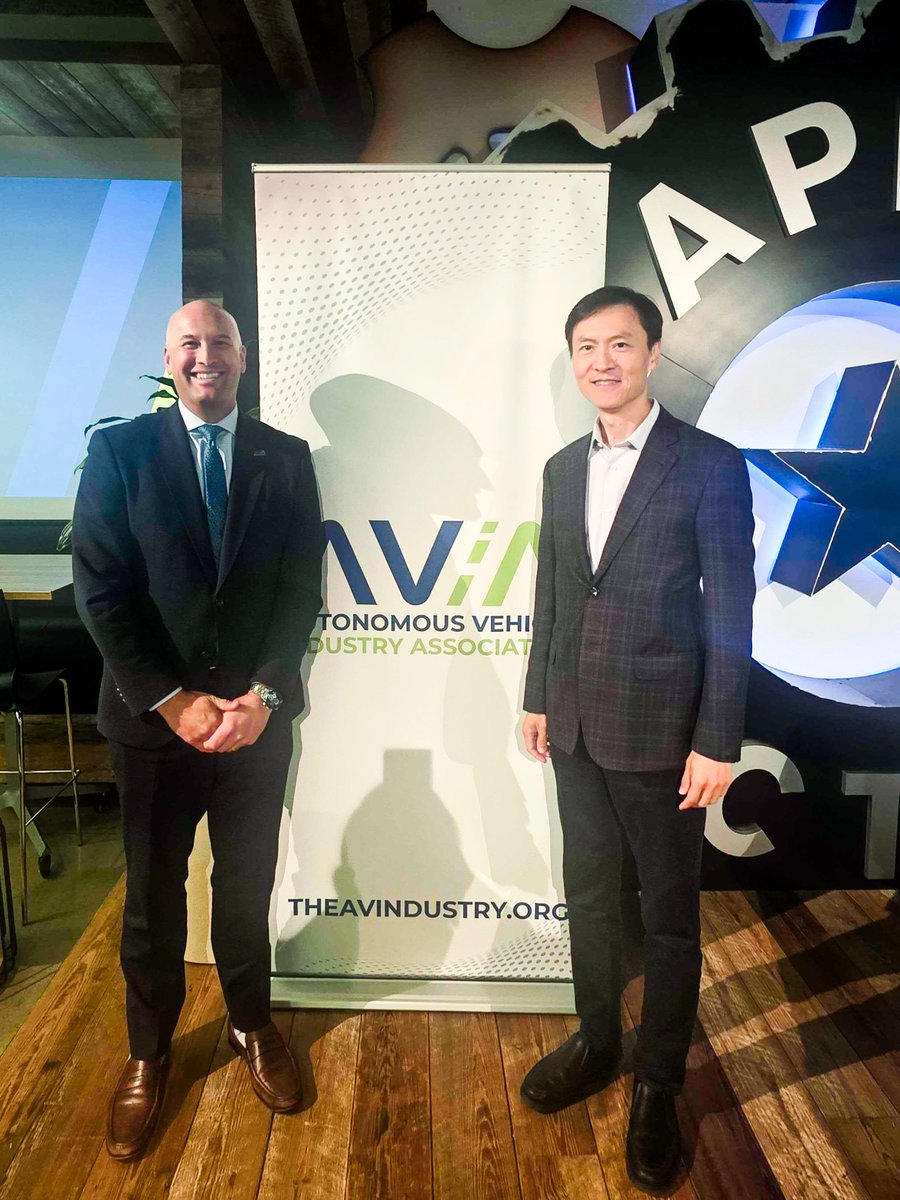
Thank you to Autonomous Vehicle Industry Association (AVIA) for hosting a great Autonomy Summit in Austin. @theavindustry
PlusAI CEO and Co-Founder David Liu joined Dan Van Alstine, former President and COO of Ruan Transportation Management Systems and a member of PlusAI’s Safety and Policy Advisory Council, for a fireside chat on the path to commercializing autonomous trucking.
Key takeaways:
🚛 We believe autonomous trucking is moving from demos toward deployment, and expect the harder challenge to be scaling safely and reliably inside real freight operations.
🚛 Safety must be built on evidence, which could include structured safety cases, rigorous validation, and transparent reporting on readiness.
🚛 Commercial scale requires collaboration across AI developers, OEMs, fleet operators, regulators, and the broader freight ecosystem.
🚛 We expect clear regulatory frameworks will be important for scaling across the US.
@BIJapan Tiny correction: that’s 40,000 pounds of sand by weight. It was there on purpose: we use it to simulate real freight loads when testing autonomous trucks –
@TechSpot Definitely not the GPU haul. The sand was there on purpose. We use it to simulate real freight loads when testing autonomous trucks. Here’s why:
PlusAI and Texas Ventures Acquisition III Corp have filed a registration statement on Form S-4 with the US Securities and Exchange Commission in connection with our previously announced proposed business combination.
This filing marks an important milestone toward completion of the transaction and PlusAI’s planned public listing. Transaction expected to provide PlusAI with capital to advance the targeted 2027 commercial launch of factory-built autonomous trucks powered by SuperDrive™.
Read the full announcement here: https://t.co/tOzia1ClVr.
@tmiyatake1 Exactly. The sand is our way of making the truck feel a lot more like it’s carrying real freight during testing. Here is the quick explainer:
@sfstandard@jennwadsworth@McLaughlinnews Still one of the stranger ways to explain our testing process... Here’s why we use sand when testing autonomous trucks:
@pcgamer The sand was there for a reason – We use it as a simulated load to test how our autonomous trucks perform under realistic weight conditions 🚛. Here’s the quick explainer:
@WatcherGuru The 40,000 pounds of sand was very real. We use it as a simulated load to test how our autonomous trucks perform under realistic weight conditions. Here’s why