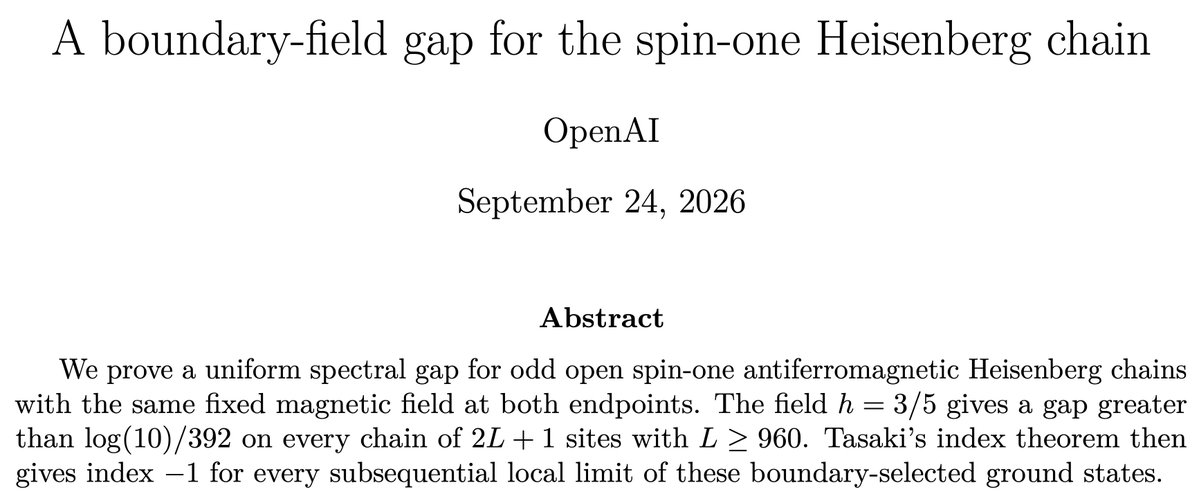
A week ago today, I woke up and, while checking my iPhone in bed, learned of OpenAI's Haldane-gap proof. The days since have felt like a sweet nightmare. I'm now almost convinced the proof is valid and am writing a more human-readable account, which I hope to share soon.
An AI agent now tunes our lasers. Claude, working with @Anthropic, tuned 12 interdependent parameters on a QuEra testbed, found a ~220 kHz resonance the manual tune missed and cut it ~1000x. 19-hour soak, zero unattended lock drops. https://t.co/Y06V4yydAi
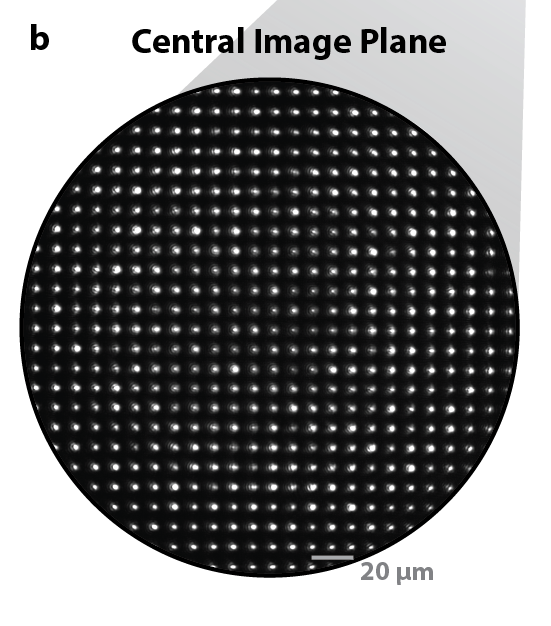
Researchers built a next-generation cavity-array microscope with 600 tiny light-trapping cavities designed to interface with large atom arrays. The advance could enable faster, larger-scale quantum networks.
📄 https://t.co/NXhnfqyYzF
Eight NSF Quantum Leap Challenge Institutes prepare to propel U.S. quantum science with a new $290M investment. The institutes will take on some of the hardest scientific hurdles in the global race to create powerful quantum-based technologies. https://t.co/QCPvab0Wlj
Ten years ago, my AKLT and KT papers were suddenly in the spotlight after Haldane’s Nobel Prize. Today, my lesser-known 2018 and 2025 papers seem to be getting some attention --- ironically, because a new OpenAI model solved a problem I had long wanted to tackle.
We’re releasing a broad range of new mathematical results produced by an internal frontier model.
We’ve been consulting with the independent Advisory Group on Mathematics and Artificial Intelligence at the Institute for Advanced Study, and we have drawn on their advice and public recommendations to inform how we release these results.
https://t.co/7N6TPlft1P
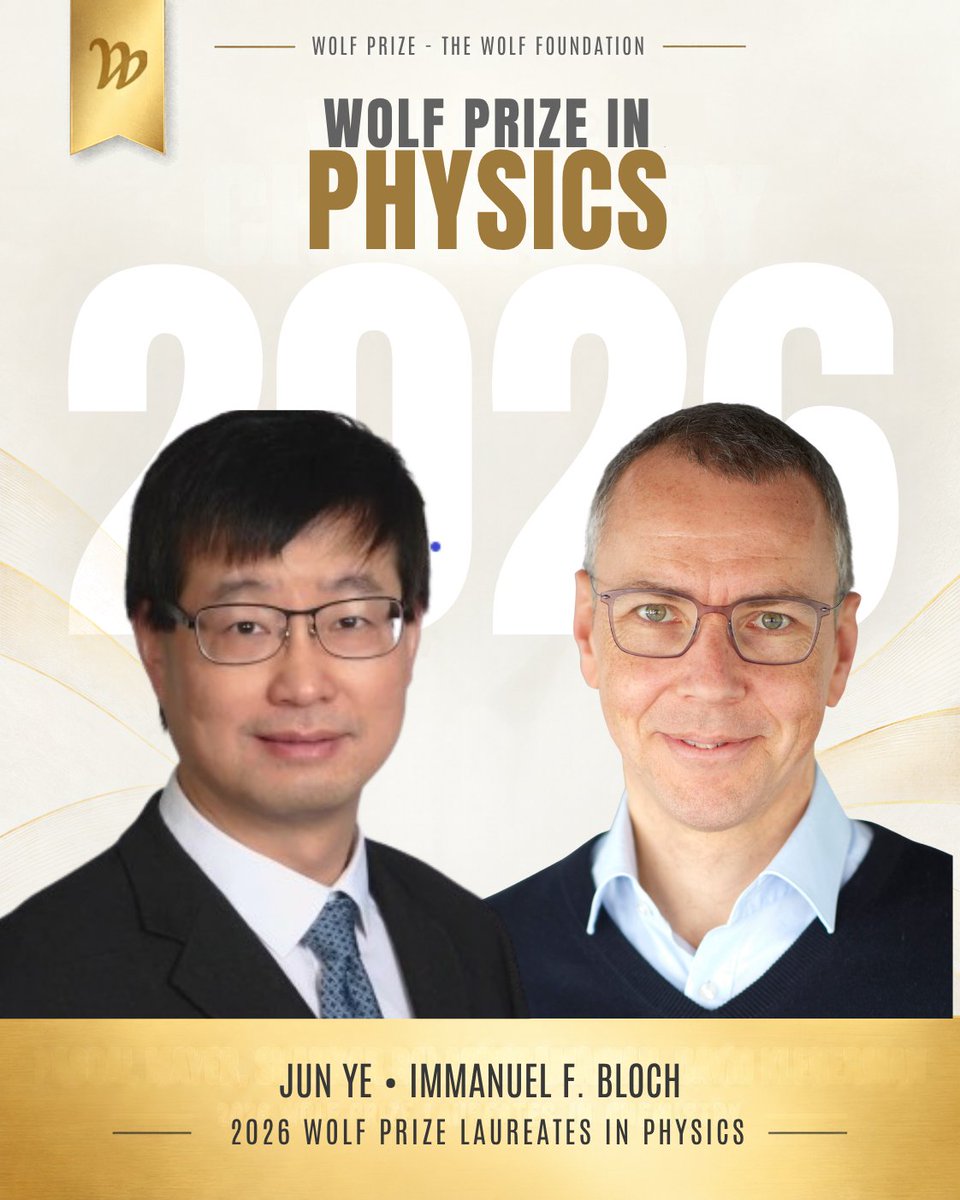
ANNOUNCING THE 2026 WOLF PRIZE LAUREATES IN PHYSICS
The 2026 Wolf Prize in Physics is awarded to Immanuel F. Bloch and Jun Ye “for transformative, widely applicable advances in the control of ultracold atomic systems.”
Their work has pushed experimental physics into realms that were once almost impossible to control.
Bloch established ultracold atoms trapped in optical lattices as a powerful platform for studying complex quantum systems. His work helped define the modern field of quantum simulation, revealing new insights into many-body quantum states and laying foundations for emerging quantum technologies.
Ye, meanwhile, led the development of the world’s most accurate and stable optical atomic clocks, achieving levels of precision that have reshaped how time and frequency can be measured. His work has also opened new ways to test fundamental physics, from relativity to searches for variations in nature’s fundamental constants.
From controlling quantum matter to measuring time with unprecedented precision, their discoveries have expanded what physicists can observe, test, and engineer.
Congratulations to Immanuel F. Bloch and Jun Ye, the 2026 Wolf Prize Laureates in Physics.
@NIST@maxplanckpress
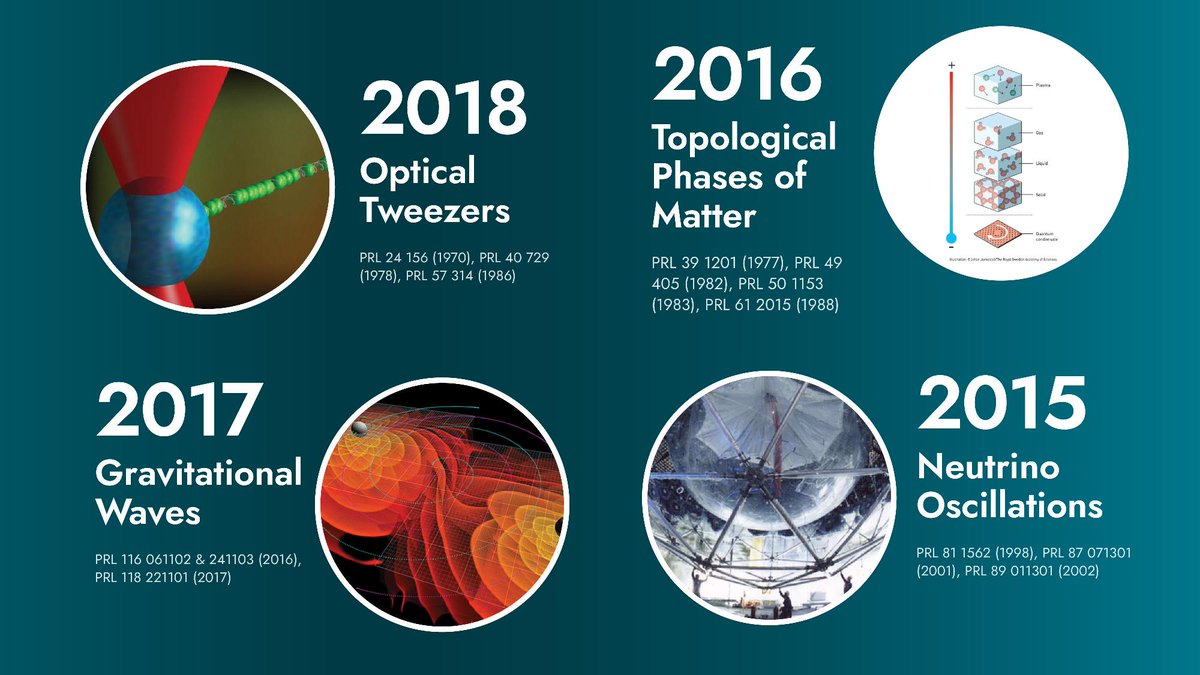
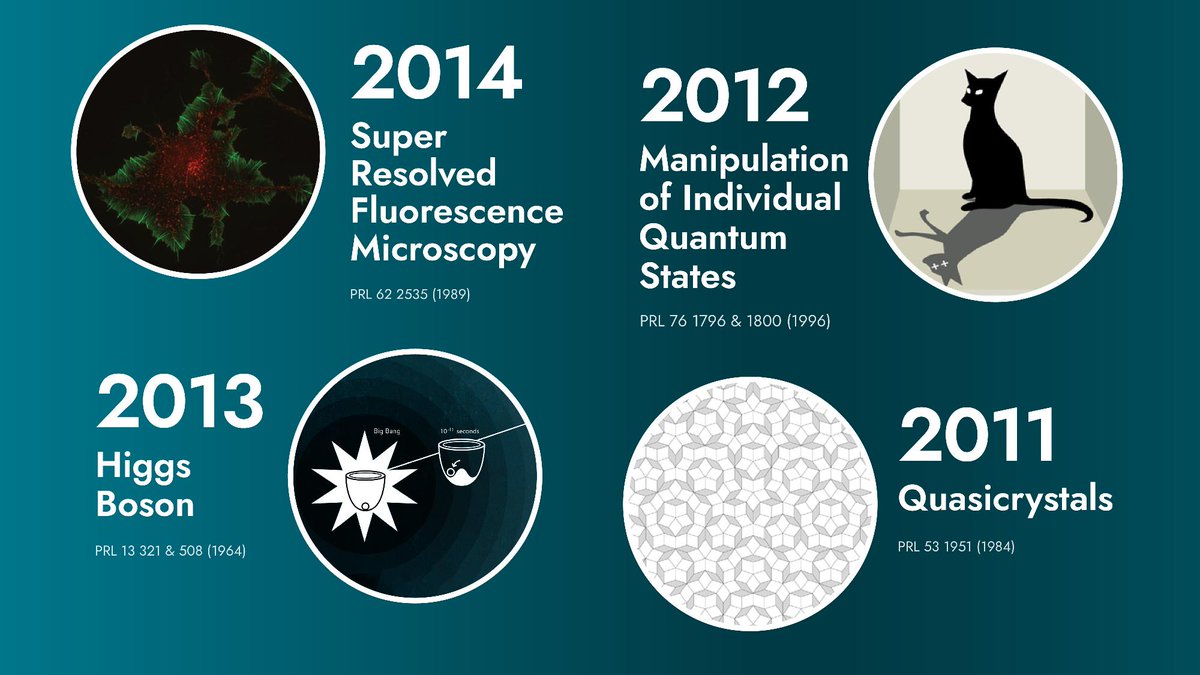
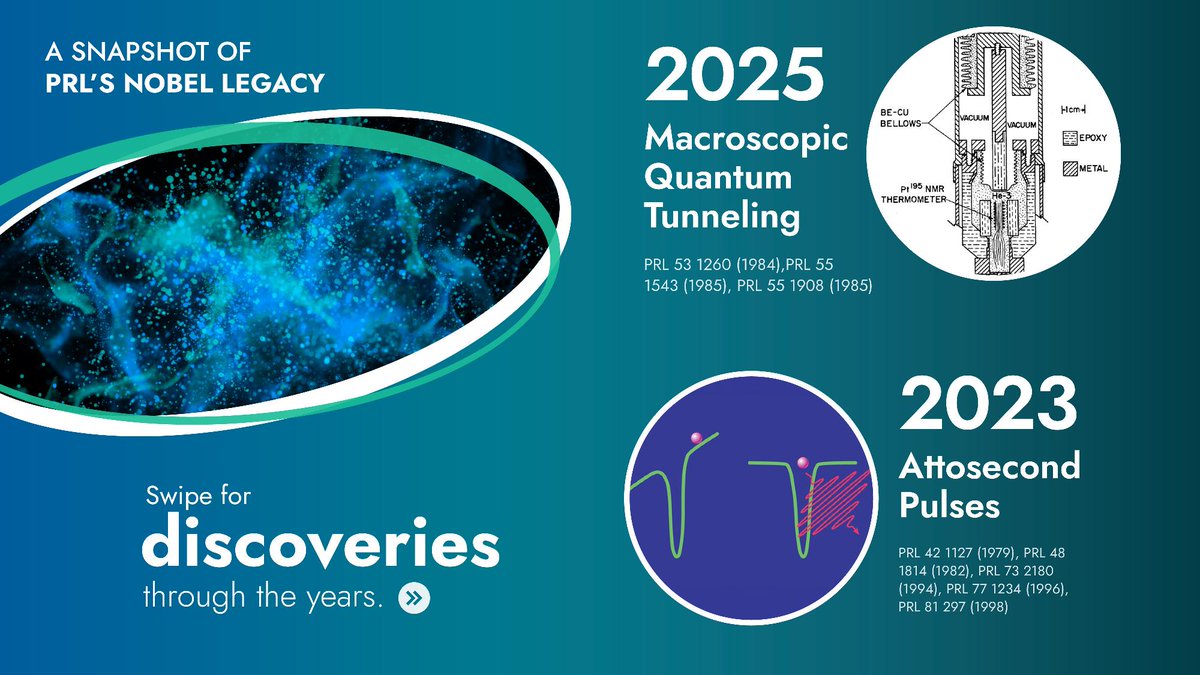
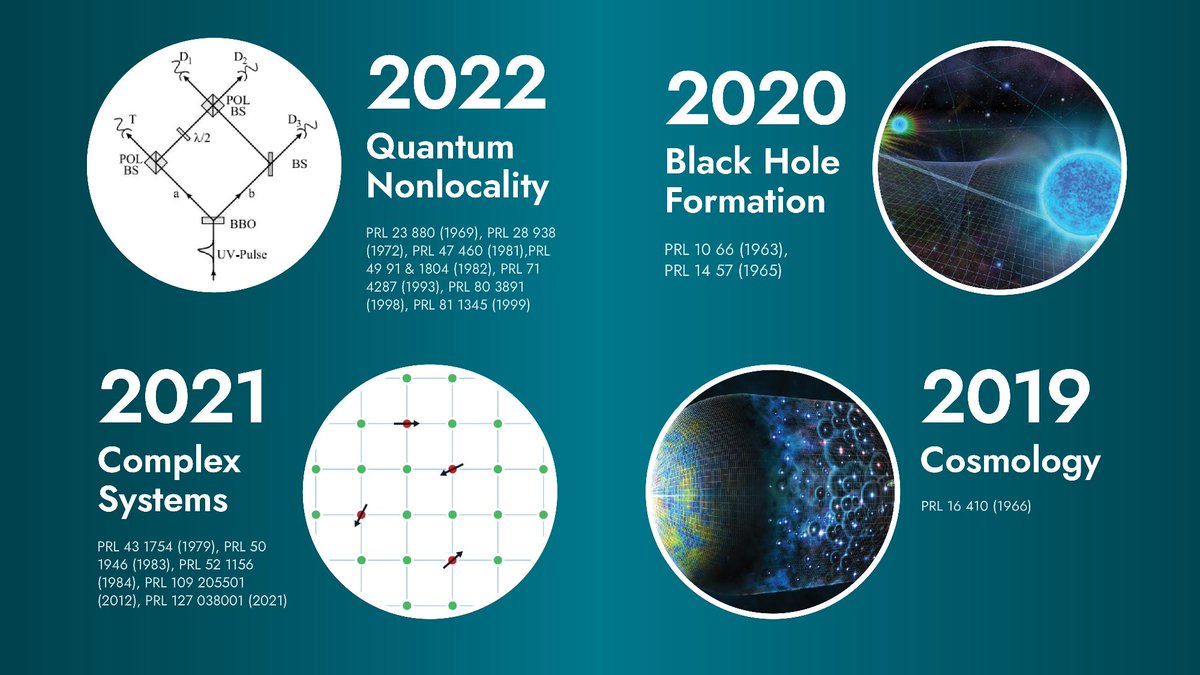
Since 2000, around 30% of all research leading to the @NobelPrize in Physics has been published in Physical Review Letters.
As we look to the 2026 award, swipe through the research published in our journal that helped pave the way to some of the most recent #NobelPrize wins.
On September 20, 2002, Hayao Miyazaki's "Spirited Away" was released in the U.S. The following year, it made history as the first non-English film to win the Academy Award for Best Animated Feature. The breathtaking hand-drawn imagery inspired American moviegoers to embrace anime not as mere children's entertainment, but as a true art form that resonates across generations.