@Support is someone able to help? I have been locked out of my personal account and cannot gain access. Keep getting this over and over, and it’s not helping.
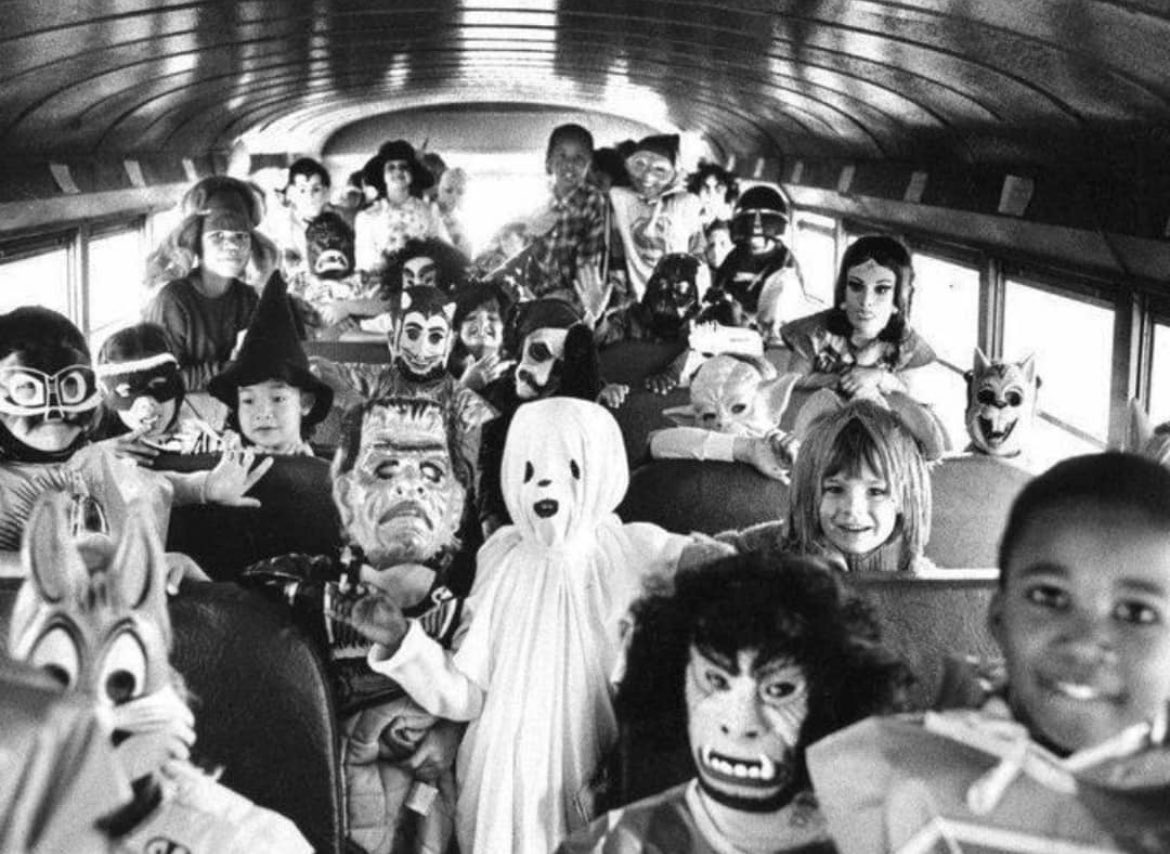
Halloween on the School Bus, 1980s
The history of trick-or-treating can be traced back some 2,000 years ago to an ancient pagan festival called Samhain, which was celebrated by the Celts from October 31st to November 1st. During the festival, it was said that the dead came back to the land of the living. To appease these spirits, they would provide food, bonfires, and sacrifices (livestock and crops).
Around the 9th century, as Christianity spread throughout Europe, Catholic festivals such as All Hallows' Eve (Oct. 31), All Saints' Day (Nov. 1), and All Souls' Day (Nov. 2) became more popular. During this time, poor children would walk from house to house, begging for money or "soul cakes" (a round cake made of nutmeg, ginger, cinnamon, and raisins with a cross on top). In return, they would sing and pray for the souls of the providers. The practice became known as souling.
By the late 1800s, Irish immigrants fleeing the potato famine and other European immigrants brought over the traditions of celebrating All Hallow's Eve.
By the 1920s, the practice of souling evolved into pranks and mischief. When the Great Depression hit, the tradition saw the rise of vandalism, destruction of property, and in some instances, violence.
As a response to the increase in crime, local communities began to curb the chaos by putting together activities and throwing parades. Homes were encouraged to give out treats as a way to encourage good behavior. As the Great Depression came to an end and sugar rations were lifted, candy companies saw a golden opportunity to make money. By the 1950s, Halloween had become the holiday that we know of today.