LIVRE "Escales au bout du monde" @taafproject par Stéphanie Légeron et Bruno Marie @sans_interdit - Vous ne l'avez pas encore ?! Procurez-vous vite l'ouvrage de référence sur les #TAAF https://t.co/VOTBJkptNT https://t.co/AHYdWqivQA
The Antarctic season 2026–2027 has begun: #AISspotted Nuyina 🇦🇺, L'Astrolabe 🇫🇷, Araon 🇰🇷, Shirase 🇯🇵, Xue Long and Xue Long 2 🇨🇳, Noosfera 🇺🇦, Almirante Viel 🇨🇱, Akademik Fedorov 🇷🇺, RRS Sir David Attenborough 🇬🇧 and Laura Bassi 🇮🇹 already in or underway towards Antarctica.
#Antartide: al via la 42ª campagna del #PNRA, apre la Stz #MarioZucchelli
Nelle basi #Zucchelli e #Concordia e sulla rompighiaccio #LauraBassi, 185 ricercatori e tecnici, studieranno clima, oceani, ghiacci, biodiversità e salute umana in ambienti estremi
👉https://t.co/Ys2rq1tG6K
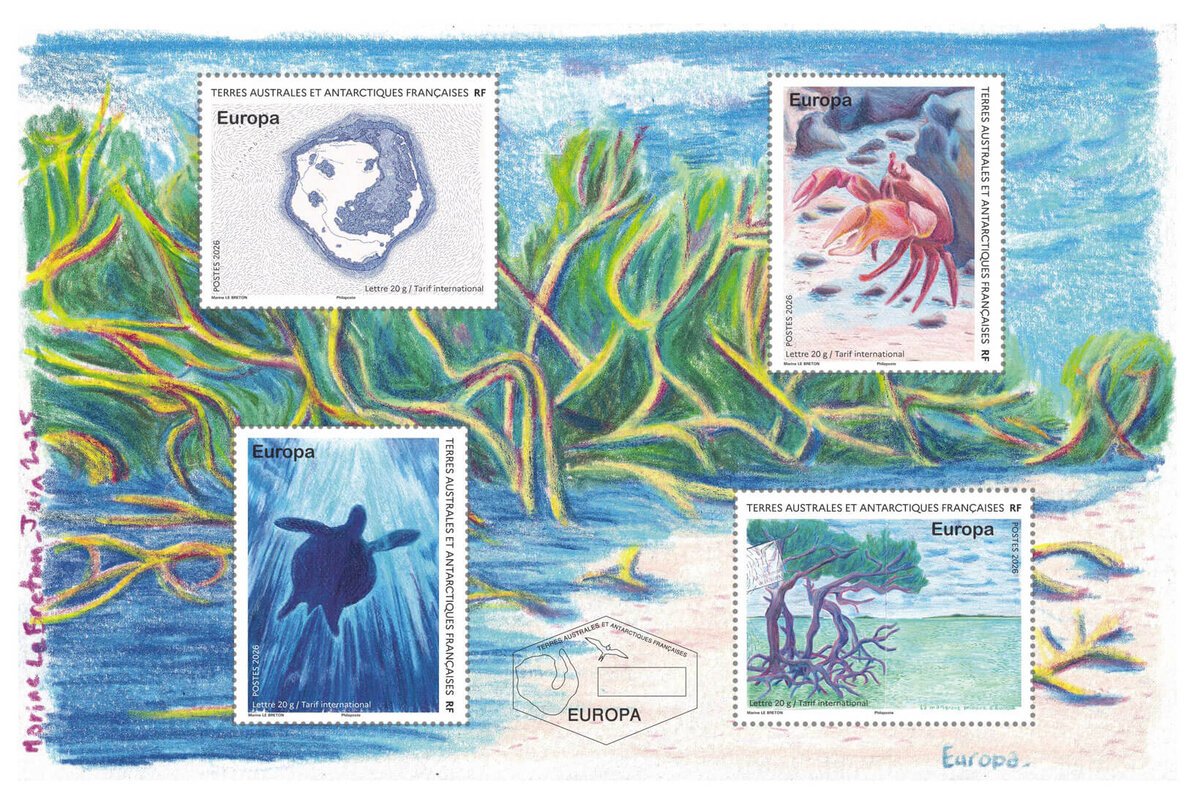
Les timbres #TAAF hors programme dévoilés au Salon philatélique d'automne sont disponibles à la vente en ligne, avec en prime le carnet "Voyage de découverte des îles Éparses".
https://t.co/s1qRHo4Ejf
Lancement de la campagne d'été 2026-2027 en #TerreAdélie#Antarctique#TAAF#IPEV avec le premier avion de la saison (ici Basler BT-67).
https://t.co/NKEqtUl11D
Two weeks of negotiations at the #CCAMLR concluded without agreement on any of the proposed marine protected areas in the Southern Ocean or new precautionary measures to manage the #Antarctic krill fishery.
https://t.co/Tyjvm98VQ4
The SA Agulhas II visit to Tristan may have been a short one this year, but that certainly didn’t stop a huge amount of important work from taking place during those few weeks! #TristandaCunha
https://t.co/xxDWcsxivO
Antarctic Science: France-Australia Research Grant. "This grant aims to foster collaboration between Australia and France in Antarctic and Southern Ocean scientific research. Eligible researchers are encouraged to apply by 30 November 2026."
https://t.co/k06p1xznoe
This weekend, the UK's polar icebreaker #RRSSirDavidAttenborough departed the UK for #Antarctica, and @BAS_News's aircraft fleet began to touchdown at Rothera Research Station. The 2026/27 Antarctic science field season is officially underway!
https://t.co/4TnuGSMGBW
In Antarctica, ice and wind erase more than 200 years of human presence. Agustina Iñiguez traces how architecture there evolved from sealers’ stone shelters to research stations like Halley VI, shaped by science, geopolitics, and rules requiring obsolete structures to be removed.
Can architecture be designed to leave no trace?
Follow the link to read more about this topic:
https://t.co/LaisZx4q0z
@ArmateursFR@_lemarin Communiqué de presse : #Arctique et route maritime du Nord : les armateurs français rappellent leur engagement à ne pas y développer de routes commerciales entre l'Asie et l'Europe.
https://t.co/RG1iOjR0Aa
Après la présentation par la Commission européenne de sa stratégie pour l'#Arctique, @ArmateursFR a rappelé son opposition à rendre cette zone accessible, afin de préserver un environnement déjà fragile, via @_lemarin
https://t.co/ZdVC2twoqa
#Antartide, dal permafrost emerge carbonio geologico profondo: nella #TaylorValley le emissioni di CO₂ sono aumentate di oltre 5 volte
La ricerca condotta apre una nuova prospettiva sul ruolo del sottosuolo antartico nel ciclo del carbonio
Leggi 👇
https://t.co/5BAwhZB02e
Good news. Greenland’s parliament has voted unanimously to halt all seabed mining until 2029, when the ban can be renewed. The decision is being hailed as a slap in the face for Donald Trump
https://t.co/ojA6QtrJ8D
A new study found that a modern ice age began at least 1,000 years ago. However, by the 1960s, anthropogenic greenhouse gas emissions overwhelmed the cooling influence of Earth's orbit, halting the growth of #Arctic ice, via @INSTAAR
https://t.co/V7tRvVme5V
Des chercheurs du @LSCE_IPSL, dans le cadre d'une collaboration internationale, ont reconstitué un épisode de perte de masse spectaculaire de la calotte glaciaire de l'#Antarctique occidental, survenu il y a environ 8 000 ans, via @CEA_Officiel
https://t.co/dQbc5bbOGB
Report: Pentagon Plans to Build New Military Facilities in Greenland Next Year
The United States hopes to establish the first new military facilities in Greenland as early as next year. At the same time, the Pentagon is planning extensive upgrades to Pituffik Space Base, according to a senior defence official.
The United States expects to begin work on new military facilities in Greenland next year, while the US Department of Defense is also planning major upgrades to Pituffik Space Base.
This was reported by the conservative news outlet Washington Examiner, citing a senior Pentagon official who spoke at a meeting with defence journalists in Washington, D.C., on Tuesday.
“We hope to have some initial capability in place as early as next year,” the official said, referring to President Donald Trump’s announcement that the United States intends to establish two new military bases in Greenland.
The plans involve Narsarsuaq in southern Greenland and Mestersvig on the east coast. The possibility of establishing US military facilities at these two locations is included in the new defence agreement between the United States, Greenland and Denmark.
Weather Conditions Affect Construction Plans
The Pentagon has already begun planning, but weather conditions limit the possibility of starting construction this year, according to the Trump administration official.
“We are currently in the planning phase because we are almost immediately running out of the window in which the weather allows us to carry out work,” the official explained.
According to the official, southern Greenland has approximately 300 days a year when weather conditions permit construction work. At Pituffik in northern Greenland, the construction season is limited to just a few months.
Mestersvig already has a gravel runway approximately 1,830 metres long, which could be incorporated into plans for the new facilities.
Radar and Power Infrastructure to Be Upgraded
In addition to the new facilities, the United States is planning a series of investments at Pituffik Space Base, which plays a critical role in defending the United States against potential missile attacks.
The planned improvements include upgrades to radar systems, power infrastructure and aircraft hangars.
According to the official, a detailed investment plan is already in place, with work expected to begin next year when weather conditions allow.
Pituffik is a central component of the US early-warning system for detecting potential missile attacks against the American mainland.
Greenland’s geographical location makes it strategically important because missile trajectories across the Arctic could pass over Greenland.
“The importance of what Pituffik provides, both in the space domain and in strategic early warning, cannot be overstated,” the official said.
—KNR