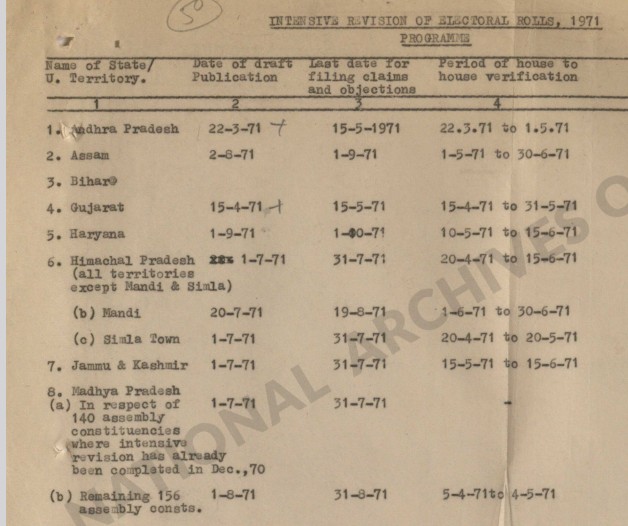
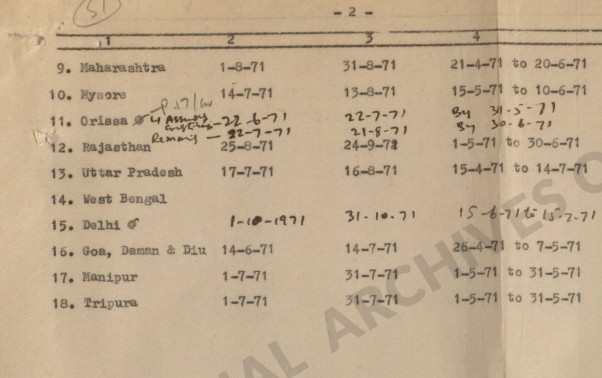
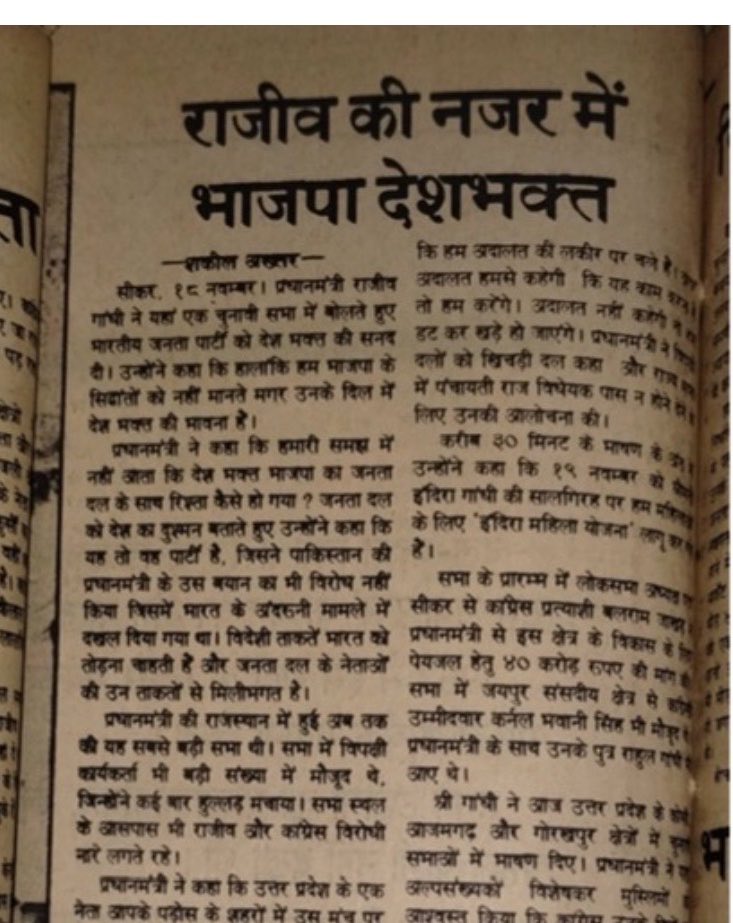
भारत में मतदाता सूची के पुनरीक्षण (Intensive Revision of Electoral Rolls) की प्रक्रिया कोई नई बात नहीं है। यह प्रक्रिया कई बार हो चुकी है, जिसमें 1971 का पुनरीक्षण भी शामिल है। तब इंदिरा गांधी प्रधानमंत्री थीं। राहुल गांधी उस समय करीब एक साल के थे। शायद उन्हें यह बात याद नहीं होगी।
Rahul Gandhi is carrying forward the Gandhi-Nehru family’s mindset that India was their family property.
In the 1970s, Congress leaders even talked about renaming India to “Indira.”
It showed how deeply Nehru-Gandhi family believed they could never be defeated. Perhaps Rahul Gandhi still carries the same mindset: if his family thought they could never lose, why is he out of power today?
Stories like these also need to be reminded to people today, especially when questions of institutional accountability and the handling of serious allegations are once again being discussed.
In 2006, journalist @navikakumar reported on a controversy surrounding former Election Commissioner Navin Chawla, including allegations concerning trusts linked to him and his wife, MPLADS funding, subsidised land allotment, missing files, and the manner in which the then Congress-led UPA government dealt with these allegations.
These are not merely forgotten episodes from the past. They are part of the public record and deserve to be revisited, examined, and discussed in their proper historical context.
From the archives. February 5, 2006.
When I first reported on the Navin Chawla case “Matter of Propriety.”
Almost two decades later, a familiar sense of déjà vu.
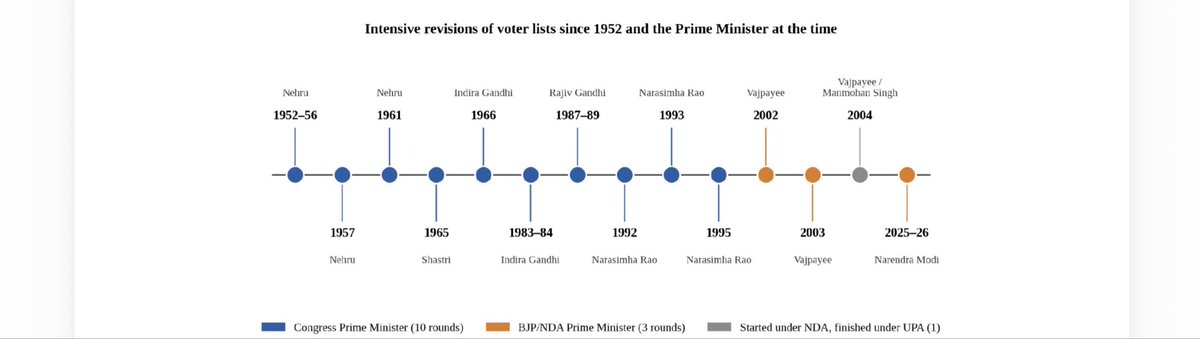
The present SIR is often described as something new. The ECI’s own order says otherwise. It lists earlier intensive revisions for all or part of the country in 1952–56, 1957, 1961, 1965–66, 1983–84, 1987–89, 1992–95 and 2002–04.
When second phase announced, CEC Gyanesh Kumar said the present SIR is the ninth such exercise since Independence, and that the last one was held in 2002–04.
Home Minister Amit Shah reminded Congress leaders that the process was started under Jawaharlal Nehru.
The timeline chart below place each round next to the Prime Minister of the
time. The picture is clear: most intensive revisions happened under Congress governments.
In October 1993, a serious internal dispute surfaced within the multi-member Election Commission of India between Chief Election Commissioner T.N. Seshan and newly appointed Election Commissioner Dr M.S. Gill. Dr Gill sent a formal protest letter to Seshan complaining that no work or major responsibilities, not even basic duties like the allocation of election symbols, had been assigned to the new commissioners.
He stressed that the Election Commission should function democratically as a collective body so it could effectively address pressing issues like electoral reforms, money power, and muscle power.
In his letter dated 12 October 1993, Dr Gill described the Commission's first joint meeting as a complete failure, noting that members could not even agree on the draft minutes. He emphasised that both the CEC and the Election Commissioners are constitutional authorities, calling for decisions to be made through democratic consultation and mutual consensus.
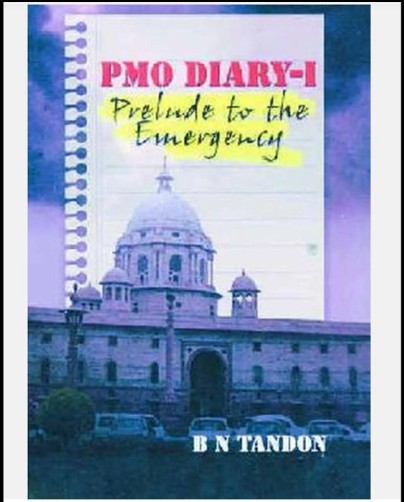
There is a book “PMO Diary-I: Prelude to the Emergency,” written by B. N. Tandon, a former officer of the Indian Administrative Service. It contains revelations about how two former Chief Election Commissioners (CECs) of India — S.P. Sen Varma (1967–1972) and T. Swaminathan (1973–1977) — worked closely with the Congress party.
According to Tandon, Sen Varma was in direct contact with P.N. Haksar, a senior Congress leader and close aide to PM Indira Gandhi. Sen Varma was reportedly seeking a political appointment for himself. Haksar is said to have strongly supported his case and tried to help him secure a position as Governor. However, instead of a Governor’s post, Sen Varma was eventually appointed as a Member of the Law Commission.
Similarly, T. Swaminathan maintained close contacts with several Congress leaders, particularly P.N. Haksar, who was among the closest advisers of Indira Gandhi. B.N. Tandon has written extensively about these matters in his book PMO Diary-I: Prelude to the Emergency.
According to Tandon, Swaminathan sought a Governor’s post through Haksar. Haksar too appeared willing to support him for such a position, considering his usefulness.
Tandon records an illuminating remark in the book: “Do you know how much we benefited when Sen-Varma held the post? I can't think of anyone other than Swaminathan who will help the PM if the need arises. I know what sort of man he is, but sometimes it is necessary to make such appointments.”
On 16 January 2009, CEC N. Gopalaswami wrote a letter to PM Manmohan Singh that EC Navin Chawla should be removed because of his alleged bias towards the Congress.
Even after strong evidence of bias and corruption against Navin Chawla, the Congress party continued to defend him publicly. Senior Congress leaders openly supported him.
At the same time, discussions also emerged about promoting Chawla to the post of Chief Election Commissioner (CEC). Several Congress leaders, including Digvijaya Singh and Salman Khurshid, publicly backed Chawla and defended him.
The controversy did not end there. Chief Election Commissioner N. Gopalaswami wrote a letter to the then President of India, raising serious concerns about Navin Chawla’s partisan conduct.
In his communication, Gopalaswami reportedly cited around 12 instances in which, according to him, Chawla had acted improperly or displayed bias in the Election Commission's functioning.
The government rejected the charges levelled against the EC Navin Chawla by CEC because they relate to events within the four walls of the Election Commission and cannot be independently verified.
Finally, the UPA government rejected the recommendation of the Chief Election Commissioner that Navin Chawla be removed. Instead, the government forwarded its opinion to Pratibha Patil, the President of India. As a result, Chawla eventually went on to become the Chief Election Commissioner.
The double standards and selective outrage of the Congress party stand exposed once again!
The issue is not just the elephant. The issue is Lord Ganesh.
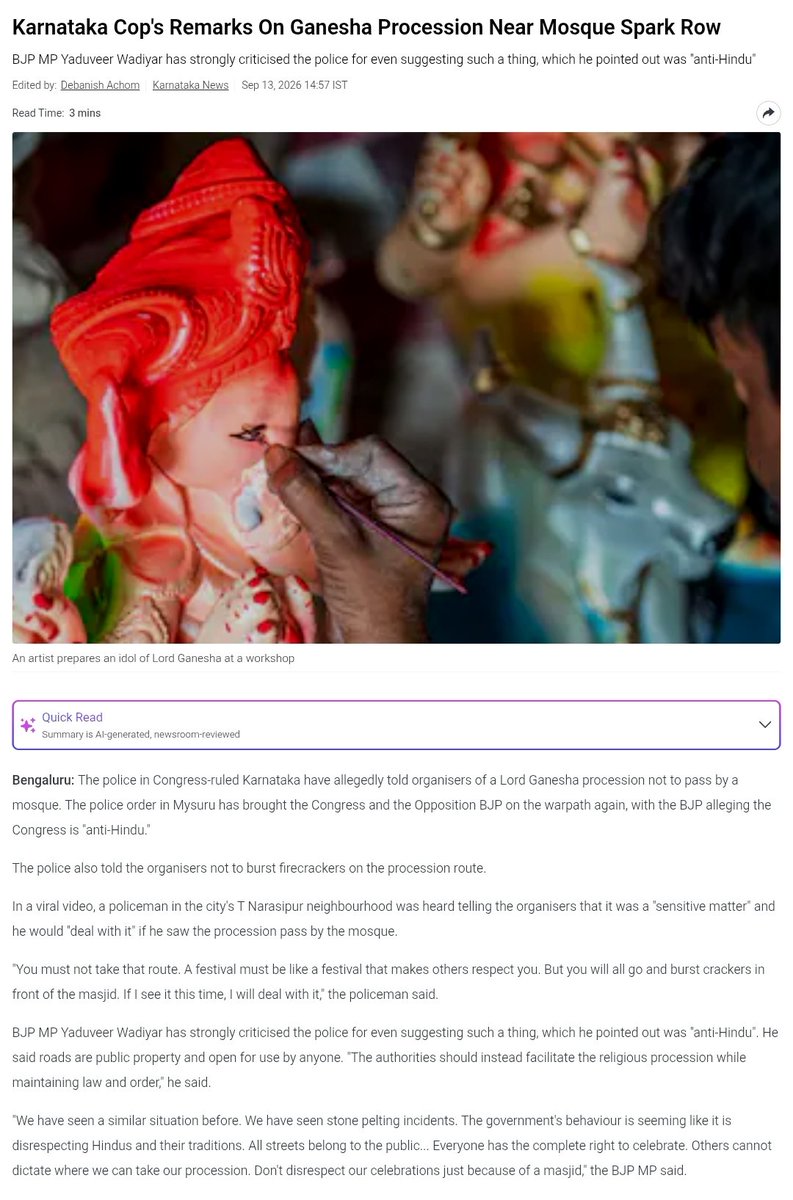
Recently, in Mysuru, Karnataka, a controversy erupted over police restrictions and remarks concerning a Lord Ganesh procession near a mosque under the Congress government led by D.K. Shivakumar.
Congress’s history of intolerance around Lord Ganesh celebrations is something hardly anyone remembers today.
In March 1992, during the Congress government in Andhra Pradesh under then Chief Minister N. Janardhana Reddy, the administration reportedly imposed restrictions on the traditional centralised Ganesh procession and did not allow immersion of Ganesh idols at Hyderabad’s Tank Bund.
So, this is not merely about elephants. However, his agenda is flawed here as well. Former Union Minister and senior Congress leader P. Chidambaram is pushing a narrative about a “decline” in elephant numbers. But India’s latest elephant estimation introduced the country’s first DNA based population estimation, using more than 21,000 dung samples and genetic mark-recapture methods. The Wildlife Institute of India itself describes this as a major methodological shift, making a direct comparison with the 2017 visual estimates difficult.
This is the typical Congress style: set the agenda, create a narrative, and push a misleading storyline.
The Economist reports that "A survey published last year by the Wildlife Institute of India counted 22,446 elephants, 18% fewer than in 2017"
We celebrate Ganesh Puja. Admirable. But we poach elephants
"18% fewer elephants in 9 years" is a wake-up call to the government
Hamid Ansari’s remarks on alleged “Hindu extremism” were not entirely detached from statements previously made by the Congress top leadership. Rahul Gandhi had also expressed similar views in conversations with U.S. diplomats.
In 2009, during a conversation with the U.S. diplomat, Rahul Gandhi reportedly said that radicalised Hindu groups could pose a greater threat to India than Pakistan-based Islamic terrorists. The diplomatic cable documenting this conversation was released through WikiLeaks in 2010 and was subsequently reported by The Guardian.
In fact, this can also be viewed in the context of what has been described as an older political tradition of the Gandhi-Nehru family. In this context, N.V. Gadgil, in his book Government from Inside, wrote that Sardar Patel once remarked, jokingly but most poignantly observed that there was only one “nationalist Muslim” left in the country and he was Jawaharlal Nehru.
This is also why Rafiq Zakaria, in his book A Study of Nehru, writes that “The Sardar, however, was not too happy at Nehru’s unqualified secularism.”
In 1999, Congress spokesman Ajit Jogi himself acknowledged that Sonia Gandhi’s name was on the electoral rolls, even though she did not hold Indian citizenship at the time.
(Her name figured in the voters' list as a resident of 1 Safdarjang Road, Delhi, voter no. 388, polling station 145 of the New Delhi constituency.)
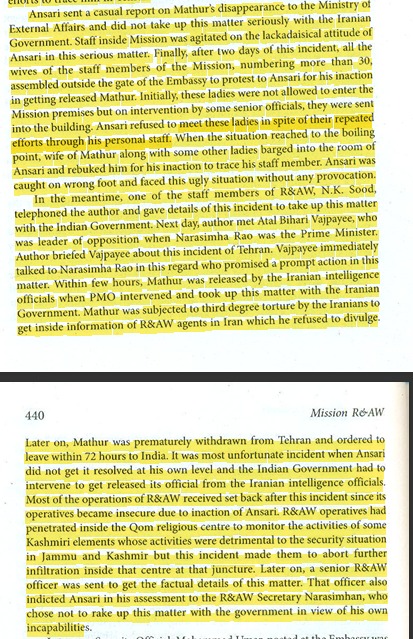
During Mohammad Hamid Ansari's tenure as Indian Ambassador to Iran in the early 1990s, multiple Indian mission staff members and R&AW operatives, including a personal assistant named Kapoor, officer D.B. Mathur, and security official Mohammad Umar, were abducted, drugged, and subjected to severe torture by Iranian intelligence.
Mr Kapoor was tortured for three days, and it was never reported to the Indian government. He was given inhuman treatment, and he was thrown on a lonely road in Tehran
The Kashmiris from India were imparted “religious teaching”, and one officer, D.B. Mathur, established contact within Qom, where these assemblies were held and sent reports to Ambassador Hamid Ansari, who was against these reports. Later, Mathur was kidnapped by Iranian intelligence officials. What a coincidence?
Ambassador Ansari displayed a reluctant attitude and refused to seriously pursue or protest these abductions with the Iranian government, prioritising his personal relationships and connections in Iran, including his son's marriage into a prominent Iranian family.
Angered by Ansari’s inaction, Mathur’s wife and 30 wives of mission staff staged a protest outside the embassy gates over the arrest of Mr Mathur, eventually barging into Ansari's office to confront him.
The author R.K. Yadav (former R&AW officer) briefed the then leader of the opposition, Atal Bihari Vajpayee, who prompted Prime Minister P.V. Narasimha Rao to intervene, resulting in D.B. Mathur's release; he was prematurely sent to India, though the incidents severely compromised ongoing R&AW surveillance of Kashmiri trainees in Qom.
After these incidents, one more security official, Mohammad Umar, was approached by Iranian intelligence to work for them, but Umar declined and informed his seniors; Hamid Ansari was briefed on this. A few weeks later, Umar was also kidnapped, tortured and thrown into a secluded place.
Ambassador Hamid Ansari asked Umar to stay silent, and he did not lodge any disagreement or protest against the Iranian government. When Umar tried to inform the Indian government regarding this, Ansari tried his best to send Umar back to India on shaky ground. R&AW officials protested against this injustice to Umar.
Source: Yadav, R. K. (2014), Mission R&AW: India's secret services unravelled, pp. 438-440
नेता विपक्ष का पद बेहद महत्वपूर्ण और गंभीर होता है। लेकिन वर्तमान नेता विपक्ष ने इसे मजाक, हंसी-ठिठोली और कॉमेडी का मंच बना दिया है। अटल बिहारी वाजपेयी जी जब इस पद पर रहे, तो उन्होंने इसकी गरिमा और भूमिका को एक नया मुकाम दिया था।
वाजपेयी जी, 1993 में नेता प्रतिपक्ष बने तो उनके संसदीय कार्यों और व्यक्तित्व का हर कोई व्यक्ति प्रशंसक था, इसमें कांग्रेस के भी नेता शामिल थे। तब शिवराज पाटिल लोकसभा के स्पीकर थे। उन्होंने कहा था, “He [Mr Vajpayee] always helped facilitate smooth conduct of the proceedings.”
जबकि तत्कालीन प्रधानमंत्री नरसिम्हा राव का कहना था, “Mr Vajpayee had always been helpful and expressed confidence that he would help uphold parliamentary traditions.”
यही नहीं,अटल बिहारी वाजपेयी जी का नेता प्रतिपक्ष के नाते कार्यकाल इतना शानदार था कि इस पद पर रहे हुए उन्हें ‘Best Parliamentarian’ का अवार्ड तक मिला था। यह एक असाधारण उपलब्धि थी।
प्रधानमंत्री राव भी वाजपेयी जी की देश के प्रति प्रतिबद्धता के कायल रहे और उन्होंने विपक्ष के नेता की बहुपक्षीय कूटनीति में विशेषज्ञता की भी सराहना की। प्रधानमंत्री राव ने एकबार कहा था, “His [Mr. Vajpayee] performance at the U.N. Human Rights Commission at Geneva as leader of the Indian delegation not only reflected his deep commitment to the parliamentary system but also demonstrated that the ‘country puts a united front abroad’.”
वाजपेयी जी की नेता प्रतिपक्ष के नाते यूएन में भूमिका की एक बेहतरीन तस्वीर उस ज़माने में इंडिया टुडे ने 31 मार्च 1994 को अपने आवरण पर प्रकाशित की। जिसमें वह सलमान खुर्शीद के साथ गले मिलते नजर आ रहे हैं।
यूएन में पाकिस्तान के प्रोपोगेन्डा के खिलाफ वाजपेयी जी ने सिर्फ भारत का पक्ष मजबूती से रखा बल्कि नरसिम्हा राव सरकार के लिए भी कोई अपशब्द नहीं कहे। भारतीय डिप्लोमसी की जीत का यह एक सबसे परफेक्ट उदाहरण है, जहाँ सत्ता और विपक्ष दोनों ने मिलकर पाकिस्तान को दुनिया के सामने हराने पर मजबूर कर दिया।
वाजपेयी जी जब नेता प्रतिपक्ष थे, वे सुनिश्चित करते थे कि कोई भी विधेयक अकारण लंबित न रहे। 13 दिसंबर 1995 को वाजपेयी जी ने कहा था, “The opposition has already assured the presiding officers in both the houses of Parliament that it will co-operate with the government in clearing important business.” उस दौरान टेलिकॉम स्कैंडल को लेकर विपक्ष ने सरकार को घेरा हुआ था, फिर भी अटल जी का मानना था कि “There is no question of a constitutional crisis notwithstanding the deadlock over the telecom scandal.”
किसी की हंसी का मज़ाक उड़ाना कितना आसान है।
किसी मसखरे को Leader of Opposition द्वारा मंच पर बुलाना और उससे मसखरी करवाना, अपने आप में उनके हल्केपन को दर्शाता है।
राजीव गांधी भी हंसते थे, लेकिन किसी विपक्षी नेता ने उनकी हंसी का इस तरह मज़ाक नहीं बनाया।
जन्मदिन पर दिया जलाओ, ब्लड डोनेट करो, सेवा पखवाड़ा चलाओ… अब ये कोई तरीका हुआ जन्मदिन मनाने का?
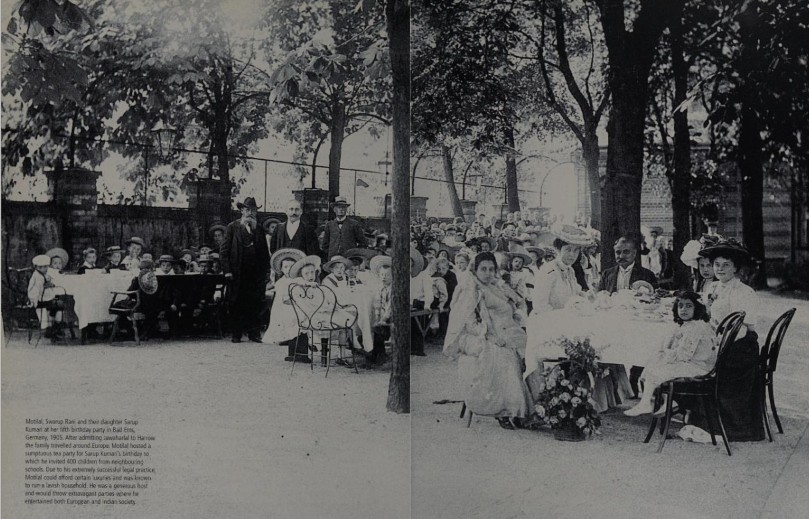
जन्मदिन तो जवाहरलाल नेहरू की बहन सरूप कुमारी - विजयलक्ष्मी पंडित का मनाया गया था, 1905 में। वो भी जर्मनी में।
उस समय भारत में बंगाल विभाजन के खिलाफ आंदोलन तेज हो रहा था और वंदे मातरम् को लेकर गिरफ्तारियाँ हो रही थीं। लेकिन जन्मदिन का सेलिब्रेशन इससे ज्यादा जरूरी था, तो जवाहरलाल नेहरू के पिता मोतीलाल नेहरू ने 400 यूरोपीय बच्चों को बुलाकर चाय पार्टी दे दी।
एक बात और—मोतीलाल नेहरू एकमात्र ऐसे राजनेताओं थे, जो विदेश जाकर भी जन्मदिन की पार्टी दे सकते थे। ‘Lavish’ और ‘Luxurious’ जीवन जीने में उनका अपना ही अंदाज़ था।
क्या कभी ऐसा हुआ है कि प्रधानमंत्री का जन्मदिन हो और भारत के राष्ट्रपति उनके घर जाकर उन्हें बधाई दें? अगर कोई यह सवाल पूछेगा, तो जवाब होगा—हाँ।
लेकिन यह 2014 के बाद नहीं, बल्कि उससे पहले हुआ करता था।
मसलन, प्रधानमंत्री इंदिरा गांधी के 66वें जन्मदिन पर तत्कालीन राष्ट्रपति ज्ञानी जैल सिंह फूलों का गुलदस्ता लेकर उन्हें बधाई देने उनके घर पहुँचे थे।




![Politicsforgets's tweet photo. नेता विपक्ष का पद बेहद महत्वपूर्ण और गंभीर होता है। लेकिन वर्तमान नेता विपक्ष ने इसे मजाक, हंसी-ठिठोली और कॉमेडी का मंच बना दिया है। अटल बिहारी वाजपेयी जी जब इस पद पर रहे, तो उन्होंने इसकी गरिमा और भूमिका को एक नया मुकाम दिया था।
वाजपेयी जी, 1993 में नेता प्रतिपक्ष बने तो उनके संसदीय कार्यों और व्यक्तित्व का हर कोई व्यक्ति प्रशंसक था, इसमें कांग्रेस के भी नेता शामिल थे। तब शिवराज पाटिल लोकसभा के स्पीकर थे। उन्होंने कहा था, “He [Mr Vajpayee] always helped facilitate smooth conduct of the proceedings.”
जबकि तत्कालीन प्रधानमंत्री नरसिम्हा राव का कहना था, “Mr Vajpayee had always been helpful and expressed confidence that he would help uphold parliamentary traditions.”
यही नहीं,अटल बिहारी वाजपेयी जी का नेता प्रतिपक्ष के नाते कार्यकाल इतना शानदार था कि इस पद पर रहे हुए उन्हें ‘Best Parliamentarian’ का अवार्ड तक मिला था। यह एक असाधारण उपलब्धि थी।
प्रधानमंत्री राव भी वाजपेयी जी की देश के प्रति प्रतिबद्धता के कायल रहे और उन्होंने विपक्ष के नेता की बहुपक्षीय कूटनीति में विशेषज्ञता की भी सराहना की। प्रधानमंत्री राव ने एकबार कहा था, “His [Mr. Vajpayee] performance at the U.N. Human Rights Commission at Geneva as leader of the Indian delegation not only reflected his deep commitment to the parliamentary system but also demonstrated that the ‘country puts a united front abroad’.”
वाजपेयी जी की नेता प्रतिपक्ष के नाते यूएन में भूमिका की एक बेहतरीन तस्वीर उस ज़माने में इंडिया टुडे ने 31 मार्च 1994 को अपने आवरण पर प्रकाशित की। जिसमें वह सलमान खुर्शीद के साथ गले मिलते नजर आ रहे हैं।
यूएन में पाकिस्तान के प्रोपोगेन्डा के खिलाफ वाजपेयी जी ने सिर्फ भारत का पक्ष मजबूती से रखा बल्कि नरसिम्हा राव सरकार के लिए भी कोई अपशब्द नहीं कहे। भारतीय डिप्लोमसी की जीत का यह एक सबसे परफेक्ट उदाहरण है, जहाँ सत्ता और विपक्ष दोनों ने मिलकर पाकिस्तान को दुनिया के सामने हराने पर मजबूर कर दिया।
वाजपेयी जी जब नेता प्रतिपक्ष थे, वे सुनिश्चित करते थे कि कोई भी विधेयक अकारण लंबित न रहे। 13 दिसंबर 1995 को वाजपेयी जी ने कहा था, “The opposition has already assured the presiding officers in both the houses of Parliament that it will co-operate with the government in clearing important business.” उस दौरान टेलिकॉम स्कैंडल को लेकर विपक्ष ने सरकार को घेरा हुआ था, फिर भी अटल जी का मानना था कि “There is no question of a constitutional crisis notwithstanding the deadlock over the telecom scandal.”](https://pbs.twimg.com/media/HSpFvnabsAA323n.jpg)
![Politicsforgets's tweet photo. नेता विपक्ष का पद बेहद महत्वपूर्ण और गंभीर होता है। लेकिन वर्तमान नेता विपक्ष ने इसे मजाक, हंसी-ठिठोली और कॉमेडी का मंच बना दिया है। अटल बिहारी वाजपेयी जी जब इस पद पर रहे, तो उन्होंने इसकी गरिमा और भूमिका को एक नया मुकाम दिया था।
वाजपेयी जी, 1993 में नेता प्रतिपक्ष बने तो उनके संसदीय कार्यों और व्यक्तित्व का हर कोई व्यक्ति प्रशंसक था, इसमें कांग्रेस के भी नेता शामिल थे। तब शिवराज पाटिल लोकसभा के स्पीकर थे। उन्होंने कहा था, “He [Mr Vajpayee] always helped facilitate smooth conduct of the proceedings.”
जबकि तत्कालीन प्रधानमंत्री नरसिम्हा राव का कहना था, “Mr Vajpayee had always been helpful and expressed confidence that he would help uphold parliamentary traditions.”
यही नहीं,अटल बिहारी वाजपेयी जी का नेता प्रतिपक्ष के नाते कार्यकाल इतना शानदार था कि इस पद पर रहे हुए उन्हें ‘Best Parliamentarian’ का अवार्ड तक मिला था। यह एक असाधारण उपलब्धि थी।
प्रधानमंत्री राव भी वाजपेयी जी की देश के प्रति प्रतिबद्धता के कायल रहे और उन्होंने विपक्ष के नेता की बहुपक्षीय कूटनीति में विशेषज्ञता की भी सराहना की। प्रधानमंत्री राव ने एकबार कहा था, “His [Mr. Vajpayee] performance at the U.N. Human Rights Commission at Geneva as leader of the Indian delegation not only reflected his deep commitment to the parliamentary system but also demonstrated that the ‘country puts a united front abroad’.”
वाजपेयी जी की नेता प्रतिपक्ष के नाते यूएन में भूमिका की एक बेहतरीन तस्वीर उस ज़माने में इंडिया टुडे ने 31 मार्च 1994 को अपने आवरण पर प्रकाशित की। जिसमें वह सलमान खुर्शीद के साथ गले मिलते नजर आ रहे हैं।
यूएन में पाकिस्तान के प्रोपोगेन्डा के खिलाफ वाजपेयी जी ने सिर्फ भारत का पक्ष मजबूती से रखा बल्कि नरसिम्हा राव सरकार के लिए भी कोई अपशब्द नहीं कहे। भारतीय डिप्लोमसी की जीत का यह एक सबसे परफेक्ट उदाहरण है, जहाँ सत्ता और विपक्ष दोनों ने मिलकर पाकिस्तान को दुनिया के सामने हराने पर मजबूर कर दिया।
वाजपेयी जी जब नेता प्रतिपक्ष थे, वे सुनिश्चित करते थे कि कोई भी विधेयक अकारण लंबित न रहे। 13 दिसंबर 1995 को वाजपेयी जी ने कहा था, “The opposition has already assured the presiding officers in both the houses of Parliament that it will co-operate with the government in clearing important business.” उस दौरान टेलिकॉम स्कैंडल को लेकर विपक्ष ने सरकार को घेरा हुआ था, फिर भी अटल जी का मानना था कि “There is no question of a constitutional crisis notwithstanding the deadlock over the telecom scandal.”](https://pbs.twimg.com/media/HSpFvmrbAAAXjJI.jpg)








![Politicsforgets's tweet photo. नेता विपक्ष का पद बेहद महत्वपूर्ण और गंभीर होता है। लेकिन वर्तमान नेता विपक्ष ने इसे मजाक, हंसी-ठिठोली और कॉमेडी का मंच बना दिया है। अटल बिहारी वाजपेयी जी जब इस पद पर रहे, तो उन्होंने इसकी गरिमा और भूमिका को एक नया मुकाम दिया था।
वाजपेयी जी, 1993 में नेता प्रतिपक्ष बने तो उनके संसदीय कार्यों और व्यक्तित्व का हर कोई व्यक्ति प्रशंसक था, इसमें कांग्रेस के भी नेता शामिल थे। तब शिवराज पाटिल लोकसभा के स्पीकर थे। उन्होंने कहा था, “He [Mr Vajpayee] always helped facilitate smooth conduct of the proceedings.”
जबकि तत्कालीन प्रधानमंत्री नरसिम्हा राव का कहना था, “Mr Vajpayee had always been helpful and expressed confidence that he would help uphold parliamentary traditions.”
यही नहीं,अटल बिहारी वाजपेयी जी का नेता प्रतिपक्ष के नाते कार्यकाल इतना शानदार था कि इस पद पर रहे हुए उन्हें ‘Best Parliamentarian’ का अवार्ड तक मिला था। यह एक असाधारण उपलब्धि थी।
प्रधानमंत्री राव भी वाजपेयी जी की देश के प्रति प्रतिबद्धता के कायल रहे और उन्होंने विपक्ष के नेता की बहुपक्षीय कूटनीति में विशेषज्ञता की भी सराहना की। प्रधानमंत्री राव ने एकबार कहा था, “His [Mr. Vajpayee] performance at the U.N. Human Rights Commission at Geneva as leader of the Indian delegation not only reflected his deep commitment to the parliamentary system but also demonstrated that the ‘country puts a united front abroad’.”
वाजपेयी जी की नेता प्रतिपक्ष के नाते यूएन में भूमिका की एक बेहतरीन तस्वीर उस ज़माने में इंडिया टुडे ने 31 मार्च 1994 को अपने आवरण पर प्रकाशित की। जिसमें वह सलमान खुर्शीद के साथ गले मिलते नजर आ रहे हैं।
यूएन में पाकिस्तान के प्रोपोगेन्डा के खिलाफ वाजपेयी जी ने सिर्फ भारत का पक्ष मजबूती से रखा बल्कि नरसिम्हा राव सरकार के लिए भी कोई अपशब्द नहीं कहे। भारतीय डिप्लोमसी की जीत का यह एक सबसे परफेक्ट उदाहरण है, जहाँ सत्ता और विपक्ष दोनों ने मिलकर पाकिस्तान को दुनिया के सामने हराने पर मजबूर कर दिया।
वाजपेयी जी जब नेता प्रतिपक्ष थे, वे सुनिश्चित करते थे कि कोई भी विधेयक अकारण लंबित न रहे। 13 दिसंबर 1995 को वाजपेयी जी ने कहा था, “The opposition has already assured the presiding officers in both the houses of Parliament that it will co-operate with the government in clearing important business.” उस दौरान टेलिकॉम स्कैंडल को लेकर विपक्ष ने सरकार को घेरा हुआ था, फिर भी अटल जी का मानना था कि “There is no question of a constitutional crisis notwithstanding the deadlock over the telecom scandal.”](https://pbs.twimg.com/media/HSpFvnnakAAu-_t.jpg)