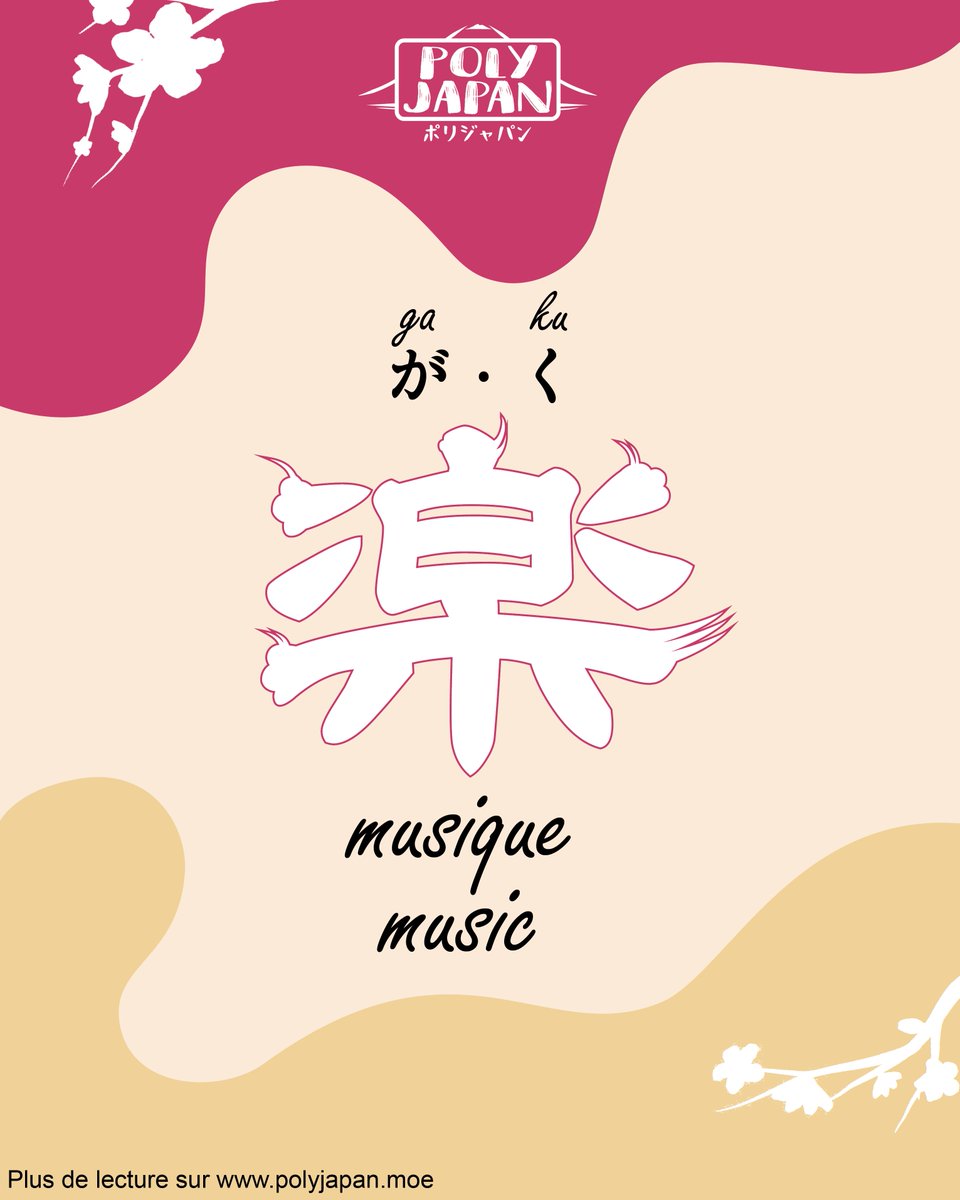
[FR 1/4] Dans le mot 音楽 (ongaku, musique), 楽 est utilisé aux côtés de 音 (on, le son) : la musique est donc tout simplement un son agréable ! Et pour beaucoup de mots musicaux, c’est bel et bien 楽 qui est utilisé et non le kanji du son.
Cette semaine, amusons-nous à étudier le kanji 楽 (gaku), lié au monde de la musique et à tout ce qui est agréable !
This week, let’s have some fun learning the kanji 楽 (gaku), which is related to the world of music and everything that’s enjoyable!
EN [6/6]
In a country growing more uniform since the Meiji era, keeping your accent may well be the most honest way of saying where you come from.
Full article on our official website https://t.co/pOSxagrsKK
[FR 1/6]
Et si on vous disait qu'il n'existait pas une seule langue japonaise, mais des dizaines de langues japoniques ? 🇯🇵
Petit tour des dialectes du Japon 🧵
EN [5/6]
And in the far south, in Okinawa and the Amami Islands, many linguists no longer speak of a dialect at all: Ryukyuan (琉球語) is a separate branch, just like standard Japanese.
[EN 3/3] More surprisingly, this kanji also appears in 弁当 (bentō), the typical Japanese lunch boxes 🍱 Alongside 当, which means “appropriate,” 弁 is used here purely for its phonetics: this is what’s called an ateji.
Cette semaine, intéressons-nous à un kanji qui a la particularité d’avoir de nombreuses significations : 弁 (ben) !
This week, let’s take a look at a kanji that is unique in that it has many meanings: 弁 (ben)!
🧵
[EN 2/3] When attached to the name of a region, 弁 refers to its dialect: the Kansai (関西) region in western Japan, for instance, has its own 関西弁 (Kansai-Ben), where “arigatō” (thank you) is said as “ookini” and “jitensha” (bicycle) becomes “chari”!







![PolyJapan's tweet photo. [FR 1/6]
Et si on vous disait qu'il n'existait pas une seule langue japonaise, mais des dizaines de langues japoniques ? 🇯🇵
Petit tour des dialectes du Japon 🧵 https://t.co/5CnonJSwEM](https://pbs.twimg.com/media/HOK1CZMXcAAdArk.jpg)


