Hello Guys,
…My first post… kinda nervous.
Have you heard of 6 months theory?
The idea is simple: commit to something for six months, stay consistent, and see how much your life can change.
Have you ever started something, worked hard for months, and then became unmotivated because the results were taking longer than you expected?
So that is what happened to me. I started trading almost a year ago, I got a mentor. I have learned a lot, did a lot but still not profitable on a scale I want to be. I also want to make myself, my mentor, and people who support me proud.
So I decided to try 6 month theory, but cut it down to 4 months.
My 4 simple goals by the end of this year:
1. Pass funded account evaluation, so I can get payouts (not by chance, but by skill).
2. Find my trading style and understand what works for me.
3. Build the confidence in my trading.
4. Build a system - so I GET FUCKING CONTROL OF MY LIFE.
I’m going to document the process: the wins, the losses, the lessons, the frustrating days, and hopefully the progress
If you are in the same situation, working toward your goals or just interested in the process - you are welcome here.
Let’s see what these months gonna become - maybe create our own small community of motivated people along the way.
I wish all of us luck and discipline.
The most important Part of your System is You
I See many Traders trying to make it work. Those who actually get to a point where they make money know themselves very well.
You can only perform so well, like you treat yourself. Your Performance is a mirror.
Trading can be used as a mechanism to numb yourself - close to nobody talks about that.
If you are in the perfect state of mind, yes bit utopia here, I don't believe anything is perfect but lets say you are - you have no reason to numb yourself. You have no reason to Risk at a random place. You don't have to prove anything to anybody... in the state of mind needed for trading, you just execute what worked before.
There is no looking for answers, theres just you and the skill that you apply.
This means you have the most powerful part always under control.
But how do you treat Yourself? Do you walk enough? Eat and sleep good? Are you satisfied with what you do? Can you take control over your fears? Can you erase your Ego when you look at the chart? Can you be patient?
Every trade you plan and take is an expression of yourself. And how you trade speaks a lot what is actually happening inside you.
Examples:
Exorbitant high Risk to Reward - it can be either Ego or Fear to risk more. Face the reality: For a small risk it might be good, but can you risk 2-3k and hold it to 50R and higher? Is that realistic? Can you even enter with this much margin? Does your TP get filled? Or even your entry on that tight SL? Not saying it doesn't work for everyone - I just rarely see it.
Non Stop Scalping - can be the need for Dopamine, the need to feel something or the wish to make it ASAP... I did it this week and you see in the PnL compared to the week before, it didn't help.
Exiting Early - pretty often we transport old traumas from previous trades into the next one. Let's say you round tripped a month of expenses... it's just logical to close early isn't it?
Over/Underrisking - often shows impatience or is a signal for being unconfident. I often underrisk when I have a win streak. You can find a 10W streak on my profile that I played public on the Discord - the more wins I got the smaller the size I took. I just got unconfident.
Not Executing - most of the time people talk themselves out of Trades.. why? The System is simply not ready to enter an environment where you make money while losing. My personal favorite: "I was waiting for confirmation" - thats just fear talking. What confirmation? Theres nobody coming and telling you "yes now since it SFPed it will give you the money you desire". The "confirmation" thing is just another layer of fear you have to uncover.
Hopping Edges - There was a time where everybody aped BBs, then many abandoned them. Why? Most just never tracked those that worked vs. those that failed. Many never been ready to encounter the path of building a profitable System including facing themselves - so they choose the easy route: going for the next shiny thing. This is either laziness or the opportunistic belief that a specific knowledge will gift you endless money. Thats a trap you lay out for yourself, nothing else.
You should do the work and track the Edge you actually using.
This would build Discipline, an extreme important skill you need for the most fragile part of your System - YOURSELF
There are way more behaviors that show at what place you are actually at. The essence of maintaining the most important part of your System is repetition. Same like on the chart.
You find something that happens before you mess up? Categorize it - eliminate it or simply don't trade then. Repeat.
You find behaviors that might send specific Signals? Talk about it, not always to get an answer but to change perspective. You don't need to talk to the best trader in the world for that, pretty often when we speak about something everything gets clear. Repeat.
The better you treat yourself, and treating yourself as a part of the System good, doesn't always mean it should be comfortable. Many things you gonna face in the process are painful at the beginning.
The outcome isn't. The pain is just temporary.
How do you treat your System and did you ever consider yourself being part of it? It's easy to lose yourself in the Process.
I encountered all these things by myself. And everybody who wants to go the path will face similar things on their way - theres simply no way around it.
The most beautiful part: Every time we Size up, everything repeats. The same behaviors. The same things happen - but you get more conscious of it. It becomes simpler to work with it.
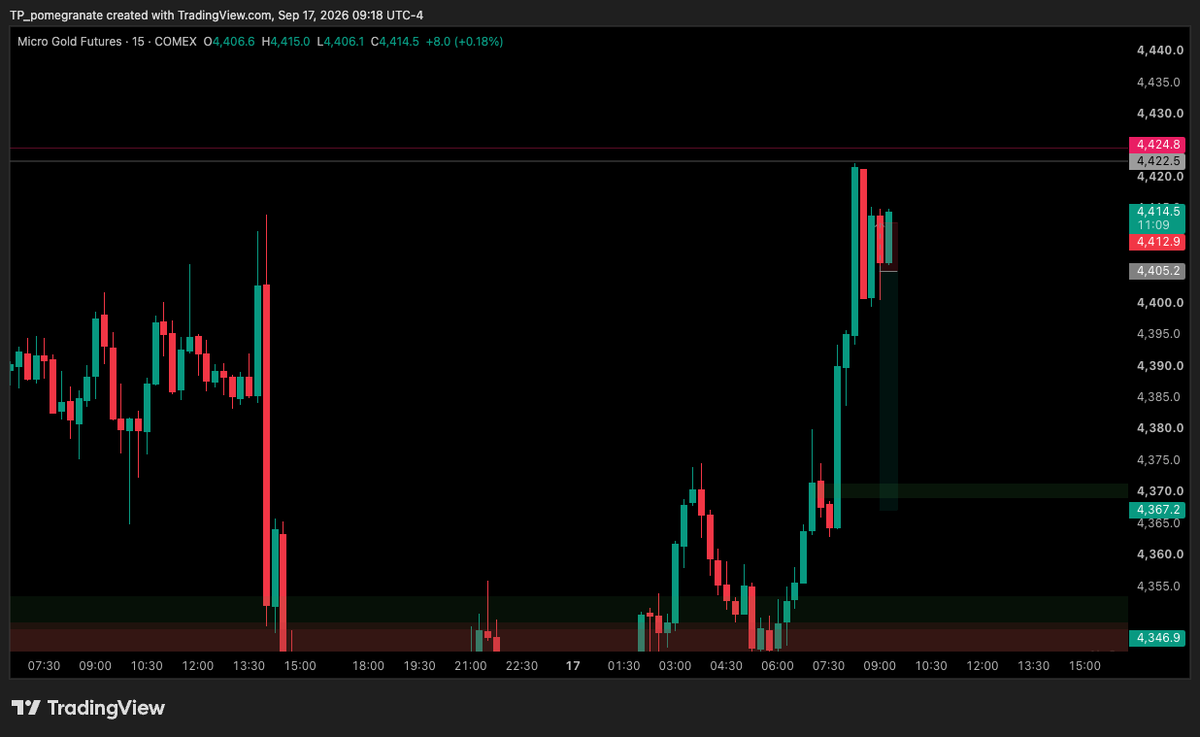
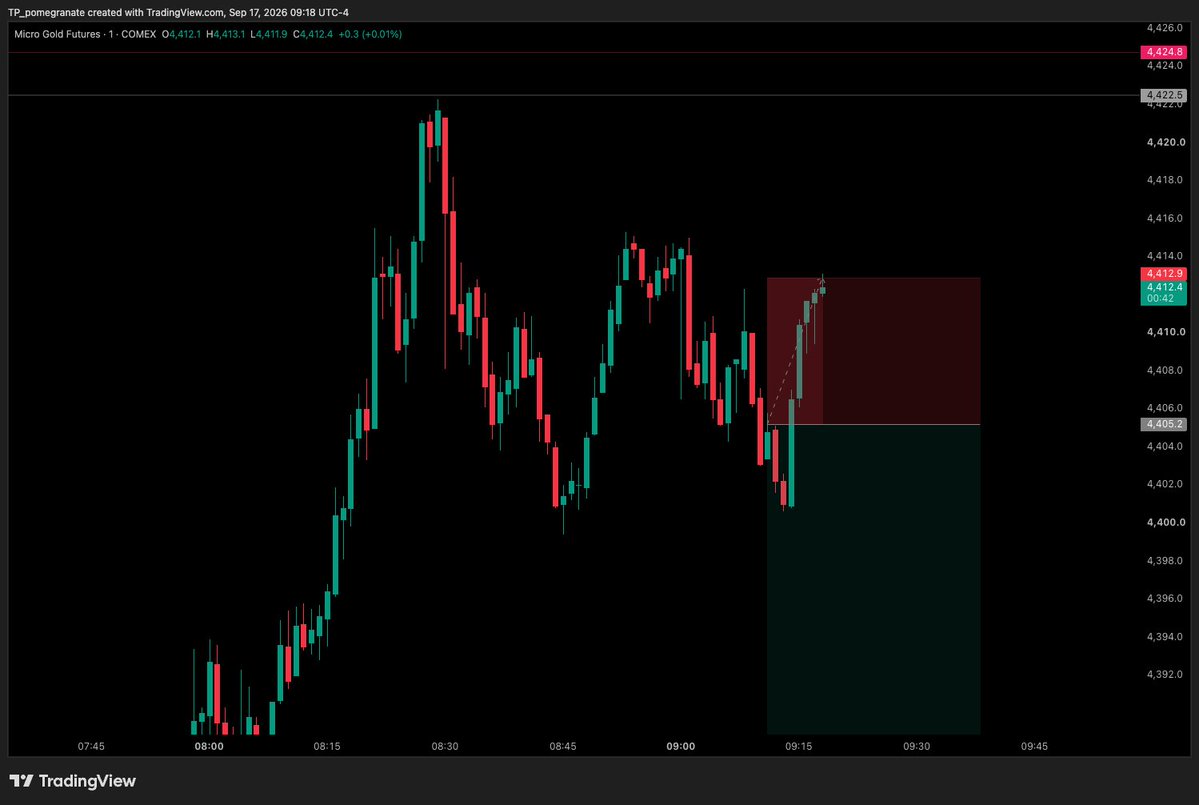
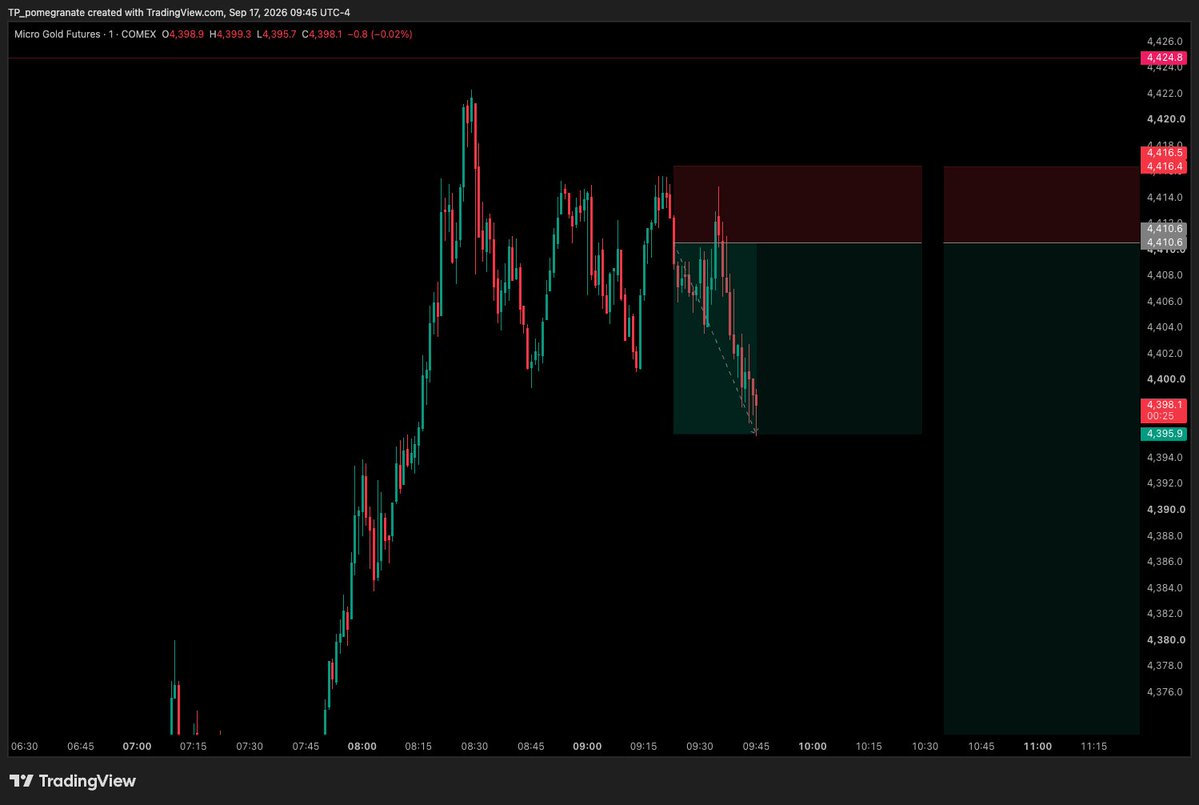
Stopped on the first try - pink line was front-run. I covered only small SFP without Highs.
Second short was good tho, filled lower than expected (it is fine). 1 unit. FTP = TP1 if I had more units. Entered based on SFP of highs.
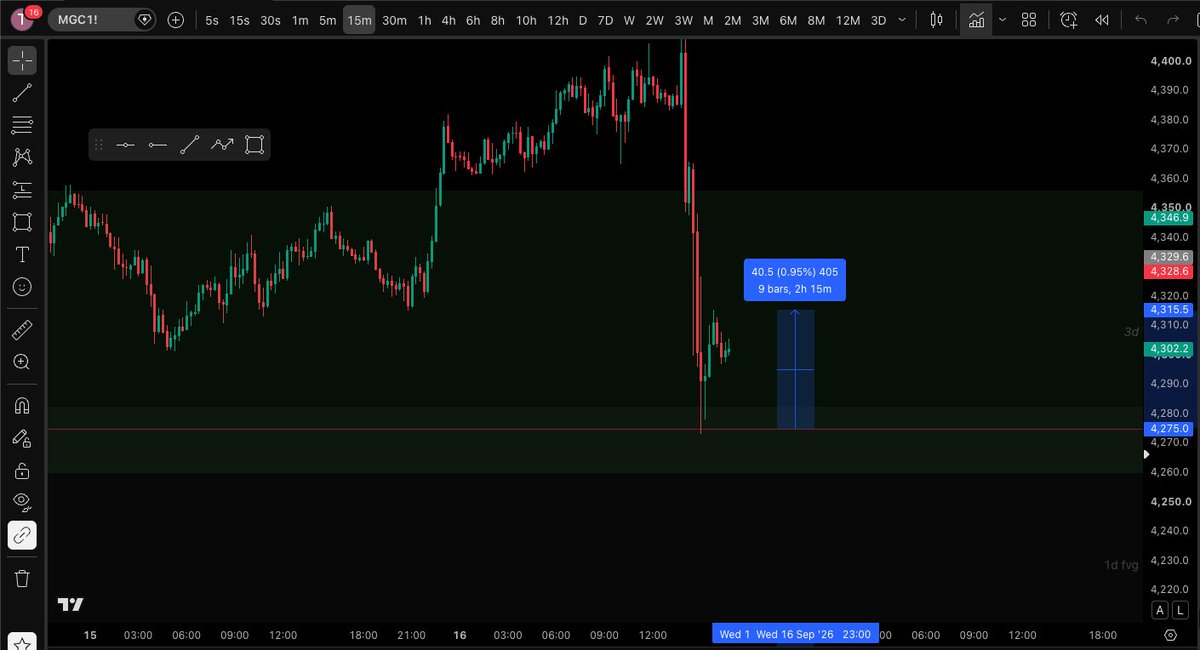
level 4275 shared before, exact reaction from the line,
405 ticks for small scalp.
Unfortunately not taken cause I was in the gym.
link to the post:
https://t.co/elUR7EWqHI
level 4275 shared before, exact reaction from the line,
405 ticks for small scalp.
Unfortunately not taken cause I was in the gym.
link to the post:
https://t.co/elUR7EWqHI
Closed my position for option.
There was a catch as well.
You either or limit or close the option my market.
BUT
the bid and ask affect it significantly:
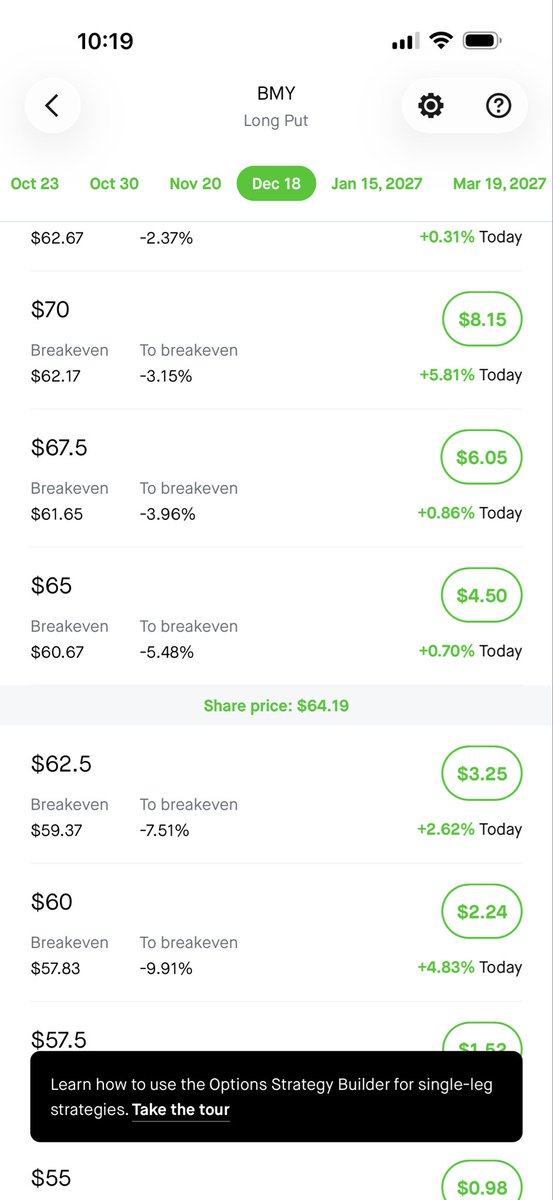
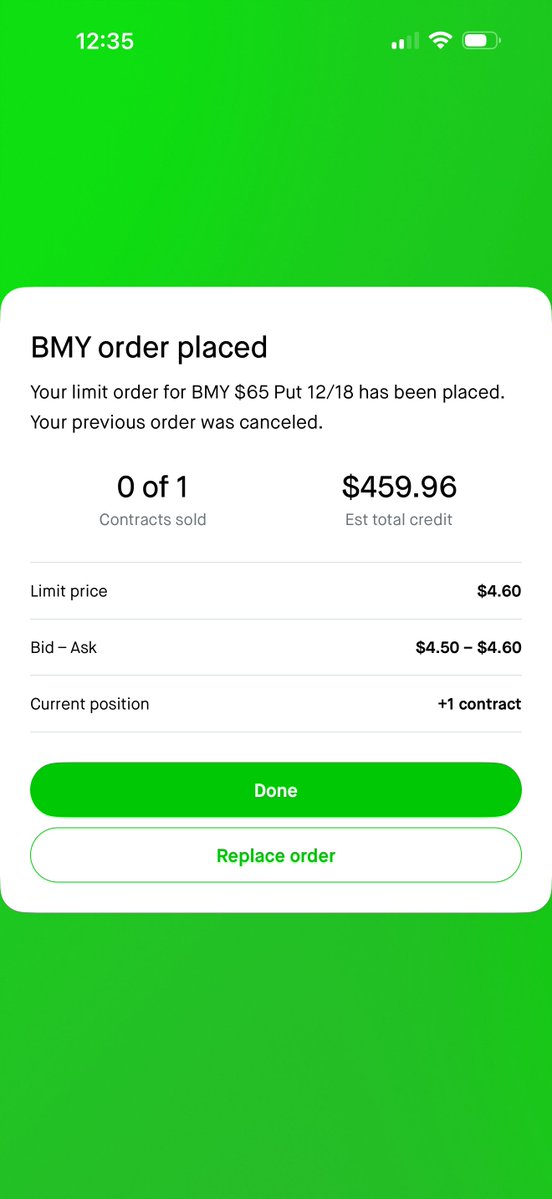
In this case I had 4.5$ & 4.6$
If I set the price for 'sell' too high - 4.6$ or 4.65$ -> chances to be filled will be low.
If I set lower price - 4.5$ -> I would be in minus.
You need to wait until someone literally buys the contract from you. If you are not filled -> you can change the price next day or replace your order.
For the market order:
You're saying: “Close my option now at the best available price.”
It will generally execute quickly during normal market conditions, but you don't control the exact fill price.
For example:
Bid $4.50 / Ask $4.60
and submit a market sell, you shouldn't assume you'll receive $4.60. You may get around the current bid, such as $4.50, or potentially worse if the market moves/liquidity is poor.
In short:
LIMIT = control the PRICE, but execution isn't guaranteed.
MARKET = prioritize EXECUTION, but the price isn't guaranteed.
In my case I closed at BE by setting limit order, but paid 2$ fee.
Plan for next trade -> I plan to enter on smaller TF (still HTF tho), but some level that will react faster. Would choose more strategic approach and share it all here.
https://t.co/AR3ogwE317
Options: long put
Options work a bit different than long/short.
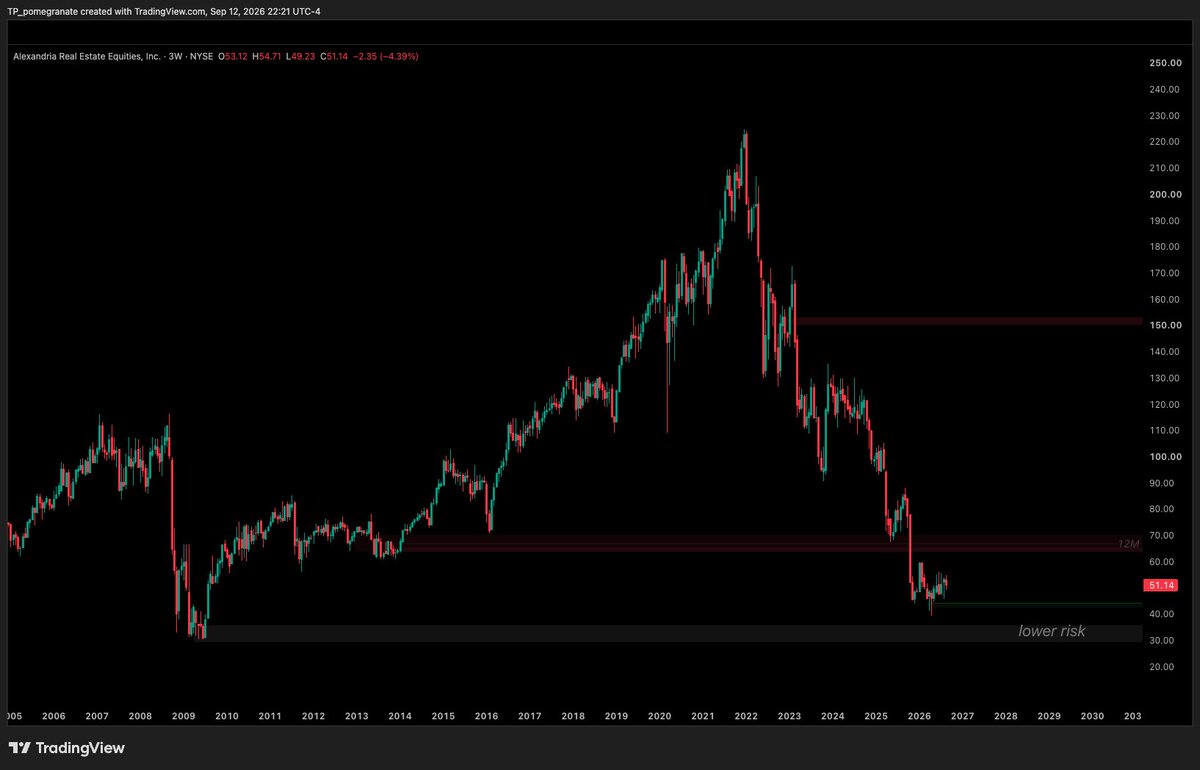
Today I placed my first short on stock through the option.
Let me explain option and my plan:
Option is a contract tied to a stock. Each contract has 100 shares. (So you are buying 100 shares per contract)
Long put = short
65$ contract price -> Called “strike”
Expiration date -> when the option will be expired. In the example: Dec 18
4.50$ -> called “premium”. This is a price per share.
Breakeven price -> matters at expiration and determines if you are on profit or not (if you waited till the end)
So when you decide to buy 1 option -> you pay 450$ (4.50 x 100)
Now let’s go to a plan. I decided to try the simplest approach so far. Calculate profit through the price per share.
How to calculate RR and risk.
The RR and risk are calculated not through the actual price on the chart but through the “premium” (price per share).
Ex: if I decided to risk 50$ in this trade. I would need to count the minimum price per share I allow.
Ex: 4.50 - 0.5 =4$
(or 450$ - 50$ =$400 % 100 = $4)
If I see that my price per share will cost 4$ I close the position.
Now go to RR.
Let’s say I plan for 3 RR
Then I count it based on SL price.
4.5 + 1.5 =6$ per share
(Or 50 x 3 = 150 + 450 = 600 % 100 = 6)
Why I look at “premium” when plan RR?
Because the chart itself does not give me any indication if I am in profit. Trading option has many variables: strike, expiration date and volatility. All of it affect “premium”. That’s why If in short - I would look for the price to drop to my TP price and take the profit. In options I can close the position much earlier (maybe the volatility increased, or some drop by the expiration date happened).
Since it is my first try with options I am not going for big RR - 2 would be great.
I entered with premium 4.65, my expected tp premium would be around 5.45
Decided to learn options because I cannot short through my broker in US yet.
Options 2.0
The Greeks:
Let’s see how the premium changes and what affect it.
In the last post I bought 1 option for BMY with 4.60$ premium.
Now my Greeks changed and premium was affected by it.
Delta -> shows how much you lose or profit if the stock price moves by 1$.
Ex: if I bought 4.80.
The stock price now is 63.80.
64.8-63.8=1$
So delta added +0.50 to my premium.
The premium would be 4.60+0.5=5.1$
With each 1 dollar move delta will increase or decrease the value of premium.
Gamma -> acceleration of delta. With each new dollar it increases delta. So the delta right now is 0.50 and gamma is 0.038. If price moves 1 dollar in my direction my delta will become 0.538
IMPORTANT ONE
Theta -> time decay. Shows how much your premium will lose as time passes. Since options are related to time - each day will “eat” your premium.
For example:
Theta = −0.018
means approximately:
−$0.018 premium/day
or:
−$1.80 per contract/day.
But importantly, Theta itself changes, so it’s not a fixed $1.80 charge every day.
Vega -> shows how sensitive your option premium is to a change in IV (implied volatility). If IV goes up/down for 1% so is your premium.
For example:
IV = 32%
Vega = 0.13
If IV goes:
32% → 33%
The premium would be: 4.60+0.13=4.73
It’s important to understand that The Greeks are not fixed numbers and are changing constantly. They are also the reason why same strike price are charged differently - because all of these identifies determine your potential profit (affects your premium)
One of the main things I understood about options is - better buying options if you expect a fast move in your direction. So theta and Vega are increasing your premium.
Options: long put
Options work a bit different than long/short.
Today I placed my first short on stock through the option.
Let me explain option and my plan:
Option is a contract tied to a stock. Each contract has 100 shares. (So you are buying 100 shares per contract)
Long put = short
65$ contract price -> Called “strike”
Expiration date -> when the option will be expired. In the example: Dec 18
4.50$ -> called “premium”. This is a price per share.
Breakeven price -> matters at expiration and determines if you are on profit or not (if you waited till the end)
So when you decide to buy 1 option -> you pay 450$ (4.50 x 100)
Now let’s go to a plan. I decided to try the simplest approach so far. Calculate profit through the price per share.
How to calculate RR and risk.
The RR and risk are calculated not through the actual price on the chart but through the “premium” (price per share).
Ex: if I decided to risk 50$ in this trade. I would need to count the minimum price per share I allow.
Ex: 4.50 - 0.5 =4$
(or 450$ - 50$ =$400 % 100 = $4)
If I see that my price per share will cost 4$ I close the position.
Now go to RR.
Let’s say I plan for 3 RR
Then I count it based on SL price.
4.5 + 1.5 =6$ per share
(Or 50 x 3 = 150 + 450 = 600 % 100 = 6)
Why I look at “premium” when plan RR?
Because the chart itself does not give me any indication if I am in profit. Trading option has many variables: strike, expiration date and volatility. All of it affect “premium”. That’s why If in short - I would look for the price to drop to my TP price and take the profit. In options I can close the position much earlier (maybe the volatility increased, or some drop by the expiration date happened).
Since it is my first try with options I am not going for big RR - 2 would be great.
I entered with premium 4.65, my expected tp premium would be around 5.45
Decided to learn options because I cannot short through my broker in US yet.
STEPS ON HOW TO TRICK THE BRAIN INTO DISCIPLINE.
1. Pay the effort, not outcome. "I showed up. I did well". Stop attaching reward to results.
2. Move reward to the doorway. Attach a treat when you do something specific (ex: audio book only in the gym. In my case it’s: tea with chocolate and blanket only while I am backtesting).
3. Shrink entry point until resisting is absurd.
Start with tiny baby steps. Repetition is the key - Small is repeatable.
(like such an easy step that you stop negotiating with the brain)
4. Design the room. Eliminate temptations instead of constantly fighting them. (Ex: phone is in another room)
You don’t need to win the fight, if you are not in it.
5. Never end on failure. Deliberately end on something that is good. Even a tiny win. Your brain will remember it.
(Ex: set a small goal to find 1 more level - then finish the session.)
Basically, learn to love the process. Train your nervous system to work with you as an ally. The journey is the goal.
It's ok to make mistakes here and there - stumbling isn't an issue, it's falling and never getting back up that is the end.
I am implementing these steps, will see how it works. After 1 month will write a review to this system.
“MAKE IT 100% OR DONT DO IT AT ALL.”
BULLSHIT.
I’m a perfectionist. Has it helped me, or has it given other people an advantage over me?
2nd one.
While I was putting my back into something and getting mid results, someone was just doing stuff for fun, doing it as a beginner were getting results faster than ever.
(for some reason - being beginner, trying something new or being cringe is bad nowadays. I think it’s cool). When and why did we decide that we have to be good at something before we’re allowed to enjoy it?
Ok… back perfectionism trap
The system give you the rule “make it 100% or don’t do it” is a wall trying to prevent really talented, ambitious people to get wanted results.
Because why would you even start if you believe you need to be fully focused, perfectly disciplined, and spending 23 hours a day on something?
You go all in. You exhaust yourself. You get results that don’t match your expectations.
What’s next? You don’t want to repeat. Brain starts screaming even on the thought of repeating the process.
Solution is - appreciate the effort not the result.
So the formula is simple: you create connection between pleasure (dopamine) and effort.
Instead of relying on random results, you remove brain resistance doing something by appreciating the efforts.
No matter what they are - big or small.
In this case we are building consistency. (This is most important for me now.)
I am not forcing myself to be disciplined. Building a system where showing up becomes easier to repeat.
I’ve been researching, learning a lot on dopamine, motivation, brain work in general, and educational approaches (to make learning/studying easy), and I want to share more of what I’m discovering—and how I’m applying it to trading.
All of my posts are related to MY journey. I’m not claiming that there’s only one right way to achieve something or telling people to change.
The main goal is to find the approach that works for YOU.