Crypto Enthusiasts | Otaku | Founder of @polarisadvisory | Recording my journey about bringing cards and collectibles on to chain as a investment class.
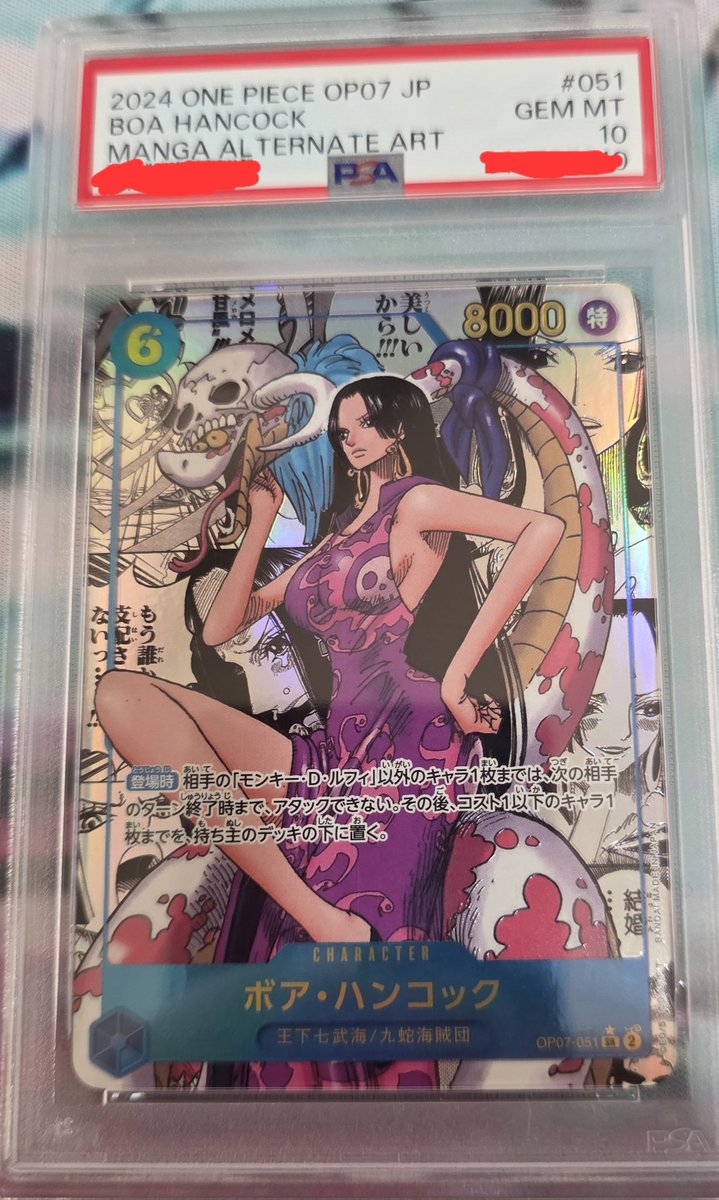
Today I purchase my first PSA graded card
Boa Hancock (OPTCG07) Manga Alternarive Art
Its a card I search for back when OPTCG07 release but I never have gotten it
Gotta say I feel satisfied. Lets see if I can HODL this for sometime.
#psacard#psa#onepiece
People often talk about PSA 10 cards as if they are perfectly fungible.
They aren’t. Two copies of the exact same card with the exact same PSA 10 grade can still have different imperfections:
print lines
holo scratches
centering variance
edge whitening
silvering
surface defects
Both may still fall within PSA’s Gem Mint tolerance.
That’s why experienced collectors still inspect scans closely instead of buying “just the grade.”
PSA creates standardization and liquidity — but not perfect uniformity or guaranteed perfection.
#PSA #PSACARDS
Internet freedom is a fundamental pillar of open economies and innovation. It's concerning to see so many populous nations restricting access — it not only affects individual rights but also limits the flow of information and economic opportunity for billions of people. Worth monitoring closely.
I saw a post today discussing how RWA tokenization “increases liquidity.”
It’s an exciting idea and one of the commonly cited benefits of tokenization — but it’s not universally true in every situation.
In practice, tokenization improves transferability and fractional access, but actual liquidity depends on whether an active market exists. Technology makes the asset easier to divide and trade, yet liquidity ultimately comes from market depth, investor demand, and ongoing participation.
A good example is the recent trend of tokenizing collectibles, such as Pokémon cards on Solana. Fractionalizing these items definitely broadened access and allowed more people to participate at smaller ticket sizes. This can create potential liquidity because the entry barrier is lower.
But even in these cases, fractionalization doesn’t automatically turn an inherently illiquid asset into a liquid one. Tokenization enables trading — the market determines whether trading actually happens.
We’ve seen similar patterns in Thailand as well.
Several early RWA tokenization projects didn’t attract much secondary-market activity. But this really isn’t unique to digital assets alone — even some traditional listed products, including certain REITs, trade with very limited liquidity despite being fully regulated and exchange-listed.
Thus I view tokenization is an enabler, not a guarantee. Deep liquidity comes from market design, investor interest, and the economic appeal of the underlying asset — not just the existence of tokens. As the industry matures, combining strong product fundamentals with thoughtful market structure will matter far more than technology alone.
Still I guess one can say a puddle of water is technically Liquid right? Just not very deep...