Campaigning for sustainable populations through optimal reproductive health, gender equity and universal, voluntary access to contraception and family planning.
“All our environmental problems become easier to solve with fewer people."
— Naturalist, Broadcaster and Honorary PIC Patron Sir David Attenborough https://t.co/G4kauJ1Vi1
The US state of California has over 39 million people – almost as many as Canada. And, like Canada, it’s been subjected to a lot of population growth. As documented by NumbersUSA, between 1982 and 2022, nearly 2.4 million acres of rural land was paved over and permanently lost to development. The median home price went from $110,000 to $824,000, a 150% increase when adjusted for inflation. And commuter traffic delays increased from 22 to 140 hours annually, a 500% increase. That could explain why a net total of 3 million people left California between 2010 and 2024. https://t.co/Yi1BSiNagk
An interesting stat from the recently published Environics poll conducted between Sept. 8-21, 2026, is that 60% of non-white Canadians agree with the statement, “too many immigrants are not adopting Canadian values,” compared with a slightly lower figure for whites, 57%. This suggests we should abandon the tiresome reflex accusations of racism and xenophobia the instant the subject of immigration is brought up, and focus on numbers, sustainability, and capacity to integrate and adopt Canadian values (yes, that’s important). If we have no values that we define and protect, what is the point of fighting for our country? https://t.co/VCdBjFzQaW
A Leger poll found that 50% of Canadians surveyed said they avoided visiting a hospital or doctor because of they didn’t think they’d receive timely treatment, 47% had not and 3% were unsure. 84% thought the healthcare system where they live needed at least some changes, with 58% thinking major changes were needed and 26% thinking minor changes. Only 10% didn’t think the system needed changes beyond additional funding, while 6% were unsure. 27% said they had paid for private healthcare services to avoid long wait time or unsatisfactory services in the public system. In Quebec, that figure was 46%. Sixty-one percent thought patients should be allowed to pay out of pocket or use extended health insurance to obtain surgery at local private clinics. Only 25% of Canadians were opposed to the coexistence of the public and private sectors. As Christine Van Geyn of the Canadian Constitution Foundation noted, Canadians are much more open to health reform than the public discourse would lead you to imagine. https://t.co/42H8cfBg5B
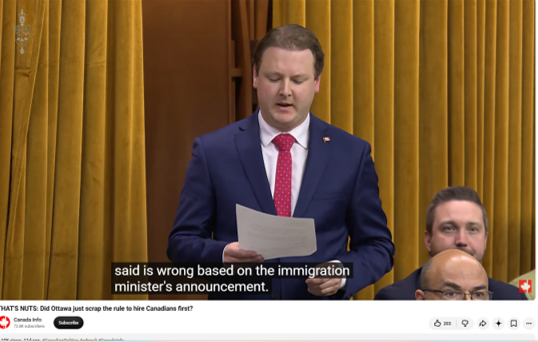
Conservative MP Michelle Rempel Garner calls BS on the Liberals’ Immigration Levels Plan. Seems like Carney is pushing the accelerator right to the floor driving Canada toward the Growtopia envisioned by the Century Initiative. This year, 2026, the Liberals will bring in 380,000 new permanent residents and 370,000 new temporary residents. And Carney calls it “sustainable immigration”! Sustainable for what? The environment? Farmland? Affordable housing? Infrastructure? Healthcare services? Young Canadians seeking entry level jobs? And the intake might be even higher. Apparently there could also be 200,000 permanent residents “outside of the headline target.” Sneaky, eh, but are you surprised? So the total number of permanent residents for 2026 could be 580,000. And despite what the Liberals say they plan to do, Rempel Garner says they’ve already issued 950,000 temporary resident permits. And they can’t even keep track of who’s here right now! Maybe instead of high-in-the-sky immigration, Canada could work on actually knowing who is in the country and find ways to ensure that those whose visas have expired actually leave. Seems like NOTHING was learned from Trudeau’s crisis. And when Canada is at 45 million, 50 million, or 60 million, then what? Will the quality of life of Canadians be better? No, but some corporations will have gotten richer. https://t.co/TQjrdFSsaW
@mhudsoncsp "Gnat shit"? What a non-sequitur. It seems you have contempt for people who haven't flown on private jets. That would be most Canadians. We gather that you think the "little" people who don't have private jets should not complain about how political elites spend their money.
Of course, it’s normal for politicians to eat well, and who wouldn’t enjoy beef tenderloin, salmon with coconut curry, or a nice truffle risotto? And you have to eat out when travelling, right? Nevertheless, the Canadian Taxpayers Federation’s figures on what Carney and his entourage spent during a 10-day trip in January gives “airplane food” a completely new meaning. Carney’s group spent $175,248 solely on airplane food during that 10-day trip, or more than what the average Canadian family spends on groceries over a nine-year period. Rounding the numbers a bit, they spent in a day what a Canadian family spends in a year. And it’s those Canadian families struggling with annual food price inflation of over 2% and for whom beef has become a rare luxury who paid for that beef tenderloin, entrecôte, and veal escalope with lemon and capers. One wonders, could Carney not have settled for slightly less extravagant dining? https://t.co/uSaELuljRW
We don’t claim to know exactly what’s happening in Europe, as violence spreads across cities not only in France but several countries in Europe, including Switzerland(!). But it’s very hard to believe that this is just about students dissatisfied with their classrooms anymore. Among the flags you can see if you look at videos online, especially those made by individuals or independent media rather than the MSM, are the Palestinian flag (inevitable at all demos these days), communist, anarchist, trans, and more. Someone, or a collection of someones, is driving all this. This footage is from October 17. https://t.co/a4smk2XhO1
Agreed. And it's not like they don't know the harm they were causing. Trudeau's government was warned years before the housing crisis exploded in 2024 by Immigration, Refugees and Citizenship Canada that there was a "misalignment" between population growth and housing supply, but he still kept raising the number of permanent residents, temporary workers, students and asylum claimants. https://t.co/uwrjYaurJv
The Conservatives have a point here. Temporary workers, unskilled and skilled, are a cheap fix for businesses that bypass resident Canadians. The Labour Market Impact Assessment (LMIA) according to some is a joke. Small business owners have used it to say they couldn’t find qualified Canadians when what they really wanted is cheaper employees from “back home” who then get a path to citizenship. Win-Win for employers and TFWs, loss for Canadians seeking jobs. Thanks to Justin Trudeau’s reckless immigration policies, the non-resident population peaked in late 2024 at about 7.3%, up from 2% before Trudeau took power. And even though it's just slightly under 7% now, Carney is hinting at ramping up immigration again. https://t.co/z98nJOJUzM
It was Bev Oda, Stephen Harper's Minister of International Cooperation, who got in trouble for switching to a more expensive hotel that allowed smoking. She also had to pay a cancellation fee to the original hotel and for taxis to go back and forth to the first hotel where the conference she was attending was being held. Oda apologized in Parliament and paid back the expenses. Let's see if Carney does! We're not that crazy about cozying up to dictators either. Nor about the multiple bills that are being passed that we fear will result in more censorship, surveillance, and digital tracking of individuals, all in the name of keeping Canadians safe.
@mhudsoncsp We don't understand what's low about holding politicians to account for their spending. Of course they have to spend money on food while travelling, but over $175K in 10 days just for airplane food seems over the top. We remember when Bev Oda got savaged for a $16 glass of OJ.
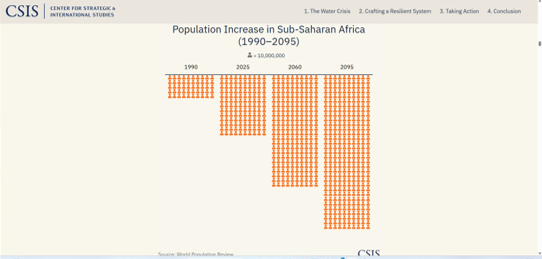
Only 24% of sub-Saharan Africans have access to safe drinking water. That means 76% don’t. Sub-Saharan Africa is the world’s most water insecure region. There is no doubt that Africa’s rapid population growth has contributed to that sad statistic in many regions. But don’t expect it to be mentioned by most aid and relief organizations. You can insist that access to water is a fundamental right, but biophysical realities don’t really care about human rights. https://t.co/3PAApkyRIH
“This is not a road trip,” says a homeless senior who sleeps in his car. Federal point-in-time counts from 2020 to 2022 found that about 27% of the homeless in Canada were over 50, and 4% over 65, an approximate doubling of both numbers since the national shelter study of 2005-2009. About half of the seniors are homeless for the first time. The statistics cited in this video raise the question – given the unmet needs of so many people in Canada, why is the government bringing in hundreds of thousands international students, temporary foreign workers, and asylum seekers, many with dubious claims, every single year? In 2025, an Ottawa city councilor said that over 60% of the shelter population was newcomers. Tracking just how much the government spends on newcomers is difficult because spending is split across many programs, but according to “Grok,” the government itself has spent about $1.2 billion on lodging migrants in hotels since 2020 and provided another $1.8 billion in “Interim Housing Assistance Program” to provinces and municipalities. Then there is healthcare: the government will spend about $1 billion in 2026 on healthcare for asylum seekers through the Interim Federal Health Program, some of whose services (such as vision and dental care) it does not provide to Canadian citizens. If the out-of-control intake of newcomers that Trudeau foisted on Canada is hurting Canadians, why is Mark Carney sending signals that it will soon resume? https://t.co/79I0oGCgCi
In PIC’s latest posting, Alan Danesh reprimands the UN Environment Programme for ignoring the population elephant in the room in its recent “Limiting Overshoot” report, which promotes drastic action on climate change. Danesh argues that ignoring the impact of population growth for fear of violating individual rights in fact violates the collective rights of humanity to live on a habitable planet. When it comes to population problems, the UN, like so many other organizations, is like those three little monkeys! https://t.co/U7MCg2HqH1
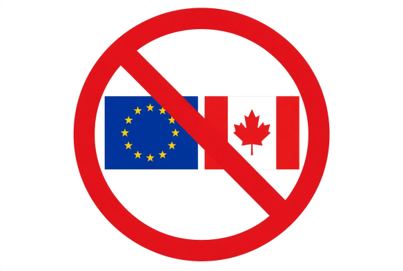
No EU associate membership for Canada? Maybe a blessing in disguise, or even an out-and-out blessing? We don’t need Eurocrats making dumb decisions and messing things up for Canada. We can make dumb decisions and mess things up all by ourselves, thank you very much! https://t.co/M1YDjExiYc
Quebec already has more control over immigration than the other provinces. In the referendum on October 19, Alberta voters indicated that they also wanted their province to have more say on immigration. And on October 22, Saskatchewan Premier Scott Moe said provinces should have more say over immigration priorities, numbers and refugee policies. Earlier this year, Newfoundland & Labrador was pushing the federal government for more control of immigration through the Provincial Nominee Program. One might think that all of this would suggest to the federal government that it should consult with provincial governments – and maybe even the Canadian people – about its immigration policies. Anyone want to bet whether this will happen? https://t.co/f3Diau9IMH
The Big One happened in British Columbia recently, a political earthquake that is. Many voters were annoyed at NDP Premier David Eby for calling an election unnecessarily early, but there were also real issues such as the spiraling debt, higher taxes, economic decline, a housing crisis, a drug crisis, an ailing healthcare system, and concerns about property rights. Let’s hope Conservative Premier-designate Lorne Doerson delivers on his promises to listen to the people. https://t.co/8wWeaLc9Vx