Running a Local PortalDot Development Node 🛠️
Whether you're testing runtime changes, developing applications, or experimenting with transactions, running a local node is the fastest way to build and iterate on Portaldot.
@akanbasa Hey buddy, feel free to join our Portaldot Discord. Our developers and community team will be happy to help you troubleshoot the issue and answer any questions you may have
🌐The Portaldot Explorer is more powerful than you might think.
The Staking tab provides a complete overview of network activity, including validators, nominators, staking participation, current epoch information, and more.
Looking ahead? The Events tab keeps you updated on upcoming on-chain events and important network activities as they happen.
🔗Explore the network yourself: https://t.co/EuqYgzvoVO
Open the Portaldot Explorer in your browser. Navigate to the network selector and choose Local Node.
The explorer will automatically connect to your locally running chain.
🔗Portaldot Explorer: https://t.co/yfBt6F8qDU
Next, Extract the Package
Using the Ubuntu release as an example:
" tar -xzvf portaldot-testnet-ubuntu.tar.gz cd portaldot-testnet-ubuntu chmod 755 portaldot_dev "
Start a local single-node development chain:
" portaldot_dev --dev --alice "
🕵️♂️The Portaldot Online Mini Hackathon S1 concludes at 00:00 UTC on May 31.
With less than 12 hours remaining, now is the time to finalize your build, review your documentation, prepare your demo, and ensure your submission is completed before the deadline.
🔗: https://t.co/5wMbPaQPKR
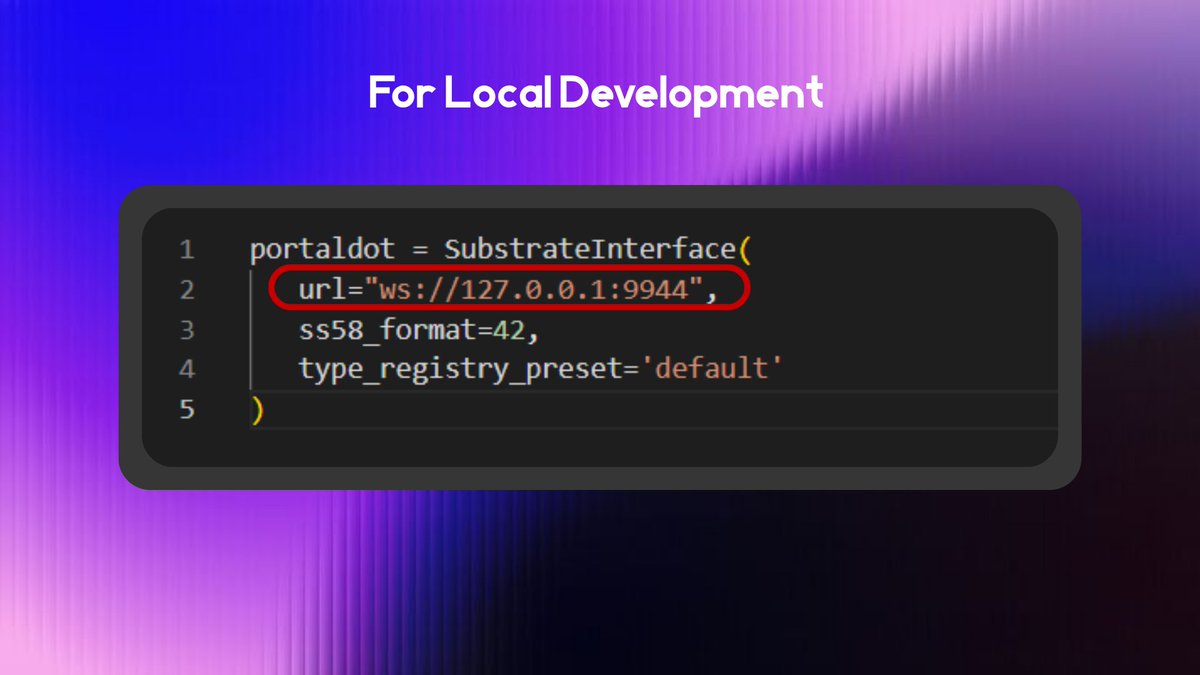
For local testing and development, switch the endpoint to your local Substrate node:
url = "ws://127.0.0.1:9944"
Running against a local node allows developers to test logic, transactions, and integrations in a controlled environment before deploying to Portaldot mainnet.
⛓️Most blockchain infrastructure talks about scale, performance, or interoperability.
But for developers, the first real question is simpler:
“How fast can I actually start building?”
This thread walks through how to connect to Portaldot using Python from SDK installation to local development and mainnet interaction.
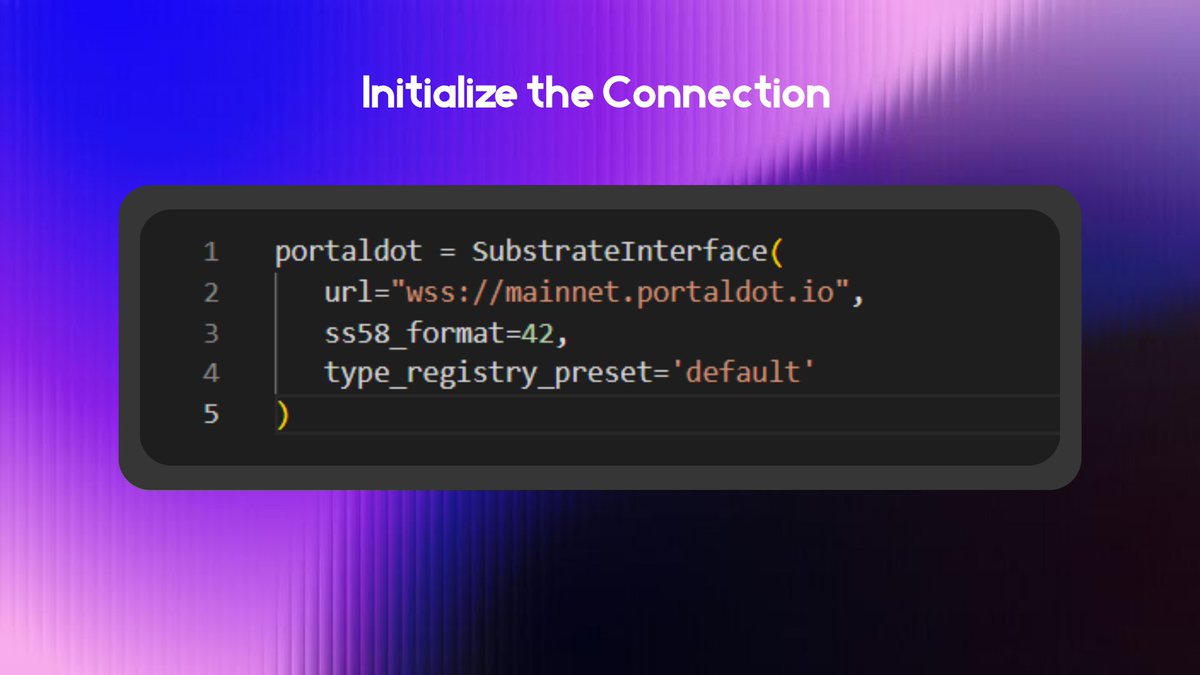
Next, establish a connection to the Portaldot mainnet node.
The endpoint connects your application to the live network, while ss58_format ensures address compatibility and the type registry enables accurate decoding of chain data and runtime structures.
💳Did you know Portaldot already has its own wallet extension available?
Here’s a quick guide on how to install the Portaldot Wallet Extension on your browser and get started, simple, familiar, and designed just like the wallet extensions you already use today
🔗:https://t.co/WLGYY4ytFL
🌐Portaldot Blockchain Explorer is now live
Track and inspect on-chain activity across the Portaldot network through a dedicated explorer interface built for transparency and accessibility.
Available data includes:
• Latest & Finalized Blocks
• Transfers
• Accounts
• Events & Calls
The explorer gives developers and ecosystem users a clearer way to monitor network activity, inspect transactions, and interact with Portaldot chain data in real time.
🔗Explore: https://t.co/rXZ5EAuk3H