How to calculate Intrinsic Value?
🎩📈 Calculating Intrinsic Value requires a Discounted Cash Flow (DCF) model. It involves projecting future earnings and "discounting" them back to present value using an interest rate. It is complicated, and it requires assumptions.
As the old City joke goes: Calculating Intrinsic Value is like predicting the weather in London—it’s an educated guess, and you should always bring an umbrella (a Margin of Safety). Never pay exactly the Intrinsic Value; always demand a 20-30% discount to protect yourself from your own bad math.
#intrinsicvalue #valueinvesting #valuestocks #financialeducation
"Everything we hear is an opinion, not a fact. Everything we see is a perspective, not the truth." — Marcus Aurelius. 🏛️
In the stock market, the "Ticker Price" flashing in red and green on your screen is just an opinion. It is a popularity contest. Intrinsic Value is the fact.
What is it? ☕ Warren Buffett’s mentor, Ben Graham, said it best: "Price is what you pay. Value is what you get."
🖋️ During a "Bull Market," the Ticker Price of a stock often floats miles above its Intrinsic Value. People are paying for the excitement of owning it. This is the financial equivalent of paying £5,000 for a handbag that cost £50 to make, simply because it has a famous logo on it. A Stoic investor doesn't buy logos. They buy cash flows. When the market inevitably panics (a Bear Market), the Ticker Price crashes below the Intrinsic Value. That is when the gentleman investor goes shopping. 🛒📉
#bearmarket #bullmarket #intrinsicvalue #warrenbuffet
Welcome to “Etymology Friday”!
Today, We will talk about the origin of "Bull & Bear" Markets.
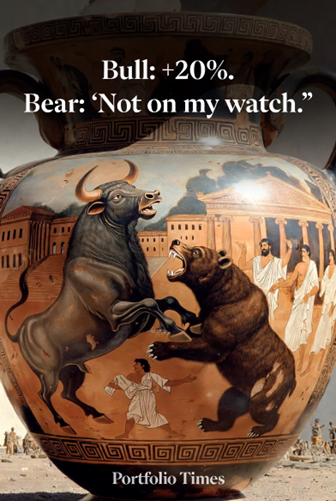
📜☕ Why do we call a rising market a "Bull" and a falling market a "Bear"? It has to do with how these animals physically attack.
🐂A Bull strikes by thrusting its horns upwards into the air. Hence, a market thrusting upwards is a Bull market. Hence bull market = upward-trending, optimistic market.
🐻A Bear, conversely, attacks by swiping its paws downwards. Hence, a market crashing downwards is a Bear market. Hence bear market = downward-trending, pessimistic market.
The Stoic Takeaway: 🎩📈A Stoic does not fear the Bear nor worship the Bull. Both animals are irrational, emotional, and entirely out of your control. Your job is not to predict which animal will win today, but to build a portfolio sturdy enough to survive the zoo.
#Bearmarket #Bullmarket #etymologyfriday #financehistory #investmenteducation
Welcome to “Etymology Friday”!
Today, We will talk about the origin of "Bull & Bear" Markets.
📜☕ Why do we call a rising market a "Bull" and a falling market a "Bear"? It has to do with how these animals physically attack.
🐂A Bull strikes by thrusting its horns upwards into the air. Hence, a market thrusting upwards is a Bull market. Hence bull market = upward-trending, optimistic market.
🐻A Bear, conversely, attacks by swiping its paws downwards. Hence, a market crashing downwards is a Bear market. Hence bear market = downward-trending, pessimistic market.
The Stoic Takeaway: 🎩📈A Stoic does not fear the Bear nor worship the Bull. Both animals are irrational, emotional, and entirely out of your control. Your job is not to predict which animal will win today, but to build a portfolio sturdy enough to survive the zoo.
#Bearmarket #Bullmarket #etymologyfriday #financehistory #investmenteducation
Welcome to “Etymology Friday”!
Today, We will talk about the origin of "Bull & Bear" Markets.
📜☕ Why do we call a rising market a "Bull" and a falling market a "Bear"? It has to do with how these animals physically attack.
🐂A Bull strikes by thrusting its horns upwards into the air. Hence, a market thrusting upwards is a Bull market. Hence bull market = upward-trending, optimistic market.
🐻A Bear, conversely, attacks by swiping its paws downwards. Hence, a market crashing downwards is a Bear market. Hence bear market = downward-trending, pessimistic market.
The Stoic Takeaway: 🎩📈A Stoic does not fear the Bear nor worship the Bull. Both animals are irrational, emotional, and entirely out of your control. Your job is not to predict which animal will win today, but to build a portfolio sturdy enough to survive the zoo.
#Bearmarket #Bullmarket #etymologyfriday #financehistory #investmenteducation
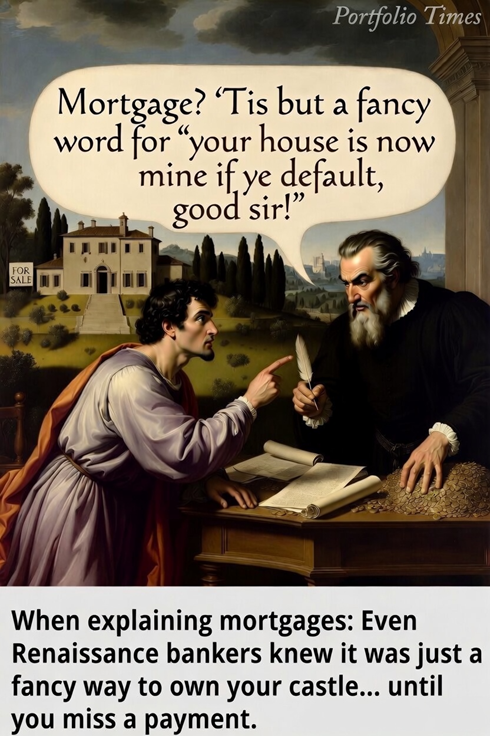
Welcome to Etymology Friday. Today, we look at a word that millions of people casually throw around at dinner parties without realising they are essentially speaking the language of a medieval horror story: The Mortgage.
The History: 📜☕ To understand this one, we must travel back to the Old French spoken in the Middle Ages. The word is a combination of two root words:
Mort: Meaning "Death" (from the Latin mortuus).
Gage: Meaning a "Pledge" or "Promise."
Put them together, and what do you get? A Death Pledge.
Why on earth did they call it that? Because in medieval property law, the pledge (the agreement) "dies" in one of two ways.
The loan is fully paid off, and the pledge dies (a happy ending).
The borrower fails to pay, the property is taken by the lender, and the pledge dies (a very unhappy ending).
Either way, the contract ends in the metaphorical graveyard.
Welcome to Etymology Friday. Today, we look at a word that millions of people casually throw around at dinner parties without realising they are essentially speaking the language of a medieval horror story: The Mortgage.
The History: 📜☕ To understand this one, we must travel back to the Old French spoken in the Middle Ages. The word is a combination of two root words:
Mort: Meaning "Death" (from the Latin mortuus).
Gage: Meaning a "Pledge" or "Promise."
Put them together, and what do you get? A Death Pledge.
Why on earth did they call it that? Because in medieval property law, the pledge (the agreement) "dies" in one of two ways.
The loan is fully paid off, and the pledge dies (a happy ending).
The borrower fails to pay, the property is taken by the lender, and the pledge dies (a very unhappy ending).
Either way, the contract ends in the metaphorical graveyard.
Welcome to Etymology Friday. Today, we look at a word that millions of people casually throw around at dinner parties without realising they are essentially speaking the language of a medieval horror story: The Mortgage.
The History: 📜☕ To understand this one, we must travel back to the Old French spoken in the Middle Ages. The word is a combination of two root words:
Mort: Meaning "Death" (from the Latin mortuus).
Gage: Meaning a "Pledge" or "Promise."
Put them together, and what do you get? A Death Pledge.
Why on earth did they call it that? Because in medieval property law, the pledge (the agreement) "dies" in one of two ways.
The loan is fully paid off, and the pledge dies (a happy ending).
The borrower fails to pay, the property is taken by the lender, and the pledge dies (a very unhappy ending).
Either way, the contract ends in the metaphorical graveyard.
Welcome to Etymology Friday. Today, we look at a word that millions of people casually throw around at dinner parties without realising they are essentially speaking the language of a medieval horror story: The Mortgage.
The History: 📜☕ To understand this one, we must travel back to the Old French spoken in the Middle Ages. The word is a combination of two root words:
Mort: Meaning "Death" (from the Latin mortuus).
Gage: Meaning a "Pledge" or "Promise."
Put them together, and what do you get? A Death Pledge.
Why on earth did they call it that? Because in medieval property law, the pledge (the agreement) "dies" in one of two ways.
The loan is fully paid off, and the pledge dies (a happy ending).
The borrower fails to pay, the property is taken by the lender, and the pledge dies (a very unhappy ending).
Either way, the contract ends in the metaphorical graveyard.
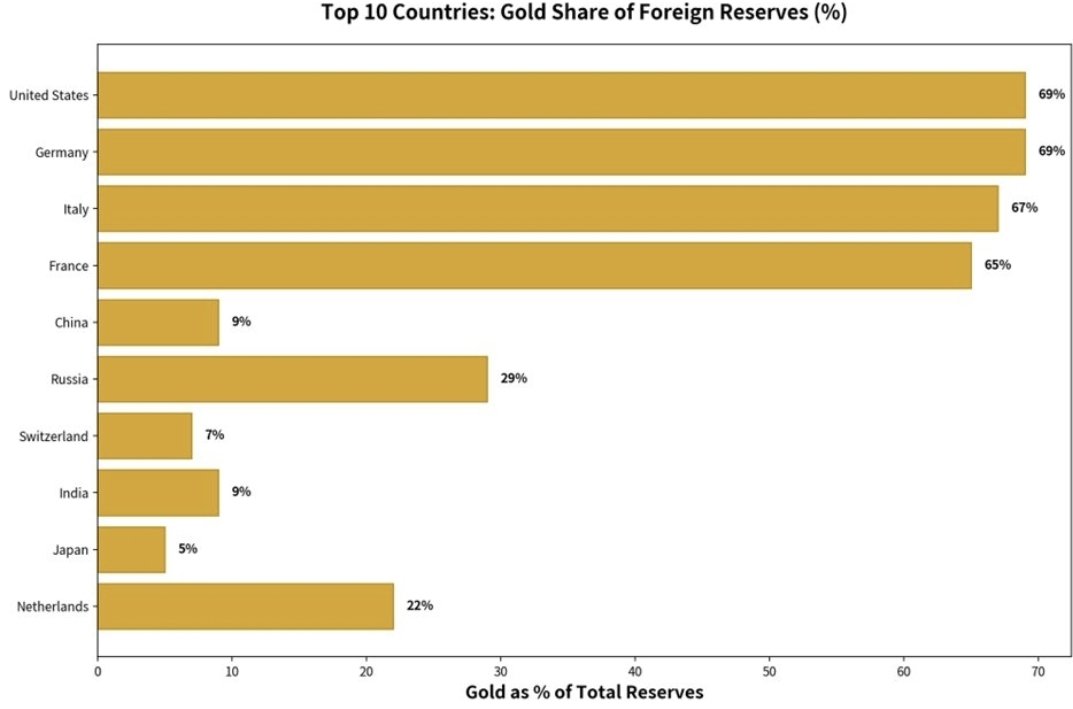
Quick Insights🔍
🪙United States dominates in absolute holdings — nearly 2.5× Germany’s amount.
🪙European countries (Germany, Italy, France, Netherlands, Switzerland) hold very high percentages of their reserves in gold (65–70%+).
🪙Major accumulators like China, India, and Russia have lower % allocations but are actively growing their stacks.
Quick Insights🔍
🪙United States dominates in absolute holdings — nearly 2.5× Germany’s amount.
🪙European countries (Germany, Italy, France, Netherlands, Switzerland) hold very high percentages of their reserves in gold (65–70%+).
🪙Major accumulators like China, India, and Russia have lower % allocations but are actively growing their stacks.
Quick Insights🔍
🪙United States dominates in absolute holdings — nearly 2.5× Germany’s amount.
🪙European countries (Germany, Italy, France, Netherlands, Switzerland) hold very high percentages of their reserves in gold (65–70%+).
🪙Major accumulators like China, India, and Russia have lower % allocations but are actively growing their stacks.
Quick Insights🔍
🪙United States dominates in absolute holdings — nearly 2.5× Germany’s amount.
🪙European countries (Germany, Italy, France, Netherlands, Switzerland) hold very high percentages of their reserves in gold (65–70%+).
🪙Major accumulators like China, India, and Russia have lower % allocations but are actively growing their stacks.
Quick Insights🔍
🪙United States dominates in absolute holdings — nearly 2.5× Germany’s amount.
🪙European countries (Germany, Italy, France, Netherlands, Switzerland) hold very high percentages of their reserves in gold (65–70%+).
🪙Major accumulators like China, India, and Russia have lower % allocations but are actively growing their stacks.
Quick Insights🔍
🪙United States dominates in absolute holdings — nearly 2.5× Germany’s amount.
🪙European countries (Germany, Italy, France, Netherlands, Switzerland) hold very high percentages of their reserves in gold (65–70%+).
🪙Major accumulators like China, India, and Russia have lower % allocations but are actively growing their stacks.
Quick Insights🔍
🪙United States dominates in absolute holdings — nearly 2.5× Germany’s amount.
🪙European countries (Germany, Italy, France, Netherlands, Switzerland) hold very high percentages of their reserves in gold (65–70%+).
🪙Major accumulators like China, India, and Russia have lower % allocations but are actively growing their stacks.