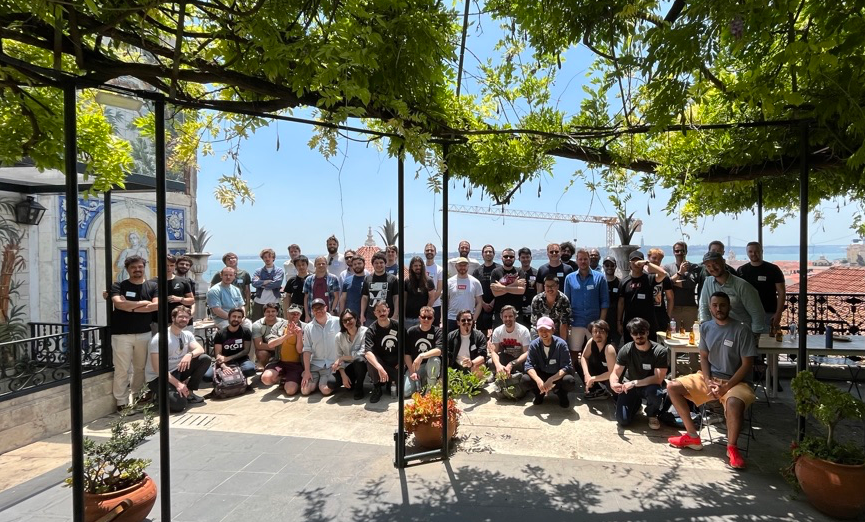
Two weeks ago, we held 'The Summit' hosted by @1kxnetwork, a gathering of 54 onchain game builders and community members who came together to hang out and discuss all things onchain games & autonomous worlds. I haven't had so much fun in years :)
@Poseidon_ZK@nounsdao To achieve an implementation of private voting in Nouns, we envision 6 milestones which we call: v0, v1, v2, v3, v4, & v5
v0
DeFROST proof of concept. We have a working version of what we proposed to Nouns DAO in the @nounsprophouse Private Voting round.
https://t.co/l9RFLsvZrV
holy shit this is a magic
we can now remove the multisig (me!) from our nouns solo staking incentivization prop and make it trustless b/c @SuccinctLabs made it possible to zk prove ⌐◨-◨ block graffiti beacon chain states inside of ethereum smart contracts
🤯🤯🤯
12/
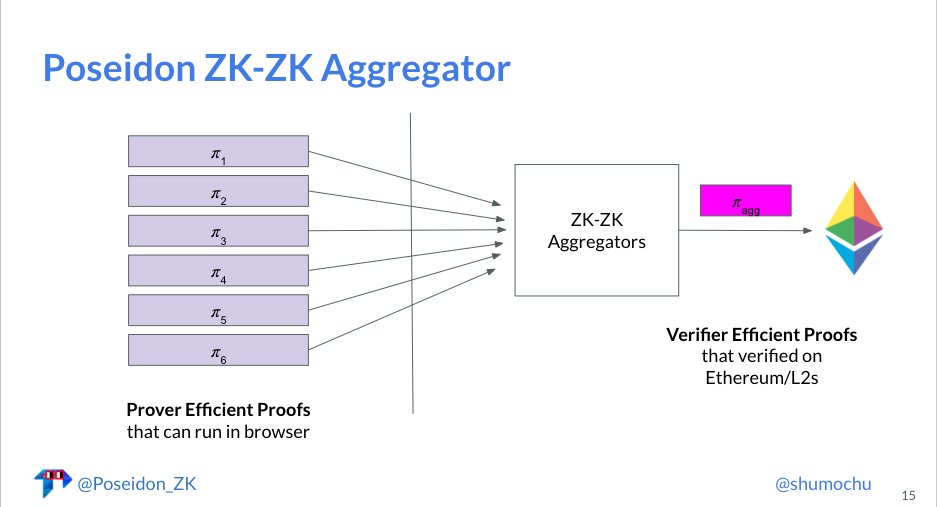
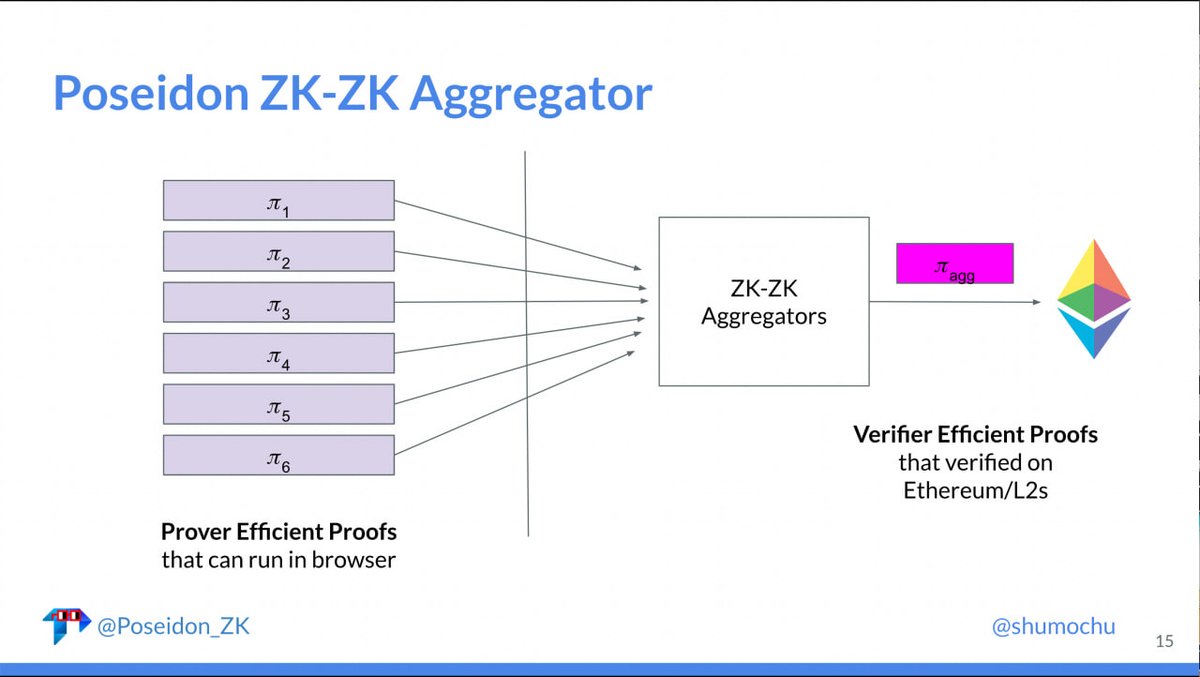
- @Poseidon_ZK is building a ZK-ZK aggression as a service, aggregating multiple inference proofs can bring scalability to ZKML’s on chain verification
- @ironmill_xyz provides the autoscale zkml inference computation on the one of world's largest FPGA cluster
15/ One feature @Poseidon_ZK is developing involves creating composable ZKP primitives as smart contracts. On top, they offer a ZK-ZK Aggregator, which consolidates a batch of client-generated proofs into a single proof, significantly reducing the amortized ZKP verification cost
4. the result is more nuanced than we thought. It turns out to be, as long as the aggregated tallying result is public, i.e. number of exact yes, no, and abstain vote. All 3 methods could reveal nouns whales voting on some particular cases. So, fasten your seat belt, @nouns40!
ZK frustrates me right now. New amazing technology has come out that should enable many new amazing products, but it hasn't been productized yet for dummies like myself to be able to use it :')
The technique is used in privacy applications like @Poseidon_ZK, where each user generates a zk proof locally for their specific transaction and passes it to an aggregator, who then posts a single proof on chain.