Job adverts that don’t post the salary, instead using opaque and unhelpful jargon like “competitive pay” or “dependent on experience”, are not just a frustration, they’re entrenching the gender and ethnicity pay gap, and wasting the time of the applicant.
Here’s why.
.@Newsweek hiring a personal finance reporter, but the salary is just marked as "competitive" - so the person apply has absolutely no idea if that means £25,000, or £40,000 or £60,000, or any other figure plucked out of the air. https://t.co/A60IuimOX4
Opportunity: We’re looking for an expert in sovereign debt across Europe, the Middle East, and Africa.
Senior Financial Journalist - Sovereign Debt
£70,000 - £80,000, London (Hybrid/Remote available)
#journojobs#journalismjobs#sovereigndebt
Also this thread. You can’t help but wonder how much a company’s employees are getting paid - or not. Lack of transparency does imply lack of banding/structure, and we know which groups of people typically negotiate their salaries up, and which don’t, further reinforcing the gap!
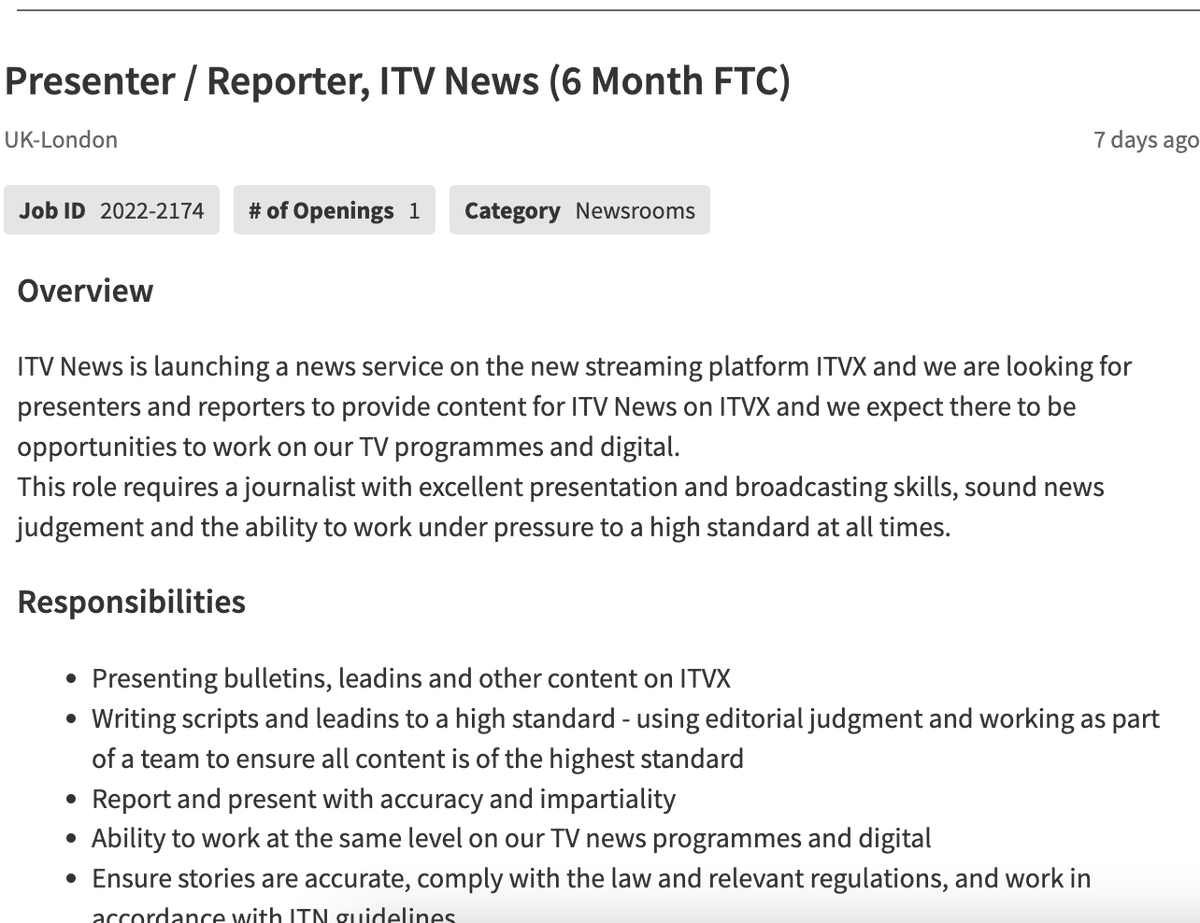
.@itvnews this looks like great new roles for presenters and reporters for your new platform @ITVX - but please can you share the salary so 1.) applicants know what to expect, and 2.) to help end the gender and ethnicity pay gap? #PostThePay https://t.co/nCq477k0Ei
it's great to see roles for new reporters. but i've been told the pay scale for all @thetimes grad schemes starts at 25k, ends at 27k in the first year, and then moves to 30k if the reporter is made permanent. So why isn't that stated here in the job posting?
@thetimes is launching a graduate trainee scheme for business reporters. This is an opportunity to to join a two-year training programme and work alongside our award-winning financial journalists. Applications close on 17 July. https://t.co/dplZEwaNs2
start-ups (like this one) have the advantage of laying out a pay band structure from day one. unfortunately, all these new roles don't say the salary, and just say 'competitive.' Competitive against what?
🚨👀 We are HIRING. With 4 million views of our content in Beta and our major launch approaching … come and help us build a brand new way to tell “the news”. Head of News UK; Designer; Senior Producer; Producer - @thenewsmovement is expanding 😊👇🏽 https://t.co/Nv5Sifndr2
@kamalahmednews thanks Kamal, appreciate your openness about this. keen to hear what those ways are, and ways we can help on this. it's crucial for ethnic minorities and lower income backgrounds to start on a level playing field.
if you're building a newsroom from scratch, a way to ensure equal pay exists from day 1 is pay transparency, so staff aren't guessing what they think they should be earning. ethnic minorities and working class people will often pitch a lower salary than what they deserve.
many newsrooms grapple with putting in pay bands and pay transparency because they need to retroactively go back and try + adjust all the pay bands. this is a rare time a new newsroom can lay out pay from the start to make it fair, and so there isn't a pay and ethnicity pay gap.
But it’s important to take note of the companies that lead the change first and embrace pay transparency – because it will mean they’re the workplaces that don’t just talk the talk, but are truly committed to ending pay inequality at the root.
Today was meant to be the day New York City introduced a pay transparency law, requiring employers to disclose pay ranges for posted positions.
But just a few weeks ago, they delayed law until Nov. 1, 2022. Here’s a breakdown of what the law will mean.
This is just a glimpse of the type of pushback against salary transparency we can expect to see happen elsewhere globally, too. Companies will be unwilling to #PostThePay and may argue that salary transparency is hurting businesses that are grappling with labour shortages.