Grok Bot has been such a force multiplier for me. It’s insane.
It provides you with a team of experts, and you get a totally customizable assistant. It replaces tools like search. It enhances applications like a CRM.
It works on every device, so you can now do real work from your phone, then pick it up on your laptop or desktop. I often have 3 to 5 bots working on things simultaneously.
If you have not tried it, use it for one month. It will blow you away. If already love it, share this message. Everyone that I get to use Grok Bot has become a total fan and feels the same way.
I know the team, and they are working relentlessly around the clock to make the product do everything and anything that you need.
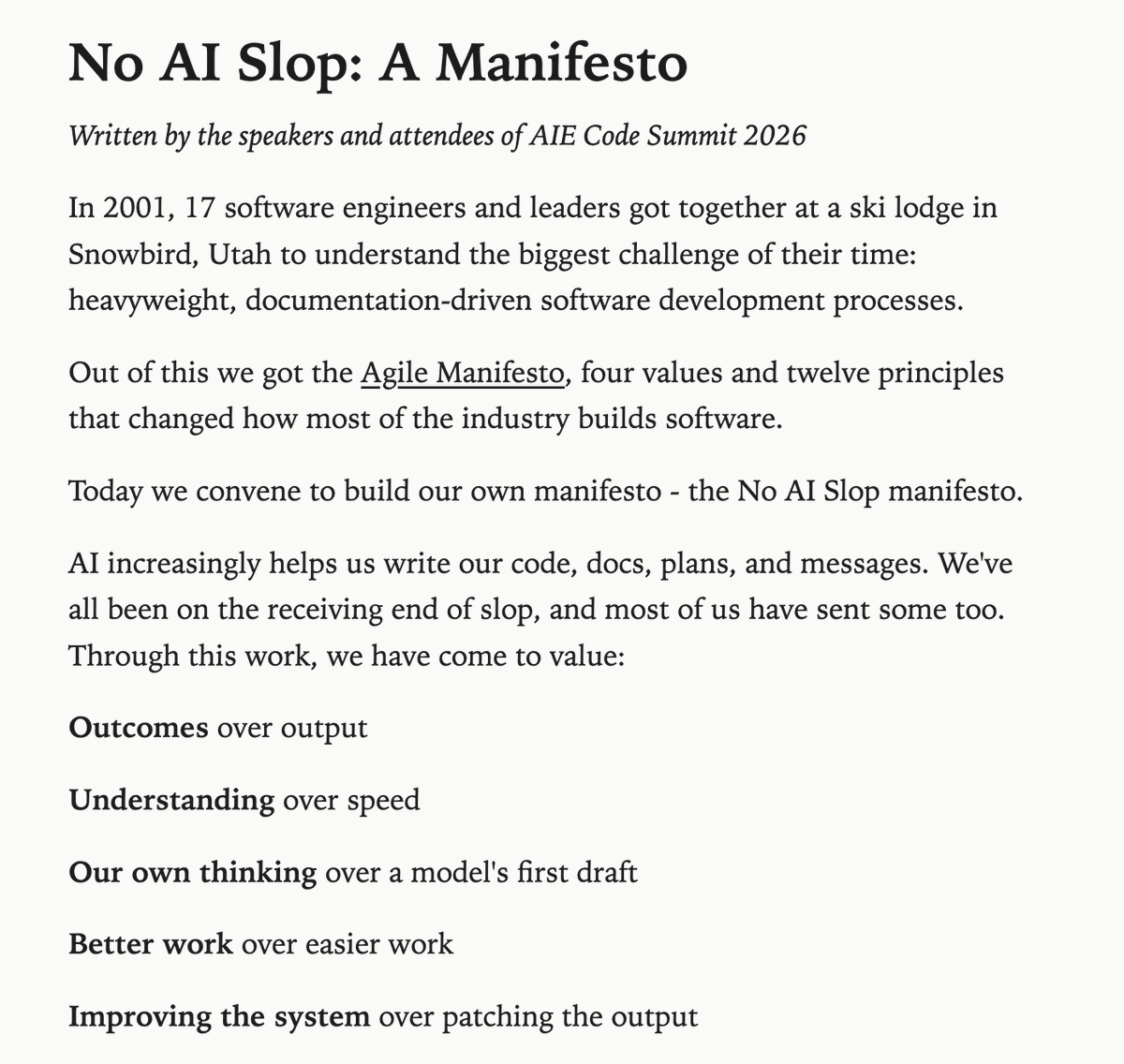
a few days ago we published the "No AI Slop Manifesto" at @aiDotEngineer Code Summit in SF, written in collaboration with many of the speakers and attendees
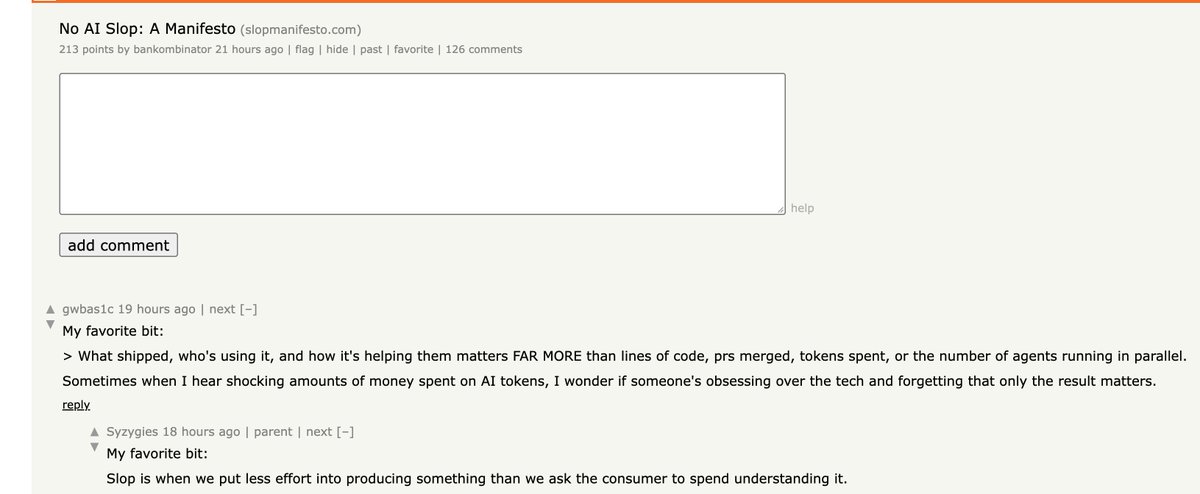
It already hit the front page of hacker news, has 300+ signatures including folks from Baseten, SpaceX, OpenAI, PostHog, Shopify, Glean, ZoomInfo, and legendary builders including
@swyx@poteto@kentcdodds@mihail_eric@audreyt@altryne@traviscline@philipkiely@TejasKumar_
read and sign it at slopmanifesto dot com
some of my favorite points
> AI cannot replace human judgement, it can only amplify our judgement (or lack thereof).
> We own the intent, taste, and consequences of what we ship, however much AI helps us make it.
> There will always be alpha in reviewing *something*. As models improve, we may stop reading most of the code. We may still review a plan, design, or result, because if we don't, we just get the same output as everyone else.
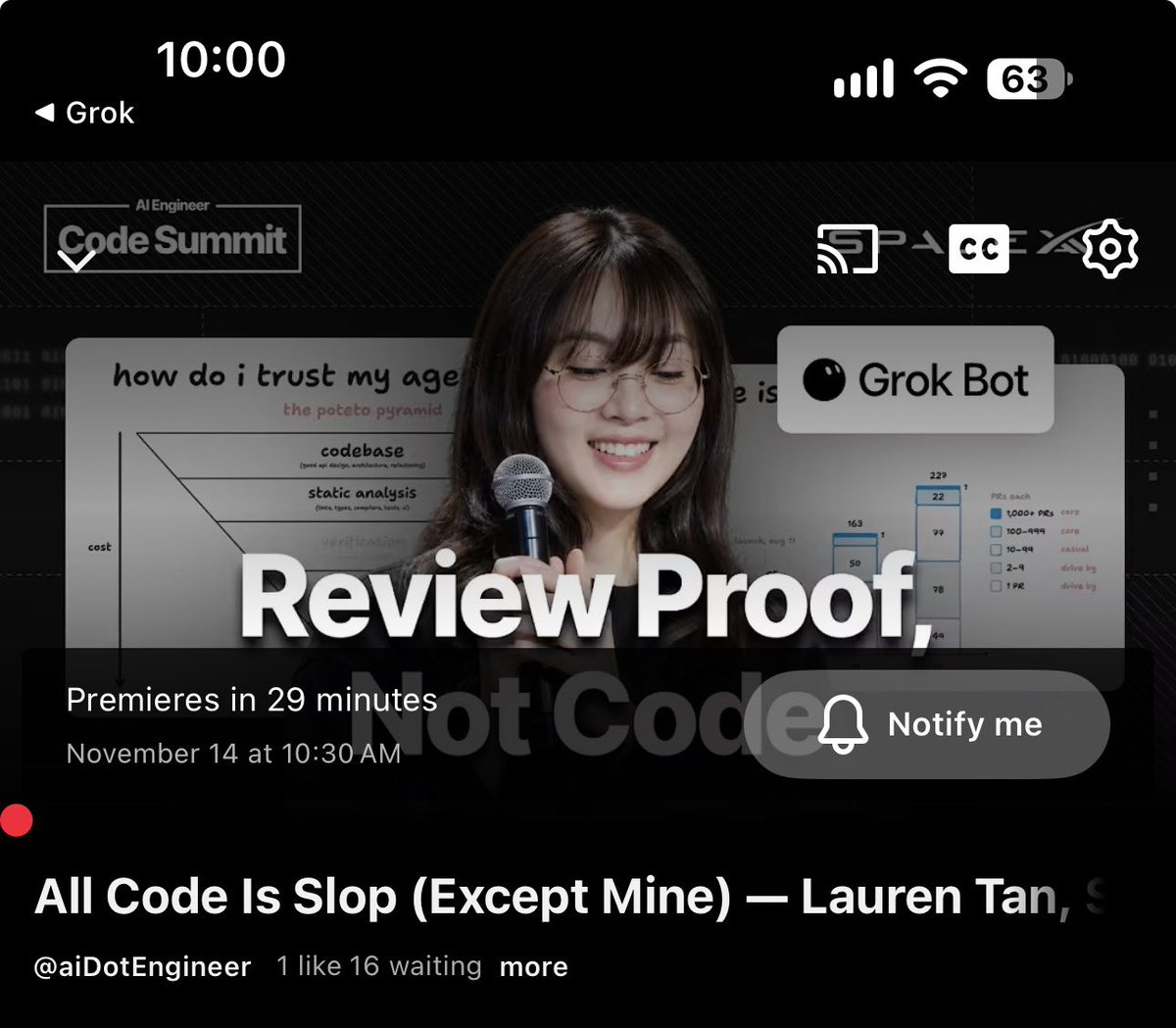
At @spacexai, Lauren Tan (@poteto) and Roman Ugarte (@romanugarte_) are on the core team that took Grok Bot from first line of code to launch in seven weeks.
It lets you spin up AI teammates with their own identities and logins, and they just keep working in the background. Their marketing team gave a bot its own ad budget. Lauren built an entire feature with her bot in one Slack thread without ever opening Cursor.
They joined us on the @LightconePod to talk about what it’s actually like working next to bots every day, and how the hard part is shifting from doing the work to figuring out what to do and why.
03:36 — Giving Bots Real Jobs
06:49 — One Bot or a Team of Specialists
10:39 — Sharing Bots Across the Company
14:46 — Identity and Permissions for AI Coworkers
18:37 — Bot-to-Bot Collaboration and Trust
22:35 — The Workflow Behind 4,000 PRs a Month
26:00 — Teaching Agents to Write Code You Trust
29:01 — Building a Personal Software Factory
33:44 — The Future of AI Coworkers
36:47 — Rethinking the AI-Native Company
40:13 — Teaching Agents to Check Their Own Work
43:56 — How Much Code Review Is Enough?
47:33 — Codebase Guardrails That Save Tokens
52:20 — When Product Judgment Becomes the Bottleneck
56:29 — From Finance to AI Engineering
quick fixes considered harmful: you might be making your agents write worse code when you ask for the smallest or quickest possible change
what seems like a harmless bandaid may lead to that pattern being copied by the next agent. before you know it that pattern has spread everywhere
we used to write bandaid fixes by hand because we rarely had the time to do the right thing. agents change this calculus. sometimes you want it to fix the root cause instead even if it’s more invasive
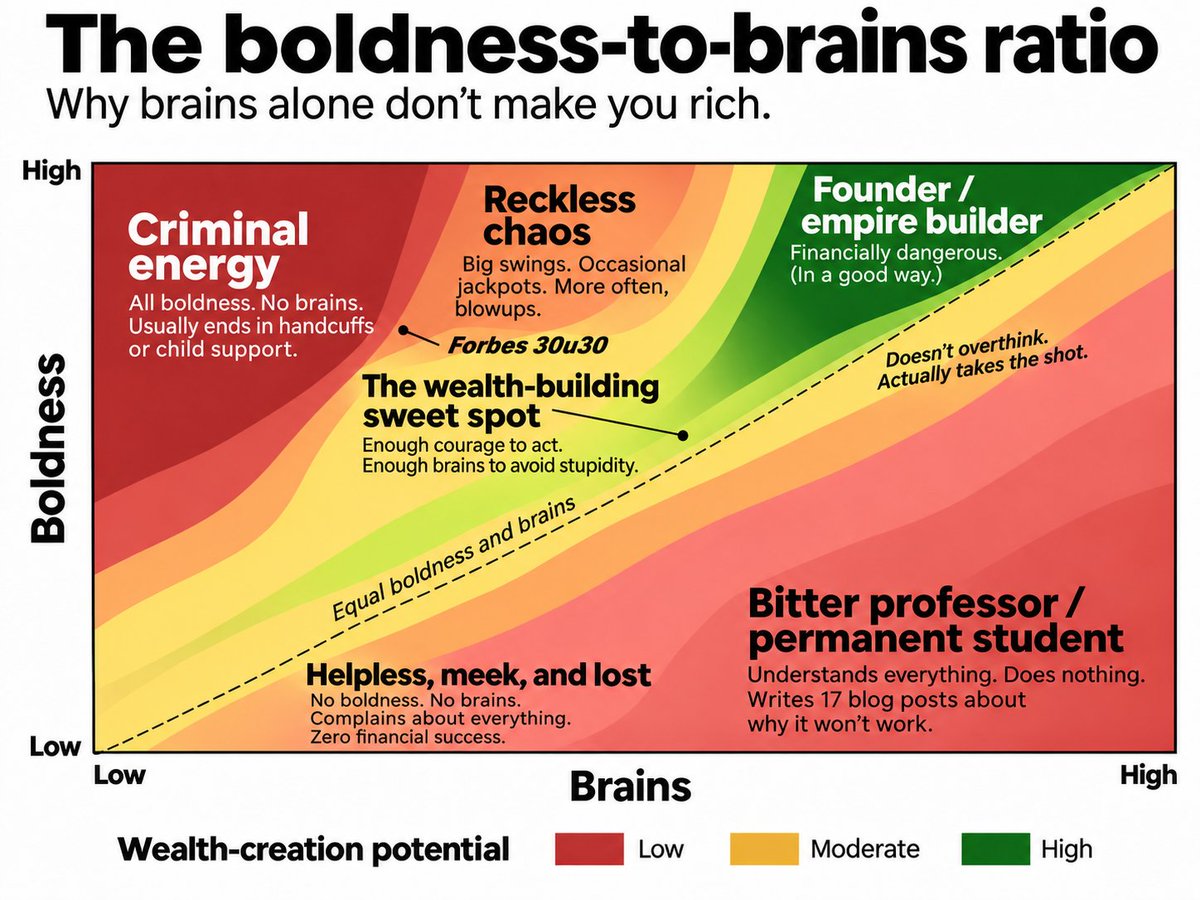
i learnt this lesson this year. it's helped me follow through on my ideas and not get stuck overthinking it
don't ask if you should do the thing. do it, then come back with a demo or something tangible
you can just do things