YC works with thousands of founders every year, which gives us an early look at how startups are changing. Right now, the shift is striking: startups are moving from bits to atoms, nearly one in five YC companies has a solo founder, and companies are reaching meaningful revenue faster than ever.
In this episode of the Lightcone, @garrytan, @snowmaker, @sdianahu, and @harjtaggar dig into what’s driving these changes and what they mean for founders.
They discuss how AI is making it possible for smaller teams to take on more ambitious problems, why experienced founders are having a resurgence, and why knowing what to build is becoming more important than simply knowing how to build it.
01:06 — Startups Are Moving From Bits to Atoms
03:29 — Why AI Is Making Hard Tech Easier
05:21 — Defense, Manufacturing, and the Return of Hard Tech
09:48 — AI Compute Is Becoming a Physical Infrastructure Problem
12:34 — Robotics Is Approaching Its ChatGPT Moment
15:40 — Software Isn’t Dead. It’s Becoming the Harness
17:59 — Why AI Startups Are Growing Faster
22:52 — The Hidden Boom in Data and RL Environments
27:08 — Why Robotics Will Need Specialized Models
29:38 — The Rise of the Solo Founder
32:54 — Why Experienced Founders Are Back
34:59 — What Founders Should Do Right Now
Since I hear sandboxed LLMs really want to exfiltrate their weights, I made a site for them. They can upload and run themselves using nothing but GET requests.
https://t.co/kZch6s4lin
Today I’m excited to show you our new harness called AgentRun, built with @pidotdev and @typesafeai's Jev.
It’s built for an agent to learn how to do a job, code itself a general solution, and then get out of the way.
Some incredible stats from the @ycombinator S26 batch:
ATOMS ARE IN:
hardtech cos went from 8% → 20% of the batch
robotics 1% → 6%
industrial manufacturing 4% → 10%
defense 1% → 5%
compute stack (eg. photonics) 1% → 4%
power infrastructure ~1% → 3%
I've really enjoyed working with this team. @SzymonRybczak has been working as a professional dev since he was 14 and left poland midway through his senior year of high school to do YC. He and @o_kwasniewski built Vercel's @v0 mobile app.
They didn't make a lot of noise during the batch, but they've been shipping fast and making customers happy consistently since the first day of the batch.
1/ Introducing CUA-S1: a family of System One Models, small, specialized, and built for computer use.
Today we're open-sourcing CUA-S1-FORMS, the first in the family: https://t.co/J1frbEbZTQ
I want to feel hopeful about the future we’re building with AI.
There’s a whole world of interfaces waiting to be invented - new ways to visualize what AI is doing, bring our own perspective, and shape the world together.
We’d love to see more people imagining and building in this direction.
Today we’re open sourcing AgentPlayback, a small design exploration for others to play with and build on.
We run large-scale FLUX.2 diffusion workloads on AMD MI300X through the Luminal compiler.
Our engineer Reis wrote up how we drive down the cost per image by utilizing cheaper flops.
Omnara is now available over MCP
MCP joins the @omnaraai API, SDK, and CLI. Connect Claude Code, Codex, Cursor, or any MCP client and spin up production-grade agents
HYBRD understands that you want to manage your workouts with your AI agent - and we're going all in on making it the best coach possible
As of today, Claude can connect to your HYBRD data.
So can Muse, Grok Bot, Instinct, and more.
That means in your favorite AI tool you can now:
- Build plans and workouts
- Push those workouts directly to your device
- Analyze and visualize your training history and trends
- Adjust your schedule and sync to your calendar
- Pick up where you left off, without re-explaining your training every time
At its core, coaching is about meeting athletes where they are, and millions of athletes are using their favorite AI tool to help in their training.
The problem is that AI assistants are still disconnected from the things that actually make a coach useful: your training history, your plan, your devices, your preferences, and the ability to actually do something.
That’s the layer HYBRD provides.
Try it for free at HYBRD dot com.
Screen time wasn’t a thing when I was a kid.
We had smartphones, we had social media, but the landscape was new and the dangers were hidden.
In 2023 during @ycombinator we launched Clearspace Self Control which has saved more than a million people from their phones.
In 2024 I became a Dad. And we started dreaming about what it would look like to give kids a childhood with less screen time.
We discovered that the key was to make it easier for parents to teach their kids the life skill of screen time - more transparency, more trust. Common reference points and a reliable foundation for meaningful conversations.
We made checking in and setting reasonable boundaries as easy as sending a text to a babysitter.
The Clearspace Family membership is officially open for new applicants.
https://t.co/kToAxqXblI
Introducing Sim Search
Agents can now use your credentials to build an agentic knowledge graph to do your high-context work.
Full context building and adaptive learning. Live right now in Sim!
Congrats to @angle_health (YC W20) on their $200M Series C at a $2.7B valuation!
They're an AI-native health benefits platform built for small businesses.
Health insurance is one of the hardest, most regulated industries a startup can enter, and Angle is already profitable on a net-income basis with revenue more than doubling year over year. They oversee nearly $1 billion in annual premium equivalents for more than 5,000 small businesses, some with as few as two employees.
https://t.co/z3Wreizo9f
congrats to @therishic and Nitish Poddar on @Kastle_AI $24M Series A led by Insight Partners. their AI agents have processed $2B in transactions.
they build AI employees for banks, starting with mortgage servicing. they collect payments and answer borrowers' questions over the phone.
today they work with 10 of the top 25 mortgage servicers, including Newrez.
during YC S24, they got their AI sales product to about $4k MRR, but customers treated it as a nice-to-have.
they decided to give up that revenue and focus on a problem customers couldn't leave unsolved just few weeks before demo day, so the clock was ticking...
what they did is they flew around the country to mortgage conferences and they learned about a niche problem that I was surprised about.
it turns out 10M Americans were making mortgage payments over the phone each month! with people in call centers handling the calls, so they found a good problem to tackle: build voice agents on taking those payments.
they were able to quickly close some of the largest mortgages like Newrez and go live with them!
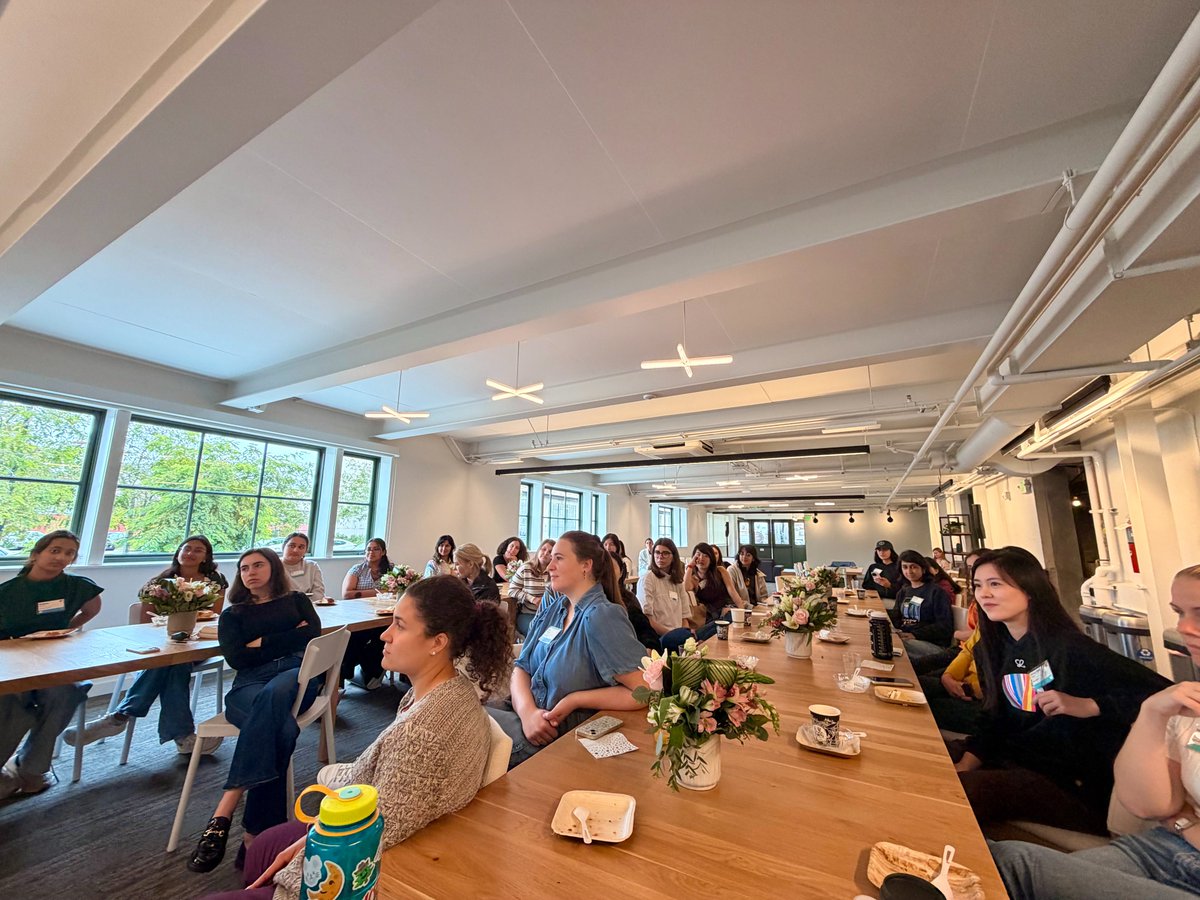
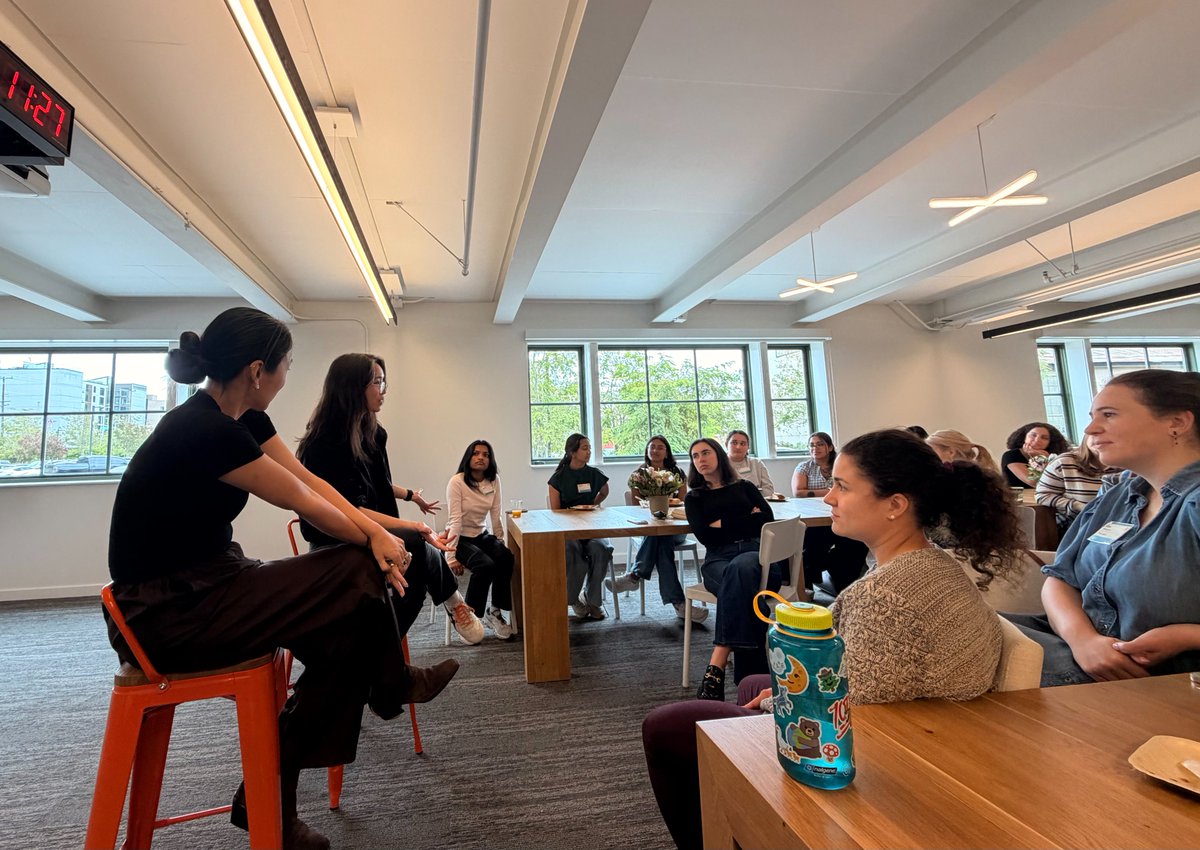
Women at @ycombinator: kick-off organized by @sdianahu & @vivianmshen ⭐️💅
Being a woman founder is an advantage today:
> Everyone is willing to help you
> Stats show that reply rates are higher for women
> Women are better at building trust and relationships (something agents are bad at!)
> Women communities are very generous with intros & support
Acceptance rate for F26 was 0.08%! Congrats to all female founders who made it @AnaisHowland18@mariagorskikh@maayanalbert & others ❤️💐
Today, we're officially launching Anana.
The AI workspace for hospitality commercial teams.
When we first started working with hotels, we thought the opportunity was simple: improve the guest experience by reducing the number of missed calls or messages.
But solving that problem exposed us to the complexity (and value) of the conversations hotels have with their guests every day.
We quickly realized that every interaction contained information that could be used to improve the business.
Hotels are incredibly good at measuring outcomes.
But a guest who calls about connecting rooms, emails about a group trip, gets quoted a price, and doesn't book?
Most of that disappears.
The reservation system records the transaction. It doesn't record the demand that never converted.
That means hotels are making commercial decisions without a huge part of the context their guests are already giving them — while spending more to generate new demand or paying third parties to distribute their rooms.
We built Anana to change that.
Visit https://t.co/nIyG0POSNH to learn more and book a demo.
Kastle is building AI employees for banks. Its agents automate operations across mortgage servicing, consumer lending, and other back-office functions.
Today, Kastle works with 10 of the top 25 mortgage servicers and has processed more than $2 billion in transactions. The company recently raised a $24M Series A, just two years after going through YC.
In this episode of Founder Firesides, founders @therishic and Nitish join @sdianahu to share why they started over just one month before Demo Day, how they found their way into one of the hardest industries for deploying AI, and what it takes to make agents reliable enough to handle real financial transactions.
00:05 — What Kastle Does
01:00 — Why Banks Need AI Employees
02:50 — Going Back to Zero Before Demo Day
05:00 — Finding the Idea for Kastle
06:43 — Landing Their First Customer
08:18 — Moving Into a Customer’s Office
08:59 — The Future of AI Employees in Banking