Completing every prescribed set is a useful measure of training consistency. It tells you the work got done. What it might not tell you is whether the session delivered the kind of training your program called for.
https://t.co/YEjUQ3t6tw
Powerlifters typically plan their competition warm-ups around the weight on the bar. There's another variable worth measuring: the time between the final warm-up and the opening attempt.
https://t.co/3LqbXfGpOT
A deadlift logged as 220 kilograms tells you the weight. It does not identify the barbell, the plate diameter, or how the bar behaved before the plates left the platform.
https://t.co/dAM6FtbfZR
Your training partner can see things you can't while you're in the middle of the lift. They can check your squat depth, watch your bench pause, or tell you whether your deadlift position changes as the weight gets heavier.
https://t.co/MSQoRIVqVC
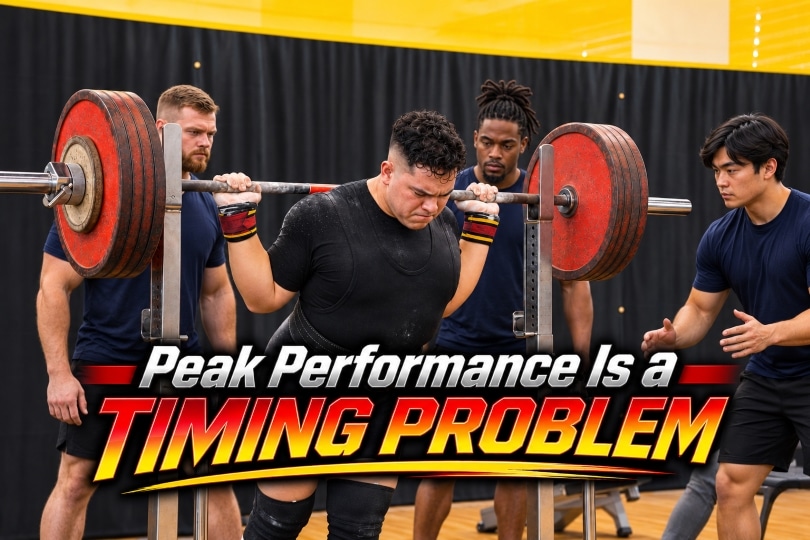
A powerlifting meet has a schedule that may look very different from your normal training week. Squats might begin at 9 a.m., bench press around midday, and deadlifts several hours later.
https://t.co/DSQIUFuIE5
Strength is one of the most accessible qualities people can develop. Wherever someone begins, there is an opportunity to improve physical capacity through appropriate training, consistent practice, and time.
https://t.co/c0KcGJOCUG
Cooking several days of meals at once is convenient, especially when training shares the calendar with work and family. A little thought about meal prep storage can make those meals easier to use throughout the week.
https://t.co/LqUPRTOV9I
A heavy squat has one more job after lockout: getting the bar safely back onto the hooks. That short trip deserves some practice.
https://t.co/GNjTMHYlhF
Recovery usually begins with familiar things: sleep, nutrition, rest days, and sensible training loads. Yet there is another kind of rest worth exploring.
https://t.co/UTxIMb1GYK
Reese Benson and Lisa MacDonald topped the men's and women's standings at the 2026 World Powerlifting Organization (WPO) Pro Super Finals on October 18 at York Barbell in York, Pennsylvania.
https://t.co/YQQCOEFKB6
Most powerlifting programs do not become crowded all at once. They become crowded one “useful” addition at a time.
A new squat variation looks promising, so it gets added. Then a second bench accessory. Then extra hamstring work.
https://t.co/g8mCyLxBGV
A strong bench press begins with a solid setup. Feet planted, upper back positioned against the bench, grip established, and the body ready to support the weight.
https://t.co/Ye6Q9i5QlP
Powerlifters usually think of readiness as something they either have or do not have. In competition, readiness is more precise than that.
https://t.co/Lt85ZoHIpr
A powerlifter can manage sets, repetitions, and intensity perfectly while still overlooking how often the same joint is being challenged across the week. Elbows, knees, and hips do not experience exercises as isolated entries in a program.
https://t.co/yckI6nDx8p
Powerlifters learn to embrace the hard work. We show up, challenge ourselves, and pour our energy into becoming stronger. There is something beautiful about that dedication.
https://t.co/odxxHm0qFg
Plate pinches, heavy holds, and thick-handle exercises can all help build grip strength. The problem comes when that extra work starts getting in the way of deadlifting.
https://t.co/YYpBHfQqec
A little common sense goes a long way in the gym, especially when heavy weights are involved. Keeping the floor clear, the spotters organized, and the equipment where it belongs makes training safer and saves everybody a whole lot of aggravation.
https://t.co/xsKnWuPuwQ