Most of us agree that too much inequality is bad—but what kind of equality is good? In this week’s @NewYorker, I write about the philosophy of egalitarianism, which is full of puzzles, contradictions, and insights: https://t.co/l8TshJBYO8
“As another season of last-minute U.S. Supreme Court opinions are handed down, Americans are faced with a perennial question: how much compliance is obligatory and how much room is there to disagree?” https://t.co/I8iZbVhH4l
It should be clear by now that SCOTUS’s power is no longer merely interpretation but national policymaking in nature, with all of the hopes, dreams, and demands for accountability that that entails.
They’re not “purely” political actors. But they nevertheless are quasi-political actors. So long as judges are selected and socially disciplined through partisan methods—and continue to enjoy the equivalent of national policymaking power—any other description is misleading.
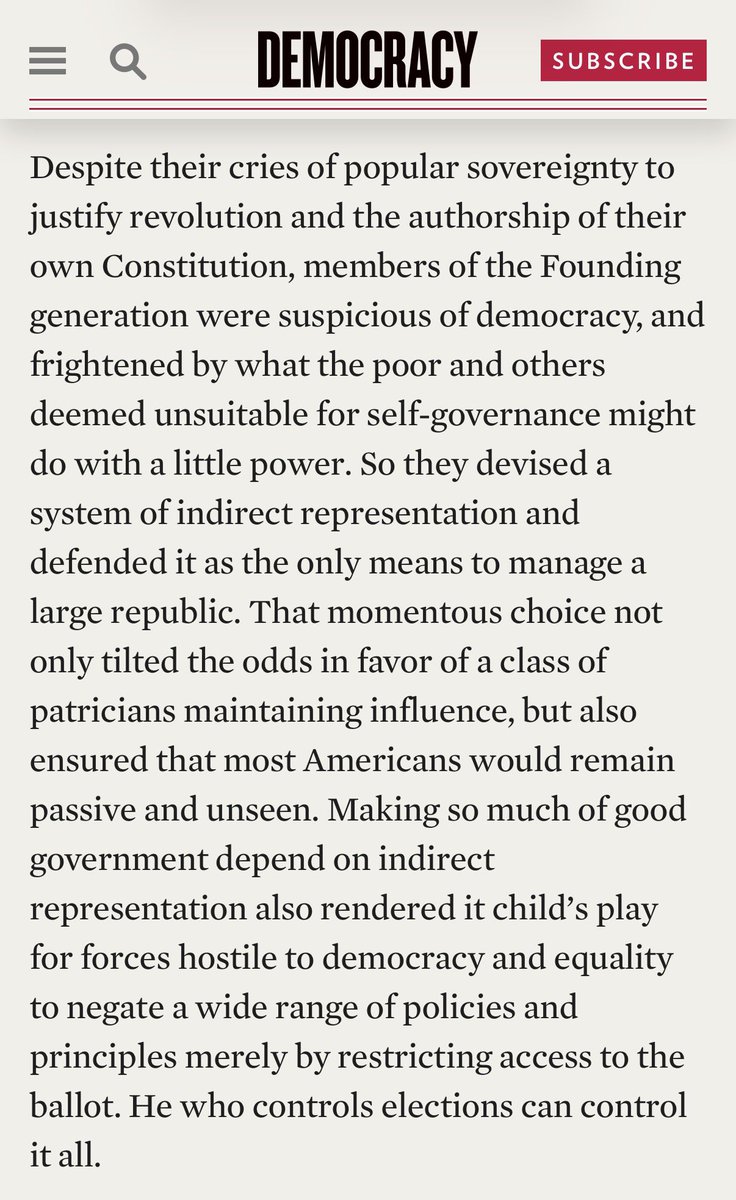
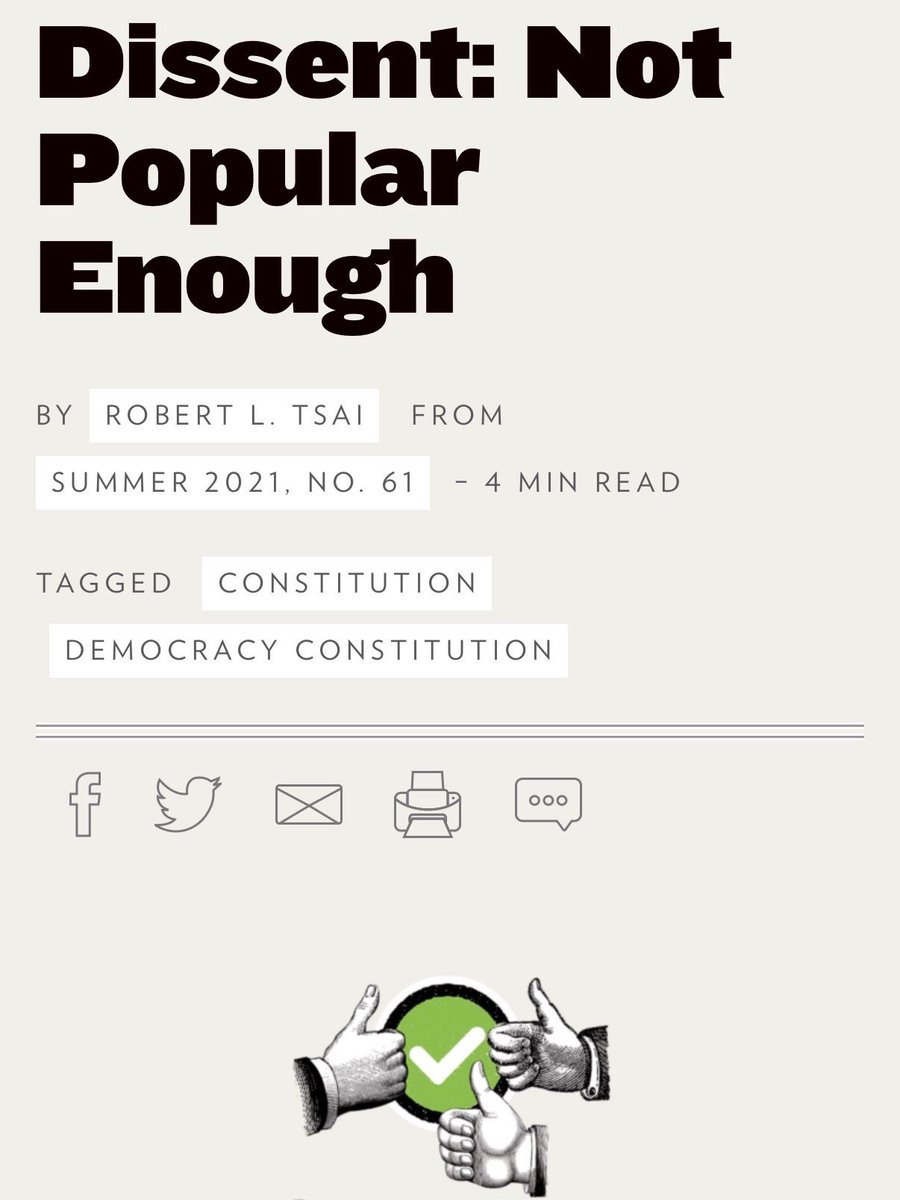
Partisan and racial gerrymandering is exploding around the country. Our national government is becoming less representative than ever. I’m reupping my @DemJournal essay on the Founders’ essential mistake, “Not popular enough”
Excellent news—this is the kind of lasting pro-democracy reform a true opposition party should be championing. I wrote about Virginia’s role in distorting democracy through felon disfranchisement in @PracticalEqual:
Unelected jurists over time have destroyed a tremendous act of popular sovereignty and engine of pluralistic democracy, turning it into a historic relic.
“John G. Roberts Jr. has cultivated a reputation for care and caution. The papers reveal a different side…At a critical moment for the country and the court, the papers show, he acted as a bulldozer in pushing to stop Mr. Obama’s plan to address the global climate crisis”