This made me cry inside the Briefing Room of National Media Centre, New Delhi. As a victim of Islamist terror sponsored by Pakistan in Kashmir myself, there is only so much one can control emotions. Rememberour 26 civilians who we lost in Pahalgam. Never forget. Never forgive. 💔
What did you do in your teens? Bulandshahr's Yogendra Yadav joined the army a few days short of his 17th birthday, following in his father's footsteps.
On the night of July 3rd 1999, still not twenty, he was a part of the 18 Grenadiers, who were to attack the bunkers of Tiger Hill from the rear, while the Naga and Sikh battalions mounted diversionary attacks.
His Ghatak platoon climbed a sheer face, with Grenadier Yogendra Singh Yadav in the lead tasked with fixing the ropes for the rest to follow. They were immediately hit by intense automatic grenade and rocket, killing their commander, and the attack was stalled.
Yadav continued climbing towards the enemy positions. Lobbing grenades and continuously firing from his weapon, he killed four enemy soldiers in close combat and silenced the automatic fire.
He took 17 bullets, but refused to be evacuated till the Grenadiers took Tiger Hill.
The story didn't end there. They announced that Yadav had succumbed to his wounds in the attack, while he was actually recuperating in Delhi. It was another Yogendra Yadav, part of the same platoon who had unfortunately perished in the attack.
Sanjay Kumar, Yogendra Yadav and Bana Singh are the only living recipients of the Param Vir Chakra, and two of them won it for their actions on the morning of July 4th, 25 years ago.
The University of Chicago is home to one of the world's great collections for the study of South Asia. There are over 700,000 volumes related to Southern Asia there, covering all the languages and dialects of the region. How these vast collections came to be is a story not told often, perhaps because it’s unflattering, and involves an ironic twist of fate.
Once upon a time (in the early 1950s), after a series of bad monsoons, India was grappling with grain shortages so severe that the fledgling government feared a ghastly sequel to the Bengal famine of 1943. We needed grain, desperately. But there was no foreign exchange to buy it, even if it were available. The United States, due to a happy mix of historical and geographical circumstances, was awash in wheat, producing far more than it could consume or even sell.
Enter PL 480, or Public Law 480 of the 83rd Congress. Under this law, the United States provided wheat to India (and other nascent nations), in periodic shipments, accepting payment in local currency. Thus began what was disparagingly called the “ship-to-mouth” phase of our economy. It’s a phrase that is seared into our collective memory.
The arrival of these ships was breathlessly reported on the airwaves and made headline news. Their timely docking would defer the prospect of food riots by another shipping cycle.
Many commentators around that time claimed that the wheat sent to India was “fit enough only for pigs!” Large swathes of India had only rice eaters and despite repeated pleas, the U.S. grudgingly offered only a small quantity of rice. Resulantly, the South Indian diet, rooted in a tradition of rice, had to make way for foreign wheat.
The payment in local currency, charmingly called “interest payable by the Government of India on the wheat loan of 1951”, was parked in a special RBI account. A large part of the said rupees was earmarked by the United States for “cultural exchange”. This phrase, dripping with diplomatic niceties, translated to buying Indian books for American libraries. The brief from the Library of Congress was to acquire every currently published monograph/book/periodical/journal/document/map etc. of research value. The grand idea was to trade mid-western wheat for anything and everything that was published on the Indian sub-continent, in any language.
By January 1962, the PL 480 library program for India was in full swing. A Library of Congress field office in New Delhi sprang into action, successfully channelling vast quantities of literature to U.S. research libraries at both public and private universities. The collections amassed under PL 480 now rank among the world’s largest in area studies literature. A total of 46 libraries, alongside the Library of Congress, reaped the benefits, with an additional 300 libraries receiving English-language publications. Among the chief beneficiaries was the University of Chicago, handpicked by the Library of Congress.
Policymakers also involved the CIA in PL 480 acquisitions, ostensibly to meet its need for foreign literature for intelligence analysis. A declassified memo from April 1962 revealed that the CIA was snapping up less than half the total literature and titles that PL 480 funds were procuring from India, Pakistan and the UAR (Egypt).
PL 480 was like a Trojan horse draped in diplomatic finery that went back and forth on a conveyor belt. Clearly, every librarian and field office employee wasn’t a pawn of imperialism or Cold War machinations. However, the fact that early proponents of the acquisitions program saw it as an instrument in the intellectual Cold War cannot be ignored.
So, the next time you find yourself in the hallowed halls and library stacks of an American university, remember this: the volumes of Indian thought and culture and history you see owe their existence to a clever little law and a wheat deal that swapped excess American grain for an incredible bounty from South Asia.
"আমাৰে সখিয়া আকুল বিয়াকুলে....."
This beautiful scene from Amguri Lower Primary School where a group of students of the school sung this beautiful song along with teachers.
Truly heart touching 💗💗💗
#Assam#BeautyOfAssam
Leander Paes is fifty today. Though his 13 grand slam doubles titles, won in 3 different decades make for a glittering career, what makes him really special is how he played when he donned the tricolour, whether it was at the Olympics or the Davis Cup
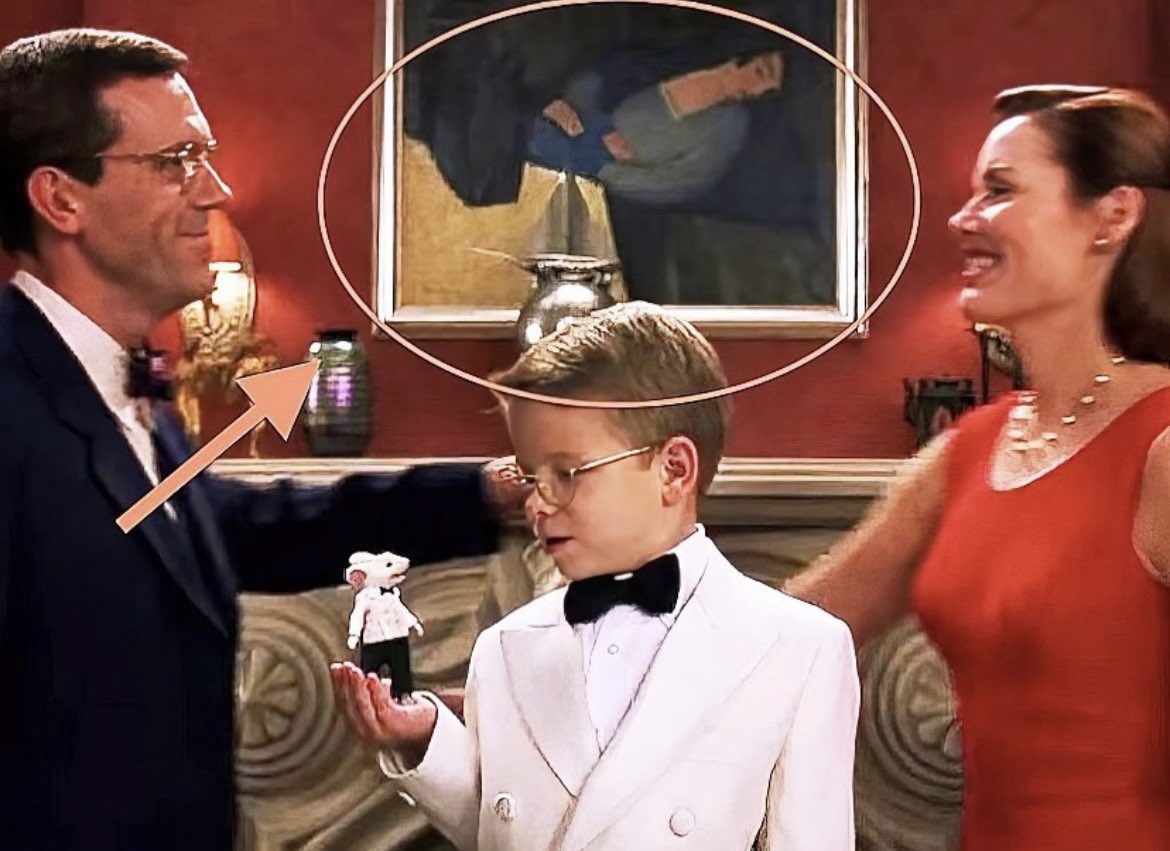
In 2009 while watching "Stewart Little" (1999), Hungarian art historian Gergely Barki saw the painting "Sleeping Lady with Black Vase" by Róbert Berény. It had been missing for 90 years and had been used as a prop. It was the original.
The painting disappeared in the 1920s, but Barki recognised it immediately even though he had only seen a faded black-and-white photo from an exhibition in 1928.
He sent a flurry of emails to staff at the film's makers, Sony Pictures and Columbia Pictures, and received a reply from a former set designer on the film - two years later.
"She said the picture had been hanging on her wall," Barki said.
"She had snapped it up for next to nothing in an antiques shop in Pasadena, California, thinking its avant-garde elegance was perfect for Stuart Little's living room."
This convoy was led by the Indian Defence Attaché, who was in continuous touch with IAF authorities all along, till they reached the airstrip at Wadi Sayyidna. The airstrip in question had a degraded surface, with no navigational approach aids or fuel, and most critically or landing lights (that are required to guide an aircraft landing at night): Indian Air Force
“Trees are the poems that the earth writes upon the sky”
Hear them speak when air passes through them.
They are like hermits with sparks & fires hidden in them still standing quiet as axes fall on them.
If I were a tree, I’d have no reason to love a human.
And, still they do.
Kerala's 104-year-old Kuttiyamma beaming with joy after scoring 89/100 in the Kerala State Literacy Mission's test. Never too late to chase your dreams!❤ #inspiration