In southern Ukraine 🇺🇦, Russian 🇷🇺 forces continue their offensive from Hulialpole to Orikhiv, a strategic town
I mapped more than 1 400 Russian airstrikes, supporting multiple offensive axes in May, while Ukraine nearly finished its fortifications.
🧵THREAD🧵1/16 ⬇️
Canada is exploring a mixed fleet of F-35s and Gripens. @justinmassie1 and Richard Shimooka discuss the potential implications, including NORAD and NATO roles, integration challenges, and continental defence. https://t.co/jyk8MsP0F0
The CAF wants UGV, and it wants a lot of them. We got a new RFI For Unmanned Ground Vehicles released the other day, and I am quite happy with it. It's the fifth UGV RFI of the last few weeks, so let's talk about it.
https://t.co/tNpfpD21vv
👀 Rongsheng Petrochemical Co., already the biggest buyer of crude from Canada’s Trans Mountain pipeline, is weighing an agreement to buy oil from Alberta’s proposed million-barrel-a-day pipeline to British Columbia
https://t.co/LEnRGP003l
"If there is a lesson from Weimar, it’s that people turn to radical politics in times of despair, when they lose trust in established institutions, parties and leaders to deal with the crises affecting their lives. The way out of this is not to tell people that their concerns are irrational."
My weekend essay @Bloomberg👇
https://t.co/Xzf3EqzhUC
⚡️ Budapest has reached an agreement with Kyiv on the rights of the Hungarian minority in Ukraine.
This opens the way for Ukraine’s EU accession. Hungary will no longer block it.
Safety at sea starts here. 🛥️
With our fleet specifically designed for search and rescue — built to respond quickly and operate in extreme conditions — we’re always at the ready. 💪
82 years ago today, eight American sailors jumped onto a sinking Nazi submarine in the middle of the Atlantic.
What they pulled out of it changed the war. And the Navy buried the whole story for years.
First, you need to know that U-505 was already cursed. German sailors called her the unluckiest boat in the fleet. In October 1943, during a brutal British depth-charge attack, her own captain shot himself in the head in the control room, in front of his crew. He remains the only submarine commander in history known to have killed himself underwater in combat. His second-in-command calmly took over, rode out the attack, and sailed her home.
Eight months later, her luck ran out completely.
June 4, 1944. Two days before D-Day. Captain Daniel Gallery's hunter-killer group, built around the escort carrier USS Guadalcanal, had been stalking U-boats off West Africa. Gallery had an idea his superiors considered borderline insane: don't sink the next one. Capture it. No US Navy crew had boarded and taken an enemy warship on the high seas since 1815.
The destroyer escort USS Chatelain caught U-505 on sonar and fired a salvo of hedgehog bombs. The U-boat broke the surface 700 yards away. Gunfire raked the conning tower, wounding her captain. He gave the order to abandon ship.
The Germans rushed out so fast they botched the scuttling. The sub was flooding, but her engines were still running. She was circling the battle at six knots, empty, sinking, and very possibly rigged with demolition charges.
So Lt. Albert David and eight men from USS Pillsbury chased her down in a whaleboat, leaped aboard, and climbed down the hatch into a dark, flooding submarine that could explode or go under at any second. They shut the scuttling valves, disarmed the charges, and stopped the flooding.
Down there they found the prize: Enigma cipher machines and roughly 900 pounds of codebooks and charts. Current settings. The keys to the German navy's secret communications.
But here's the catch. The treasure was only valuable if Germany never found out. One leak and Berlin changes every code overnight.
So the Navy ran one of the great cover-ups of the war. The sub was towed 1,700 miles to Bermuda and given a fake American name: USS Nemo. Around 3,000 sailors were sworn to total silence. The 58 captured German crewmen vanished into a POW camp in rural Louisiana, hidden even from the Red Cross. Germany declared U-505 lost with all hands and notified the families. The dead men were alive in Louisiana, and their boat was working for the US Navy.
The secret held until the war ended.
Lt. David received the Medal of Honor, the only one awarded in the Atlantic Fleet in all of WWII.
And the submarine? In 1954, Chicagoans raised $250,000 to bring her home. She was towed across Lake Michigan and dragged through the streets of Chicago to the Museum of Science and Industry.
She's still sitting there right now. You can walk through her.
A wonderful Canadian example of vernacular sacred architecture, echoing an igloo.
I’ve had the privilege of worshipping there. A lovely Church with a vibrant community.
The EU should think bigger the same way the United States and China do when it comes to trade, markets and geopolitical power.
Canadian accession to the European Union would be enormously beneficial for both sides.
For Canada, it would mean direct access to the world’s largest single market and a massive diversification away from the United States.
As the Trump administration already showed, Washington can threaten tariffs overnight and when more than 70% of your exports depend on one market, that threat directly hit your currency, companies, workers and entire trade balance.
A deeper EU relationship would allow Canada to expand exports into a market of 450 million people, reduce dependence on U.S. trade policy and strengthen its long-term economic sovereignty.
For Europe, Canada would bring exactly what the EU needs: critical minerals, raw materials, uranium, food security, potash, aluminium, advanced industry, Arctic access and a stable democratic partner.
At the same time, Europe is trying to reduce its dependence on China for critical raw materials and on unstable suppliers for energy and industrial inputs.
European integration with Canada would strengthen both.
Russia's southern logistics depend on three towns: Chernihivka, Kamianka, Rozivka. Four field armies receive supplies through them. All sit astride a railway.
Ukraine's drone campaign hunts Russian trucks on the deep highways—150 km from the front. The farther back you hit, the bigger and less protected the cargo. "They simply cannot secure all these logistics routes," one Ukrainian officer said.
But the 1 June strike near Chernihivka hit a different layer. The last-mile chokepoint. Trucks have to converge on those three towns to deliver. There's no alternate route for the final kilometers.
1,391 trucks destroyed in three days. Now Ukraine is targeting where they arrive. https://t.co/fKP9gC1NFx
Based on @DrnBmbr map, multiple gas station are out of use (red), while multiple other ones (orange) are limitating the gas sold.
The situation is impacting both the military and the civilian businesses, further complicating logistics.
Ukraine 🇺🇦 continues to launch an important number of mid-range strike, targeting Russian 🇷🇺 logistics in occupied territories
Since early may, more than 270 trucks have been hit, together with multiple fuel depots and trains.
🧵THREAD🧵1/14 ⬇️
Worst energy shock in history transpiring; inventories about to bottom; Germany buying BC LNG; South Korea, India and China all come to Canada in the same two week period asking for oil and gas; TSX O&G index up 35% YTD.
The Canadian Left:
🤡
EXCLUSIVE: Hungary has signaled it will drop its long-standing opposition to Ukraine’s bid for EU membership, allowing it and Moldova to begin formal negotiations to join the bloc in the coming days, four diplomats told POLITICO. https://t.co/B4jaW4lByv
Did you know that a Canadian named James Campbell Clouston played a critical role in the 1940 Dunkirk evacuations?
Read more in my latest Legion Magazine article, part two of an interview with biographer Brian Jeffrey Street.
https://t.co/OrlA2C5OGg
📸 Norman Wilkinson/IWM.
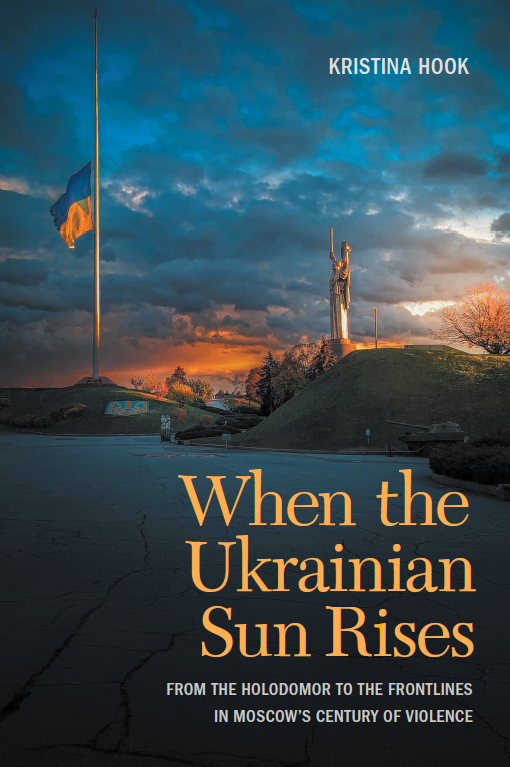
Why did Ukrainians recognize Russia’s war as an existential threat long before much of the world?
Since Moscow’s 2014 invasion, I’ve traveled Ukraine asking this question.
10 yrs in the making, my new book When the Ukrainian Sun Rises is now open for pre-order @Georgetown_UP
When Ukraine destroys the Trans-Siberian Railway Bridge in the Siberian city of Krasnoyarsk the Kremlin will be in trouble. It’s only a matter of time. ⏳