After years of hard work, our team has built something special!
A platform that solves the biggest pain points of modern investors & traders.
Here’s why @stoxkartonline stands out from the crowd:
🧵👇
That patience is the actual advantage here, the kind of capital built to fund a bet this slow.
Founders raising money today are asked to show traction every quarter.
Would you take a check that ran on a longer clock?
Five years ago, India committed ₹76,000 crore to a chips policy. This July, it committed a trillion.
India approved Semicon 2.0 on July 15. ₹1.275 trillion, roughly $13.2 billion, spread across chip design, fabrication, display manufacturing, packaging, specialty materials, R&D and talent development.
Here's what's already on the ground: 🧵
Private capital runs on a different clock. A VC fund wants a markup by year three. A growth investor wants an exit path by year five. Every check in the startup world carries that timeline with it.
A government funding a chip ecosystem operates on its own clock. It can fund equipment suppliers, specialty chemical makers, and the talent pipeline years ahead of any of them showing up on a P&L.
1 lakh+ clients traded commodities through Stoxkart in FY25-26.
And interestingly, MCX recognised that milestone before we announced it.
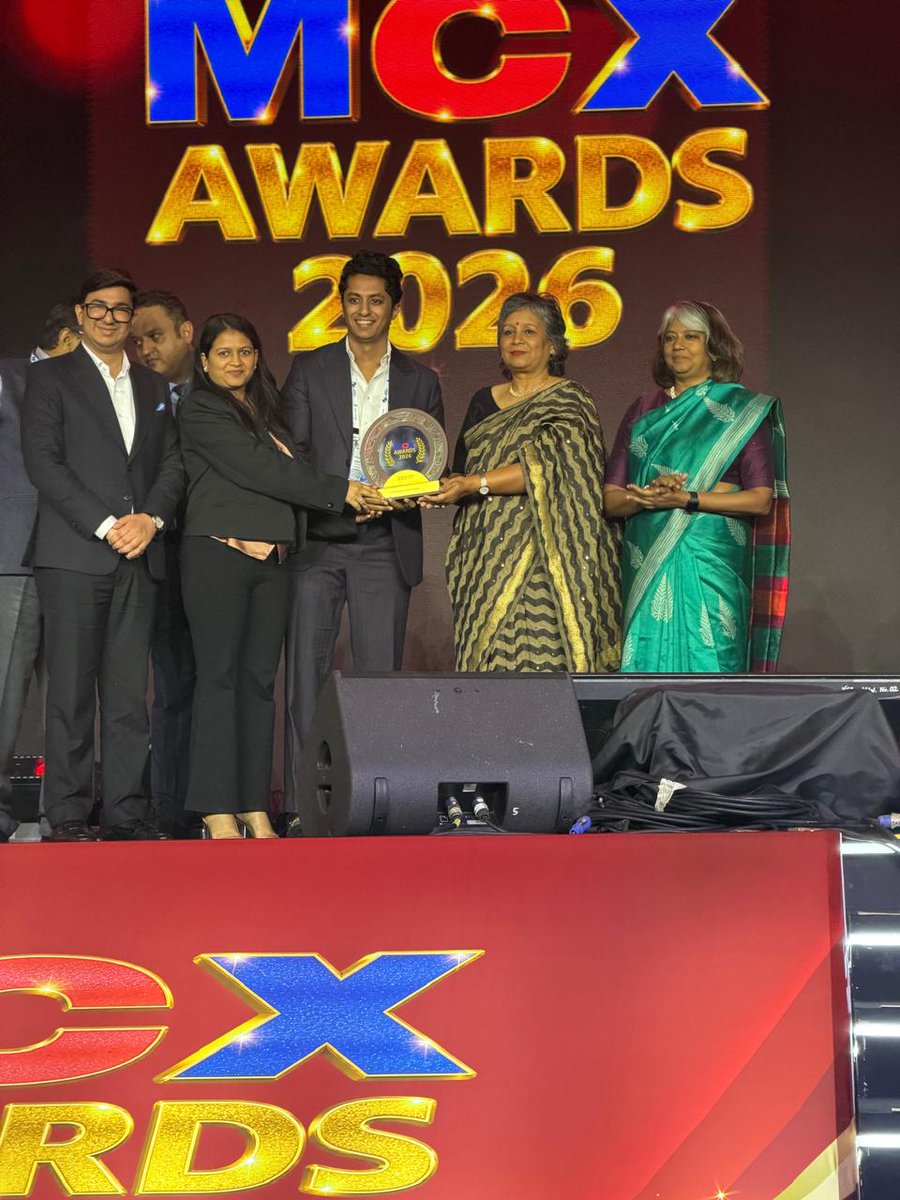
Last week, at the Jio Convention Centre in BKC, I had the privilege of receiving the MCX Award recognising @stoxkartonline as a Leading Member in terms of UCC for FY25-26, presented by Praveena Rai, MD & CEO, @MCXIndialtd .
For those unfamiliar with it, UCC stands for Unique Client Code. It is the identifier through which clients are enabled to trade on the exchange, making it an important measure of participation in the commodity segment.
For Stoxkart, reaching 1,04,000 commodity UCCs is a milestone we’re particularly proud of.
Commodity trading has its own learning curve, and building participation in this segment takes time. This number represents a journey we’ve built quietly, one client at a time.
Holding the award was special, not simply because of the recognition, but because I know the years of work, persistence and commitment that went into getting here.
A heartfelt thank you to MCX for the recognition, to our clients for placing their trust in us, and to the entire Stoxkart for everything that made this possible.
We’ve come a long way, but there is still so much more to build.
More clients to serve. More markets to make accessible. And many more miles to go
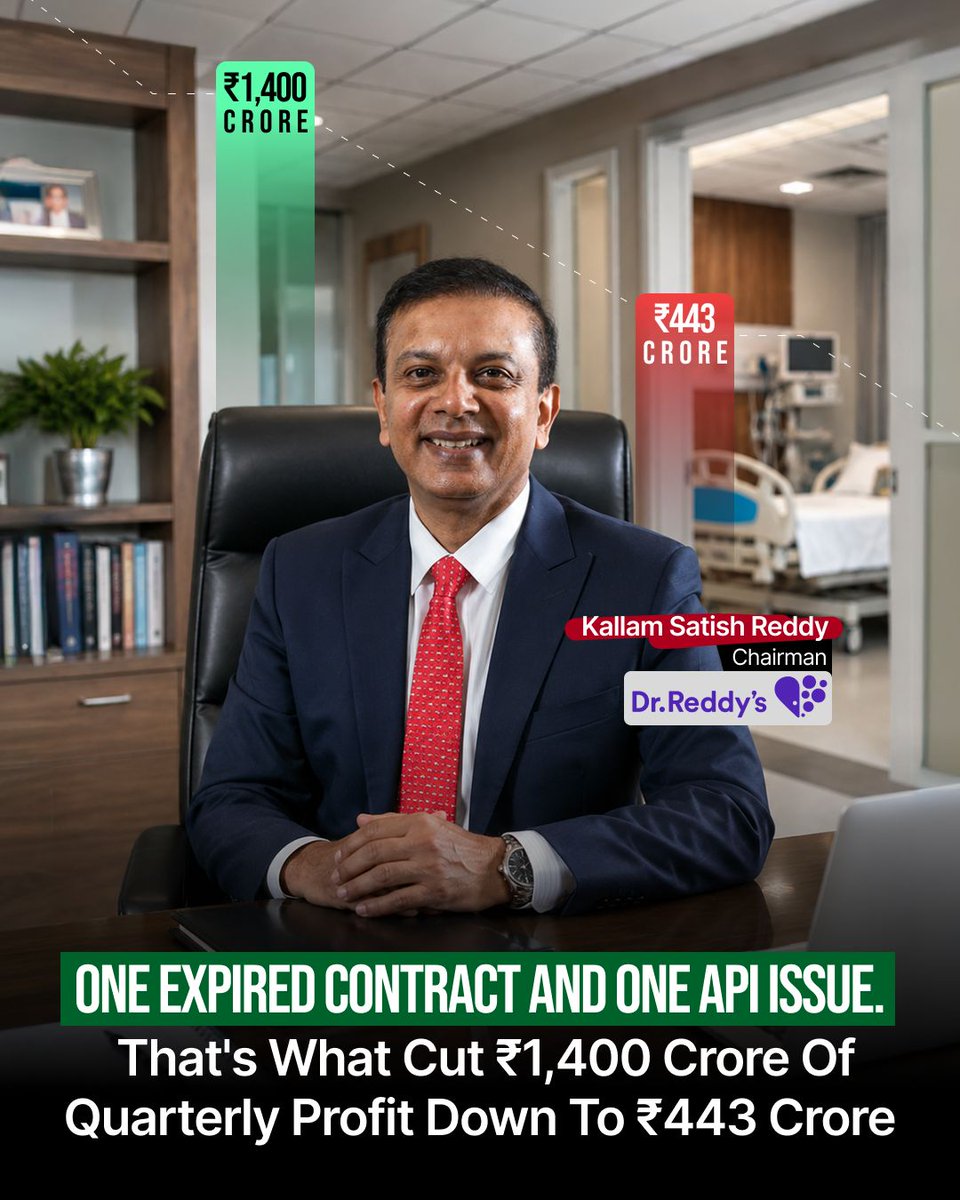
Dr. Reddy's sells medicines in dozens of countries. One product line still decided its entire quarter.
I read the Q1 FY27 numbers this week. The company looks diversified on paper. The profit number tells a different story.
Net profit fell 69% year-on-year to ₹435 crore. Revenue slipped about 5.5% to roughly ₹8,070 crore. The stock fell as much as 9% the next session, to a fresh 52-week low.
Here's what actually caused it:
→ A four-year exclusive agreement on lenalidomide, a high-margin generic, ended in January
→ A quality issue in its semaglutide API line forced a production halt
→ That halt led to a ₹240 crore provision, on a drug the company was counting on as its next growth driver
As a CA, this is the part I'd flag to any operator reading these results. Diversification protects you from broad market risk. It does very little when a single high-margin product line runs into trouble, because that one line was probably carrying more of the profit than the balance sheet made obvious.
Most businesses have a number like this hiding somewhere, however spread out they look on paper. Founders rarely find it until it moves.
Do you know which single product or client could do this to your own numbers?
Two numbers on Ola Electric look wrong next to each other. The contradiction is the whole point.
Start with the number everyone is quoting. Ola's market share in calendar 2026 sits at roughly 7%, down from around 26% a year ago. It has slipped to fifth place behind TVS Motor Company, Bajaj, Ather Energy, and Hero's Vida, the only top-five brand whose volumes declined year on year.
And yet Q1 FY27 tells a different story. Registrations came in at 43,719 units, nearly double the 22,252 from the prior quarter.
→ April: 12,166 units, up 20% month on month even as the broader market contracted 22%
→ May: up another 23% month on month
→ June: 16,144 units, strongest monthly performance in recent quarters
Both numbers are accurate. They are just measuring different things, and I think most commentary this week is picking one and ignoring the other.
Market share is a trailing number.
It tells you where you stood while you were rebuilding. Sequential registrations are a leading number; they tell you whether what you changed is actually working.
I track both in our own business every month. The annual comparison tells me the story of decisions made 12 months ago. The monthly sequential tells me whether this quarter's decisions are landing.
When these two move in opposite directions, the useful question is not which one is right. It is what specifically changed last quarter that the annual number cannot show yet.
For Ola, that answer sits in the operational data. Gross margins at 38.5% in Q4 and monthly opex cut from ₹178 crore to ₹105 crore. A recovery that held even when the broader market softened. That is a different story than the share chart alone tells you.
If you track a business through a rough patch, which metric do you watch more closely, trailing share or sequential volume?
There’s a different kind of satisfaction in seeing years of hard work turn into a moment of recognition.
At the MCX Awards 2026, Moneywise Finvest Ltd. (Stoxkart) was recognised as a Leading Member in terms of UCCs.
@HDFC_Bank just raised $750 million. It is already back for $1 billion more.
In June, HDFC Bank priced its tightest-ever dollar bond. By August, @ICICIBank and @AxisBank had already returned to the market. HDFC is reportedly lining up $1 billion more.
@Bloomberg reported this week that five private lenders are lining up to raise as much as $3 billion overseas.
→ HDFC Bank may raise up to $1 billion
→ Federal Bank, @KotakBankLtd , @rblbank , @YESBANK are evaluating $250 to $500 million each
→ RBI is fixing hedging costs on eligible overseas borrowing at 1.5% a year, but only for inflows that land by December 31
→ FCNR deposits from NRIs: rates up to 6.25%, window closes September 30
The easy read is that Indian banks are confident enough to return to global capital markets on attractive terms.
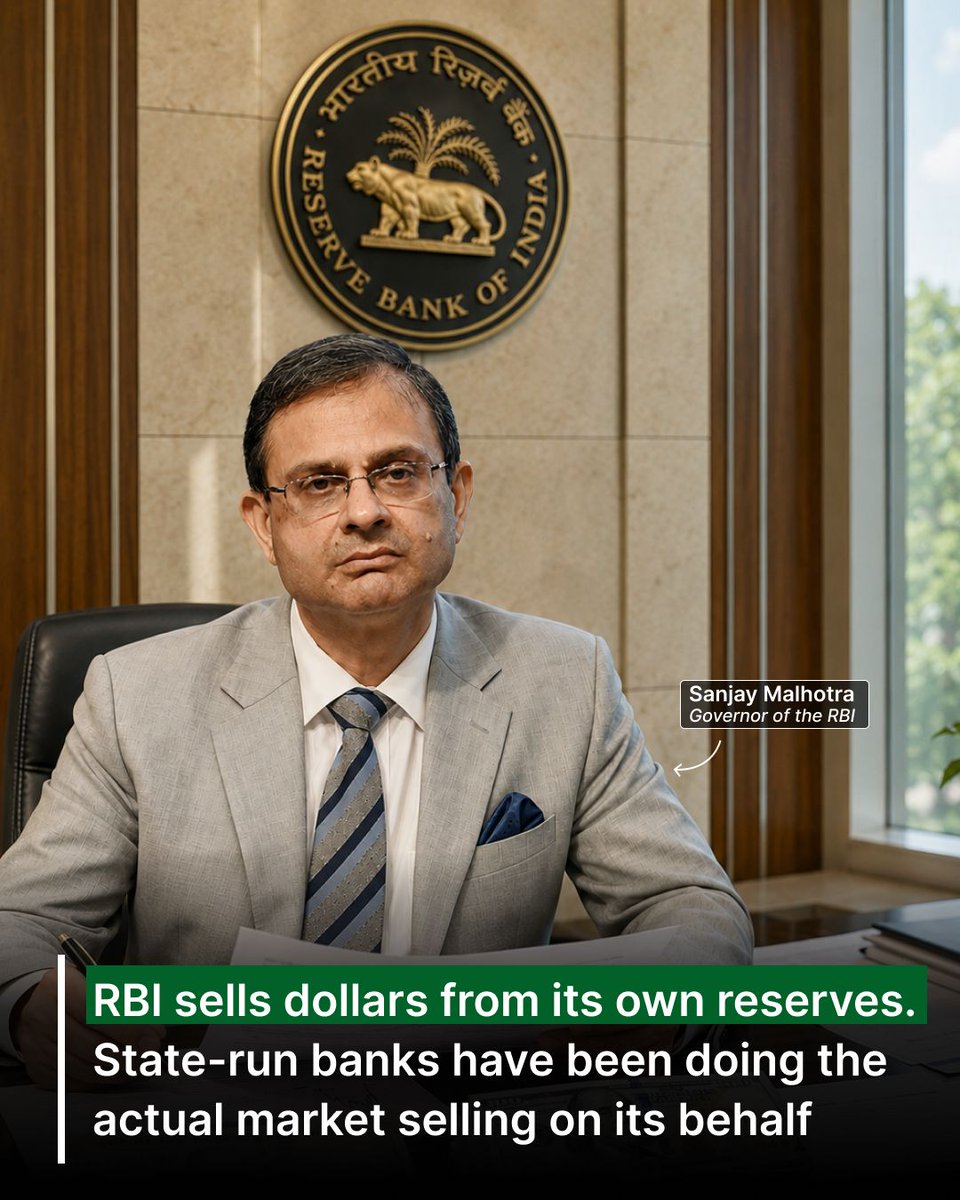
I read it as something narrower. The rupee has been trading near 95 to 96 to the dollar this year, close to its weakest levels on record, and RBI has been selling dollars through state banks to slow the fall.
Instead of spending more of its own reserves, RBI made two specific channels artificially cheap, for a fixed window. Banks are not raising this money because the mood improved. They are raising it because the discount closes soon.
A regulatory circular reads like a P&L line. When one item suddenly gets subsidised, that tells you where the real pressure is sitting, long before it becomes a headline.
Which regulatory window are you watching closely before December?
The government set LIC's floor at ₹382. Within the first trading hour, the stock touched ₹390.50.
I watch OFS transactions from the broking side, and this one is not just about LIC. It is about how buyers read seller motivation in real time.
The government needs to sell because SEBI's minimum public shareholding deadline is May 2027, and LIC is still 96.5% government-owned.
Here is what this OFS actually looks like:
→ Floor price: ₹382, a 10% discount to Monday's close of ₹424.35
→ Stake on offer: up to 6.5%, bringing government holding from 96.5% to 90%
→ Amount to be raised: nearly ₹31,000 crore if fully subscribed
→ Same government, same asset, four years ago at IPO: ₹949 per share
And yet the stock fell anyway.
That is supply overhang playing out live, not as a concept. The market is not pricing in the additional shares alone. It is pricing in the fact that the seller has to sell.
There is a difference between a company raising capital because it sees an opportunity and a government divesting. After all, a regulator set a deadline. Institutional buyers read that difference immediately and bid accordingly.
When the market can read the seller's motivation more clearly than the buyer's conviction, the price is the verdict on that motivation.
For fund managers or institutional investors reading this: how do you factor in seller motivation when bidding on an OFS?
SEBI fined Zee ₹1.48 crore for a pledge. Three days earlier, shareholders had approved ₹3,143 crore.
I have seen this pattern in regulated businesses: not every liability sits on a balance sheet. Some sit in audit flags that went unresolved, in disclosures that got deferred, in decisions that felt manageable at the time.
What I find striking about the Zee case is how clearly it shows what that actually costs.
In December 2018, Zee's Hyderabad land was pledged to secure ₹726 crore in loans for Essel Group entities without the board, audit committee, or shareholders knowing. Deloitte flagged missing title deeds in the FY19 audit.
he company's CEO-CFO certifications for FY19 and FY20 stayed silent on it, SEBI's order alleges.
Seven years passed.
On July 31, 2026, shareholders approved a ₹3,143.5 crore promoter fund infusion:
→ Subhash Chandra's stake: from 4% back to nearly 24%
→ One day later: a 150-page SEBI final order
→ Chandra and Punit Goenka: barred from markets for 12 months
→ Zee itself: barred for two months
The stock dropped 13% when markets opened.
As a CA, the ₹1.48 crore penalty tells me nothing. What tells me something is that a gap from 2018 took seven years to surface, and it picked the exact week Zee needed clean books the most.
A gap that looked small in 2018 was still small on the day it was created. It just wasn't small anymore by the time ₹3,143 crore was riding on the company's credibility.
Have you seen this pattern in businesses you have worked with or built?
In March 2020, @YESBANK stood at the centre of India's biggest banking crisis, only to be saved by an @SBI-led rescue.
For years, the bank had chased growth by lending heavily to large corporate groups, several of them already shaky. When the defaults came, they came together. The balance sheet cracked, depositors panicked, and the RBI stepped in to cap withdrawals at ₹50,000, the only way to stop a full run on the bank.
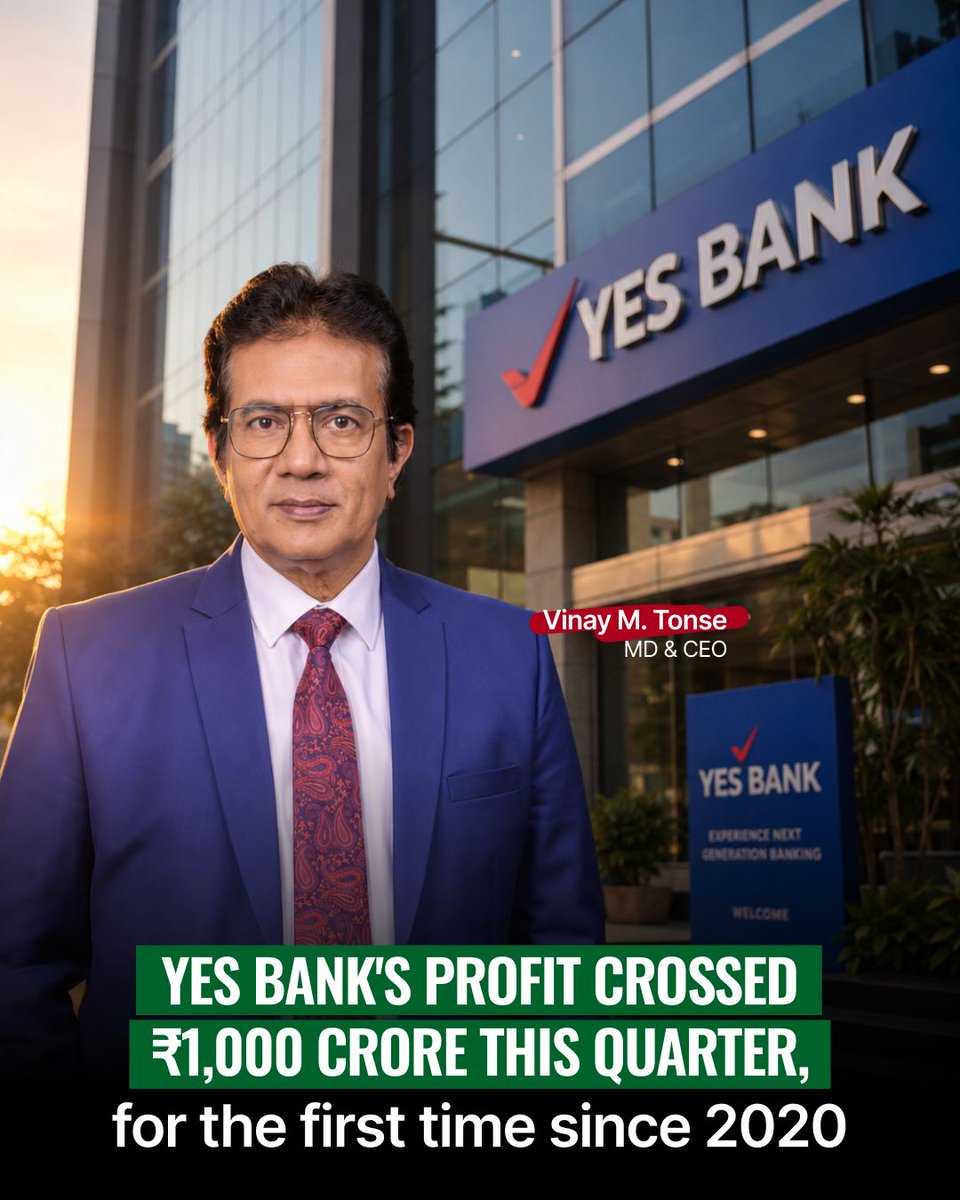
Six years later, the bank has reported a net profit of ₹1,071 crore for Q1 FY27, up 33% year-on-year, the first time it has crossed ₹1,000 crore since the crisis.
I went looking for a different number in this report.
→ Net interest income up 17.5%, operating profit up over 25%, even as treasury gains fell
→ Gross NPAs down to 1.3%, net NPAs down to 0.2% from a peak of 16.8%
→ Retail and SME loans now make up nearly 60% of the loan book, against 36% around FY20
→ Deposits up 14% to over ₹3.15 lakh crore, CASA ratio at 32.7%
→ Return on Assets: -7.1% during the crisis, ~0.9% now, still below HDFC Bank and ICICI Bank at 1.5%+
The loan mix change is the line I would flag first. Yes Bank got into trouble lending heavily to a handful of large corporate groups.
In 2022, it moved nearly ₹48,000 crore of old bad loans to JC Flowers ARC, just to clear the decks. It is coming back by lending in thousands of smaller pieces instead, not by chasing the old playbook.
A bank does not run on profit the way other businesses do. It runs on whether people trust it enough to leave their money there. Deposits growing back tells me that trust is returning. Profit is just what shows up after that.
The balance sheet got fixed years ago, in my read. What changed this quarter is who the bank is choosing to lend to, and the RoA gap tells me there is still ground to cover before this counts as fully back.
Would you trust a bank based on one strong quarter, or on how it lends?
India's ₹100 crore income club grew 4x in five years. The single biggest jump came in the most recent year of data.
In assessment year 2021-22, 142 individuals declared a gross total income of ₹100 crore or more, and this year, that number is 576. The government shared this data in Parliament, in response to a direct question on India's wealthiest earners.
I looked at the years in between before I trusted the trend.
→ AY 2021-22: 142
→ AY 2022-23: 301
→ AY 2023-24: 284
→ AY 2024-25: 415
→ AY 2025-26: 576
The number dipped in AY 2023-24, likely a choppier year for markets and capital gains, before jumping nearly 39% in the final year alone. This reflects annual income, which moves with business cycles, rather than stored wealth that stays fixed.
The detail that actually tells me something is who these earners are. Of the 262 people in the ₹100-500 crore band, only 19 are salaried. Every single person above ₹500 crore earns through ownership, not a salary. This is a promoter and founder class, built on businesses they own.
There is a bigger number sitting just below this one. Individuals declaring over ₹1 crore in income have grown roughly fivefold in a decade, crossing 3.24 lakh.
Add companies, firms and trusts, and that count crosses 4.68 lakh. That is the layer that actually decides demand for premium brands, private banking, and better financial products.
The government also shared one more figure alongside this. India's Gini coefficient, which measures income inequality, has fallen in both rural and urban areas over the same period. Wealth at the top keeps growing, while the gap below it keeps narrowing.
Chasing the ₹100 crore club makes a good headline. Building for the layer growing beneath it is where the real decisions get made.
Where do you think the next wave of affluent India is actually coming from?
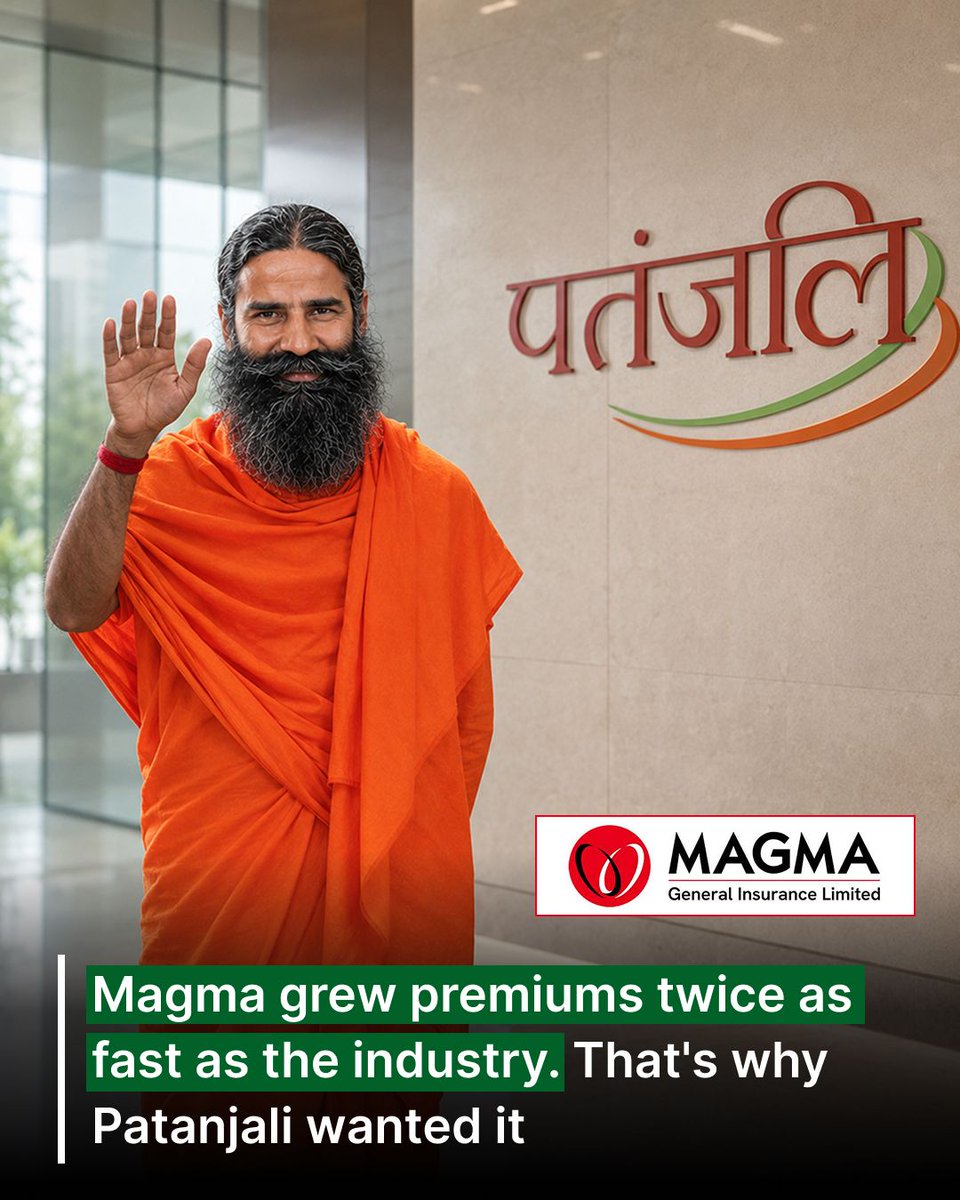
Magma General Insurance Limited made ₹27 crore in nine months. Patanjali is paying ₹4,500 crore for 73.56% of it.
Read only the P&L, and that trade makes no sense. Read what's actually being bought, and it makes complete sense.
As a CA, the first thing I look at in any acquisition is what's on the balance sheet versus what's in the price. Here, the price is not primarily about the ₹27 crore profit line.
What @PypAyurved Limited is really buying:
→ A licence that just cleared IRDAI's final approval
→ A solvent balance sheet with more than 70 approved products
→ Years they didn't have to spend building an insurer from zero
→ A retail network across semi-urban and rural India where the brand already has reach
That last one is the real asset. Every general insurer in the country sells roughly the same products at roughly the same prices. Distribution into a market that already trusts you is not a commodity. It's the one thing money can't shortcut on its own, and I'd argue it's worth more than the ₹27 crore profit suggests.
This is the pattern I'd watch. The next wave of entrants into Indian financial services won't be startups building new products.
They'll be consumer brands with distribution nobody else can replicate, buying their way past the one problem that usually takes a decade to solve.
Which other consumer brands do you think are sitting on distribution a bank or insurer would pay a premium for?
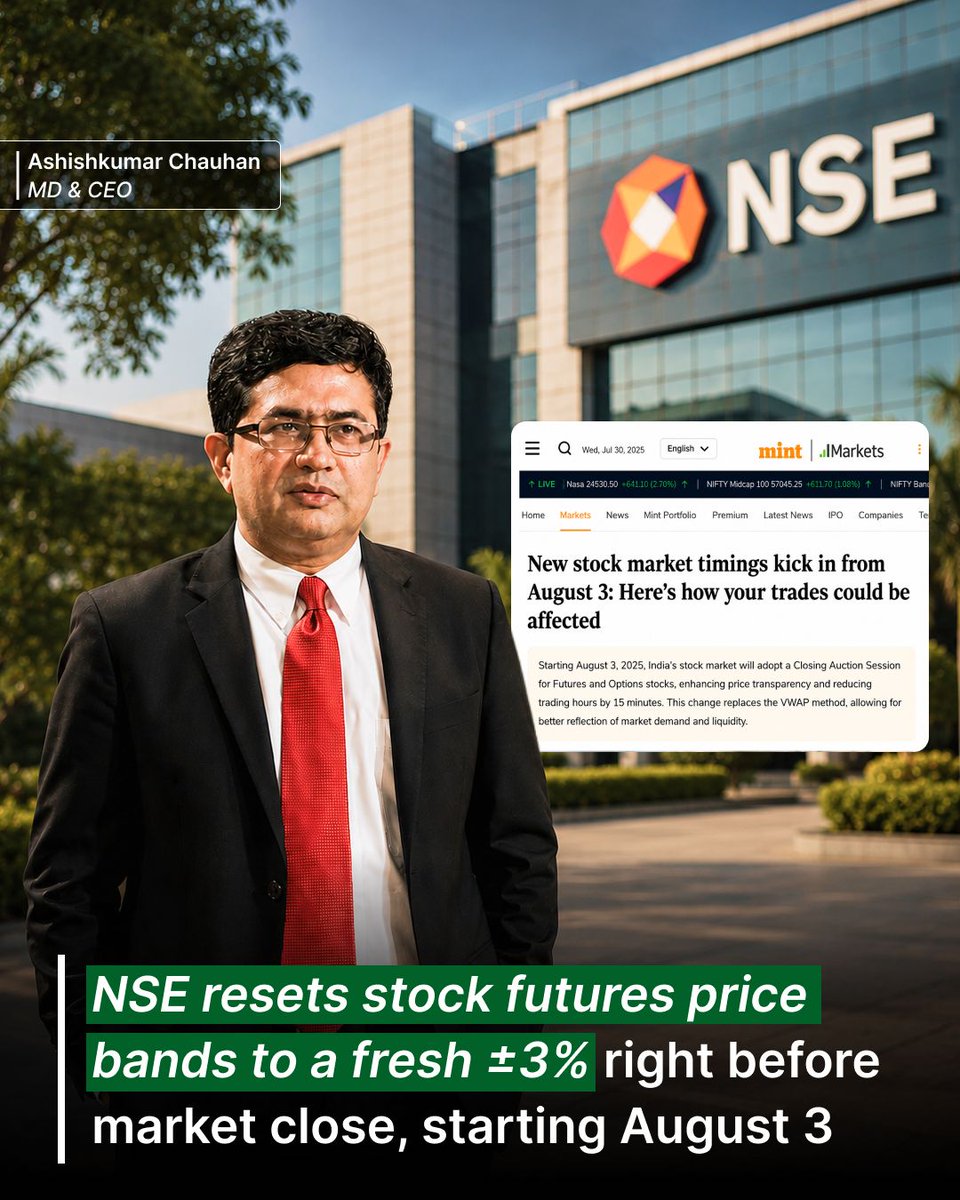
From August 3, NSE closes F&O at 3:40 PM and recalculates closing prices using a new 3:10-3:40 PM window.
Many traders might be talking about one thing this week: Ten more minutes to trade.
I am looking at a different set of lines in the same circular, the ones that decide how your money actually gets priced at the end of the day.
Start with this. From August 3, the market will close at three different times, depending on what you are trading. If a stock has F&O contracts, it stops trading at 3:15 PM and moves into a new Closing Auction Session.
If it does not have F&O contracts, it keeps trading till 3:30 PM. Index and stock F&O contracts trade till 3:40 PM.
I have read this circular twice, and that is the line that will confuse the most people on day one.
@NSEIndia calculates the closing price of every F&O contract using a VWAP window, which stands for Volume Weighted Average Price, calculated from trades inside a fixed time band. That band is being redrawn.
→ Old VWAP window: 3:00 PM to 3:30 PM
→ New VWAP window: 3:10 PM to 3:40 PM
→ New Closing Auction Session in the cash market: 3:15 PM to 3:35 PM
→ Stock futures price band: reset to a fresh ±3%
→ Pre-open and the 4:15 PM trade modification cutoff: unchanged
This price band change is the one I would flag first to any broking tech team. A fresh band right before close means order checks in those last minutes need to be tested again, and any algo strategy built around the old 3:30 close needs to be adjusted.
NSE has confirmed mock sessions before August 3. To me, that suggests the mechanics have changed enough to need a rehearsal, instead of just a notice.
Your order timing stays the same on August 3. Your closing price, your NAV, and your MTF valuation now run on a different clock.
Would this change your trading routine in any way?
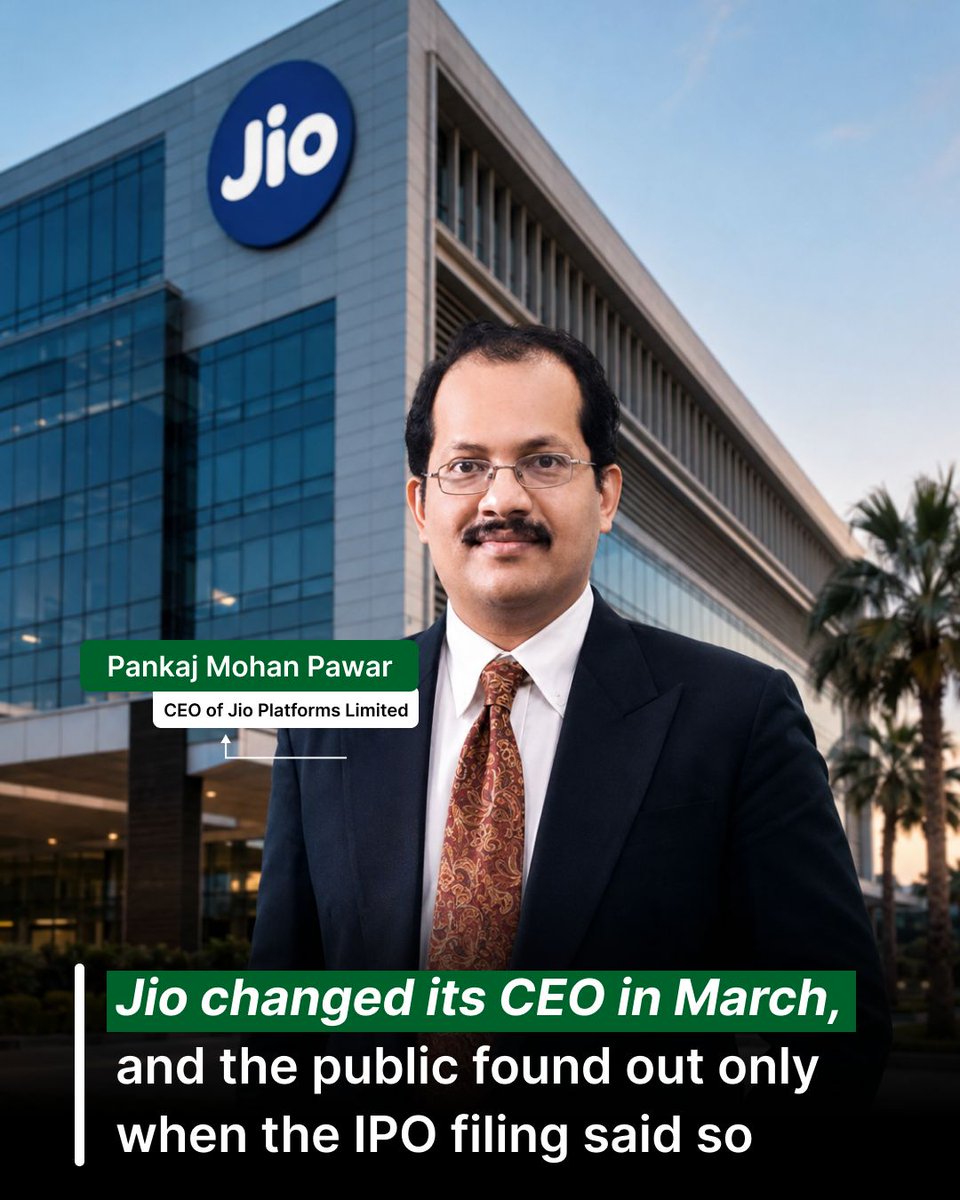
Jio's ₹37,700 crore #IPO, on track to be the largest in Indian history, just got sent back by SEBI for more answers.
The regulator wants Jio Platforms to clarify certain disclosures in the DRHP it filed on June 19, days before the query landed.
The other detail in that DRHP is easy to miss if you only read the headlines.
Kiran Thomas resigned as CEO on March 23, and Pankaj Pawar took over the very next day, but the public only found out three months later, when the DRHP became public.
As a CA, I keep coming back to that gap. A private company the size of Jio Platforms can change its CEO, and the market finds out only when a regulatory filing forces it to inform.
Companies choose when to announce a leadership change, right up until the day they need public capital. Then a year of decisions surface at once, in one document, for anyone to read.
→ March 23: Kiran Thomas resigns as CEO
→ March 24: Pankaj Pawar takes over, while also staying on as MD of Reliance Jio Infocomm
→ June 19: DRHP filed, disclosing the change for the first time
→ Days later: SEBI returns with questions on the same filing
I read a clarification request on a filing this size as routine scrutiny, more than a problem with the issue itself. The CEO change is the more interesting fact of the two.
It shows how much can happen inside a large private company before the public finds out, and a DRHP is often the first moment they do.
For those who have read a DRHP closely, what disclosure do you check first, before you get anywhere near the financials?
#JIO #JioIPO
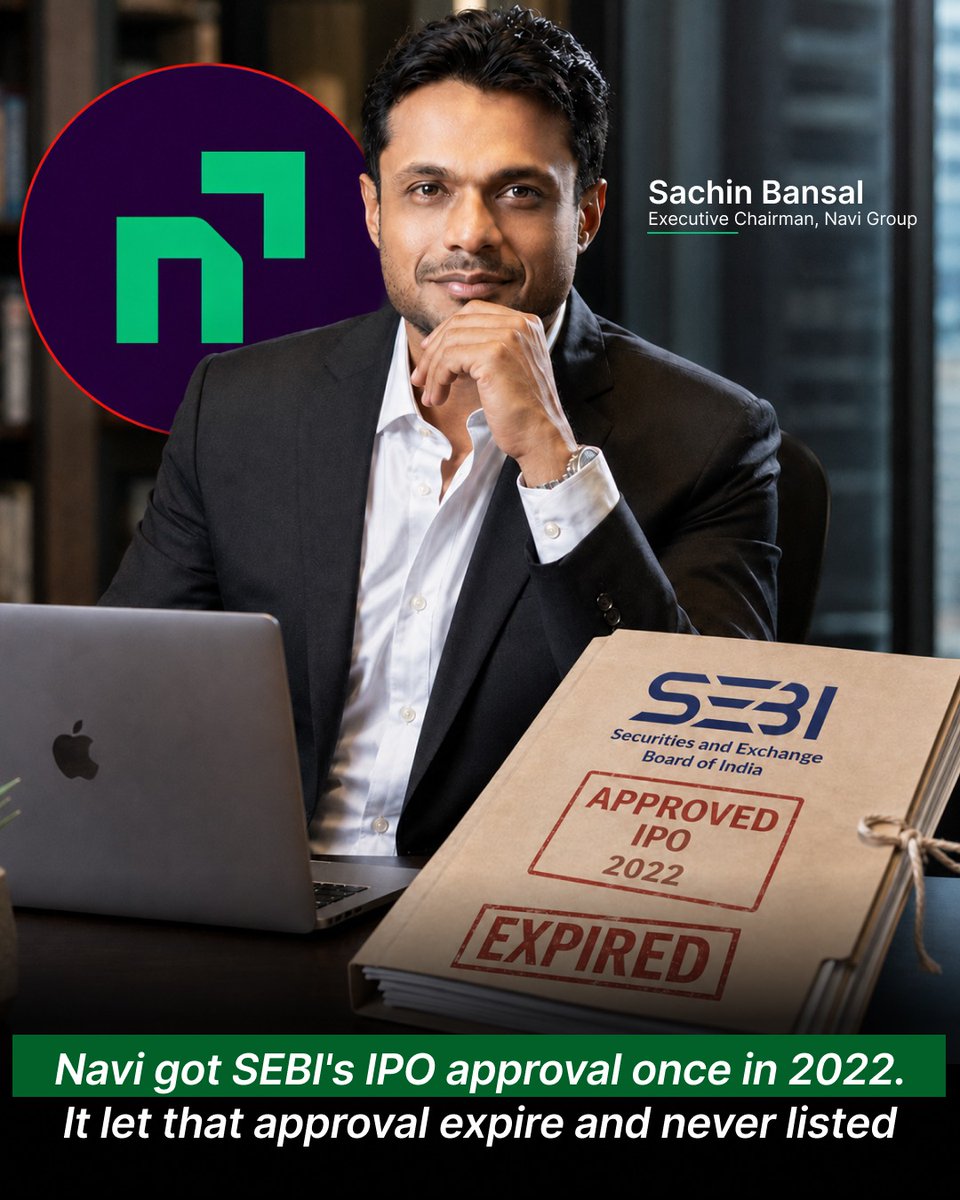
Sachin Bansal built @Flipkart in eight years. Getting Navi to this same finish line took longer.
Getting SEBI's approval to list is not the same as being ready to list, and Navi is the clearest proof of that gap in the market right now.
E-commerce never once asked Flipkart to explain itself to the RBI. Navi answers to the RBI, IRDAI, and SEBI at the same time before a single investor gets a fresh share.
That difference already shows up in its own history. Navi got SEBI's approval for a ₹3,350 crore IPO back in September 2022, then let that approval lapse and never listed.
As a CA, the detail I find most telling is how SEBI approval actually works.
An observation letter typically holds for twelve months. Once it lapses, the company has to refile and get scrutinized again from scratch, not just resubmit the same paperwork.
Whatever readiness the business had in 2022, it has had to prove all over again.
Four years on, that is exactly what is playing out.
→ 2022: ₹3,350 crore IPO, approved by SEBI, never launched.
→ Earlier this year: talk of a pre-IPO round near $1.8 to 2 billion, roughly ₹17,000-19,000 crore.
→ Now: Prosus in talks to lead that round near ₹13,000 crore, pulling the number down instead of up.
I read that gap as the real story here, more than the fresh DRHP itself. A marketplace gets valued on where it might be heading.
A lending and insurance business gets valued on what it can already prove, because book value, provisioning, and asset quality are numbers an investor can check against actual data, not a story about how big the market could get.
Flipkart's biggest constraint was shifting consumer demand. Navi's biggest constraint is whether the balance sheet and the valuation agree with each other on the same day the DRHP goes in.
If you have taken a regulated business through SEBI more than once, what actually changes the valuation the second time around?
Indian startups raised $7.39 billion in H1 2026, up from $6.72 billion, the highest since 2022.
The number everyone repeats is the total. What actually explains this cycle sits one layer deeper, in the deal count.
106 growth and late-stage deals took $5.61 billion between them. 445 early-stage deals split just $1.77 billion. Roughly three-quarters of all the money went to a small set of companies that had already proven something. That ratio is the real signal.
I've done this kind of diligence work myself, so I know why it plays out this way. Checking a company with two years of audited numbers takes a fixed amount of work.
Checking a pre-seed company with none takes almost the same amount of work for a cheque that is a fraction of the size. When capital turns cautious, that arithmetic decides who gets written into the budget first.
The stage-wise split carries the same pattern through.
→ Series B pulled $2.54 billion across just 57 deals, the single biggest pool in the half.
→ Seed had the highest deal count of any stage, 202 of them, and still raised only $483.94 million combined.
More deals, far less money.
Funding more than tripled to $2 billion in June from $630 million in May, after 3 straight months of decline, once CRED's $900 million round from Meta came in.
Neysa's $1.2 billion round and Sarvam AI's $234 million round sit in the same bracket: large cheques into startups that had already cleared the early risk.
The money is still flowing this year. What has thinned out is the patience for anything unproven.
Founders who raised early-stage money this year: was the diligence longer, or was the cheque just smaller?
#IndianStartup
2026 IPOs are up 30% on average from their issue price, but 8 of 29 are still below it.
So far in 2026, 29 companies have listed, and 21 are trading above their offer price, and the average return is 30%.
At first glance, that looks like a very good year for IPO investors, but I never trust an average before checking what is carrying it.
→ Omnitech Engineering Limited is up 147.5%.
→ SEDEMAC Mechatronics is up nearly 94%.
→ OnEMI Technology Solutions is up almost 88%.
At the other end, SHREE RAM TWISTEX PRIVATE LIMITED is down 60.3%. Innovision is down 44%. 8 of the 29 listings are sitting at or below their offer price, and that is the part the 30% headline does not tell you.
A few big winners can pull the average up, even when many investors had a completely different experience.
While people did not earn 30%, they owned one IPO.
In June, mutual funds invested ₹32,000 crore across their ten biggest purchases, and Adani Enterprises Limited and JSW Infrastructure led that list; 2 large, already listed, already audited names were not among the 29 new ones retail was chasing.
I would not see that as institutions rejecting new companies but as a reminder that professional money does not care whether a story is new or old. It looks at price, liquidity, structure, and track record.
The average tells you how the group performed. The spread tells you what investors actually experienced. I check the spread before I trust the headline.
Where else do you think averages hide the real story?
Swiggy’s cap table now looks Indian-owned. Its board rights tell a different legal story.
@Swiggy shareholders rejected the board changes in May. The ownership threshold was crossed anyway, without another vote.
On July 7, Swiggy disclosed that foreign investment had fallen to 49.76% on a fully diluted basis. In simple terms, domestic ownership had moved above 50%. The stock rose as much as 7%, and most headlines stopped there.
As a CA, I understand what it means.
Swiggy itself clarified that this change did not automatically alter its ownership or control status, and that distinction matters because IOCC status involves two separate tests.
→ First, ownership.
More than 50% must be beneficially owned by resident Indians or qualifying Indian entities.
→ Second, control.
Control can come from board nomination rights or the ability to influence management and policy decisions, and a cap table alone does not settle that.
In May, Swiggy proposed amendments to its Articles of Association, including changes to nomination provisions. The resolution received 72.36% approval, which sounds like a majority, but a special resolution requires 75%.
So it failed by just 2.64 percentage points. This matters beyond legal classification.
If Swiggy eventually secures full IOCC status, Instamart could get greater flexibility around inventory ownership, procurement, and availability.
Eternal took a cleaner route. Its shareholders approved a 49.5% foreign ownership cap with 99.85% support. Two companies are moving toward the same status through very different paths.
A cap table tells you who owns the shares, and the articles tell you who may still hold the power.
Would you call Swiggy Indian-owned today, or wait until the control test is equally clear?