Do you know the name of the real culprits who leaked the NEET paper ????
Think !!
The propaganda of the opposition and narrative against PM Modi and Education Minister Dharmendra Pradhan is so virulent and widespread that the real criminals who leaked the papers never found a mention in the news or media.
CBI investigation has revealed that P.V. Kulkarni, a Chemistry Lecturer involved in the examination process on behalf of the NTA, had access to the question papers.
During the last week of April 2026, he mobilized students with the help of another accused, Manisha Waghmare, who was arrested by CBI on 14.05.2026, and conducted special coaching classes for these students at his residence in Pune.
Notice that during all the CJP protest, the opposition and Abhijeet Dipke demanded the resignation of Dharmendra Pradhan and PM Modi.
But not even once, yes even once did Arvind Kejriwal, Abhijeet Dipke, Mahua Moitra, Atishi Marlena, Sagarika Ghose, Akhilesh Yadav, Dimple Yadav, or Brinda Karat, mention the name of PV Kulkarini, Manisha Waghmare and ask for strict punishment for these criminals.
That's how your mind is being influenced and manipulated by the ecosystem.
when i started in 1990 my first IPO allotment is HDFC (fv rs 100) i received 30 shares allotment. capital trippled and sold all. by that time i dont know so many things. i thought i can apply and take profit that only stock market😀
Gym Jihad
This video is bone chilling
▪️ Mirzapur (UP)
▪️8 Muslim Gym coach
▪️All in different gyms
▪️All are organised and connected
▪️Hunt Hindu women 20-45 year old
▪️Use Personal training (PT), diet consultation as a tool to get mobile number and get closer
▪️Once trapped, have sex with them, click photos and videos
▪️Ask them to wear burqa, read namaz, convert to Islam
▪️Till now they have trapped 70 Hindu women from rich families
▪️ Police have recovered sex photos and videos of 50 hindu women from their mobiles
This is story of just one small city of India - Mirzapur
This is the story of just one profession - Gym
Now imagine the extent if we combine all professions - Saloon, fancy stores, education etc, all cities of India
This is the Crisis situation
Wake Up Hindu samaj
Wake Up Government
Make Central UAPA type law for Love Jihad
It’s official folks: being Indian is a timing risk abroad.
We don’t realise how far this reputation has travelled until you’re standing at a random bus stop next to your hotel in Fukuoka, Japan at 7:40 a.m., holding a tour voucher, half-awake, trying to look “normal”.
Reporting time: 8:00. Takachiho day tour. Group of 9 friends.
The guide, an elderly Japanese man, starts ticking names off a printed list. Sees mine, nods, then pauses on the next line where it says there are 8 more Indians.
He looks up and asks where the rest are.
I say, “A few minutes” (in my broken Japanese + hand gestures, because obviously).
And he just… laughs. Not rude, not mean. The kind, polite laugh that’s basically disbelief doing customer service. Then he repeats, multiple times, slower each time, like he’s talking to a toddler:
“Bus… leaves… eight… sharp.”
Like, sir, I can hear you. I’m also a person who can read time.
He asks again if I’m sure they’ll come. And again. And again. Each time with this tiny smile that says, “Yeah, I’ve seen this movie.”
And in that moment you realise something slightly grim: you’re not being treated as an individual. You’re being treated as a probability distribution.
Not “Are your friends here?” but “Are Indians capable of this?”
I’m there early. I’m literally the counterexample. Doesn’t matter. The stereotype walks in before you do.
Those 10 minutes between 7:40 and 7:50 were genuinely stressful, because if even ONE person showed up late, it wouldn’t just be “Arre he’s late”.
It would be “Of course they’re late.”
You know that feeling when you’re forced to silently represent 1.4 billion people at 8 a.m. outside a tour bus.
Thankfully, everyone turned up by 7:50.
Not 8:01. Not “almost there”. Not “2 mins”. Properly early.
I gave the guide the smallest, most respectful “I told you so” look possible without getting deported.
He was nice after that. Zero hostility. But the first reaction said everything.
And this is the bit Indians don’t want to admit: people abroad already have a pre-loaded template about us, and it’s not flattering. It’s not just punctuality, either. Punctuality is just the easiest stereotype to express out loud.
So yeah. Make your jokes about “Indian Standard Time” if you want. Just know the world is taking notes, and sometimes you’re the one paying the reputation tax at 7:58 a.m. in rural Japan.
Do we even realise how often we’re being pre-judged like this?
A MUST. MUST READ.
1942.
Rangoon.
While most Indians remember freedom through textbooks, one 15-year-old girl lived it through sacrifice.
Her name was Saraswati Rajamani.
Born into obscene wealth.
A mansion. Silk dresses. Diamonds. Cars.
Her father owned a gold mine.
But destiny didn’t want her to live behind curtains.
It wanted her in shadows.
That day, Rangoon shook.
Netaji Subhas Chandra Bose stood before the crowd and thundered:
“Give me blood, and I will give you freedom.”
Something ignited inside that teenage girl.
She didn’t clap.
She didn’t cheer.
She removed every ornament from her body — necklace, bangles, earrings — and donated them to the Azad Hind Fauj. On the spot.
The next morning, an army jeep stopped outside her mansion.
Netaji himself stepped out.
He came to return the jewellery.
He thought it was emotion. Impulse. Youth.
Rajamani looked him straight in the eye and said:
“Netaji, I did not give it by mistake.
I gave it to my country.
And I never take back what I give.”
Netaji saw it instantly.
Not a girl.
Steel.
He renamed her “Saraswati.”
And said:
“I don’t want you with a gun.
Your task will be harder.”
Her long hair was cut.
Loose clothes replaced silk.
Saraswati Rajamani became “Mani.”
Her mission: espionage.
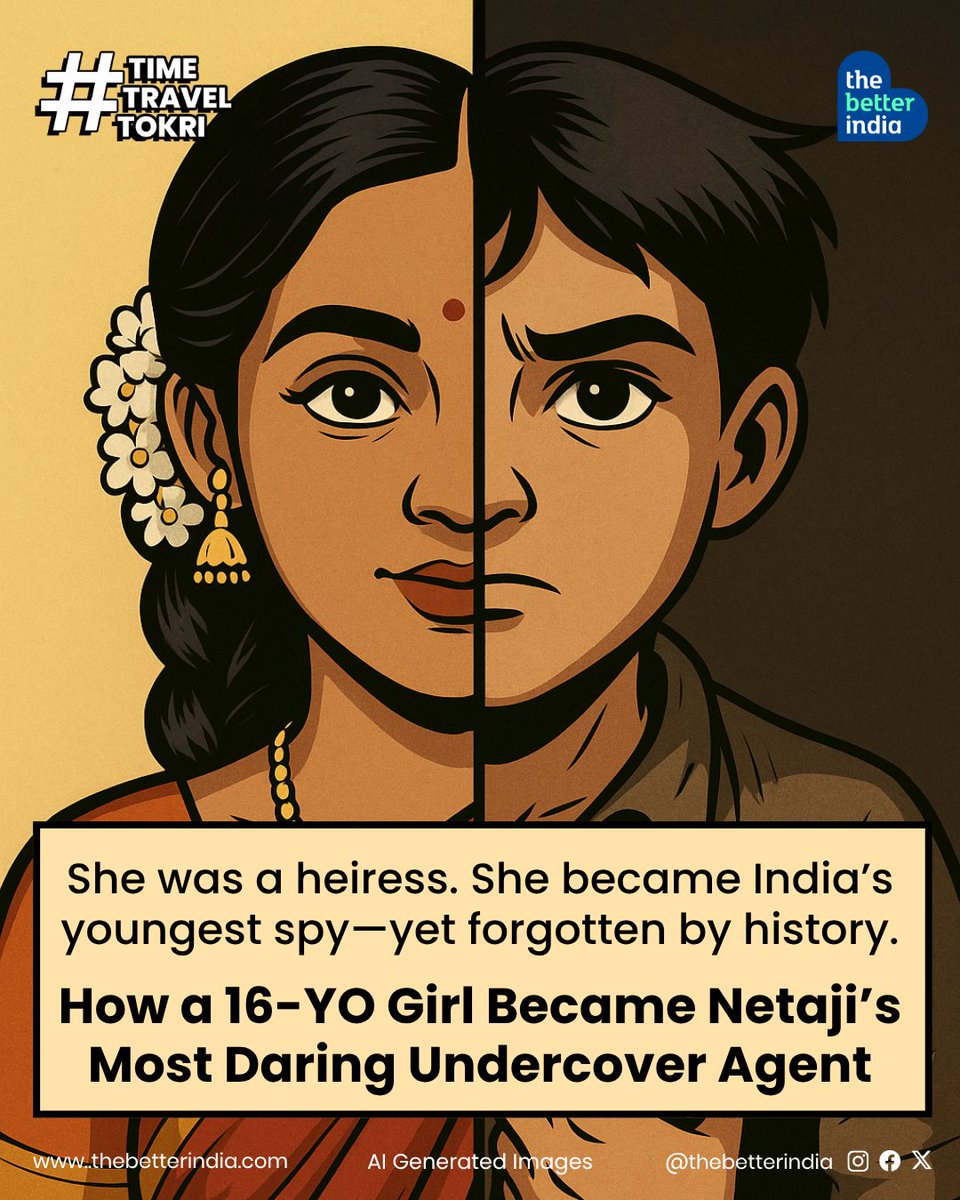
At 16, the girl who slept on cushioned beds worked inside British military mess halls, disguised as a boy.
Polishing boots.
Serving tea.
Sweeping floors.
The British officers laughed freely, confident these “local boys” understood nothing.
Right in front of them, they planned bombings.
Supply routes.
INA movements.
Mani listened.
Memorised.
Recorded everything in her mind.
Later, she scribbled notes in washrooms, hid them in shoes and bread, and smuggled intelligence to Netaji.
Day after day.
One mistake away from death.
Then the nightmare struck.
Her partner Durga was captured.
INA’s rule was brutal but clear:
Never be taken alive.
Everyone told Mani to flee.
She refused.
“My friend is captured.
I won’t run.”
At night, disguised again, she entered the British prison.
Drugged the guards.
Stole the keys.
Freed Durga.
As they escaped, alarms screamed.
Searchlights cut through darkness.
Shots rang out.
Mani was hit in the leg.
She didn’t stop.
Stopping meant death.
They vanished into the forest.
Hunted by soldiers and dogs.
They survived by climbing a tree and hiding there for three days — wounded, feverish, silent — while British patrols searched below.
Eventually, they escaped.
Back at INA camp, Mani collapsed.
As doctors removed the bullet, Netaji saluted the teenager and said:
“I didn’t know our army hid such explosives.
You are India’s first woman spy.
You are my Rani of Jhansi.”
He wanted to gift her his pistol.
She wanted only one thing:
Freedom.
India became free in 1947.
And then India forgot her.
No chapter.
No spotlight.
No gratitude.
The girl who gave her youth, blood, and family wealth lived her final years in a small rented room in Chennai.
Her pension delayed.
Her life ignored.
Yet she never complained.
During the 2004 tsunami, when people begged for aid, this old woman — who struggled for her own medicines — donated her savings for relief.
When asked why, she smiled:
“Giving is in my blood.”
In 2018, at 91, Saraswati Rajamani passed away quietly.
No national mourning.
No breaking news.
No outrage.
But remember this:
Free India stands on the courage of a 15-year-old girl who chose the nation over comfort, silence over safety, and sacrifice over recognition.
Her name was Saraswati Rajamani.
History forgot her.
We must not.
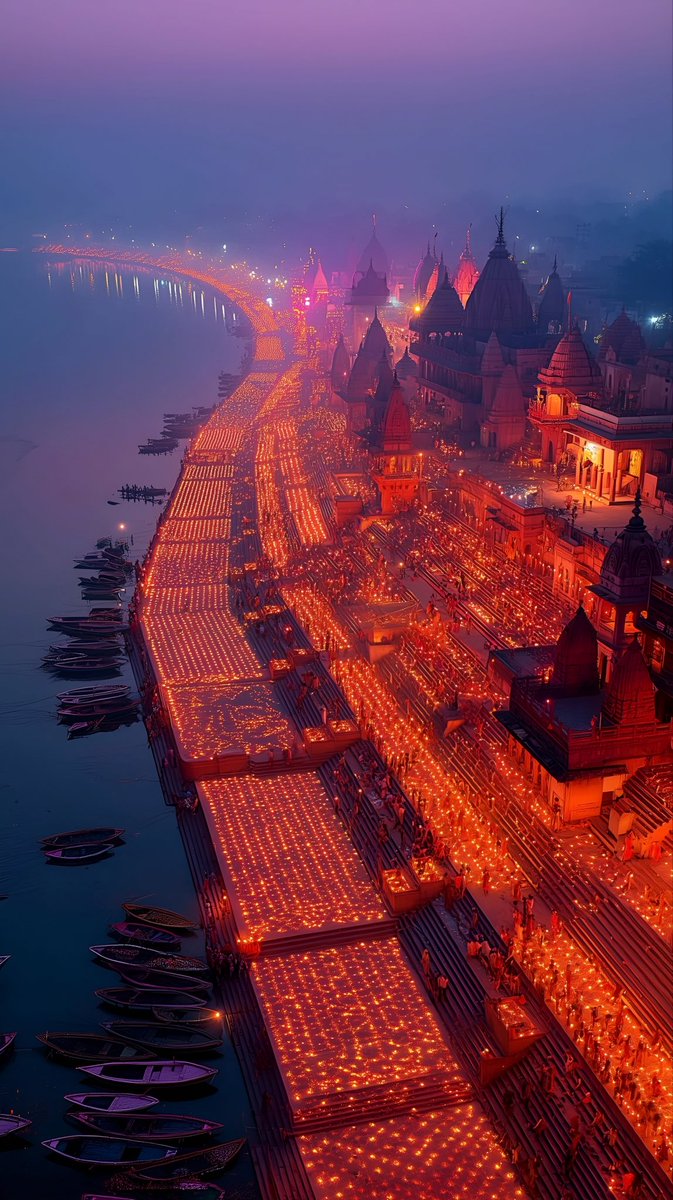
World’s oldest civilization, the only one to survive unbroken since Bronze Age, shone in full glory last night.
A testament to over four millennia of resilience against invasions, suppression, and the tides of history, while retaining its sacred wisdom, rituals, and traditions.
🚨 IT'S HISTORY GETTING CREATED FOLKS 🤯
INDIA'S ANANDKUMAR VELKUMAR IS THE WORLD SPEED SKATING CHAMPION 2025!🏆
He becomes First Ever India to win the GOLD Medal in 1000m Sprint at World C'ship 🏅
IT SHOULD BE HEADLINE OF INDIAN SPORT! 🇮🇳
Some people are saying “Brahmins are the Jews of India.”
Both communities face hate, yes. But the comparison is FALSE and it’s used to justify open season on Brahmins.
Jews, despite persecution, built enormous global influence, finance, politics, tech, media. While Brahmins in Post-1947, they were systematically sidelined by quotas, by politics, by propaganda. Today, many Brahmins live in poverty, clerical jobs, or farming.
Utmost respect for leaders who let their teams WFH as much as they want (as long as work doesn’t suffer).
The traffic outside is wrecking mental health, physical health, the planet - and honestly, life itself 😓
Would you carry 200 kg on your back to save a life? They did.
In a remote village in Himachal’s Sirmaur district, two brothers carried their 200 kg sick cow on their backs and walked 3 km uphill to save her.
No road. No ambulance. No help. Only love.
When their cow fell seriously ill, Daya Ram and Lal Singh didn’t wait for help. With no way to transport her, they tied her to their backs with ropes and set off — climbing steep, rain-slick mountain paths with nothing but hope and determination.
After hours of effort, they reached the hospital just in time.
Today, she’s standing again. Alive. Safe.
What these brothers did is more than an act of strength.
It’s a story of empathy, courage, and unwavering love.
Credits: streetdogsofbombay | livetimestvhimachal on IG
#HimachalPradesh #UnsungHeroes #AnimalLove #CowRescue #GoodNews
She was born into privilege. But at 16, she chose patriotism over pearls.
Saraswathy (Rajamani) – once a wealthy heiress in Rangoon – became one of India’s youngest and bravest spies for Netaji Subhas Chandra Bose.
She smuggled secrets from British camps, staged a jail rescue disguised as a dancer, and took a bullet for her country — all before she turned 18.
This Independence Day, we remember the girl who gave up everything and never asked for it back.
Swipe through her untold story.>>
#Rajamani #SubhashChandraBose #INA #IndependenceDay #UnsungHeroes #IndianFreedomStruggle #WomenInHistory
Before Burberry made checks elite, India wove them by hand.Guaranteed to Bleed turned a local Indian fabric into a global luxury statement.
And yet today, while the world flaunts checkered shirts, how many know they began in Madras?