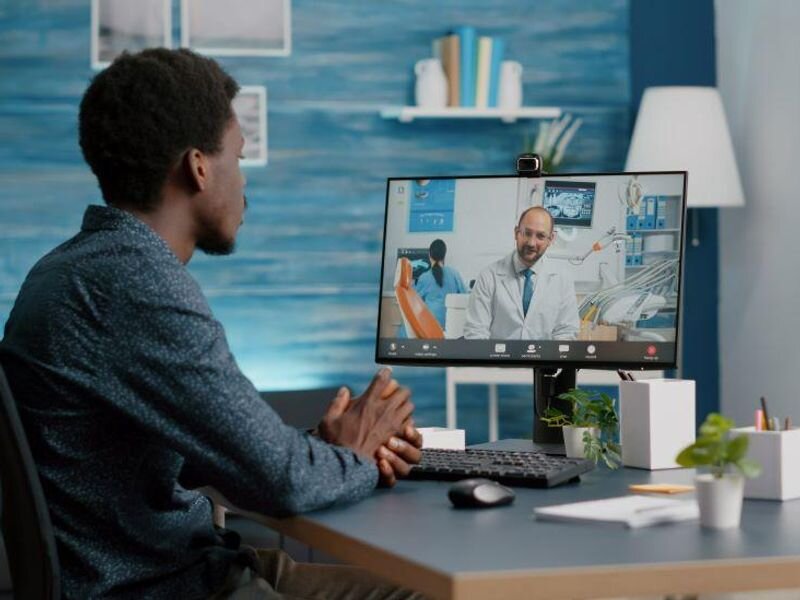
Telemedicine is evolving beyond the standard synchronous phone or video call. Asynchronous telemedicine in the form of #RPM is changing the healthcare paradigm from sick care to continuous care 24/7.
#Telemedicine#PatientAccess
https://t.co/MIu7Xpkfd8
We have truly entered a new era in healthcare in the U.S. According to Becker’s Hospital Review, “approximately 90% of consumers are satisfied or highly satisfied with virtual providers.”
#FutureOfHealthcare#PatientCare#VirtualCare
https://t.co/qEEVtarCdk
Whether a medical practice has expanded to include telehealth or a telehealth-only service, primary care #physicians must be supported to provide high-quality care in this medium. Click for tips on adequate #telehealth training.
https://t.co/6zy2317ZZT
Recent telemedicine statistics show an increase from approximately 840,000 patients in 2019 to nearly 52.7 million in 2020 — that's a 63-fold increase.
#FutureOfHealthcare#Healthcare#Telemedicine
https://t.co/C49X09LUu9
“RPM is more than just fancy activity trackers. It is a way to reduce hospital admissions, lower healthcare costs and provide better care and outcomes for patients.”
— Katie Nunn, practice management consultant for the MGMA
#Telemedicine#RemoteCare#RPM
https://t.co/Xte1nvvNbz
In a recent survey, 40% of employers said that telemedicine will be very important in providing future access to care for enrollees in remote areas.
#Employers#Telemedicine#PatientAccess
https://t.co/VzFBdBIdne
When you leverage @Prescribery's #telemedicine technology you offer a patient journey that is fully compliant and secure. We have incorporated certifications that meet or exceed industry requirements or standards.
#PatientJourney#HIPAACompliant
https://t.co/acYVRWTTOh
Nearly half of U.S. adults have high blood pressure. A new study found telehealth care by pharmacists is an effective alternative to clinic-based care for managing high blood pressure.
#Telehealth#Pharmacists#BloodPressure
https://t.co/MwoHQqGzEp
The remote patient monitoring technology market is projected to reach $175 billion by 2027, up from $23 billion in 2020.
#VirtualHealth#PatientMonitoring#RPM
https://t.co/TQzLIS7WPI
93% of physicians now believe digital health tools are an advantage for patient care, up from 85% who felt that way in 2016.
#DigitalHealth#Physicians#RPM
https://t.co/CdNYYimmCG
A recent study found that telehealth helped decrease no-show rates among surgical patients and led to improved healthcare access.
#Telehealth#PatientCare#Healthcare
https://t.co/ZKU1YhuTHX
"Almost invisibly, the most important door to digital health had changed from one at a doctor’s office to one in the home: the bathroom door." Click to learn more.
#DigitalHealth#Wellness#RPM
https://t.co/frJBtAQcV4
The Centers for Connected Health Policy examined state law, state administrative codes and Medicaid provider manuals for all 50 U.S. states and found nuances and similarities in policies between states.
#Telehealth#Telemedicine#FutureOfHealth
https://t.co/klerjc3X0r
Using telemedicine platforms that are HIPAA-compliant enables physicians to securely store, manage, and transmit electronic patient health information (ePHI) and protect all patient medical records.
#ePHI#HIPAA#Telemedicine
https://t.co/0Z8aFFrjht
Psychiatrists practiced in less than half of US counties as of 2018. Today, #Telehealth's ability to expand access and advance health equity is making it an indispensable care delivery method within the #MentalHealthcare landscape.
https://t.co/mIkCzLhMgi
In recent survey, 61% of people indicated that the primary reason for using telehealth was convenience, quick service, and easier access to health information.
#Telehealth#VirtualCare#Healthcare
https://t.co/kEngKTyc6x
According to a new study, 37% percent of adults used telemedicine in 2021, with use varying by age, sex, and race/ethnicity.
#Telemedicine#Telehealth#CDC
https://t.co/7Ytt2vwwIt
How does offering remote education and remote physical therapy to patients improve access for vulnerable populations? Read this interview with physical therapist Bronwyn Spira to learn the answer.
#Telemedicine#VirtualCare#OrthopedicCare
https://t.co/ZSiWj0l1m3
In a recent study, #telemedicine was more likely to meet HEDIS quality measures than in-person care alone in all counseling and testing-based measures (vaccinations, cardiovascular disease and diabetes testing, #depression and #cancer screenings).
https://t.co/8nVtjkHQDR