The US just dropped some key demands of Iran. From their missile program to future nuclear enrichment, we seem to have changed policy overnight.
We're joined today by @DanielBShapiro to discuss what we know about the MOU and what to watch for as it plays out.
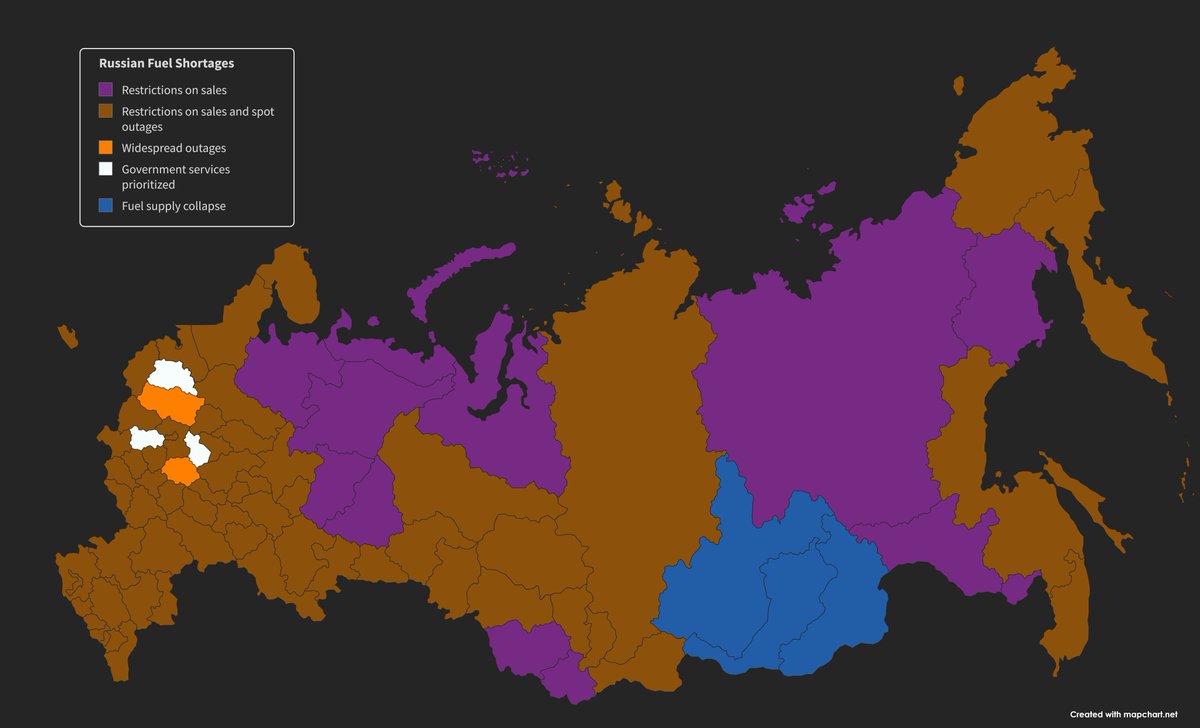
Russian Fuel Crisis Update: 29 June 2026
The situation continues to deteriorate much faster than we expected. Russia is entering the most challenging months of July-September, when demand peaks due to tourism and agriculture.
For the second time in a week, the Kremlin decided not to impose a completely ban on diesel fuel exports. Yesterday's update covered why this is a difficult issue politically and economically.
All regions in Russia have fuel restrictions or outages.
Irkutsk Oblast: Moved to fuel system collapse - per the regional governor, 80% of filling stations no longer have fuel
Republic of Buryatia: Moved to fuel system collapse - diesel shortages and restrictions are severely impacting logistics
Novosibirsk Oblast: Moved to spot fuel outages per social media reports
Kurgan Oblast: Moved to spot outages per regional governor: "I've traveled through several regions. In some places, there are queues at gas stations and sales volumes are rationed, while some gas stations are simply closed."
Novgorod Oblast: Moved to government services prioritized
Jewish Autonomous Oblast: Per Russian source Military Informant
There are two areas of major shortages: eastern Siberia and in the oblasts surrounding Moscow.
Assessment: The Russian government is already moving fuel from areas around Moscow to bolster supplies in Russia's capital.
Reminders: None of these are permanent states. An area in collapse will improve when fuel is delivered. An area with only restrictions can collapse in less than a week, as observed in Buryatia. Spot outages mean fuel shortages are not widespread. Areas where government services are prioritized should not be viewed as also experiencing widespread outages or collapse.
Russia's fuel supply will never reach "zero."
Russian media Rybar reports continued Ukrainian advances in the West Zaporizhzhia direction.
"unfavorable dynamics persist in the Kamianske-Plavni area. After capturing Primorske, Ukrainian formations continue to seep further south, creating a threat to Russian Armed Forces positions in Kamianske."
Russian milblogger Military Informant reports on fuel availability issues in 89 regions of Russia.
"Most of the regions noted have introduced restrictions on the sale of fuel in one hand in terms of the number of liters and/or a ban on refueling into canisters, and this is explained by several factors:
▪️a refining crisis due to strikes on refineries by the Armed Forces of Ukraine,
▪️their planned repairs,
▪️additional speculative demand against the backdrop of news about attacks, rising prices, and shortages in other regions;
▪️historically high demand in the summer period.
The situation is much more serious in Crimea and the new territories (DPR, LPR, Zaporizhia, Kherson), where problems with the availability of fuel are caused not so much by strikes on refining in Russia, but by strikes on logistics. The fuel simply does not reach the consumer, or it arrives with serious delays and in smaller quantities.
As a result, we have a huge snowball effect - seeing a fuel shortage in some regions caused by strikes on logistics and refining, the population of other regions rightly assumes that the situation will soon affect them too, so it's necessary to urgently stockpile.
Against this backdrop, many expect that the situation will only get worse. And how do people think? Either the fuel will become even more expensive, so it's necessary to buy it while it's still cheap, or it will simply start to disappear, and therefore it's necessary to buy it while it's still available. This is joined by stock exchange speculators, who buy large stocks of fuel in bulk, leaving none for others, and small speculators, who buy fuel at gas stations and resell it at a higher price.
It is the fight against resellers that explains the limits on refueling in canisters introduced by many regions, but the fight against them is a fight against the consequences. The root cause of the crisis is not them (they only exacerbate it), but the loss of production and logistics capacities.
Together, the refining crisis due to strikes, the frenzy against this backdrop, and speculation on the market lead to a fuel shortage and a sharp rise in its prices, which will inevitably affect all prices soon."
Well technically it's focused on "Persistent Airfield Denial" and not specific to Russia as some milbloggers are alleging.
Either way, apply here: https://t.co/hwe7AyCkNp
We also publish each episode on podcast platforms, I know some of these longer form conversations may be easier to just listen to on the go
https://t.co/9nAz8rWoQa
Great chatting with Francis about the situation in Kostiantynivka. Incredible work on his part traveling one of the most dangerous roads in Ukraine to help tell this story
Ukrainian attack drones dropped a road bridge on top of railway tracks in Russian-occupied Crimea, successfully cutting off a pair of key transport links on the northeast side of the peninsula in a single strike.
Great time chatting with Nataliia Lutsenko with @warpolitics24 on some new developments in the war in Ukraine, check it out below!
https://t.co/AwF8BUj59Y
For nearly 250 years, West Point has stood at the heart of America's story.
What began as a Revolutionary War fortress became the nation's oldest continuously occupied military post & ultimately, USMA.
Learn more about the USMA's America 250 celebration: https://t.co/35dJPDmzle
US forces are carrying out airstrikes on Iran again tonight, reportedly larger than last night's round.
Multiple explosions have been reported in Qeshm, Bandar Lengeh, and Sirik.